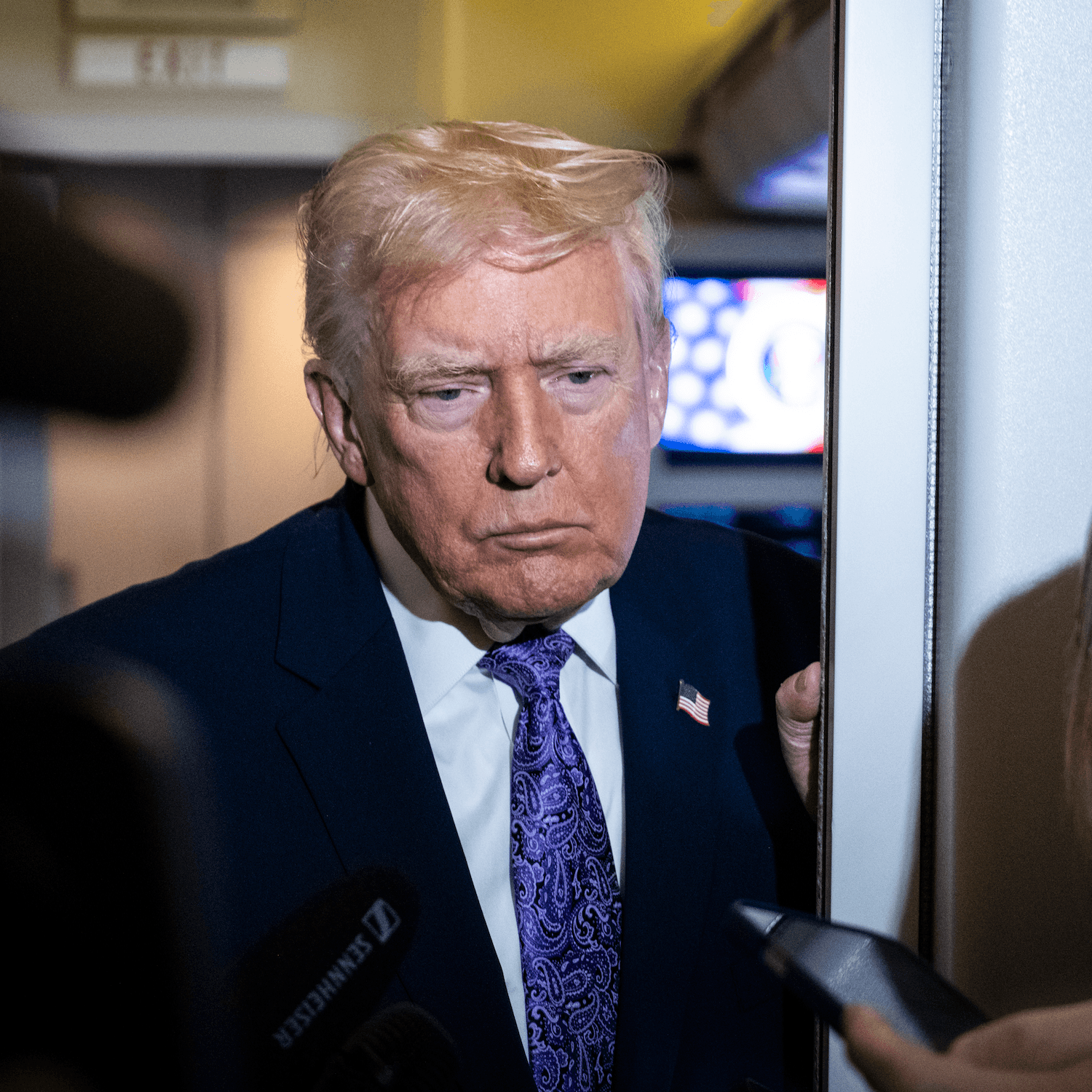
What’s uniting Trump and Hegseth amid mounting GOP scrutinyApple News Today · Dec 4, 2025
The Wall Street Journal asks whether the weekly $600 in unemployment aid is disincentivizing people from rejoining the workforce. And PBS NewsHour has economists on both sides of the aisle weigh in on the debate.
CNN obtains internal memos that reveal the inner workings of this year’s Supreme Court deliberations. Read the four-part series: Part 1, Part 2, Part 3, Part 4.
Journalists at the San Francisco Chronicle follow Theo, a 7-year-old boy who’s been homeless his whole life.
And a new discovery about Vincent Van Gogh’s final painting. Newsweek has the story.
No summary for this episode yet.
Good morning, I'm Duarte Giraldino. And I'm Shamita Vasu. This is Apple News Today. Each morning, hear about some of the most fascinating stories in the news, and how the world's best journalists are covering them. But first, let's catch up with some of the day's top headlines. The Washington Post reports federal officials in Portland are keeping records on journalists covering the protests. After the Post published this reporting, on Thursday night, the Department of Homeland and security said it's ending the practice and will conduct an inquiry. Mysterious packages of unsolicited seeds appearing to come from China are showing up at the homes of people all around the world.
22 people in the U.S. got the seeds, too. Authorities so far don't suspect malicious intent, but if you get these seeds, the United States Department of Agriculture is urging you to contact authorities. And former Presidents Bush, Clinton, and Obama were among the speakers at Congressman John Lewis's funeral on Thursday. In his remarks, President Obama urged lawmakers to honor the late civil rights hero by restoring the Voting Rights Act. Let's honor him by revitalizing the law that he was willing to die for. The latest economic data paint a bleak picture of the U.S. economy. The value of all goods and services in the U.
S. shrank nearly 33 percent in the second quarter, and an additional 1.4 million people filed for unemployment. And now a whole lot of those people who lost their jobs because of the pandemic are about to take another hit. Today, their extra unemployment benefits expire. And that's the heart of the debate in Congress. Should lawmakers extend the extra $600 weekly unemployment benefit? Democrats say it's essential for people who have lost their jobs and are suffering. Republicans, on the other hand, argue that extra money discourages people from rejoining the workforce. Right. Their argument is that some people made more money on unemployment than their old job was paying them.
But The Wall Street Journal points to a Yale study that shows there's just no evidence that people are choosing not to get a job because of this money. This article also highlights the fact that after 22 million people lost their jobs in the first two months of the pandemic, when state economies started to open up in May and June, 7.5 million people went back to work. Hold on for a second, Shamita, because there's a nuance to the Republican perspective that's important to highlight. Michael Strain is an economist at the American Enterprise Institute. He advises Republicans and told PBS NewsHour that while he agrees the economic data is grim, It's not about the state of the economy today.
Congress is looking to pass a relief bill that would cover Americans over the fall and winter. And if enough state and local economies do reopen and the labor market rebounds, that's when he worries this extended payment could convince enough people to stay unemployed rather than get a job. And the upcoming election is adding another dynamic to this decision. CNBC and Change Research did a survey in six key battleground states. That includes Arizona, Florida, Michigan and Pennsylvania. And it found 62 percent of those voters want to see the $600 extended. Only 36 percent disagreed. The Supreme Court's term ended this month.
And what a big one it was. Huge, actually. We saw landmark decisions on everything from DACA to protections for LGBTQ workers to abortion law. And not to mention President Trump's taxes. It seemed like every week we were getting rulings that even legal experts found surprising. Well, now we are getting a rare look into the inner workings of the court. CNN's Joan Biskupik, she's the network's legal analyst and a Supreme Court biographer. She's out with a four-part series this week that goes behind the scenes of the court's decisions. She doesn't name her sources and we don't know how she did it.
But Piscuit Pick got her hands on internal memos that shed light on what happens when the court closes its doors, the deliberations, the stuff that's not made publicly available. She shows you how today's court is much more nuanced than the usual liberal versus conservative framework. For example, when the court ruled to expand federal protections for the LGBTQ community, Justice Kagan, who is on the court's left, was working behind the scenes to persuade Justice Gorsuch, who is, as you know, on the conservative side. She managed to appeal to him by sticking close to the text of the laws. And Biscupid notes the court's decision not to hear 10 cases involving the Second Amendment surprised many legal observers, according to CNN.
Turns out four conservative justices kept the cases off the docket on purpose. Internal draft opinions show they worried Justice John Roberts might side with the liberals. Another thing this series reveals, or at least hints at, is how the justices feel about President Trump. In the cases of Trump's taxes, Justice Kavanaugh wrote an internal memo asking whether it was too political for the court to resolve. The rest of the justices didn't agree with that, but the court was stuck for a while on how to proceed. These are fascinating leaks from the most leak-proof branch of our government. Born into homelessness.
It's a reality for many U.S. children. In 2018, nearly 10,000 children were living without shelter. That's about 5% of the homeless population in this country. If you count young people staying in short-term housing like hotels, the number of homeless youth jumps to almost 112,000. San Francisco Chronicle reporter Sarah Rivani and photographer Gabrielle Laurie profiled a 7-year-old boy named Theo who has been homeless his entire life. Over the course of a year in Berkeley, California, Theo and his mother live in a tent in city parks or in hotels that are often paid for by the city. Theo's father is also homeless and he's fighting with Theo's mother for visitation rights.
The Chronicle reports city mental health staff have diagnosed Theo's mother with a mental disorder, although she's rejected this diagnosis. And they've also diagnosed Theo with depressive disorder. Now, city officials say they've been trying to help find Theo's family housing. Neighbors and residents also tried to help, but it just hasn't worked. Theo's mom blames the city. City officials blame her. Everyone, though, seems to agree on one thing. Theo needs and deserves stable housing. Through all of this, what he really wants is his own bedroom. He wants a dog. He wants a kitchen where he can bake a cake.
He's tired of sleeping on the hard ground, and he's embarrassed to tell friends at school that he's homeless. This immersive piece of storytelling takes you into a year in the life of a family in crisis. And finally, to end your week, another story to file under discoveries made during lockdown. There's a new finding that could offer clues about the final days of Vincent van Gogh's life. One of van Gogh's paintings depicts a tangle of roots growing out of a landscape in swirls of blue and yellow and green. Now, the painting is called Tree Roots. It's believed to be the last one he created before he died in 1880.
Well, earlier this year, Wouter van der Veen, the scientific director of the Van Gogh Institute, he was going through a collection of historical postcards for unrelated research. And he sees a cluster of trees in one of the postcards that looks very familiar. You know, the curved roots, three distinct knots, the vegetation. That postcard gave him the exact location of these familiar looking trees. So he goes there himself and it's a match. And it confirmed his hunch that it is the exact spot where Van Gogh painted tree roots. The Van Gogh Museum sent their experts to the site to study it further.
And this week, on the 130th anniversary of Van Gogh's death, it officially recognized Van der Veen's findings with a ceremony. They're calling it a remarkable discovery of the place where Van Gogh painted his last masterpiece. You can find all these stories and more in the Apple News app. And while you're there, check out some of this week's audio stories. Have a great weekend. We'll talk to you again on Monday.