--:-- Shumita Basu: Good morning. It's Friday, May 9th. I'm Shumita Basu. This is Apple News Today.
--:-- Shumita Basu: On today's show, for the first time, an American pope. A Soviet-era spacecraft is expected to come crashing down to Earth. And why many non-coastal cities are sinking. But first, we are in the height of graduation season. In fact, this year's graduating class is expected to be the largest in history, and millions of young people will be entering the workforce for the first time in the next few weeks.
--:-- Rachel Barber: A recent survey found many are pretty optimistic about finding a job. 83% said that they think it'll happen shortly after graduation. 37% predict that it'll happen within four to six months. And only 5% said that they think it'll take them a year or longer.
--:-- Shumita Basu: Rachel Barber is a money and economy reporter at USA Today. She told us about this survey from the job site Monster and Harris Poll. It checked in with more than 1,000 recent and soon-to-be grads.
--:-- Rachel Barber: Most feel confident that they're qualified for an entry-level role, and 20% even said that they feel overqualified for an entry-level position. Their confidence in the job market has been backed up by recent economic reports. Job numbers were strong in April, beating expectations. The unemployment rate held steady, and average hourly earnings grew slightly.
--:-- Shumita Basu: But the graduates surveyed were far less confident that they'll be able to find jobs at the companies they want to work for. Nearly half said they didn't think it was likely.
--:-- Rachel Barber: For some, there were a few potential deal-breakers about entering the workforce. Nearly half of the students said that they won't take a job that doesn't have a competitive salary and benefits.
--:-- Shumita Basu: Barber says young job seekers are leading the way on pay transparency, pushing executives to publish details like in-office expectations and salaries, a requirement in some but not all states.
--:-- Rachel Barber: Nearly 60 percent of grads think work-from-office requirements are outdated. I think since COVID, we've seen that more graduates and more workers in general obviously want remote work, and that's something that keeps popping up in the data.
--:-- Shumita Basu: The biggest deal breaker they called out, companies that don't value work-life balance. More than half said that they won't work somewhere that doesn't provide that.
--:-- Rachel Barber: So kind of the conventional wisdom that the first few years of your career are for grinding and putting in overtime to get a promotion. They're not really in agreement with that. They want somewhere where they can clock out at 5 p.m. or something where they don't even have to work until 5 p.m. because they have flexible hours.
--:-- Shumita Basu: Barbara also spoke to some career experts for tips on what graduates should expect as they start their job hunts. One of them told her grads should prepare to be patient. Companies are taking longer and taking more time in the hiring process.
--:-- Rachel Barber: So you're seeing four or five rounds of interviews these days and maybe a writing test. And maybe they want you to come in for coffee to see if you gel well with the team.
--:-- Shumita Basu: And the reasoning behind that, she said, is just because companies can. There's a lot of qualified applicants out there. And if they're not in a rush to hire someone immediately, there are people who will agree to do that.
--:-- Shumita Basu: Of the young people surveyed nearly a quarter said they plan to pursue a career in business. 15 said they plan to pursue a career in AI.
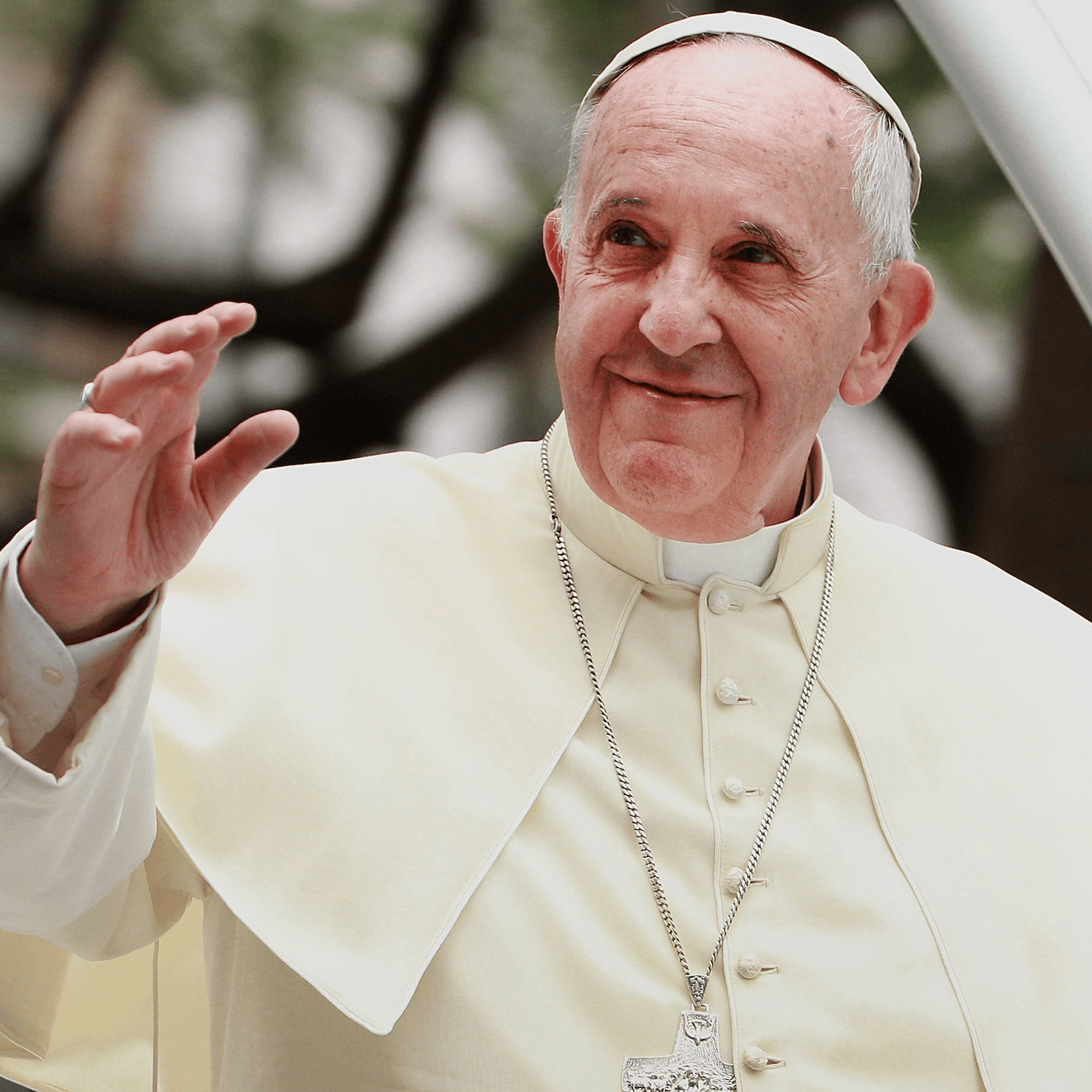
--:-- Shumita Basu: Now to the Vatican, where yesterday white smoke appeared, signaling to the world's 1.4 billion Catholics that a new spiritual leader has been chosen.
--:-- Joshua McElwee: Robert Prevost, now Pope Leo XIV, was emotional as he addressed a jubilant crowd from the Vatican balcony. La pace sia con tutti voi! He said, may peace be with you all.
--:-- Shumita Basu: Leo is the first American ever selected to be pope. But in his first words to followers yesterday, a 69-year-old Chicago native spoke in Italian and Spanish, a language he picked up while spending most of his career in Peru.
--:-- Joshua McElwee: Joshua McElwee is Reuters' Vatican correspondent, and he's had a front-row seat to this process over the past few weeks. He's not someone who a lot of people were looking at. He's only been at the Vatican for about two years. Before that, he was a missionary in Peru.
--:-- Shumita Basu: McElwee said it's an interesting moment to choose an American pope. There might have been a sentiment now that with the role America is playing on the world stage and the divisive tenor of U.S. President Donald Trump, that maybe it was the right time for an American pope to be at the helm of the Catholic Church and help it navigate and also respond to the American administration.
--:-- Joshua McElwee: President Trump called Pope Leo's selection a great honor for the United States. That comes a few days after he tweeted an AI-generated image of himself as pope, which evoked negative reactions from many religious leaders.
--:-- Shumita Basu: And it's quite possible the American president and the new American pope won't see eye to eye on many social issues. Months ago, a social media account connected with then-Cardinal Prevost criticized the Trump administration and Vice President J.D. Vance, who is a Catholic, for their hardline stance on immigration.
--:-- Joshua McElwee: Leo is generally seen to be someone who was close to the previous pope, Francis, and has made causes of social justice, especially for refugees, a personal interest.
--:-- Shumita Basu: People McElwee spoke to in Peru noted his down-to-earth manner and compassion for Venezuelan migrants. He brings with him clear preference for some of the priorities of Pope Francis, who criticized the Trump administration over its handling and deportation of migrants and on other life issues.
--:-- Joshua McElwee: And I think we can expect that in time, the new Pope, Leo XIV, will also echo Pope Francis and make some of those same criticisms.
--:-- Shumita Basu: It's not clear exactly how Pope Leo might break from his predecessor on issues like sexuality. Pope Francis famously said homosexuality is a sin but not a crime, and he allowed for the blessing of gay couples.
--:-- Joshua McElwee: As for the new pope, we know little beyond 2012 comments he made, critical of the media's positive portrayal of, quote, practices that are contrary to the gospel.
--:-- Shumita Basu: I think initially you could expect that the new pope would uphold a lot of the traditional Catholic sexual doctrine. And then we could see if on social issues he pronounces a line that might fit in more in a progressive viewpoint.
--:-- Shumita Basu: So there's still a lot of unknowns. For Chicagoans, another big unknown is Pope Leo's baseball allegiances. A rumor quickly circulated on social media that the South Chicago native was a Cubs fan.
--:-- Shumita Basu: His brother was quick to clear up the confusion on local WGN. Clear up the thing about the Cubs and White Sox. Yeah he was never ever a Cubs fan so I don't know where that came from. He was always a Sox fan.
--:-- Shumita Basu: Any day now, a spacecraft that was sent by the Soviet Union to land on Venus over 50 years ago is expected to fall down to Earth and make a crash landing somewhere.
--:-- Shumita Basu: According to ABC News, soon after it initially launched, parts of the spacecraft got trapped in Earth's orbit by mistake.
--:-- Shumita Basu: And since it was built to survive the atmosphere of Venus, which is far denser than ours, it's possible it won't fully disintegrate as it streaks down through Earth's atmosphere.
--:-- Shumita Basu: Which brings us to the next point, where could it land? And even more specifically, could it land on me or another human?
--:-- Joshua McElwee: One astronomer at Harvard told ABC News the risk of it striking a person is very low.
--:-- Shumita Basu: Another expert put it this way to CNN, 70% of the Earth is water, so chances are fairly high it'll land in the ocean.
--:-- Shumita Basu: The impending crash is once again raising attention to the problem of space junk in general.
--:-- Shumita Basu: Most of it is stuff like satellites, which, unlike what's expected to happen with the Soviet craft, commonly burn up and vaporize as they hit Earth's atmosphere.
--:-- Shumita Basu: In 2024, Bloomberg News reports there were about 1,000 satellite re-entries, roughly three per day.
--:-- Shumita Basu: And by 2035, according to an estimate from the same Harvard astrophysicist, there could be as many as up to 50 satellites re-entering the atmosphere every day.
--:-- Shumita Basu: And that takes a toll.
--:-- Eric Rosten: When you start burning up all that aluminum and copper and lithium at the top of the atmosphere, it turns out it might start to have some effects we do not want.
--:-- Shumita Basu: And that will come largely in the form of depleting the ozone layer, which is, of course, the layer of this oxygen gas ozone that blocks the sun's ultraviolet light and prevents it from harming living things on Earth.
--:-- Shumita Basu: Companies like Amazon and SpaceX have been filling up space with more and more satellites in recent years.
--:-- Shumita Basu: SpaceX plays a particularly big role. When the company first started to send satellites into orbit around six years ago, there were fewer than 2,000 functional satellites total.
--:-- Shumita Basu: Since then, SpaceX alone has sent more than 7,000. And the company has said in the past it hopes to have six times that amount in space someday.
--:-- Shumita Basu: Research into stratospheric pollution is relatively new. So far, data from the past five years shows that things like rocket fuel and particles from satellites that re-enter the atmosphere could potentially undo decades of progress repairing the ozone layer and possibly indirectly change the weather.
--:-- Shumita Basu: The scientists say this is concerning. It's not a crisis by any stretch yet.
--:-- Shumita Basu: But what it requires is asking some questions and keeping an eye on the data and trying to be proactive about testing and about whether or not this could become a real problem that we don't want to see blossom.
--:-- Shumita Basu: Scientists will get more answers soon from the European Space Agency. It plans to launch a mission in 2027 that follows a satellite final descent into the atmosphere and measure what exactly is left in its wake.
--:-- Shumita Basu: Before we let you go, a few other stories we're following.
--:-- Shumita Basu: It was a day of hirings and firings at the White House. President Trump has selected Fox News host and former prosecutor Jeanine Pirro as the interim U.S. attorney for the District of Columbia, one of the most important federal prosecutor's offices in the Justice Department.
--:-- Shumita Basu: It comes as Trump pulled the nomination of Ed Martin, who faced backlash from key Republican senators in his nomination process.
--:-- Shumita Basu: Pirro joins the ranks of other Fox News personalities who have been selected by Trump for prominent roles in his second term.
--:-- Shumita Basu: Pirro, who's known the president for decades, was an outspoken voice repeating his false claims of election fraud in 2020.
--:-- Shumita Basu: And as for firings, Cameron Hamilton, the head of FEMA, the Federal Emergency Management Agency, was fired just a day after he told members of Congress that FEMA should not be eliminated, seeming to go against the stated goals of the Trump administration.
--:-- Shumita Basu: His departure comes just three weeks before the start of the Atlantic hurricane season and as Congress considers a proposal from the Trump administration to dramatically cut FEMA's budget.
--:-- Shumita Basu: In other climate-related news, new research indicates that land beneath the 28 most populous cities in the U.S. is shrinking, impacting areas with about 34 million people.
--:-- Shumita Basu: The phenomenon, called subsistence, is normally a big concern with coastal cities, but many of the cities highlighted in the research are further inland.
--:-- Shumita Basu: Reasons for the sinking vary from region to region, but Houston is the city sinking the fastest, as Texas pumps a lot of groundwater, oil, and gas.
--:-- Shumita Basu: And finally, this Sunday is Mother's Day.
--:-- Shumita Basu: I've got really high expectations for my one-year-old. He should be able to cook me breakfast by now, right?
--:-- Shumita Basu: Well, there's this really sweet story out of Fort Worth, Texas, where a mother will actually share the graduation stage with her son at Texas Christian University.
--:-- Shumita Basu: Grandy and Kyle Fields will both get diplomas over the weekend.
--:-- Shumita Basu: Carol reflected on the experience in a promotional video for the school. One of my favorite memories from it is being able to sit in the living room and knock out our homework together.
--:-- Shumita Basu: I mean, there was plenty of nights where up till 10, 11 o'clock, she's reading or I'm writing an essay, that kind of thing. Definitely brought us closer.
--:-- Shumita Basu: Whatever you end up doing on Mother's Day, we hope it's a special day and doesn't involve any homework.
--:-- Shumita Basu: You can find all these stories and more in the Apple News app.
--:-- Shumita Basu: And if you're already listening in the news app right now, our latest episode of In Conversation is queued up for you next.
--:-- Shumita Basu: This week, we're bringing you my interview with a recent Pulitzer Prize winner.
--:-- Shumita Basu: Madeline Barron, the host of the podcast In the Dark, and her team won for their massive investigation into the massacre of Iraqi civilians in Haditha in 2005.
--:-- Shumita Basu: The podcast really does both of these things. It looks very closely at the actual killings, what happened that day, who did what, what are the contradictions, what are the through lines, what can we determine happened that day?
--:-- Shumita Basu: And then also, why was no one punished for this?
--:-- Shumita Basu: If you're listening in the podcast app, you can find that episode by searching for Apple News in Conversation.
--:-- Shumita Basu: Enjoy your weekend, and I'll be back with the news on Monday.