--:-- Shumita Basu: Good morning. It's Friday, March 28th. I'm Shumita Basu. This is Apple News Today. On today's show, senior administration officials have been ordered to preserve the signal group chat involving military strikes on Yemen. Trump pulls his nominee for United Nations ambassador, and major cuts are coming to the Department of Health and Human Services.
--:-- [Discussion continues with a brief pause before the host begins to speak again]
--:-- Shumita Basu: Let's start with the Signal chat. It's been another busy week in Washington as the administration deals with the fallout from mistakenly inviting Atlantic journalist and editor-in-chief Jeffrey Goldberg into a Signal group chat in which they explicitly debated and laid out detailed plans to attack Houthi rebels in Yemen, an attack which killed dozens of people, including children.
--:-- [The host pauses briefly before continuing]
--:-- Shumita Basu: The story prompted questions in congressional hearings, denials and mixed messaging from the administration, and a bipartisan request for an inspector general to investigate the matter. On Thursday, a judge ordered administration officials to preserve the messages on that chat.
--:-- [The host pauses briefly before continuing]
--:-- Shumita Basu: This all comes as the administration continues its immigration crackdown, and the president suggests fundamentally changing the rules around voting. To help us take stock of a flurry of news stories this week, we called up Politico's White House bureau chief, Dasha Burns.
--:-- Dasha Burns: Thanks for having me.
--:-- Shumita Basu: Let's begin with the fallout from this Signal chat. It does seem like the administration has been scrambling in their response.
--:-- Dasha Burns: Yeah, yeah. I mean, Mike Waltz, the national security advisor, has taken responsibility for the mess up. Responsibility-ish, I would say.
--:-- Shumita Basu: Yeah, yeah. I mean, he did say, I built the chat. And he also said that we will look into the matter further, right?
--:-- Dasha Burns: Doesn't know how the number got into his phone or how the number got into the group chat. Right. Right.
--:-- Shumita Basu: Meanwhile, we're hearing Defense Secretary Pete Hegseth and others try to deflect blame onto the journalist here, Goldberg, attacking his character, attacking his credentials.
--:-- Dasha Burns: And then you have President Trump saying the whole thing is being overblown. But, I mean, you and I and everyone can read the messages that were exchanged with our own eyes. We can clearly see that there was extremely sensitive material involved.
--:-- Shumita Basu: Behind the scenes, are you hearing more concern from people close to the administration than they're letting on?
--:-- Dasha Burns: Yeah, absolutely. I mean, look, the typical Trump playbook is do not apologize, deny and go on Fox News. Right. And that's very much what Mike Waltz tried to do. And it's not working as well this time around because this time there are these receipts that the entire world, including senators and members of the House and voters themselves, can take a look and can read and can decide for themselves.
--:-- Shumita Basu: So behind the scenes, there is a lot of tension and frustration. The frustration with Wallace has been the reticence to accept that he made the mistake of adding the journalist. He has said on Fox News that he's not sure how it happened. He never knew Goldberg. He never talked to him.
--:-- Dasha Burns: And what I've been hearing from sources in the White House is that that answer actually just opens them up to further investigation.
--:-- Shumita Basu: The president is really upset about this. He feels like it was embarrassing. It was an unforced error. And the question now is, is someone going to take the blame for this and actually get canned? And right now the top contender is Mike Waltz.
--:-- Dasha Burns: But there's a lot of finger pointing behind the scenes going on right now.
--:-- Shumita Basu: You know, when Hegseth was an on-air analyst at Fox, he was very vocal in criticizing Hillary Clinton for using a private email server while she was secretary of state.
--:-- Dasha Burns: Any security professional, military, government or otherwise, would be fired on the spot for this type of conduct and criminally prosecuted for being so reckless with this kind of information.
--:-- Shumita Basu: The fact that she wouldn't be held accountable for this, I think, blows the mind of anyone who's held our nation's secrets dear. And many other people in the Signal Chat group, including Tulsi Gabbard, Marco Rubio and others, have been on the record saying that anyone who breaches security protocol should face harsh consequences.
--:-- Dasha Burns: So will we see consequences? It's a great question. I mean, the point that you're making is something that I've heard from Republicans behind the scenes saying this is why this is so bad. We made such a huge deal out of the Hillary Clinton email scandal. It's likely why she lost the election, at least in part.
--:-- Shumita Basu: And here we are trying to defend something that is pretty difficult to defend at this point.
--:-- Dasha Burns: I think they're trying to take the cue from President Trump, who's out there saying this is no big deal, nothing to see here. But again, we see, right? We can see with our own eyes and it's harming their credibility politically.
--:-- Shumita Basu: This is going to be the big test because the thing that I'm hearing is this was supposed to be the administration's 47 versus 45, where there isn't the palace intrigue, there isn't the drama and there aren't people being fired left, right and center.
--:-- Dasha Burns: And so they worry that it would set a bad precedent. But there is a lot of talk from some of the serious people in the room, of which there are people like Susie Wiles, that it might get to the point where real consequences need to be seen.
--:-- Shumita Basu: You know, congressional Republicans have also been so far extremely loyal to Trump in these first few months of his administration. Where are they at on this?
--:-- Dasha Burns: Well, we just saw this bipartisan request to the DOD IG to investigate the signal chat. That is a really big deal. Seeing senators and members of the House that are very much in MAGA world start to defect a little bit. Those are major fractures when you look at the context.
--:-- Shumita Basu: Let's shift gears a little bit and move on to another big, big story from this week. More students have been detained by ICE.
--:-- Dasha Burns: A young woman from Turkey who attends Tufts University and a young man at the University of Alabama. There is a video of the student from Tufts literally being pulled off the street. It's kind of a shocking video to see, actually.
--:-- Shumita Basu: There are masked officers, people who appear to be officers who approach her and then lead her away. Homeland Security is saying she's being accused of supporting Hamas, which her lawyer denies.
--:-- Dasha Burns: Secretary of State Marco Rubio yesterday said more than 300 student visas have been revoked by the department and they're looking for more.
--:-- Shumita Basu: What is the administration strategy here in targeting foreign people here legally and what's the intended effect?
--:-- Dasha Burns: So there are a number of goals for this administration that sort of combine into one here. Number one, retribution against liberal institutions. Universities have been criticized by Republicans for quite a long time.
--:-- Shumita Basu: And then on the campaign trail and during the protests over the Israel-Hamas conflict, that is something that Trump really latched onto and exploited in this political way that he's actually quite good at and riling up his base.
--:-- Dasha Burns: And now this is a way that he can come down hard on those institutions. And that's something that people in his world and in his base are very much in favor of.
--:-- Shumita Basu: And number two, targeting people who weren't born in the United States, the numbers of deportations are not as high as they want them to be. This mass deportation operation hasn't really ramped up yet.
--:-- Dasha Burns: And so this is a way that they can have the optics of cracking down on immigration without having the big infrastructure that they would need to build, which they are working on, but it's just not going as quickly as they would like.
--:-- Shumita Basu: Yeah. And there's certainly there's that aspect of it cracking down on foreign-born people, students, people attending these universities. There's also the lack of due process part, which I think most people would point to as the most concerning aspect of all these.
--:-- Dasha Burns: Yeah. And in this country, we have laws, even for people who came here illegally, And those laws aren't being followed right now, which was why you have so many of these challenges in the courts.
--:-- Shumita Basu: The problem is that doesn't move very quickly. And this is part of the strategy of this administration is to flood the zone and do all of this so rapidly that the guardrails that would normally be in place just can't keep up.
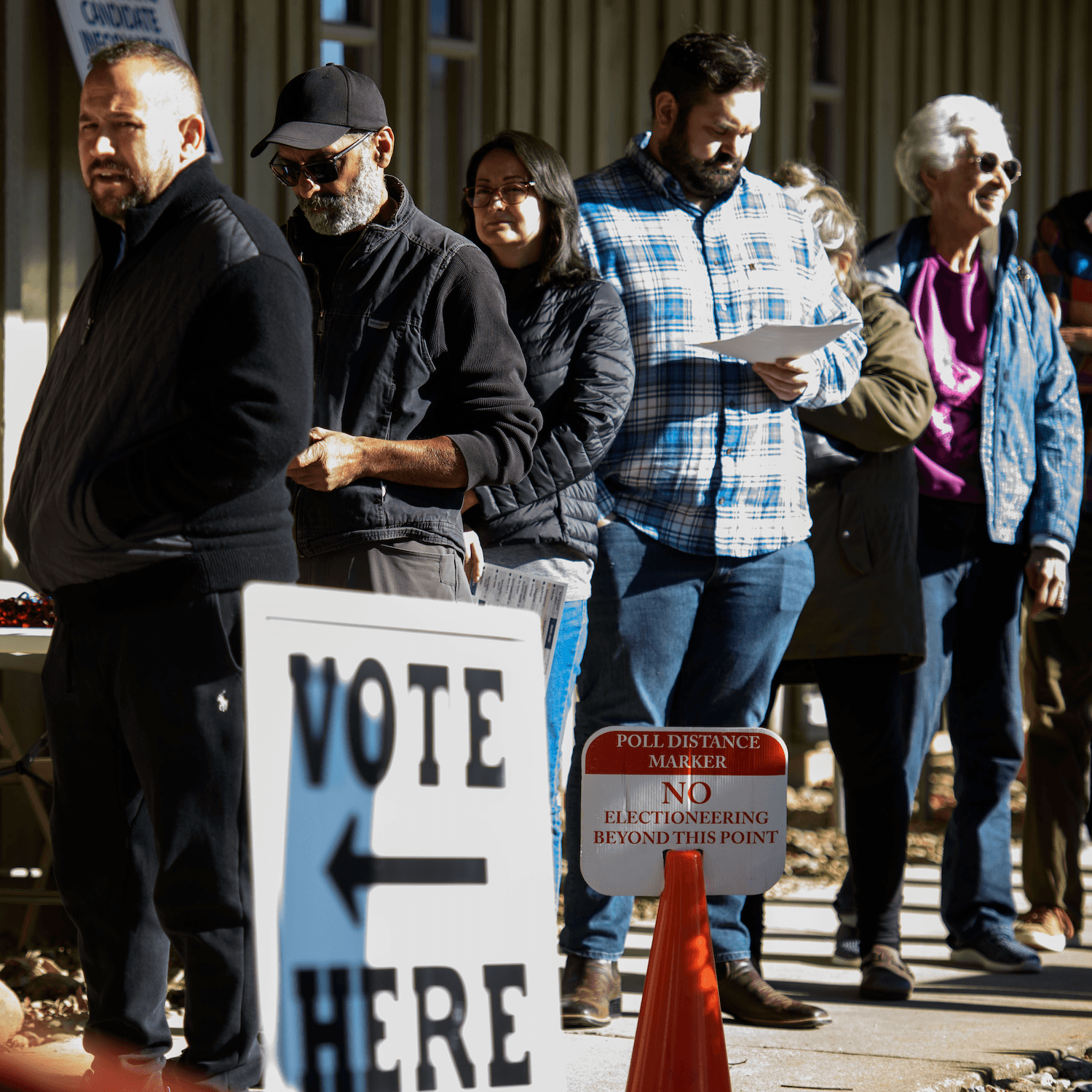
--:-- Dasha Burns: Well, one last thing, before I let you go, I do want to take a moment to talk about the story that hasn't gotten quite as much attention this week, which is President Trump signed an executive order that seeks to mandate proof of citizenship for voter registration in federal elections.
--:-- Shumita Basu: What should we know about this effort and its legality?
--:-- Dasha Burns: Look, there will be plenty of challenges to this, but it's unclear how much of this will actually make it into any sort of law. I mean, I think you're going to need some help from Congress there, too, if he really wants to execute this.
--:-- Shumita Basu: But this goes back to those campaign trail promises to his base that he is going to prevent elections from being stolen, even though we have no proof of elections being stolen.
--:-- Dasha Burns: You know, one thing I was trying to parse when looking at this executive order, most people register to vote with their state. And it seems like this order impacts federal forms to register to vote. I'm trying to understand how much impact would this executive order actually have if it's allowed to stand?
--:-- Shumita Basu: So this is a trend among the executive orders from this administration. Not all of them have actual teeth, but that doesn't mean they're not effective in some way. It is often a message and a signal And then others at the state level in Congress take that and run with it in their own way so it doesn't have to have the policy teeth necessarily to have a big impact.
--:-- Dasha Burns: Dasha, thank you so much for joining us.
--:-- Shumita Basu: Thanks for having me.
--:-- Shumita Basu: Before we let you go, a few other stories we're following. President Trump on Thursday pulled the nomination of Congresswoman Elise Stefanik for ambassador to the United Nations. Stefanik was expected to have a relatively easy path to confirmation, but because Republicans have such a razor-thin majority in the House, Trump said on social media that he didn't want to take a chance on anyone else running for her seat.
--:-- [The host pauses briefly before continuing]
--:-- Shumita Basu: Meanwhile, two special House elections in Florida are set for Tuesday, one to replace former Congressman Matt Gaetz and another where Governor Ron DeSantis said he expects the Trump-backed candidate to, quote, underperform. That's in a district that Trump won in November by 30 points.
--:-- Shumita Basu: Mass job cuts are coming to the Department of Health and Human Services. Health Secretary Robert F. Kennedy Jr. announced 10,000 staffers will be laid off. Combined with previous buyouts and other departures, about one in four jobs at federal health agencies will be eliminated.
--:-- Shumita Basu: The cuts will hit the FDA and the CDC hardest. They're each expected to lose about 20 percent of their staff. Kennedy said this is a realignment under new priorities, that he'll be doing more with less, and acknowledged it would be, quote, a painful period for HHS.
--:-- Shumita Basu: Democrats came out strongly against the move, saying the cuts would decimate agencies protecting people's health and safety.
--:-- Shumita Basu: And finally, archaeologists say a set of footprints confirmed to be the oldest ever found in North America are even older than previously thought. Found in White Sands National Park in New Mexico, the prints are roughly 23,000 years old, 10,000 years before it was believed humans stepped foot on the continent.
--:-- Shumita Basu: Scientists say the footprints and other evidence give us a glimpse of our ancestors, not only hunting and surviving, but also playing, running, a mix of age groups together. These researchers hope more discoveries will lead to the telling of a larger story of what life was like for these early humans in North America.
--:-- Shumita Basu: You can find all these stories and more in the Apple News app. And if you're already listening in the News app right now, stick around for our weekly interview show, In Conversation.
--:-- Shumita Basu: I talked to Zoe Schiffer and Leah Figer from Wired about their reporting on what they describe as Elon Musk and Doge's digital coup of the federal government.
--:-- Shumita Basu: But they had the keys to the kingdom and he had these lieutenants ready to go in these kind of nondescript government agencies and then fanned out from there.
--:-- Shumita Basu: They went into these first, they figured out the systems, they put their people in place. And we're talking, you know, as we reported, a cohort of very young, not experienced technologists and engineers.
--:-- Shumita Basu: And we've just never seen anything like this before.
--:-- Shumita Basu: That episode is queued up to play for you next. Enjoy the weekend, and I'll be back with the news on Monday.