--:-- Shamita Basu: Good morning. It's Tuesday, December 19th. I'm Shamita Basu. This is Apple News Today.
--:-- Shamita Basu: On today's show, how Israel's military is using AI to target Gaza. The Tennessee woman who was denied an abortion and is now running for office. And how kids are making the case for holiday gifts using corporate slide decks. But first, let's take a quick look at some major stories in the news.
--:-- Shamita Basu: More than 125 people are dead after a 6.2 magnitude earthquake hit northwest China. It's the country's deadliest quake in about a decade. There's currently a brutal cold wave there, meaning rescue efforts are harder because of sub-freezing conditions. Survivors trapped under rubble can typically live for three days, but the dangerous cold is expected to make the rescue window much shorter.
--:-- Shamita Basu: In Texas, an immigration law just signed by Governor Greg Abbott gives local law enforcement the power to arrest immigrants entering illegally from Mexico. Legal critics say the law is unconstitutional because immigration enforcement is the federal government's territory. Advocates for migrants say the law will lead to racial profiling and harassment. They plan to sue. Abbott says Texas needs the law because the Biden administration isn't doing enough to secure the border.
--:-- Shamita Basu: In other news, Marvel is dropping actor Jonathan Majors after he was found guilty of misdemeanor counts of assault and harassment. He was on trial for attacking his ex-girlfriend in New York in March. Majors was slated to appear in some of Marvel's upcoming superhero movies. He could face up to a year in prison.
--:-- Shamita Basu: And there's a massive volcano erupting in Iceland. Scientists are watching this after weeks of seismic activity. The BBC spoke to Halgrimur Indri Dawson from Icelandic broadcaster RUV.
--:-- Halgrimur Indri Dawson: This is the fourth eruption in the Reykjanes Peninsula in almost three years. And this is by far the strongest one. Early indications are that the eruption isn't expected to destroy any homes, and there no sign that the smoke will disrupt international flights.
--:-- Shamita Basu: You can see some striking images of the eruption on the Apple News app.
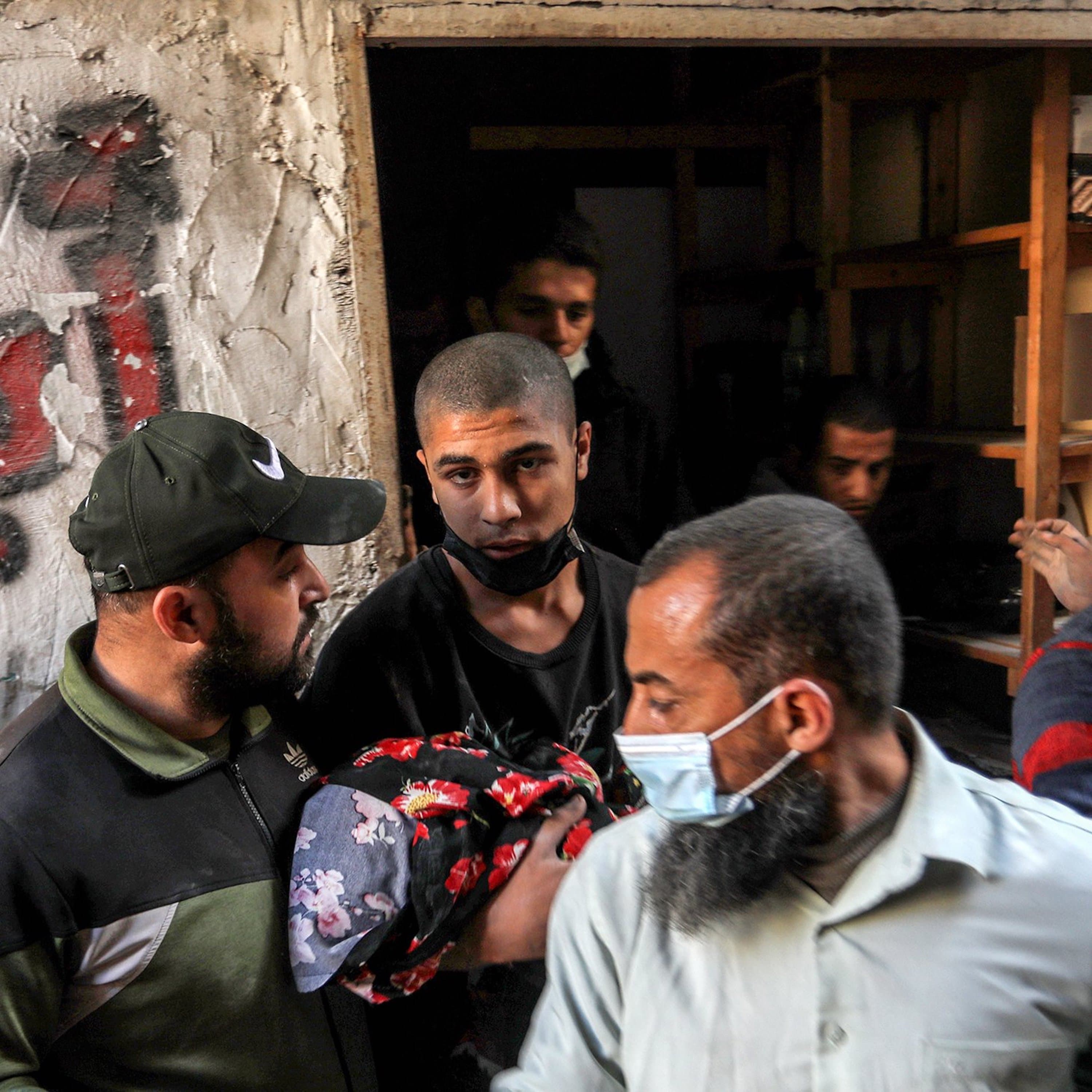
--:-- Shamita Basu: We are entering a new phase of artificial intelligence and warfare. Since the Hamas attacks in Israel on October 7th, the Israeli military has hit tens of thousands of targets in Gaza. Close to 20,000 Palestinians have died, according to local health authorities. Israel's military says it's using artificial intelligence to help choose some targets. But critics say the system is unproven and potentially dangerous to civilians.
--:-- Heidi Kleff: You're ultimately looking at imprecise and biased target automation. That's really not far from indiscriminate targeting.
--:-- Shamita Basu: Israel's AI system is called the gospel, and the idea is that it can search through massive troves of data to help identify enemy targets 50 times faster and with more accuracy than human intelligence teams. It's not clear what information the system uses exactly, but one expert says it could include cell phone messages, drone footage, and satellite imagery.
--:-- Heidi Kleff: But that information can be misinterpreted or misleading for a human or an AI system. Beyond the technical questions, there are ethical ones. I worry that an increased use of this technology will complicate questions of ultimate responsibility. It then becomes impossible to trace decisions to specific design points that can hold any individuals or military accountable for an AI's actions.
--:-- Shamita Basu: Israel's military has said in the past that the gospel AI system makes recommendations, which are then reviewed by humans before strikes are launched.
--:-- Shamita Basu: Debates over the promise and risk of AI are happening in many areas, but when it comes to its use in war, the stakes are especially high. That's why experts are watching the use of AI in Gaza and in other conflicts, and urging military leaders to use the technology carefully.
--:-- Shamita Basu: A warning that this next story deals with pregnancy loss. Tennessee House candidate Allie Phillips has a backstory like a lot of first candidates. She was angry about an issue and she turning that passion into a run for office.
--:-- Allie Phillips: What stands out about me is that the issue is abortion access, and that I'm been using TikTok to tell my very personal story of how the state of Tennessee blocked me from getting the procedure even when I faced a dangerous complication.
--:-- Shamita Basu: In one post, she describes how she got the news that her fetus had fatal health issues that could put Philip's life at risk as well. So when I asked what the next steps were, she said, if you guys so decide, you can terminate the pregnancy. Because I live in Tennessee, I can't do that here, so I'm going to have to travel out of state. Or, she said, if we decided to continue with the pregnancy, we risk having a stillborn or giving birth to her for her to just die shortly after delivery.
--:-- Allie Phillips: So she traveled to New York for the procedure. There, Phillips learned that her baby, who she had named Miley, had died, and that she was at risk of sepsis. She continued to share the aftermath with her followers.
--:-- Shamita Basu: Six months after going public with her abortion story, Phillips announced her campaign on TikTok.
--:-- Allie Phillips: We are controlled by these legislators who are pro-life and think a unborn fetus has more rights than a living, breathing person. How do I change that? Well, I decided that I'm going to run for my house district.
--:-- Shamita Basu: Elle magazine recently wrote about Phillips and how abortion bans are motivating women across the country to run for office. Phillips is among the first people in the post-Roe era to announce her candidacy after being denied an abortion. Another woman with a similar experience is planning to run for office in Louisiana.
--:-- Shamita Basu: Some candidates are using TikTok to share their deeply personal and emotional stories. to fundraise for their campaigns, and to reach voters in a whole new way.
--:-- Shamita Basu: When you were a kid you might have written out your holiday gift wish list on paper hopefully with good penmanship and remembering to say please. But these days it not so simple. Kids are taking a cue from corporate America presenting their wish list as a slide deck.
--:-- Shamita Basu: Just listen to little Hayden in this social media post. She's standing in a pink tracksuit, gesturing to the slides behind her on the TV screen.
--:-- Hayden: Presenting Hayden's Christmas list. Did you say to a budget?
--:-- Shamita Basu: The Wall Street Journal reports on this trend of kids creating decks to persuade their parents to buy them presents.
--:-- Shamita Basu: Jenna Bush Hager recently talked about this on NBC. Her 10-year-old daughter put together a deck when she wanted a kid-friendly debit card. She did a PowerPoint presentation on why she was responsible enough now and what chores she would do and how she wanted to learn how to save.
--:-- Shamita Basu: My gosh. And how she wants to buy presents for her siblings at Christmas on her own. She said the kid made some good points and it worked.
--:-- Shamita Basu: The journal also tells the story of 11-year-old Ben, who prepared a nine-page deck, telling his family about NBA jerseys and Xbox games that he wants. 12-year-old Abby put together 29 slides asking for things like velour track pants and skincare products.
--:-- Shamita Basu: Now, this trend is not news to companies that make slide deck software. Canva has holiday wishlist templates. It says they were used more than 3 million times in the month leading up to Black Friday.
--:-- Shamita Basu: Not all parents are on board with mixing holiday fun with corporate slide decks. But some parents told the journal they see this as harmless, a tech twist on the old-fashioned wishlist. Maybe even good practice for future negotiations and presentations, even if the kids don't get everything they want.
--:-- Shamita Basu: You can find all these stories and more in the Apple News app. And if you're already listening in the News app right now, we've got a narrated article coming up next from Bloomberg Businessweek. It looks at the problem of online manipulation of real people's photos to make fake nudes. Law enforcement is way behind the deepfake technology here, so a group of young women who were victimized decided to fight back in their own way.
--:-- Shamita Basu: If you're listening in the podcast app, follow Apple News Plus Narrated to find that story. And I'll be back with the news tomorrow.