--:-- Shamita Basu: Hey there, it's Shamita. I've got a quick request for you. If Apple News Today is an essential part of your morning routine, follow the show in Apple Podcasts. And if you have another 30 seconds, leave us a rating and a review too. It helps other people find our show and it helps us know what you like about it. Thanks.
--:-- Shamita Basu: Good morning. It's Thursday, September 18th. I'm Shamita Basu. This is Apple News Today. On today's show, the CDC director fired by RFK Jr. reveals her side of the story, how Trump risks being sidelined in the Israel ceasefire effort, and why ABC pulled Jimmy Kimmel off the air.
--:-- Shamita Basu: But first, to the Federal Reserve. For the first time this year, the central bank cut its benchmark interest rate by a quarter percentage point on Wednesday amid a slowing job market.
--:-- Fed Chair Jerome Powell: My colleagues and I remain squarely focused on achieving our dual mandate goals of maximum employment and stable prices for the benefit of the American people.
--:-- Shamita Basu: The Fed also signaled there could be more cuts on the way. Yesterday's rate cut came as the economy is on shaky ground. Job growth has slowed since April, with the economy adding on average just 29,000 jobs in the past three months, a number that was much higher as recently as May.
--:-- Shamita Basu: And while the unemployment rate isn't considered high, those out of work are spending longer periods unemployed, something we talked about earlier this week.
--:-- Anne Safir: If you lower the borrowing rate, it makes it easier for companies to borrow, easier for them to expand, makes them more willing to hire, take a risk.
--:-- Shamita Basu: So the idea is if you keep it restrictive, then the labor market is eventually going to pretty much collapse.
--:-- Fed Chair Jerome Powell: Even so, that doesn't mean this week's rate cut is going to solve the economy's problems right away. Fed Chair Powell said a quarter point is not going to make a difference one way or the other to the economy.
--:-- Shamita Basu: What's important here is the signal that rates are going to come down further later this year and into next.
--:-- Anne Safir: As for other parts of the economy, your credit card interest could see a slight dip as those interest rates track the Fed. Some could drop by as much as half a percent by next year, according to analysts.
--:-- Shamita Basu: And fixed rate mortgages, which are likely to not be affected by Wednesday's decision since their tie to Treasury bond yields could see some downward pressure if additional rate cuts happen.
--:-- Anne Safir: Wednesday's cut was largely expected, but it was not unanimous. The lone dissenting vote came from Stephen Myron, President Trump's newly appointed governor on the Fed's board.
--:-- Shamita Basu: Myron voted for a half-percentage point cut, larger than what passed. Myron was sworn in just before this week's meetings began. He is a Trump loyalist and chief of the White House Council of Economic Advisors, a job he's taking temporary leave from while serving on the Fed board.
--:-- Anne Safir: That's unprecedented in the history of the U.S. Central Bank.
--:-- Shamita Basu: Safir says most analysts don't think partisan politics are influencing the Fed, but the idea has certainly been planted.
--:-- Anne Safir: The political nature of it, I actually do feel, is new, at least in the past 15 years. I don't think that there has been quite this much questioning about the potential that the Fed could become partisan in the way that it makes decisions.
--:-- Shamita Basu: I don't think that what the Fed is doing I don't think most analysts think that the Fed is anywhere near doing that But I think there definitely a conversation about that that we really haven had in quite some time
--:-- Anne Safir: The Fed next meeting where another cut could happen is in October
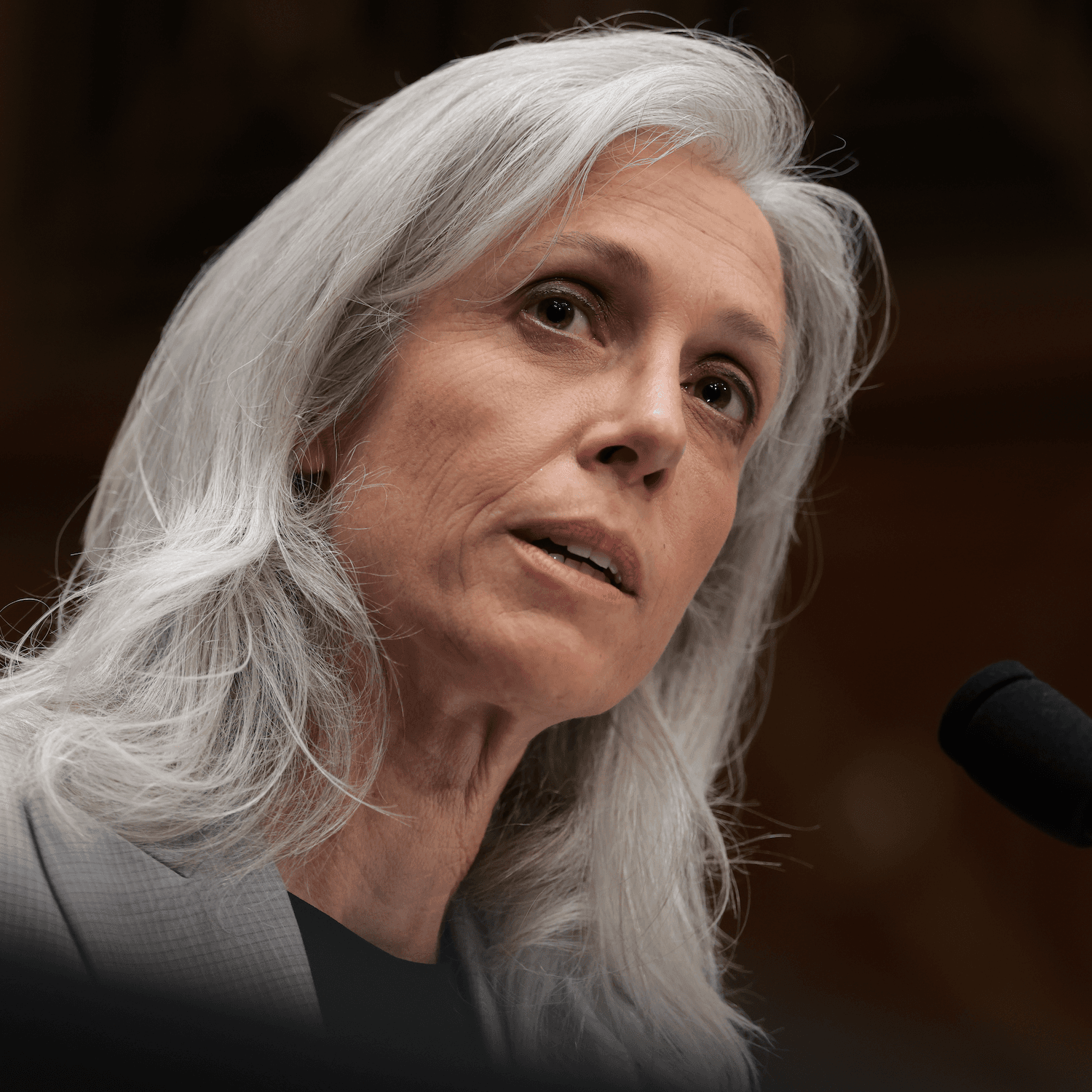
--:-- Shamita Basu: Meanwhile, on Capitol Hill, former CDC director Susan Menares testified to a Senate panel that Robert F. Kennedy Jr., the Health and Human Services secretary, told her just days before she was fired that the childhood vaccination schedule would change.
--:-- Susan Menares: He directed me to commit in advance to approving every ACIP recommendation, regardless of the scientific evidence. He also directed me to dismiss career officials responsible for vaccine policy without cause.
--:-- Shamita Basu: He said if I was unwilling to do both, I should resign. I responded that I could not pre-approve recommendations without reviewing the evidence, and I had no basis to fire scientific experts.
--:-- Susan Menares: Menares, whose tenure lasted just 29 days, testified that Kennedy had told her that CDC employees were, quote, killing children, that he had spoken with President Trump, quote, every day about changing the vaccine schedule, and that she needed to be on board with it.
--:-- Shamita Basu: Menares concluded with a warning to the committee. If vaccine protections are weakened, preventable diseases will return.
--:-- Susan Menares: I was fired for holding the line on scientific integrity, but that line does not disappear with me. It now runs through every parent deciding whether to vaccinate a child, every physician counseling a patient, and every American who demands accountability.
--:-- Shamita Basu: Kennedy, in a hearing earlier this month, disputed Menares' characterization of the events leading up to her firing.
--:-- Deborah Howery: I first learned that the secretary had changed our CDC COVID vaccine guidance on an ex-social media post. CDC scientists have still not seen the scientific data or justification for this change. That is not gold standard science.
--:-- Shamita Basu: The CDC's vaccine advisory panel is now made up of Kennedy appointees, some of whom have advocated for anti-vaccine positions in the past.
--:-- Shamita Basu: Today, that committee is due to meet. One of the topics they're expected to discuss is whether to recommend delaying hepatitis B vaccines that are typically administered to newborns and instead recommend children get them at the age of four, which would be a shift in the CDC policy of the last 30-plus years.
--:-- Shamita Basu: Over that span of time, the potentially fatal disease has been effectively eradicated among children in the U.S. Those who've argued for the schedule change say that mothers who are not infected could delay immunizing their newborns.
--:-- Shamita Basu: Republican Senator Bill Cassidy, a physician who leads the Senate Health Committee, talked about the importance of infants receiving hepatitis B vaccines during the hearing yesterday, noting that changing the recommendation could also impact coverage of the vaccines by insurance companies.
--:-- Bill Cassidy: Now, fewer than 20 babies per year get hepatitis B from their mother. That is an accomplishment to make America healthy again. And we should stand up and salute the people that made that decision. Because there's people who would otherwise be dead if those mothers were not given that option to have their child vaccinated.
--:-- Shamita Basu: Cassidy was one of the key votes to confirm Kennedy to his position, despite expressing reservations about Kennedy's record of anti-vaccine stances.
--:-- Shamita Basu: The vaccine panel will meet over the course of two days but some states are waiting for national guidance and are pushing ahead with making their own policies California Oregon Washington and Hawaii joined together to publish separate recommendations yesterday which mirror the major American health institutions in recommending for example COVID shots for pregnant women and young children between six months and two years old
--:-- Shamita Basu: Let's turn now to Gaza and Israel's ground assault to take over Gaza City. Nearly half of Gaza's population, around one million Palestinians, live in this area and are now trying to decide whether they should flee or stay.
--:-- Shamita Basu: The risks of staying are high. Between Tuesday, when the ground operation was formally announced, and Wednesday afternoon, Gaza health officials say nearly 100 people have been killed, nearly 400 wounded, and an unknown number of people are trapped under rubble.
--:-- Shamita Basu: And according to satellite data, Israel has destroyed 78% of the buildings in Gaza City in recent weeks, either completely or partially.
--:-- Shamita Basu: But fleeing is not simple. Poverty rates in Gaza are so high that many Palestinians don't have the means to leave. Many people aren't healthy enough. A UN-backed report found Gaza City and the surrounding area are experiencing famine, a finding that Israel has contested.
--:-- Shamita Basu: And many Palestinians fear permanent displacement. According to Israel's military, only about 40 percent of Gaza's city population has left so far, and the military says it plans to open additional evacuation routes.
--:-- Shamita Basu: Efforts to end the war through diplomacy appear to have stalled for now. Speaking from Israel alongside Prime Minister Benjamin Netanyahu on Monday, Secretary of State Marco Rubio struck a decidedly pessimistic tone about the prospect of a ceasefire.
--:-- Marco Rubio: I think we have to be prepared for the fact that savage, you know, terrorists don't normally agree to things like that. But we'll continue to pursue that route. It's the ideal outcome. But it may require, ultimately, a concise military operation to eliminate them.
--:-- Shamita Basu: Alex Ward, a national security reporter at The Wall Street Journal, told us Netanyahu's decision to continue this operation in Gaza City indicates he would rather use military force than diplomacy to reach his goal of eliminating Hamas.
--:-- Alex Ward: That's despite the fact that polls in Israel have found support for ending the war through a hostage exchange. And Israeli officials are concerned that hostages could be killed in the assault.
--:-- Shamita Basu: Plus, they say troops are now exhausted. So we are now in this weird moment where Netanyahu is overseeing an unpopular war, an unpopular policy of military pressure against Hamas, but without really any restraint from the U.S.
--:-- Alex Ward: Ward says President Trump could apply more pressure on Netanyahu, but is largely letting the Israeli leader chart his own path.
--:-- Alex Ward: Trump, who's made a whole political persona and career off of I'm the tough guy, I maintain leverage in deals, has done nothing to gain leverage and, if anything, has willingly sort of given it away.
--:-- Shamita Basu: He is seemingly mad at Israel for not making a deal, but also is unwilling to defy Israel or place pressure on them because he doesn't want to rupture the relationship with Israel at large and Bibi in particular.
--:-- Shamita Basu: One way the United States could increase pressure on Israel is through weapons. The U.S. is the largest supplier of weapons to Israel, and a number of European allies have instituted partial or complete arms embargoes since the start of the war.
--:-- Shamita Basu: But there's no indication that the U administration is considering this In fact it warned other countries against implementing restrictions European countries are continuing to ramp up pressure though Yesterday the EU unveiled a plan to strip Israel of its privileged access to its market and sanction some ministers.
--:-- Shamita Basu: And at next week's UN General Assembly, several countries, including the UK, Canada, France and Australia, are likely to recognize Palestine as an independent state. A symbolic move, but still a major departure from their conventional foreign policy.
--:-- Shamita Basu: Acknowledging the growing criticism, Netanyahu said this week he believes that Israel could face a period of isolation and admitted the country may not be able to rely on foreign arms sales forever.
--:-- Shamita Basu: Before we let you go, a few other stories we're following. ABC has suspended Jimmy Kimmel Live indefinitely after remarks the late night host made this week about the death of Charlie Kirk.
--:-- Jimmy Kimmel: We hit some new lows over the weekend with the MAGA gang desperately trying to characterize this kid who murdered Charlie Kirk as anything other than one of them and doing everything they can to score political points from it.
--:-- Shamita Basu: The suspension came after Nextar, which owns 28 ABC affiliates, said it would take the show off the air. Hours before the network's decision, FCC Chair Brendan Carr had suggested he would take action against ABC affiliate stations for Kimmel's remarks.
--:-- Brendan Carr: After the announcement, Carr thanked Nextstar and said he hoped that other broadcasters follow their lead.
--:-- Shamita Basu: In other news, Jerry Greenfield, the co-founder and co-namesake of ice cream brand Ben & Jerry's, says he's quitting the company over a dispute with parent company Unilever.
--:-- Jerry Greenfield: Greenfield says the company left him, quote, torn apart and muzzled, and that Ben & Jerry's was silenced from openly supporting social causes like voting rights and LGBTQ rights.
--:-- Shamita Basu: Ben & Jerry's was founded in Vermont in 1978 and was acquired by Unilever in 2000.
--:-- Shamita Basu: In a statement to the AP, Magnum, Unilever's spinoff ice cream division, said they would be forever grateful to Greenfield, but that the company did not align with his viewpoint.
--:-- Shamita Basu: And finally, a debate is simmering over former NFL quarterback Tom Brady. You might have noticed him in the Las Vegas Raiders coaching booth, which he holds a minority stake in, as they took on the Los Angeles Chargers on Monday.
--:-- Shamita Basu: But Brady is also Fox Sports' lead NFL analyst, and that means that as he's sitting with the Raiders, he's wearing a headset, which allows him to hear both coaches.
--:-- Shamita Basu: And in his Fox role, he gets unique access to other teams' prep. It's reignited concerns of a conflict of interest.
--:-- Shamita Basu: And the Post reports that a number of teams have expressed reservations about Brady juggling both roles, especially after restrictions on his access have been recently relaxed.
--:-- Shamita Basu: Raiders head coach Pete Carroll said Brady approached the role with professionalism, but in a league of paranoia, as the Post calls it, that's unlikely to satisfy everyone.
--:-- Shamita Basu: You can find all these stories and more in the Apple News app. And if you're already listening in the News app right now, we've got a narrated article coming up next. Wikipedia is one of the world's most popular websites, but it's under attack. The Verge looks into how the world's largest encyclopedia has been navigating recent criticism in an online world dominated by political polarization.
--:-- Shamita Basu: If you're listening in the podcast app, follow Apple News Plus Narrated to find that story.
--:-- Shamita Basu: And I'll be back with the news tomorrow.