--:-- Mark Garrison: Good morning. It's Wednesday, June 15th. I'm Mark Garrison, in for Shamita Basu. This is Apple News Today. Each morning, hear about some of the most fascinating stories in the news, and how the world's best journalists are covering them.
--:-- Mark Garrison: There were primary elections in several key states Tuesday. In South Carolina, Tom Rice is projected to lose. He was the first of 10 House Republicans to vote to impeach Trump. But Nancy Mace won her primary. She refused to back Trump's false election claims.
--:-- Mark Garrison: In Nevada, Republican voters backed many Trump loyalists, including the man hoping to become the state's top election official. And Myra Flores won her special election in South Texas, flipping that House seat red. You can find more results and analysis on the Apple News app.
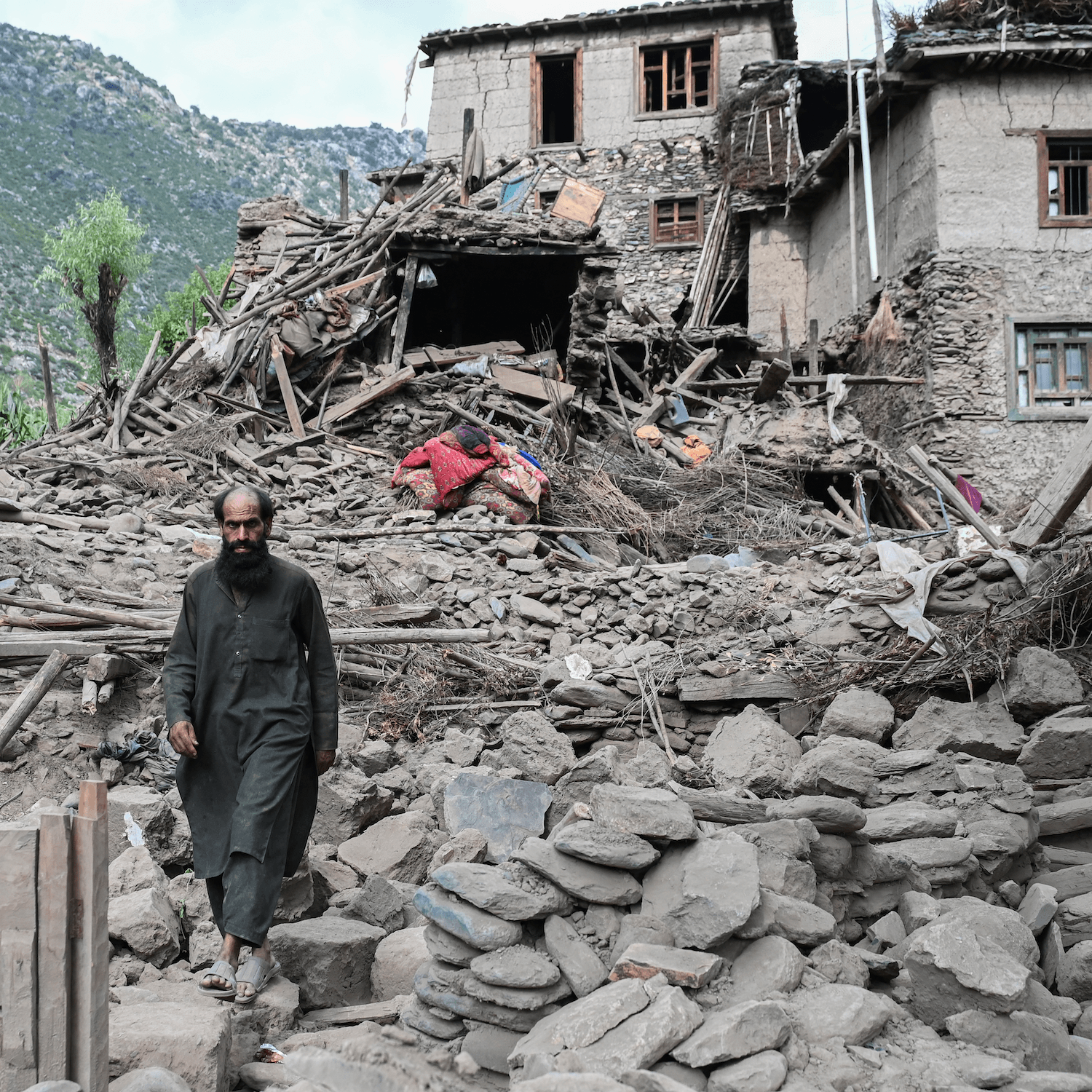
--:-- Mark Garrison: Intensifying climate disasters and Russia's invasion of Ukraine are putting 49 million people at risk of famine, according to the UN. We are seeing both conflict and climate change not just hurt the farms themselves, but also hurt the entire chain that is required to get food from the ground into people's mouths.
--:-- Mark Garrison: We spoke to Sarah Kaplan, climate reporter at The Washington Post. There is enough food in the world right now for everyone who is hungry. The problem is just getting the food to the place where it's needed and also making it possible for people who are vulnerable to access that food.
--:-- Sarah Kaplan: One big issue is the war in Ukraine, one of the world's biggest breadbaskets. Russia has seized wheat, bombed grain silos, and blocked ports and railways. American and European officials say the Kremlin is weaponizing the world's food supply.
--:-- Sarah Kaplan: At the start of the war, there was hope that India would be able to help make up for the lost Ukrainian supply. But climate change has complicated that plan. India is experiencing intense heat waves and erratic rain. In response India wound up putting in place an export ban and saying no wheat could be exported abroad because Indian officials say they are worried about a famine in their own country if all of that grain gets sold.
--:-- Sarah Kaplan: Climate change and war aren't the only things contributing to famine. Supply chain and pandemic issues are raising prices for things farmers need, like fuel and fertilizer. The crisis is severe in Eastern Africa. Ethiopia, Kenya, and Somalia are experiencing severe drought. Save the Children says one person dies from hunger about every 48 seconds in these countries.
--:-- Sarah Kaplan: They aren't big sources of greenhouse gases. It's kind of the universal truth of climate change that the people who contributed the least to the climate crisis suffer the most. The problems Kaplan's reporting on don't go away if the war in Ukraine ends. In the past, conflict has been the greatest driver of famine. But the war in Ukraine will end eventually. And climate change is going nowhere. It's only getting worse.
--:-- Mark Garrison: Of all the coverage of abortion in America at this critical moment, a piece we saw in Politico stands out. It does an unusually good job of pointing out the complexity of how Americans feel about abortion. It looks at Florida, which turned red in recent years as far as votes for president. But when it comes to how people in the state feel about abortion, the picture is far more gray.
--:-- Mark Garrison: We asked Kathy Gilsonan about her reporting. Florida is a place that has a very large gap between public opinion and policymaking when it comes to abortion and abortion access. This is a state where Republicans control every lever of state government, and yet it is an outlier in the Southeast in terms of both public opinion and practice.
--:-- Kathy Gilsonan: In public opinion terms, it is the only state in the Southeast where a majority, more than 50 percent of people, support abortion being legal in most or all cases. CDC data shows Florida abortion rate is nearly twice the national average.
--:-- Kathy Gilsonan: Politico spoke with many women there who had the procedure. They critical of both Republicans and Democrats. One thing that was interesting to me in my reporting talking to folks who were getting or had gotten abortions, almost everybody volunteered without my asking that they think that the two-party system is broken.
--:-- Kathy Gilsonan: Gilsonan says because of the gap between the state's politics and the citizens' attitude, key Republicans seem more cautious than others in their party. Florida Governor Ron DeSantis signed a bill that bans most abortions after 15 weeks. While that might seem conservative, it doesn't go as far as Texas, which effectively bans abortions after six weeks, or Oklahoma, which basically has an all-out ban.
--:-- Mark Garrison: Presumably, these lawmakers are looking at the same public opinion polls that we are. The question for them is what happens when their policymaking finally starts to bump up against their voters' actual preferences and actual behavior. According to one polling group, most Florida swing voters are against a full-on abortion ban. And Gilsonan says there may be enough of them to affect the outcome of important elections.
--:-- Mark Garrison: Most teenagers aren't getting nearly enough sleep. Between extracurriculars, homework, and socializing, both in real life and on social media, a lot of young people are finding it hard to get enough rest when school starts up so early.
--:-- Mark Garrison: As of right now, what we know is that we really are in what I would characterize as a teen sleep deprivation epidemic. Lisa L. Lewis is the author of The Sleep Deprived Teen. She has an article based on her book in The Atlantic.
--:-- Lisa L. Lewis: The fact is when teens are literally asleep on their desks, They're obviously not learning, but even when they're sleep-deprived, it's really impacting their ability to learn in terms of acquiring that information, in terms of retaining that information. Poor sleep also leads to mental health issues and drowsy driving crashes.
--:-- Lisa L. Lewis: Only 22% of high schoolers were getting at least eight hours of sleep on school nights. But a new California law will change that. Public high schools there will be allowed to start before 8. For middle schools, eight Lewis says later starts are a good step. She also wants parents to think about ways to lighten the load on their teens so there's more time for sleep.
--:-- Lisa L. Lewis: So many of our teens are overscheduled. They are on overload. They're often going to bed late because they are doing homework, because they're not able to get to homework until late at night, given other extracurriculars they may have going on, sports, jobs, other activities.
--:-- Mark Garrison: Lewis says Seattle students got better sleep when schools moved start times back to 8.45 a.m. New York and New Jersey now have bills under consideration to make a change like California's doing. Teens in these places may finally get some real rest.
--:-- Mark Garrison: The Whiskey War is over. One of the world's most unusual land disputes between Canada and Denmark ended peacefully yesterday. This follows nearly 50 years of fairly good-natured sparring. It involves a tiny island between Canada and Greenland. Both the Canadians and the Danes claimed it.
--:-- Mark Garrison: The BBC explains how the dispute got its name. One year, Canada landed troops on the rock. They planted a maple leaf flag, and they left a bottle of Canadian whiskey. A few weeks later, Denmark struck back. They replaced the flag with theirs, and they swapped in a bottle of Danish schnapps.
--:-- Mark Garrison: This boozy back and forth went on for decades. It was basically a joke war. A few years ago, the governments decided they should just do the paperwork to end it. And now they have.
--:-- Mark Garrison: Canadian Foreign Affairs Minister Melanie Jolie describes her reaction when the deal was finally done. I laugh. I couldn't believe that we were actually able to settle this very important issue.
--:-- Mark Garrison: Her Danish counterpart says he's looking forward to a final exchange of bottles. You can find all these stories and more in the Apple News app. And when you're in the app, keep listening to hear narrated articles from our News Plus partners.
--:-- Mark Garrison: We'll talk with you again tomorrow. Thank you.