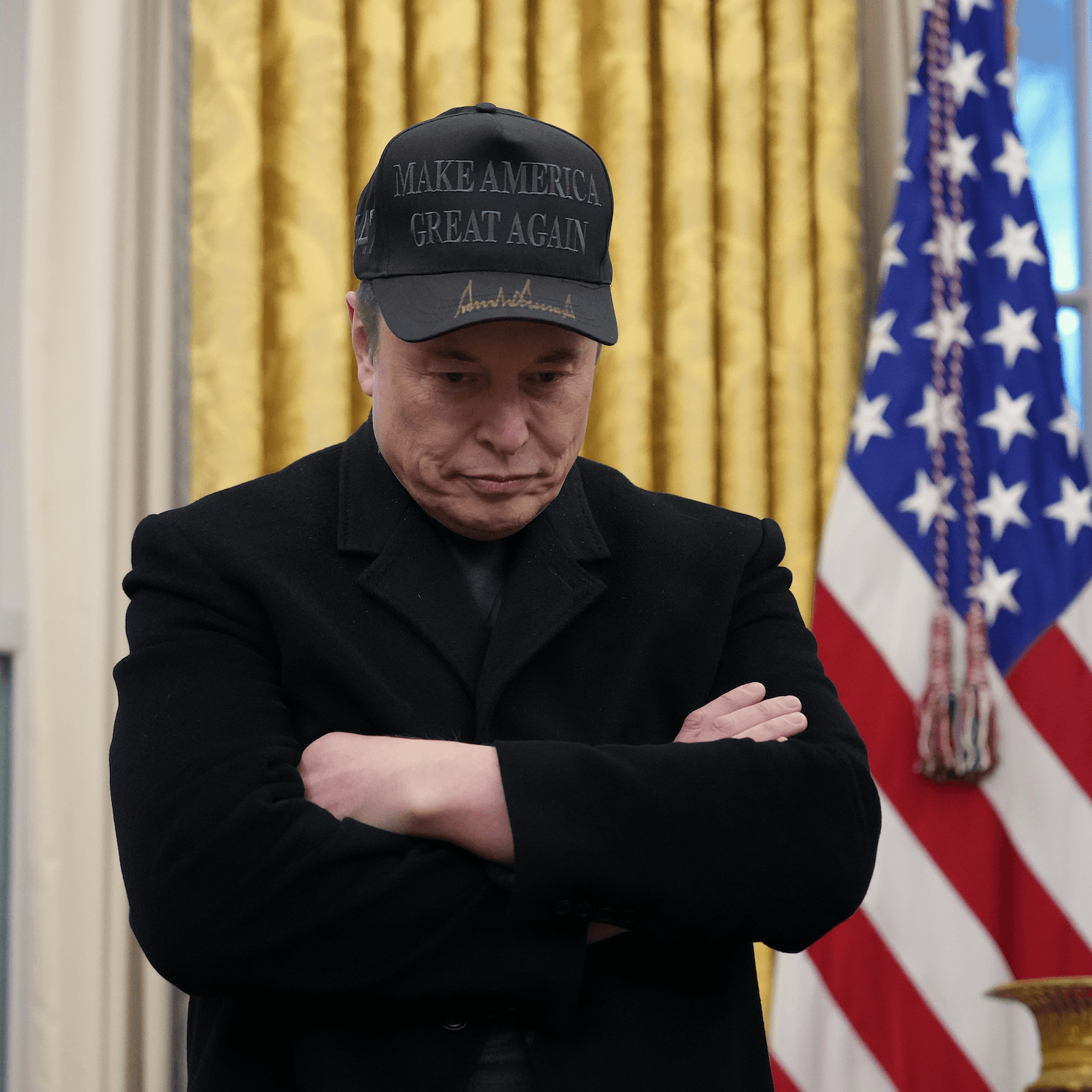
Musk’s latest email to federal employees sows more confusionApple News Today · Feb 24, 2025
Main Topic: The podcast episode covers various news stories, including a US military raid in Syria, the exodus of teachers from the classroom, gun violence in America, and challenges faced by rural hospitals and winter Olympic athletes.
Key Points:
Takeaways:
The Pentagon says U.S. special forces carried out a counterterrorism mission in Syria. The Washington Post reports on what’s known so far.
You’ve probably heard that teachers are leaving schools. The Wall Street Journal looks at where they’re going.
U.S. states and cities are backing an unusual lawsuit by Mexico against American gun manufacturers. The Trace explains.
Health care in rural America had been deteriorating for years, as hospitals lost money and faced closure. Then the pandemic made everything worse. Bloomberg Businessweek has the story.
Before athletes can compete in the Winter Olympics, they face a mundane challenge: getting skis, bobsleds, and other bulky winter gear on an airplane. The Los Angeles Times asks them how they do it.
Fuerte Deraldino
Good morning. It's Thursday, February 3rd. I'm Fuerte Deraldino. And I'm Shamita Basu. This is Apple News Today.
Shamita Basu
Each morning, hear about some of the most fascinating stories in the news and how the world's best journalists are covering them.
Fuerte Deraldino
We're following breaking news this morning. The U.S. military carried out a raid in Syria overnight.
Shamita Basu
President Biden says this operation killed Abu Ibrahim al-Hashimi al-Qarashi. He's the leader of ISIS.
Fuerte Deraldino
Biden also says all Americans involved in this operation return safely. There's a lot that's unclear at this point.
Shamita Basu
The Washington Post reports that people on the ground say several people in the area are dead, including children.
Fuerte Deraldino
The defense secretary recently ordered the military to do more to reduce civilian casualties.
Shamita Basu
The Defense Department was heavily criticized for an airstrike in Kabul that killed 10 civilians in August.
Fuerte Deraldino
You can read more about this story as it develops through the day on the Apple News app.
Shamita Basu
We've talked on the show before about how teachers are leaving the classroom in waves. Literally hundreds of thousands of educators have been resigning.
Fuerte Deraldino
The combination of low pay, burnout, and the stress of the pandemic, all of it just drove a lot of people to leave the classroom.
Shamita Basu
A Wall Street Journal story goes a step further than the headline about people leaving and answers the question, where are all these teachers going?
Fuerte Deraldino
The Journal's careers reporter found former teachers are in high demand in this tight labor market.
Shamita Basu
Educators are getting new jobs with better pay, flexible hours and better work conditions.
Fuerte Deraldino
Companies are snapping them up to work in all kinds of fields like sales, technology and consulting.
Shamita Basu
Recruiters are saying teachers have skills that are important for a lot of jobs. They're good communicators, handle stress well and they know how to multitask.
Fuerte Deraldino
LinkedIn data shows people moving from the classroom to become software engineers, instructional coaches and behavioral health technicians.
Shamita Basu
One kindergarten teacher told the journal she knew it was time for a change when she had trouble getting out of her car each morning to get into the classroom.
Fuerte Deraldino
She wanted a job where she could work from home some of the time and see her daughter more.
Shamita Basu
She taught herself graphic design skills, and when a job opened up, she went for it.
Fuerte Deraldino
She now gets to work from home three days a week. She even got a raise, but she says she would have taken a pay cut to leave teaching.
Shamita Basu
She said my happiness was worth more.
Fuerte Deraldino
Today, President Biden meets with New York Mayor Eric Adams. They're going to be talking about reducing gun crime.
Shamita Basu
And this is all happening after two NYPD officers were shot and killed recently.
Fuerte Deraldino
Gun violence in America, it's not a problem that stops at our borders.
Shamita Basu
The Mexican government recently filed a lawsuit against U.S. gun manufacturers, alleging they are, in part, to blame for gun violence there.
Fuerte Deraldino
And what's interesting about this case is that dozens of U.S. states and cities are throwing their weight behind this unusual lawsuit.
Shamita Basu
The Trace, which covers gun violence, has some reporting on this.
Fuerte Deraldino
Last year, the Mexican government sued several American gun manufacturers in U.S. federal court.
Shamita Basu
It alleges that they intentionally enabled gun violence in Mexico through targeted advertising schemes and careless distribution.
Fuerte Deraldino
More than 140,000 people have been killed by guns in Mexico since 2015.
Shamita Basu
The gun companies named in the lawsuit either didn't respond or declined to comment to the trace.
Fuerte Deraldino
U.S. states, cities, gun violence prevention groups, this week, they all filed briefs supporting Mexico's lawsuit.
Shamita Basu
The thing to understand about this case is, since 2005, a special kind of legal immunity has protected the American gun industry from most litigation.
Fuerte Deraldino
It prohibits suits brought by the criminal or unlawful misuse of a gun. Gunmakers have argued this suit should be dismissed on those grounds.
Shamita Basu
But according to Mexico, what's happening is a violation of foreign law and the immunity it doesn't apply here.
Fuerte Deraldino
Another way to look at this story is gunmakers have powerful protection against lawsuits.
Shamita Basu
And many of the industry's American critics think this Mexican lawsuit may be a way to challenge that protection.
Fuerte Deraldino
Even before the pandemic, rural hospitals were in big financial trouble.
Shamita Basu
Between 2010 and 2020, about 130 of the country's 1,800 rural hospitals went out of business.
Fuerte Deraldino
That's Monty Real. He's an investigative reporter for Bloomberg Businessweek.
Shamita Basu
At the beginning of 2020, this is before the pandemic, almost half of them were deemed at high risk of closure because their cash reserves were so low.
Fuerte Deraldino
Rio's reporting looks at how things got even worse when the pandemic hit.
Shamita Basu
He focuses on the Mississippi Delta to see how COVID has made things especially difficult for rural hospitals.
Fuerte Deraldino
As the number of patients in ICUs exploded, hospitals had to cut back on elective surgeries.
Shamita Basu
That meant losing a key source of revenue. And high demand for nurses meant hospitals had to pay more to have enough staff.
Fuerte Deraldino
Riel told us how one hospital made the hard decision to let go of its neurosurgeon.
Shamita Basu
He was the only one in the region. The closest neurosurgery units were hours away.
Fuerte Deraldino
The distance of travel could be the difference between, for example, somebody who is having a neurological emergency.
Shamita Basu
It could be the difference between life or death, or a permanent brain disability.
Fuerte Deraldino
Rural hospitals are making these trade-offs in order to stay open.
Shamita Basu
And it's not an exaggeration to call this a matter of life and death.
Fuerte Deraldino
Studies show when a rural hospital closes, the death rate for time conditions goes up by nearly 9.
Shamita Basu
And for low patients and people of color, the death rate is even worse.
Fuerte Deraldino
As we get into the third year of the pandemic, what's becoming clear, and what this piece of journalism underscores, is that a growing number of hospitals in places like the Mississippi Delta, they don't know if they're going to survive 2022.
Shamita Basu
Think about the difference between packing for a summer trip, you know, T-shirts, flip-flops.
Fuerte Deraldino
And packing for a winter trip. Big, bulky sweaters and boots.
Shamita Basu
Now apply that to the Olympics.
Fuerte Deraldino
Winter athletes have to pack way more gear than their summer counterparts.
Shamita Basu
The LA Times has a story on how challenging it is.
Fuerte Deraldino
And honestly, it sounds so difficult and so stressful.
Shamita Basu
They should be handing out medals at the airport.
Fuerte Deraldino
Yeah, I mean, just think about it. These athletes have to carry helmets, skis, and it's not just one set.
Shamita Basu
You know, they're all tuned differently for each event.
Fuerte Deraldino
American star Michaela Schifrin could have as many as 60 pairs of skis with her.
Shamita Basu
Then they're on the bobsleds, which is basically like taking a grand piano on a trip.
Fuerte Deraldino
It is such a huge task, figuring out how to get all this stuff to Beijing, that the U.S. delegation hired a company that's worked with big rock stars like Led Zeppelin and Bruce Springsteen.
Shamita Basu
And it's their job to make sure all the equipment makes it there, on time and in one piece.
Fuerte Deraldino
Winter Olympians have all these tricks to get all the stuff into fewer bags.
Shamita Basu
As one skier tells the LA Times, in the airport, you can tell the rookies from the veterans.
Fuerte Deraldino
The ones dragging five bags, it's probably their first time at the games.
Shamita Basu
You can find all these stories and more in the Apple News app.
Fuerte Deraldino
And while you're in the app, keep listening to hear narrated articles from our news plus partners.
Shamita Basu
We'll talk with you again tomorrow.

