The Man Who Sees The Future - EP 94 Neal StephensonCore Memory · Oct 28, 2026
Guinness. Sharks. American manufacturing. These are a few of the interests I share with the founders of Ulysses, a San Francisco startup building autonomous underwater drones.
The idea for Ulysses started when one of the four co-founders was on a surf trip and learned how much of humanity depends on a single marine plant: the humble seagrass. He spent a weekend designing a robot to plant it. Two years later, the group of Irishmen — and for diversity, a Scot — have moved well beyond ecological restoration. They’re providing services for the Great Barrier Reef Foundation and selling their drones to the U.S. Navy.
The robots are called Mako. They’re two meters long, weigh about 400 pounds, and can dive 5,000 feet for up to 72 hours at a time. They’re also modular — payloads swap in and out like Legos, so the same vehicle that plants seagrass in Australia one week can inspect a submarine cable in the Baltic the next. A base Mako costs $50,000. Most legacy underwater drones built by big defense contractors can run between $1 million and $20 million each.
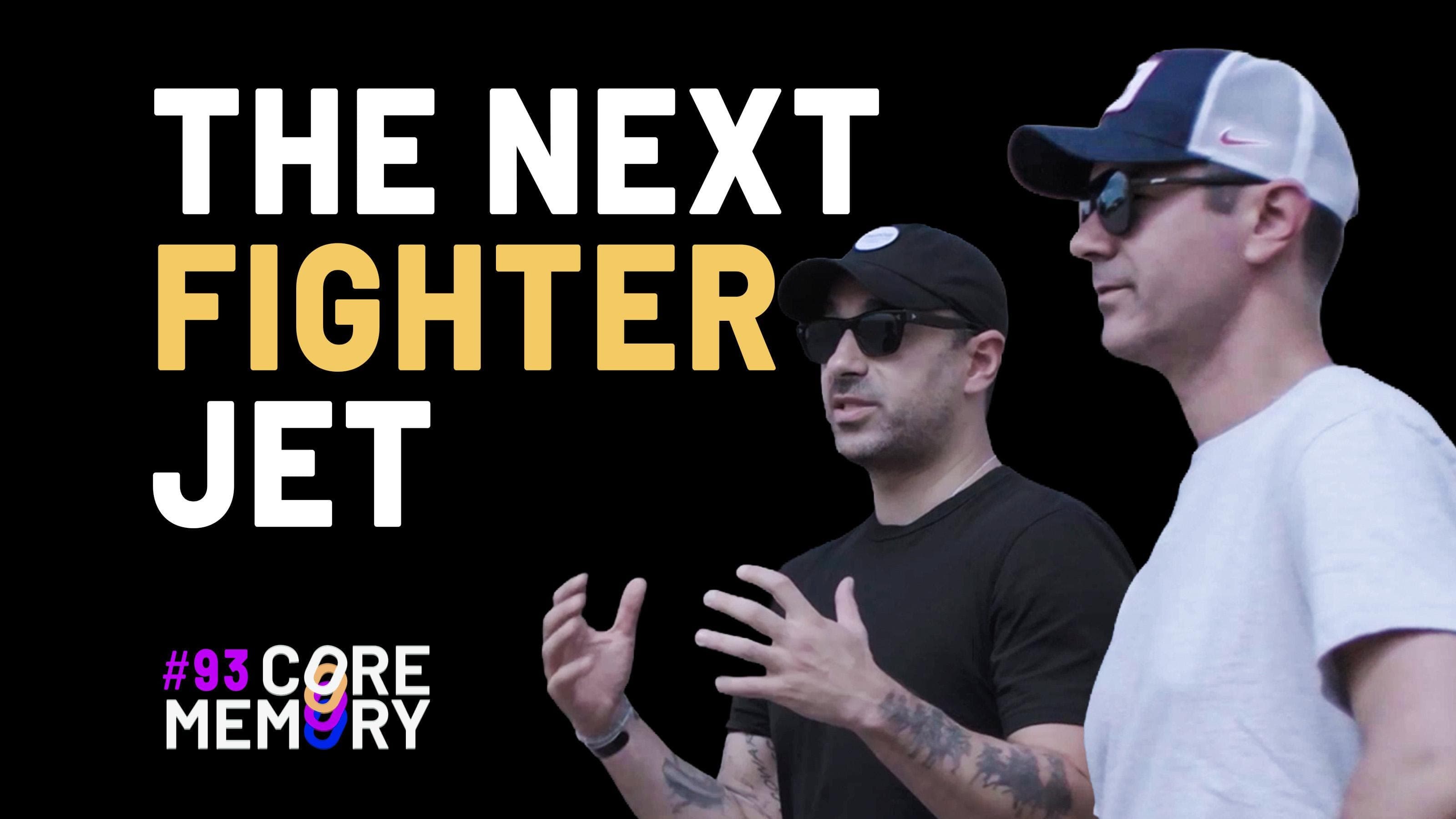
On this episode of the Core Memory podcast, we’re joined by Will O’Brien and Akhil Voorakkara, co-founders of Ulysses. They build these drones out of an office in San Francisco — for conservation, for academia, for national defense. They just raised a $38 million Series A led by Andreessen Horowitz through its American Dynamism fund. We discuss what it actually takes to make robots for the most hostile environment on Earth, why the ocean is about to have its SpaceX moment, and the surprisingly thin line between planting seagrass and defending NATO.
The Core Memory podcast is on all major platforms and on our YouTube channel over here. If you enjoy the show, please leave a review and tell your friends.
This podcast is sponsored by Brex, the intelligent finance platform built to help companies spend smarter and move faster.
We run on Brex and so should you. Learn more about Brex right here.
No summary for this episode yet.
Speaker 2
Today on the Core Memory Podcast, we're joined by the co-founders of Ulysses, Will and Akil, the two Irishmen that came to America to build underwater drones. They just raised a Series A led by Andreessen Horowitz, and we talk about that. We talk about defense, the Strait of Hormuz, we talk about ecological restoration, the Big Blue Sea, and how it could be the next trillion-dollar frontier for disruption in technology. So join us and learn more about their seafaring expeditions. My name is Kylie Robison, and this is Core Memory. Hello. Thanks for joining me. I wanted to start with, like, who you guys are. Why did you go from, like, nothing to Ulysses? What brought you here?
Speaker 3
Sure. I mean, I can start from my side. Yeah, I'm Will O'Brien, one of the founders of Ulysses, again, company president. I grew up by the seaside in the southwest of Ireland, so always had a huge affinity for the ocean. All my summers were Um, yeah, spent on the water, in the water. Um, my mom would just put me in like a wetsuit and just like send me down to the beach and, you know, lifeguard was effectively my babysitter. And, uh, and, uh, but, you know, I never thought that there was like a business in it. it or a technology in it, you know, I was just like, oh, it's just boats and ships and that's it.
You know, I didn't really think twice about it. And, um, you know, I, I'd started a, I'd been in a startup before and we sold it and we were thinking about what to do next. And I, I'd known Akil from, from college and, uh, You know, he's like, well, I think these underwater drones, I think you could start a really interesting business in underwater drones. He'd been building aerial drones before, so I trusted his judgment on these things. And we worked together on a project in college. Um, and, uh, and then, you know, once you start to dig, you know, dig a little bit deeper into the underwater domain, you start to realize how little we know about it.
And then you start to realize about the technology and the tools available in the underwater world are so limited and so, uh, so kind of stuck in the stone ages. And then you start to learn about all the problems in nature or the industry or defense that you could, you could solve it like better underwater drones. And I was just like, yes, it was pretty easy, immediate, like hook. I think I didn't work with Ikeel and Cullum and Jamie, you know, my co-founder was like, okay, this is a pretty rock solid team, fun guys as well. I was like, I wanted to do something a bit weird as well. I didn't want to do just like, you know, definitely nothing in software.
And yeah, underwater drones was definitely take the kind of weird and quirky box. So yeah, when Akil kind of brought the idea, I was like, yeah, I'm in.
Speaker 2
So how did you bring up the idea of underwater drones?
Speaker 4
Yeah, it's pretty funny. I'm Akhil. I'm one of the other of the four co-founders. It's always funny introducing yourself. It's like, yeah, I'm a co-founder. And you assume there's two of you, but there's four. Right. Like a boy band.
Speaker 2
Oh, that's perfect.
Speaker 4
This is true. Yeah, I'm also the CEO. My background, mostly engineering, worked on a lot of very interesting problems and various gadgets and widgets and such throughout my career, ranging from self-driving cars to warehouse robotics, med tech, and then aerial drones. That was the last kind of engineering thing that I worked on before Ulysses. Aerial drones, the developments that have happened there over the last, like, you know, even five years, absolutely insane. You know, it went from, like, oh, there's this one guy in the entire, like, country that has, like, this camera drone, and he's, you know, the most advanced, most advanced and he's booked out for years in advance to now, it's like, oh, you want the drone?
Just go on Amazon.com. There's a dime a dozen. And they have great cameras. They can fly themselves. They can even carry things for you as well. And that kind of technological leap completely changed the way that the average person can access the skies and do things in it. But you look at the ocean, It's been the same as Will said, right? You know, you think about the ocean, you don't think, can there be like a big innovative business there? It's just ships. It's just people. You know, it's these really huge expensive things that haven't changed in centuries. You know, you go back to the time of the conquistadors, it was still massive ships, loads of people, loads of money to do anything important and a massive scale in the ocean.
But you look at what's happened in the air, look at what's happened in space, what's happened on the ground. We've moved away from that to do great things. He can do it with a lot of like really small, really cheap and really accessible tools that didn't exist for the ocean. And yeah, it was around, it was like around a year and a half after leaving the drone delivery startup that me and Jamie, who also worked at that drone delivery startup, were both bored at our respective jobs after that and thinking about like, I just want to go back to building something really cool that could have like a potentially larger impact than getting someone their coffee a couple of minutes quicker.
And, you know, in that he had a friend who he met on a surf trip who was complaining about the marine biology research they were doing and how manual and hard and expensive it was. And, you know, in our hubris, we were like, well, you know, surely it sounds like robots could do this work. Why is no one building robots to do this work? And, you know, it snowballed from there.
Speaker 2
Right. So you guys are both from Ireland. You went to college together. What college, how did you guys end up in San Francisco after thinking, I'm going to build water drones?
Speaker 4
Well, it's funny. When we thought about building drones and building the company, San Francisco just seemed like the right place to do it. It's Silicon Valley. It's where the best and brightest and smartest people go to. It's where, you know, all these fantastic hardware, software, everything in between companies have come out of. It's where the talent is. It's where the capital is. Also for customers, you know, they hear you're a San Francisco based startup and there's an air of credibility to that. And for us, even as we set out to start the company, we always thought we'd end up here.
Speaker 2
Yeah. Same answer for you.
Speaker 3
Yeah, you know, there's kind of, you know, this is a well-trod question, you know, what San Francisco or LA or Austin or, you know, where are you going to start your business? And, you know, my kind of typical answer, you know, the short answer is like, it's kind of like the midwit meme or something like that. There's like a 10 second answer, which is like, you know, eight out of the 10 of the most valuable companies in the world were founded in San Francisco, including Saudi Aramco, bloody, you know, started in San Francisco, right? Like all of these great companies, you know, started here. It's like, okay, you should probably build a company there. And then there's, you know, more of a Rose answer. You know, you could talk about the frontier origins that San Francisco has always has been at the cutting edge, whether it's the, you know, the gold rush to the summer of love, to the start of the internet, to today. And, you know, there's a certain type of thinking here. But yeah, we didn't really think about it too much. We were just like, yeah, bought the tickets and just like came here.
Speaker 2
Totally. And so you went from air drones and now we're underwater. That is like a whole new lot of challenges. I can imagine those conditions. And I just want to talk about what you guys actually build and some of the challenges you've faced going from sort of a different niche to these completely new engineering challenges.
Speaker 4
Yeah, no, absolutely. It's very interesting. Yeah, we were absolutely filled with hubris when we started the company when we were... We built things that fly, you know, things that swim. In fact, Jamie, you know, he's got like 20 satellites in space. We built things that go in space. Yeah. Colm, you know, he was at Red Bull Racing Formula One, you know, he's, uh, you know, built things that go the absolute fastest on the racetrack. Just like, come on. Things that just swim around, I can swim. And it turned out that was not completely the case. There were some difficulties and some things that were different.
But that was also, I think, one of the most fun parts of the journey. The first three, four months where we made a lot of obvious mistakes just to see what would happen. And in doing that, we learned very quickly. Our whole company, even today, almost three years later, one of the ways we operate that allows us to move really fast and build actually really good tech is Just put it in the water and see what happens. And we learned, yes, it's very much not the same as operating in the air or in space or on land. There are numerous critical challenges. One, the environment is absolutely trying to kill you all the time.
It's trying to corrode you. It's trying to eat you. It's trying to clog up all your motors, any surfaces, any sensors. And is, you know, biofouling one of the greatest challenges of all time? Anyone in the maritime industry will tell you that. And then, you know, there's, of course, you know, you're in space. You actually have global positioning. You're in the air. You have global positioning. You're on land. You have global positioning. In the water, you don't have anything. You can't communicate over a high bandwidth, radio frequencies or anything like that. You get really low bandwidth acoustic modems.
Your communication is like bats clicking in a cave. It doesn't go very fast. You can't really convey a lot of information. So you have to make robots that are a lot more capable in terms of an autonomy standpoint and a reliability standpoint. Even if you want to make something that's really low cost and really cheap, the actual expectations for what it does are a lot higher because it has to do those things without any outside input, without any help. And that's led to us doing some interesting things like figuring out how to put entire servers in our robots so they can, you know, One day we'll put an LLM on the robots and just be like, go scan this pipeline, go fix this mooring line.
But we do have to get to a point where we can tell the robot to do something and it is going to do those things.
Speaker 1
This episode is brought to you by Brex. At Core Memory, we spend tons of time with companies that are trying to build fast and they often run into similar problems. Their corporate spend either spins out of control or slows them down. Brex was built to break that trade-off. It is the intelligent finance platform that helps you move faster and spend smarter. Cards, banking, expenses, all in one place with AI agents working in the background to handle annoying tasks like collecting receipts and enforcing corporate policies. This is a massive time saver for us. More than 35,000 companies use Brex, from early-stage startups to giants like Anthropic and Zoom, and soon-to-be giants like Core Memory. We run on Brex, so should you. Go to brex.com slash core memory to learn more.
Speaker 2
And what are your robots? You have several we talked about. I went to your warehouse. Uh, tell me more about what you guys actually build.
Speaker 4
Yeah, so, you know, we build... unmanned underwater vehicles and we're also building unmanned surface vehicles that act as motherships for these unmanned underwater vehicles. The unmanned underwater vehicles we've been operating for nearly two years now. They're our most mature platform. They fall under what we call the Mako family of vehicles. And they're basically like, think of Mako's, or the Mako family is basically a collection of Lego bricks, you know, and these bricks add and subtract different capabilities depending on how you stack them. Do you want a Mako with loads of batteries Stack a load of battery modules and put whatever sensors you want on it.
Do you want a Mako that's really agile and really precise for really careful maneuvering and manipulation of things in the world? water column, then we have the agility modules that you just stack on. Or do you want something that's heavy lift capable? And we've got a heavy lift configuration that we've carried three people on before. But the thing is, these vehicles that are very different in terms of size, shape, and capabilities, they still all cost the same, and they still all come from the same set, come off the same assembly line. They share pretty much all the same components. And that allows us to have this one almost one-size-fits-all vehicle where we can do large-scale surveys and data gathering and scanning.
But we can also do some of the really, really hard and really expensive things to do in the ocean, you know, infrastructure maintenance and actual installation. So, you know, manipulating things on the seafloor, in the water column, and on the surface. And that has... almost limitless applications across nature, across commercial, so think oil and gas, telecoms, that kind of thing, and defense as well. A really hot topic has been the mine countermeasure stuff in the Strait of Hormuz. We carry pretty much the same sensors that are used on those platforms today, and you reconfigure the Mako, you bolt on those sensors, you can have it go in and look for mines.
You can change the sensors around and you can have it go and uh figure out and survey the biodiversity of a seagrass meta it's all the same platform yeah like from the start um
Speaker 3
You know, I think we've been pretty intentional how we built Mako, kind of working back from this bigger picture of like, how do you, you know, how do you do large scale work in the ocean and kind of coordinated kind of swarm of robots type of way? From the start, we built from that. You know, if you take the premise that robots are going to do all the important work in the future, and then you take the next premise that they're going to do all the important work in the underwater domain, then the question is, what does that platform look like? So it needs to be modular because there's a lot of different shaped tasks in the ocean.
You need a sense, you need to be able to manipulate, you read or write to use the kind of computer science analogy. And similarly, if you want to produce a lot of them, you need because the ocean is a massive area, you know, 361 million square kilometers, you need to make them cheap and mass manufacturable. So, you know, we've taken a kind of, you know, we call Mako the Model T for the sea. It's, you know, built to be mass manufactured. We can make one 26 hours. Um, it's, uh, you know, uh, there's been a lot of design decisions in, in that regard. And it also brings the cost down, you know, starting price for Mako is, um, if you know, for selling them, we more often than not deliver these, uh, them as services, but, um, with certain customers where we do sells we can sell them for 50 a base price of 50 000 um us dollars um compare this to other uh you know platforms that kind of do similar things to amaco that might cost you 5 million um so 100 times cheaper um really getting us to this kind of vision of kind of doing things, swarms of these things.
And then, you know, there's the other aspect of the platform, which is the interface, the surface. So we have a autonomous launch recovery recharge system called Kraken. It sits at the surface, can be put on a boat, can be put on a pier. And this is the thing that takes the vehicles out of the water, recharges them, does data offload, and sends them back out. You know, it's this enabling piece of the infrastructure that is as important as the underwater robots themselves, because without them, you don't get this vision of millions of underwater robots doing the thing because you couldn't have people taking them out, filling them up, you know, um, uh, you know, and, and sending them back out.
You need other robots to do those other important things. Um, and then yes, we're launching a surface vehicle later this year, which would be the mothership for these vehicles, picking them up from locations, picking them up, picking up the kids from school, you know, dropping them off to where they need to go next. Um, and yeah, another accessory piece in this kind of broader vision of a, you know, a tech, a tech platform that can solve the most important tasks in the ocean.
Speaker 4
And when you, When you automate the full stack and then you can provide it at a cost that allows for scale that matters, now you can start to change the way you do things at the ocean. Now you can start to move away from big ships, really expensive staffs you know these bespoke beautiful systems that are super capex and opex heavy and really limit you know how much of an area you can cover how much time you can spend out there to a model where you can actually be everywhere all at once you know and you can actually cover all the infrastructure you can protect all the borders and fishing zones you can actually Use the ocean to put in as much infrastructure as you could dream of having in there. You can also actually start to realistically quantify and understand and extract all the resources out of the ocean as well in a way that makes sense.
Speaker 2
Yeah. So you guys started with seagrass as a concept, right? So how did we go from seagrass and sort of understanding underwater life and all there is to explore to what you now see as like perhaps defense or just, you know, putting it in the Strait of Hormuz and protecting lives? How did we get from seagrass to defense? And did you always see that mission at the start or is that something that developed over time? Our company mission was always kind of stewarding the ocean for an abundant future.
Speaker 4
Any missions that we thought aligned with that always excited us. But in terms of starting with the seagrass, it was and remains still one of our core use cases. But it's a use case where the scale that you need to operate on is absolutely massive. You're talking like hundreds of thousands of kilometers squared of seagrass that needs to be restored, monitored, protected. And the budgets are absolutely minuscule, Sheda, in a completely inverse relationship.
Speaker 2
Academics don't have a lot of money?
Speaker 4
Yeah, well, not even that. Even the governments and organizations that do still, that's not where they're putting the money it's you know it's a really slow moving space but and so to do anything at a scale that matters you know you can go out and you can you know get thousands of volunteer hours you know there are programs out there that have tens of thousands of volunteer hours over the course of years of restoration. And the amount of restoration they have done is on the scale of a couple of hectares, a couple of hundredths of kilometers squared in areas where the loss is on the scale of thousands of hectares, despite tens of thousands of human hours going into it.
To make the unit economics work, you need robots that are really, really cost effective. But then to actually do that complex work where you actually have to harvest fruits and seeds, you have to process them, then you have to plant them, and then you have to monitor it. You actually need really advanced robotic technology to be able to do all of that. And it was in developing that we quickly realized that problem Well, you know, the scales might change slightly and the unit economics might change slightly really is pretty universal across the maritime industry. Yeah. You know, even with, you know, in the places where there are the highest budgets and there's billions of dollars being spent today, we would look at that and say, well, you're still not getting nearly the value for money that you should.
Yeah. You know, you're still not able to operate nearly on the scale that you should be able to.
Speaker 3
Yeah, they're all the same shape problem. It's all important tasks underwater that are too expensive to do today or just not being done because the tools don't exist. And frankly, like, you know, we started off in the seagrouse work, but, you know, moving into both the commercial and fence market, it was actually those markets, they actually came to us. So in both our first kind of client in the offshore wind space, I heard about our autonomous underwater vehicle and its capabilities and um and and kind of asked us could could it help with that to which we said yes and i started working with them and similarly um with with the navy as well it was a retired um navy veteran who used to work on um uh my encounter measures work um you know uh in in the navy heard about the tool and was so excited about it because he was like this is exactly what i needed to on when i was on the inside um and uh he wanted to get our capability really quickly um, to, to his former, you know, um, colleagues, um, and made some interruptions for us and, you know, we got working with them then.
And so what does your product do differently than what's already on the market? Like why are, you know, retired generals coming to you guys and saying, we need this now.
Speaker 2
Why are they blown away? I think it's the, you know, if you look at the maritime industry, it's really stagnated, right?
Speaker 4
You know, the products that are on the market and available today are the same products that were brought onto the market and made available 20, 30 years ago. You know, the large primes and these primes sell not just to defense, but also to, you know, provide services and sell to commercial as well. the customers have been paying. They don't have any other options. The technology is hard and it is complex and it's not something that you can just walk into and suddenly make way cheaper and way easier. And as a result, these companies where the customers are happily paying whatever price that they quote, what incentive do they have to give the customers more for their money, effectively lowering maybe their margins?
Why would If they've got a vehicle that people are spending $5 million for and selling enough of them, what incentive do they have to go and make one for $50,000 and sell at volume? And you'll talk to them directly and they'll say, well, We don't really care about volume. We just care about having the best units. And when I hear that, that's great. They've already lost. And for us, again, we're coming from the space industry. and the drone industry and the automotive industry, there's so many incredible developments that have happened from the embedded systems, power systems, propulsion systems, communications, compute, and AI and everything, even in just the last two or three years, let alone five to ten years, sensing and everything.
But no one's been taking stock of that and being like, yeah, let's bring it to the maritime domain. And for us, we saw all of that and we were like, this is crazy that it's not being done. And we quickly realized why it's not being done. They don't have the incentive and why would they build something from scratch that it's their own business model, right? But for us, we absolutely have the incentive. We want to deliver orders of magnitude more capability to the maritime industry than what they're getting, than what they're getting today. And we want to do that to support, uh, you know, civilization doing way, way, way more in probably our most like, uh, you know, unknown domain.
Yeah.
Speaker 3
Yeah, to speak to that a little more like specifics that like appeal to our end users in our markets like, you know, in the in the defense market, I think what people are very excited about is, you know, we've got like 40 over 100 times and more compute on board than anyone else in this like category of vehicles, small to medium unmanned underwater vehicles, bringing kind of like unparalleled capabilities in the subsea domain. As Akil mentioned, you can't speak with the surface, so you need to have a lot of inference on board to kind of make decisions on the fly. I think that's very exciting to people.
The price point is extremely exciting to them as well. They can buy, you know, 50 to 100 times more vehicles for the same budget that they had before, enabling totally different new kind of type submissions. And yeah, the subsea robotic capability is like very important as well. A lot of platforms today are very good at gathering data underwater, but not good at like robotically doing something like, you know, intervening in the subsea. That's an exciting capability. And then on the commercial side, I think, you know, a huge unlock there is like when you integrate the surface and the subsea vehicles into one, right?
If you look at today, what, you know, offshore energy companies are spending on a inspection on a pipeline or something like that, they will be charged, you know, hundreds of thousands of dollars to rent rent an expensive kind of topside offshore support vessel. From that offshore support vessel, then you'll have a team on board, maybe 10 people, you know, all earning kind of, you know, single digit thousands a day. So you get to maybe 50,000 day rate for the team and throw a vehicle over the side. That might cost them 10,000 a day. So you're very quickly getting this very expensive day rate.
And then you have a mobilization and demobilization costs. And, you know, these projects run into the millions and they're just getting like side scans of the subsea pipeline. um with when you integrate surface and subsea um you know you take away that 100k a day rate for the surface vehicle because you've got an autonomous surface vehicle that maybe you're you're renting out a 10k a day or something like that um and then so that integration of surface subsea means you take out that opex cost and then you know our own as i said kind of like the capex for what we do is like much cheaper our underwater vehicle is much cheaper um so cost is a big thing for folks in the commercial industry that they're they're very excited about because if you're in offshore energy you know you you can't control your revenue because the price of oil and gas goes like this right there's no controlling it but you can't control your costs um so they're very very committed to reducing costs whenever they can um which makes an offering like ours um very compelling totally and you've talked a lot about the costs i'm curious like how do you make it so cheap compared to competitors like what have you changed how are you innovating to make it so cheap is there stuff
Speaker 2
you're offloading or how does it work Yeah, not really software offloading, but we have a very different way of doing things.
Speaker 4
If you look at the platforms that cost $500,000, $5 million, $15 million, they're really engineered to often last a long time. long time. And they also, you know, are often over-engineered quite heavily. You know, a degree of over-engineering is always good, but, you know, it's like, this thing is made to last 20 years, but we'll put components that'll last 40 years in it just to be safe. And then, you know, they're made like, let's make the systems, you know, quadruple redundant. So, you know, this thruster could fail this battery could fail the brain could fail and it'll still swim and and do the thing and you know these things become very complex and frankly very bloated and very very very expensive um we we've taken very much an opposing uh approach where it's like you know fire things cost 10 times less uh let alone 100 times less It doesn't need to last 20 years anymore.
It'll be fine if it lasts five years or, you know, if it lasts, you know, six years or, you know, it's a hundred times less cost. If it lasts even two years, it's fine. it's a lot easier for us to choose materials. We can choose materials that actually have a much lower manufacturing and machining cost and also procurement cost when you don't need to use titanium or as high a grade of aluminum aluminum, you can get away with a lower grade of aluminum that's anodized, that's actually a lot less machine time, a lot faster and thus a lot more to actually work with and also just cheaper to get off the line.
And that's just for the pressure vessels and the raw materials. And then you look at things like the internals, the electronics, it's like Well, if the thing starts to go wrong and fails and floats to the surface, that's actually not so bad when you have a hundred of them or when you have a thousand of them. It's pretty bad when you only have one of them in the water. So now the electronics and the internal control systems and safety systems can be a lot simpler. And when they're a lot simpler are internal PCBs that run through the whole vehicle and handle communications and data and power and payloads, we can spend a lot of time on actually making the features good, having much higher data bandwidth, having much more power capacity as well, rather than spending a lot of time and expense on, you know, making this thing like triple redundant or, you know, something like that.
And then in terms of the modularity, if you look at most vehicles on the market today, each, like some of them, many of them are modular, but they're like each module is an independently sealed vessel. That is really expensive to have electrical and data connections between sealed vessels. The connectors alone a pair can be like thousands of dollars, which is pretty crazy. And, you know, they're also then really hard to work with in terms of servicing or maintenance or if, you know, the user wants to make a change or do something. Whereas ours, you know, it's like one continuous air volume all the way through Makes our construction a lot easier, makes our maintenance a lot easier, takes a lot less time.
Again, brings the cost down way, way further. And then there's other things we do which are more like technical breakthrough aligned, but it's more like What have we learned from like space and drones that we can bring to this? And, you know, we're doing that in areas where, you know, we're starting to make our own motors and doing it very differently to a lot of what's on the market today. And that should mean that we should be able to get, you know, motors that are ready to do the full ocean depth, but for tens of dollars instead of thousands of dollars, right? Our navigation systems, you know, the best, not even the best, The bog standard inertial navigation systems are like $75,000 or $100,000.
And that's just to like know where you're going. And that's not even like you can use, you spend $120,000 and you can stay underwater for your whole three days. Sorry, for your whole three days. You spend that much money and it's like, great, you can stay under the water for like two hours and then you still have to surface or whatever. That's crazy, man. We're working on systems that'll probably be able to do the same thing for an order of magnitude lower cost. Going from $100,000 to $10,000 and maintaining that capability is huge. I think part of the benefit of us not being from the maritime industry, we look at the way a lot of things are done and we don't take the answer for face value.
You know, we talked with our team. We have an exceptional team of engineers who always come to us with crazy ideas. It's like, you guys don't need to spend that much money on that. What if we just made it ourselves or did something else? And then, you know, we're like, hell yeah, let's try it. See what happens. yeah and there's nothing I mean this is just what like SpaceX did for space it's just like companies have nobody's really done that for the ocean yet so it's yeah taking the same kind of like you know really high idiot index and yeah in the
Speaker 3
maritime space yeah
Speaker 2
So, you know, I was reading about you guys in the free press. I thought that was a really interesting article. And it's now like sort of my pet interest is sort of disrupting these industries. Like you guys have the maritime industry. It makes perfect sense why there hasn't been a lot of investment and thought there because it's not like immediately like a critical point. Now it is like, look at the news. Now it's like a very, very important piece to, you know, a war that we are fighting in the Middle East. So I'm just curious, like, you know, what was that coverage like for you guys? How are you guys thinking about defense in that way? Because it talks about all of these other, like, American companies coming together and, like, innovating in this space. So how do you guys fit into that?
Speaker 3
Yeah, I think, you know, um, the, the, you know, one of the kind of prominent things, themes I think of this century is like, um, there's like resurgence in like how important the ocean is. Um, and a key part of that is going to be, um, you know, in terms of, uh, in, in, you know, defense, right? Like one of the kind of big trends or facing right now is increased kind of geopolitical competition between the United States and China. And, you know, that is, you know, America is shifting from maybe a track record of kind of preparing for wars that, you know, took place over a desert. and now it's moving towards wars that could take place over an ocean.
That requires a very different composition of forces and capabilities that the US has not maybe invested in as much previously. So as a result, yeah, there's a lot of efforts going on right now in the Navy to kind of future-proof themselves. You know, obviously you want to avoid conflict and get ready for that. But, you know, the underwater domain is going to be very critical to any people. potential conflict in that world. You know, the underwater remain again in a future where satellites can see everything everywhere on Earth all the time. Well, they can't see underwater. So it's one of the few places remaining where you have stealth.
Similarly, it's one of the areas where where the US has the most strategic advantage already. The kind of status of Chinese or American capabilities on shipbuilding compared to Chinese is, you know, pretty scary. Chinese making hundreds of ships per year, the US making single its numbers of ships per year.
Speaker 2
That's crazy to me. When I read that stat, it was mind-blowing, actually.
Speaker 3
But in the underwater domain, when it comes to the submarine fleet, um, the, uh, the, the US, uh, you know, totally, you know, to, to mogs China in this regard. Uh, like, they're just, like, totally, totally, like, uh, light years ahead of, um, you know, Chinese capabilities in the subsea domain. You know, the, the US's nuclear submarines are just, you know, um, really, really far ahead there. So it's an area where the US already has strategic advantage and an area where they can further accentuate that with unmanned systems. And, you know, again, in an era where you have like hypersonics on the surface that could potentially take out any surface asset or drones that could take out any surface asset.
Again, the underwater main becomes a place where you could get some competitive advantage because you can't use hypersonics to take out unmanned underwater vehicles. So Yeah, it's a domain. I think that will be very important. And yeah, I mean, the nice thing about our platform is there's a lot of defense type missions that that I can look after. We talked about the mine countermeasures mission. It's an area where we're already working with Navy on. um but there's you know intelligence um reconnaissance cut type missions in the subsea domain protection of off protection of offshore infrastructure as well uh when you pair our underwater vehicle or surface vehicle we can stay out um uh in the ocean for many months at a time protecting subsea cables um and these sorts of uh you know critical assets so yeah it's an area we're spending increasingly more time on and having a lot of traction in you know there's some cool things like
Speaker 4
Think illegal phishing enforcement. No governments really have the money to spend on that because of how expensive the current tools are and just in terms of owning them but also operating them. Like a destroyer can cost upwards of a million dollars a day just to be out there. Um, but when you have, you know, tens of thousands of unmanned surface vehicles with underwater vehicles that can, you know, like I said, be everywhere all at once. Now you can look at problems like that and actually have realistic solutions, uh, solutions to them and, you know, applications like that really, really get us, get us very excited.
Speaker 2
Yeah, and so something you guys had mentioned is that you've got a customer requesting 10,000 vehicles. I'd love to hear more about your customers, if you can talk about them. How are they using your vehicles, using the service? Is there any cool story you've heard so far?
Speaker 4
Yeah, I mean the 10,000 vehicles one is really cool because that is the exact type of application that we want to enable with our technology that wouldn't be possible if our robots weren't as capable as they are while being the cost that they are. It's an application that is today, it's a seismic survey type application that is today served by really expensive assets. The surveys cost tens of millions of dollars, really expensive. But if you had underwater vehicles that can carry the right sensors, that could go out and survey these large areas, it becomes very expensive. Yeah,
Speaker 3
there's, I mean, so we have, you know, three kind of customer types, the nature of customers, the commercial customers, the defense customers. Um, yeah, there's different aspects that excite all of them. Um, you know, the, again, the thing that excites the nature of customers, again, it's like ecosystem restoration on a scale they never thought was possible. can offer offshore kind of energy customers. It's like, yeah, doing important tasks and, you know, at a very large scale in the subsidy domain at a fraction of the cost. And then, you know, for defense customers, it's like capabilities that, again, were never possible before at this scale. Um, so, um, yeah, the specifics on like, you know, what we're kind of doing with, with all these customers, it's, you know, it's all different. And that's the kind of beauty of the business is that like the same platform that we've built for initially for Seagrass, um, is like this thing that has just like massive ramifications for anyone in the ocean.
Speaker 2
Totally. And so it was 3.3 million in revenue in the last two years?
Speaker 3
Uh, well, that was, that was like our most recently announced number. Um, yeah, we're upwards of probably, yeah, that was, that was three and a half million, um, kind of first years. Um, yeah, we're, we're kind of closing on, yeah, two million in just Q1 this year. Um, so, uh, yeah, and that'll probably be our quietest, um, quietest quarter of the year, I hope. I think so.
Speaker 2
So, like, how does that shake out? Is a lot of people buying the vehicles, using the services? Like, how is that sort of slicing up in the pie?
Speaker 3
Services mainly. Yeah. So, you know, we have two main ways of working with customers. We offer them vehicles and operate them for them as a service. Um, but for select, you know, depends customers, we will sell them the assets. Um, and yeah, predominantly most of our operators today have been services. But the beauty of that is that, you know, by developing, by the operating services, you get a really like tight, tight feedback loop between the tech you're building, you operate it, you see where it works and where it doesn't work. And then you can work with, you know, engineering to then go and fix these two things on it that didn't work that well on that mission. Um, and then that means you have like this extremely robust product. Then when you go sell them to someone like Navy, um, you know, it's been tested and it's got hundreds of errors on it. It's not just like this idea that you're not selling them a PowerPoint slide. You're selling something that you can be like, look at all these mission reports we've done all around the world. This thing works.
Speaker 2
And so you guys just raised new money from Andreessen Horowitz. Is it through the American Dynamism Fund? Can you tell me more about what that is, how you guys came together and all that partnership?
Speaker 4
Yeah, it's very interesting. But we'd been friends with a couple of their associates since we moved here. They were some of the first people we met. They were super friendly and we'd always be telling them about some crazy mission that we're running out in Australia or Florida or Virginia or even out here. You know, they're always quite interested in, you know, we had this new office, this facility where just in the last year, middle of last year, we started like doing all this big, you know, vertical integration push, making all our mechanical stuff in-house, starting to do a lot of our electronics assembly and stuff in-house as well.
And we started moving really, really fast. You know, we, uh, you know, start of 2025, we were on like iteration two or three end of, uh, you know, now we're like closing in on your iteration six, uh, of our platform. And, you know, we landed some pretty interesting, pretty big contracts. And so, uh, you know, they came by, they, they spent, uh, spend an hour with us. They saw the tech in action. Uh, you, we did a really cool. Some really cool demos of like our launch and recovery system of the vehicle in action, showed them some of the reconfigurability that we had that really sets us apart. And for them, they saw a company that was building technology that has the potential to forever change how we do things in the ocean.
But not just talking about it. We were building it, have actual customers, a killer team that's just constantly innovating and executing on all sorts of crazy projects. And that got them super stoked.
Speaker 3
Yeah. Yeah. I think they were excited by, I think as well, like, yeah, real tech, but also like we're doing it off like pretty lean team as well. Like this time last year, we were like five, you know, this time, like last Christmas, it was five people. This time last year, maybe eight people. Um, when we did the fundraise, um, like 15 people. Um, but you have a full, you know, TRL nine level, uh, subsidy system that is like the best in the market. Um, so, uh, yeah, I think, yeah, that, that, and making, you know, millions of dollars in revenue, so. Yeah, and that's like making millions of dollars of revenue with much more to come. And we're still just doing a lot of similar services in some cases to what others
Speaker 4
are doing today. When we pull off the automated launch and recovery system and the surface vessel and really bring that cost down, the scale that we're going to be able to operate at and the level of services we're going to be able to provide, they're going to be completely industry changing.
Speaker 2
Yeah. And so tell the audience, how much was this Series A? This was your Series A, right?
Speaker 4
Yeah.
Speaker 2
How much?
Speaker 4
$38 million.
Speaker 2
And so what do you plan to do with this fresh funding? What are your dreams, ambitions?
Speaker 4
So, you know, right across the board, we're hiring massively today. You know, we're hiring technical people, you know, mechanical engineers, electronic engineers, embedded engineers, software engineers, where, you know, you're building out an acoustics team because... Those sensors are really, really expensive. The most expensive part of our vehicle is the stuff that we don't make. So we want to make them to really bring the cost down and make the product way better. We're also hiring our first operations team, which is really exciting. Of course, hiring head of talent to help build this team up. And then on the commercial side, there's a number of hires there we're really excited to be making too.
Speaker 3
Yeah, yeah, like out of marketing and these sorts of things. So yeah, I think hiring will probably be the, you know, number one focus immediately after the round. I think, you know, Mako is a pretty developed platform right now, so we want to bring that to production and be able to start ripping like you know, um, massive orders on it. Um, and, uh, then, uh, on the kind of other side of the house, Kraken and Leviathan, our launch recovery system and our service vehicle want to get them to production readiness such that, you know, um, this time next year, we're able to start taking large orders on, on those platforms.
And, uh, and yeah, like we have initial traction in each of these markets that we're working in now, but time to take that to the kind of next level. And, um, yeah, Uh, you know, we've pretty consistently like, uh, you know, done some nice, uh, increases on revenue year over year since the stars are just like, keep that, keep that going. Um, and, uh, yeah, drive broader adoptment across these fields. And I think what we're, one of the things I'm most excited for to see in the next year is to see like, um, the whole suite of technologies that we're building, working together in unison in customer operations.
You know, we've tested and worked on a lot of these things independently and tests and that sort of thing. But doing a large at scale multi-vehicle surface and sub C operation for a customer will be, um, something we will, we will do in the next, um, in the next year. And I think that will be really, really sick seeing a vision come together of like this swarm of robots doing at C work. And then you're like, okay, wow, you've done it for that. Then it's like, you know, time to pour even more gas on the fire and just go, you know, go ham.
Speaker 4
Yeah, it's really putting our money where our mouth is, you know, and showing that our tech really does do what we say it's going to do and does it at the costs that we're targeting. And yeah, it's going to be fun building out our first like internal fleet. You know, we've got five vehicles now. We want to get that to like, you know, 10, 20 vehicles, have the, you know, Team take our vehicles from what is today hundreds of hours in the water to thousands or rather tens of thousands of hours in the water. So when we say that we have the best maritime platforms, we don't mean best by like on paper specifications, but we mean best by, you know, hours in the water, actual work done.
Speaker 2
Yeah. And, uh, you know, sort of going back to my pet project, the American Dynamism Fund is so interesting, and I was listening to an acquired pod, uh, from a partner at A16Z talk about, like, this concept, and I'm just really curious what you guys make of this concept, like, what you're gaining from it, and why you might feel that we need this, because it, over the last week, I mentioned to you guys when I saw you in the office that this has become my pet project, because I started reading, uh, Freedom's Forge, and I was like, damn, like, Why don't we make things like we used to? And I mean, I'm obviously very new to this and it's Ashley's will that he really wants me to get into it. But it's interesting. So please tell me more about this fund and like why it matters.
Speaker 3
Yeah, I mean, I think, you know, there's been a real resurgence in the last year or so of people investing in real world technologies, things you can touch and feel. And, you know, it's kind of actually surprising that it took this long for it to catch on. I think American Dynamism were one of the first in the space to catch on to this many years ago, realizing that we need to ensure more manufacturing, invest in defense capabilities, build robots for working in austere environments and doing dangerous tasks. I think they were early to it. you know when you think about it from an investor perspective you look at like the top companies again in the world as well as being founded in San Francisco most of them are hardware companies or companies that have a significant hardware component right like Amazon is you know a significant bunch of it is you know it's a software business but it's a data center business right Tesla obviously you know and look at the IPOs that are going to happen this year as well right whether it be like Android or whether it be the SpaceX one or even like again any of the AI build out they're hardware companies right they're hardware companies and software companies you know So I think, you know, people are starting to realize that the biggest companies that are being built today are hardware companies and being like, well, you know, we should put some money into those early stage ones.
So I think that's happening. And I think as well in a world where like, you know i can vibe code a docusign replacement tool in just like you know 10 minutes or something like that it's kind of hard to you know vibe code a ulysses replacement you know it's uh it might take you a little bit longer so i think there's probably um excitement on that side but then i think you know on the more on the founder side i think uh I think we kind of like we kind of hit peak software a few years ago. And I think like, you know, you also have like a generation of kind of 20 something founders these days as well.
Now we're like the software just doesn't excite us. We're looking for something more meaningful. Um, we're looking for something a little bit more real. Um, you know, one of my own kind of personal theories is like, we had like, we're, you know, we're a set of founders that spent, you know, maybe two years at the prime of our lives, you know, in our early twenties, like locked indoors due to COVID. And I think for me anyway, at least like that made me really want to just go out and do something in the real world as well. I don't want to look at it under a screen. You know, again, most of my days by looking at screens, but I want to do something in the real world, something real impactful, something that like drives real change in a domain that I find important.
And I think you're seeing a lot of founders like that as well these young young people 20 somethings that kind of like very disaffected uh you know maybe at the world and they're taking they're choosing you know a creative project of company building um to affect that change that they want to see in the world um so i think that's kind of like some of the appeal to the building in the real world for these young people is like it's i don't want to be virtual anymore i want to be in the real world i do enough of that
Speaker 4
Yeah, and to add to that, I think from our discussions when we're talking to the folks at American Dynamism, they're very, very excited to back companies that are adding capabilities to the country that the country has kind of let go of. You know, this is like across the board where, you know, that shipbuilding stat being a prime example of that, where it's like, what are we doing? You know, we spent so many decades now outsourcing a lot of the, you know, a lot of critical work and, you know, pushing the whole, you know, globalism and everything and it's been good for a lot of things but at the same time it's allowed a lot of complacency that is going to come and bite us hard if things keep going the way they're going so it's really important to build that capability here and continue to compete on merit, not just on capital. You can't just pay money to do something somewhere else. You need to have the capabilities at home so that you can be the best.
Speaker 2
Yeah. It's so interesting. I was just in Canada doing an episode, and they were talking about having their own, like, sovereign rocket defense companies, and you guys are two Irishmen who came to America. So, like, what does that mean to you to build it in America versus... I know it probably sounds silly, but why not Ireland?
Speaker 3
Well, I mean, you know, I'm definitely not, we're not the first Irishman to get on a boat or a plane, you know, and cross the beautiful Atlantic and come here in search of a final fortune. It's a genetic memory thing. Yeah. You know, hundreds of years ago, we had the potato famine and sent a lot of Irish people over here. So it's not an uncommon, I mean, I'm the first in my family to leave and I bet as Irish as they get, Murphy's and O'Brien's all like to stay home in Cork. But yeah, I mean, look, I think, you know, both of us, I think, want to do something very impactful and meaningful, you know, with our short lives that we have on this earth.
And, you You know, company building is probably one of the most impactful things that you can do, especially when you work on an important problem. San Francisco is probably one of the best places you can build a company. So it's a, you know, and, you know, we both love America and have like fallen in love with san francisco and northern california since moving here um and love this country and everything that it stands for um so i think you know it doesn't take many logical jumps um to be like wow this is this is so exciting to to build a company here to support this national interest um you know we might at some point in our future have a satellite office in dublin and uh you know i think my mom would be very happy with that but uh uh get home get home a bit more often but um Yeah, I think now we're very excited to be based here and be serving kind of national interest.
Speaker 4
Yeah, I think I think it's again, like you want to be where the stuff is happening. You want to be building in a country that is actually doing stuff, putting its money where its mouth is and actually standing up for morally what's good or whatever, but still participating through action, not just words and not just throwing money around, which I think a lot of countries and a lot of places have just resorted to doing. It's like they'll come out with these great flashy statements, but what are you actually doing Uh, even though America is doing less than it once was, uh, it is still doing the most, you know, and we want to be a part of that. We want to help, uh, help it get back to being, uh, on the level it once was, you know, like just after, uh, you know, like just after the last war, when this was the place where all of the industrialism was happening, where the greatest innovation was happening. We want to keep that going and keep that growing.
Speaker 2
And so, you know, on the topic of America and sort of this refound interest in, like, maritime innovation, the Pentagon just carved out $13.4 billion for autonomous systems. How much of that is actually accessible for a 20-person startup in San Francisco versus, like, like Lockheed or, you know, like, how is that coming down to you guys? Yeah, I mean, some of it will get allocated to existing programs of record.
Speaker 3
So that's, you know, blocked in. There's vendors selected for those problems. But and, you know, some of it it will go for surface, uh, you know, assets, which is not like necessarily the field that we're leading in right now for more folks on kind of the underwater stuff. But, um, yeah, I think the important thing to look at is not like maybe how much of it, but how much of it relative to what it was two or three years Right. Um, you know, a number of years ago, it was, you know, single digit billions before that it was hundreds of millions. Um, you know, next year will probably be, you know, another multiple on that. Um, so when you have that much new budget created and so a short space of time um that gives you know a lot of opportunity then for companies like us to go in and position ourselves such that the next underwater vehicle program record that is set up is ulysses vehicles on that program and that we're there so i think that's kind of the more interesting thing to look at in that regard is like the rate at which it's uh increasing yeah it's it's hard but it's
Speaker 4
getting better
Speaker 2
Right, right. And so, you know, looking forward to the next five years for Ulysses, what does it look like if it all continues to go fabulously? What are you hoping for?
Speaker 4
Hundreds to thousands of robots deployed globally. We want to be operating in the most critical maritime domains across commercial, nature, security. And when people think of the ocean company, that's Ulysses.
Speaker 3
Yeah, exactly. The same way that SpaceX is synonymous with space. I think like what that looks like in actuality is like, you know, networks of vehicles and every critical waterway around the world surface. And so see the Gulf of America, you know, the Irish Sea, you know, the Gulf, the Arabian Gulf. everywhere you go, there's just like networks of these Ulysses vehicles doing these like, uh, important tasks in the same way that you have Starlings here, you know, all over the, all over the skies and SpaceX going in and out of space every day, you have Ulysses vehicles doing that. You have remote operation centers all around the world. Um, we're multi-product at that stage as well. Many different classes of underwater vehicles beyond Mako, many different surface crafts, many, maybe even other form factors and, uh, and yeah.
Speaker 2
It's, you know, really interesting to think of sort of autonomous war. And this is something I was asking you guys about in the office. Like, what does that... What's the need for that? It didn't make sense to me, like, for us to go all the way to completely autonomous, and you guys explained it really well. Could you explain, like, what that sort of looks like if we have all of these Ulysses products all over the world? How does it help?
Speaker 3
Yeah, well, I suppose the point is deterrence, right? Like you're not like we're not building, you know, for to start wars, you know, we're building to stop them, right? The idea is that you have like the capabilities so strong that nobody wants to, you know, aggress against against you. But I think, you know, where the maritime domain is right now and why it needs autonomy is because it is absolutely massive. Like it's actually like unfathomable to think about how big the ocean is. Right. So you need autonomy because you need a lot of assets and you can't have, there's not of humans on this planet to look at the data streams coming from each of these vehicles that you need to protect all of the offshore, to protect the fishing fleets in South America, to protect the critical undersea infrastructure like cables that bring your brilliant internet uh you know to the united states that that could that could be tampered with um to protect any you know any of these ports um where all your goods every day come in and out of um you just need autonomy in that regard so the idea is that um yeah you you build enough these vehicles you make them autonomous um It acts as a deterrence for bad actors because the ocean really is the Wild West, right?
It actually is the wildest domain on Earth right now. There's always crazy stories coming from the ocean. Pirates still exist. It's not like this like imaginary thing. Um, so yeah, I think if we can build our capabilities up, you know, you prevent any war and you make, you, you turn this disorder domain into an order domain, it becomes the wild west to this, like this, you know, this resource that already gives so much to people, to humanity, right? It's like this huge source of protein, daily source of protein, huge source of income, but it has so much more to give. And you give people the tools then to really just take as much and steward this resource appropriately and manage it.
That's what got us into it in the first place, the nature problem. We were like, how are we managing our oceans so poorly? You can start to restore the fish stocks. You can start to stop illegal fishing. You can restore the ecosystems and solve all these other downstream things as well.
Speaker 4
And in the event that war actually does happen, well, you shouldn't be sending people out there. As Will said, the domain is so massive and so vast. And ultimately, what are you fighting for control of? The resources, right? The ability to have your telecommunications cable, the ability to extract oil from this oil field and own that, the ability to pipe it somewhere, the ability to use this shipping route straight of Hormuz again being a very relevant and in-time example. And the control of all those domains can be established and maintained with completely unmanned systems. People don't need to be out there doing that work.
Speaker 2
So I'm thinking of the scale that you guys hope for, and I've been to where you guys assembled these underwater drones, and it feels like you guys are going to need a lot of scale. You said 10,000 for one customer is wild. So how do you see yourself getting there to that capacity? 26 hours for one Mako, right?
Speaker 4
Yeah, that's today on the current machines without really any optimization and it's not even proper machinists or technicians running the systems, it's the engineers who design them. But that's the thing, we feel like we're that good and we're just in the early days, the pre-scaling up stage. We've been designing the vehicles from the ground up to be mass manufactured, and that goes through every level in terms of how the mechanics actually go together, but also how they're machined. How do you take an aluminum pipe stock and then actually turn it into the pressure vessels. To make that as easy and as cheap and scalable as possible, that affects the design. Even the electronics, what ICs, what chips are we selecting? Do we have really easy, stable, and quick supply chains? All of those things are considered right from day one. They're not things that we go and we've done five or six iterations and then we need to do production ready revision. And that will allow us to scale really rapidly. We always talk about it's just a copy and paste. The same set of four machines that we have in the office, just copy and paste those in a larger space and we can do everything that we need to do.
Speaker 2
And, you know, you talked a little bit about, like, the most expensive parts for the ones we don't make ourselves. Again, my pet niche, like, how important is it to bring those in house? And how challenging is that going to be? Because, you know, I'm not a manufacturer or an engineer. So when I read these books, I'm like, why don't we do everything here? But it's like, obviously, a very, very hard task. So how are you going to sort of take that on?
Speaker 4
Yeah, a lot of it is really hard. There's technologies where there's like one supplier left in the US that can actually make this transducer onshore for you because it's all being farmed out to Asia or wherever it's not easy by any means but the beauty of it is it's all stuff that has been done for decades and a lot of it doesn't necessitate hey we need to create a new way of doing this or we need to invent this capability from scratch and a lot of it is a you know an idiot index problem uh you know a process optimization problem where it's like well this is the thing that has been used for the last 20 years you look at it and you look at the technology that's available for us today and you rebuild that with the technology that's available for us today and suddenly it costs 10 times less and it's way easier to make. There's a lot of stuff like that and a lot of low-hanging fruit we're going to be able to hit. But there are some things that are going to take quite a long time. But the thing is, even today, with using a lot of off-the-shelf stuff, we're still orders of magnitude cheaper and we still have the same or better capabilities than what's on the market.
Speaker 2
I was gonna ask about the cheaper stuff earlier. In a way, you know, this is sort of a tale as old as time, this sort of upstart that's like, we can make this cheaper and more available and get into everyone's hands. It doesn't have to be this expensive, you know, bureaucratic device. But I'm thinking, like, if you're going to the Strait of Hormuz or somewhere, those really expensive failure modes seem to make more sense. But how are you thinking of that from an engineering standpoint? Because it feels like they would need to be really robust to take on Iranian mines, you know?
Speaker 3
I mean, this is... the beauty of the modular system right is that like if we want to swap in expensive robust sensors that have been battle proven you know a thousand times well it's just like you don't have to redesign the vehicle it's literally just like let's take out the front you know the nose cone and put in a more expensive expensive, you know, sensing module in there. Oh, we want more onboard compute. Let's take out the compute module. Put that again, this, the beauty of the modular design is that, okay, your base cost is really low, but the minute someone's like, nah, I need this capability. You just snap it in. Um, and it's super easy. So, um, yeah, for those types of use cases, we can do all that. We're just like, we're pulling the floor down really, really, really.
Speaker 4
Yeah, and ultimately to operate in the ocean, it has to be super robust. There's nothing we can do about the fact that the environment's always trying to kill you and getting transported out there and being out on the water is a harsh environment that's constantly beating you about. So there is that floor that we absolutely need to meet and we do, but the fact of the matter is Today, we don't just meet the bare minimum. We do more than that. But the thing is, a lot of the vehicles that are out there, they have become so bloated and so full of stuff that they've become these massive, complex, gargantuan, really expensive things. And we're starting from scratch. We are able to make a lot smarter choices.
Speaker 2
So, you know, we're on the pod today because you guys raised your Series A. I've known Will for a while now. It's really cool to have you guys on. I want to make sure that we sort of touch on everything that's important to you guys. Like, what is the big message, you know, as you guys scale? I mean, it's growing like crazy. So how do you feel? What's most important to you right now?
Speaker 4
Yeah, I think, you know, from my side, it's definitely like hiring also, you know, putting our money where our mouth is. We want to get way more hours in the water, get way more case studies up there, you know, spend way more time with customers and just really show that we're not just talking about doing this, but we are actively out there and we are delivering globally. Yeah.
Speaker 3
Yeah, I think, you know, you mentioned the talent points. I think that's like massively important to us. I think, you know, I think a message we are trying to get home to people, you know, young, smart individuals that want to work on meaningful problems is that for for decades, you know, you know, if you actually go back to the 60s, people thought that they were as excited about ocean exploration as they were about space exploration. In fact, in 1961, JFK wrote a letter to the Secretary of the Navy commissioning him to look into a subsea equivalent for the space program. And we had these programs like Con Shelf and others were building subsea habitats and people were dreaming about it, you know, future where we had, you know, habitation in the sea, where we were, you know, we'd found all the lost treasures of antiquity.
We had like, um, you know, discovered what is really lurking in the depths. Um, all these stories and mythology of these, you know, sea creatures, like which, you know, are they, are they real? What's going on down there in the, in the, in that domain. It was becoming increasingly important in the Cold War as well, the subsea domain. Moni recently, you know, de-classified in the last few decades and how important the submarines were in the Cold War. And then we forgot it. We forgot about the maritime domain. We kept the space dream alive. It kind of died for a few decades, but we went to the moon.
But more people have been to the surface of the moon than they have been to the deepest depths of the ocean, to the Marianne Trench.
Speaker 2
Why did we forget it? How is that even possible? It's wild to me.
Speaker 3
So, um, there's a few reasons. Uh, there is a, there's, you know, part of it is all of these programs went classified. Um, there was also, um, some unfortunate deaths in these, like, subsea exploration, uh, programs, which kind of shuttered funding. Um, additionally, there was a change in kind of our perception of the ocean. Um, there was a, we, we changed, you know, Cousteau was this, you know, you know, he invented the, the, the regulator, um, you know, he's a world famous ocean explorer, and he was really the champion for subsea exploration. Him and others who were kind of champions of space kind of shifted more from an explore and find out to a preserve and protect model of how we should interact with our oceans, which was totally right.
We were doing some absolutely deplorable things to the nature in the world's oceans. There was oil spills happening. There was strip mining of resources. There was, you know, bottom trawling, which was massacring environments, and he spent a lot more of his energy. So our cultural beacon that was leading it, totally well-intentioned, you know, focused more on the problems in the matter of nature, forgot it. So these two things kind of came as a confluence and kind of, you know, and this was fitting into a broader decline in doing things in the physical world that was kind of starting around the 60s and 70s.
So it kind of rides along that wave as well. And where we're sitting here in 2026, you know, 50, 60 years later, is like looking at like young engineers and stuff like that. These are people being like, This is the most important place for you to spend your time. Building capabilities in this world is the most important place for you to spend your time. It has been totally neglected. There is huge white space for you as an engineer and individual to really be groundbreaking. We have engineers that are joined us straight out of college working on designs for certain aspects of our vehicle, be it motors, sensors and otherwise, that if they pull these things off, this will be looked back on in years as the people who worked on the refinements that SpaceX were making to their engines.
You see these rapid iterations of the SpaceX engines over time, we're doing that to the subsea domain. and i think we're trying to appeal to people in that regard being like yeah if you want to work on a neglected difficult problem with a ton of white space um the underwater domain is like totally where you can do that where you can do like new things for the first time and uh ulysses is home for those people where people were going to spacex 10 years ago they should be coming to ulysses today it's like that big of a problem space so that's that's what i would like to get home to anybody listening to this today it's like Come work at ULC.
There's a ton of jobs, a ton of difficult work to do. We'll pay you, feed you. We'll give you Guinness. We have a tap in the office. We have a lot of fun, but we work hard. We don't take ourselves too seriously. And yeah, you should come work at us.
Speaker 2
Amazing. Thank you guys so much for joining me on the podcast. Can't wait to see you in five years.
Speaker 4
Yeah. Thank you, guys, for having us. Hopefully, in five years, it's underwater. ULC's HQ. Yeah, yeah.
Speaker 2
Perfect. I'll be there. I'll bring my goggles. Thanks, guys.
Speaker 4
You too. Thanks, Carlos.
Speaker 2
The Core Memory Podcast is hosted by me, Kylie Robison, and or Ashley Vance, or both of us together. It is produced by Ashley Vance and David Nicholson. Our theme song is by James Mercer and John Sortland. And the show is edited by always the John Sortland. Thank you so much to Brex and E1 Ventures for all your support. This is my first ad read. And thank you most of all to everybody for listening and watching. We love you. Please leave us a like, a review, a subscribe, all of those tremendous things. Thank you and we'll see you again.