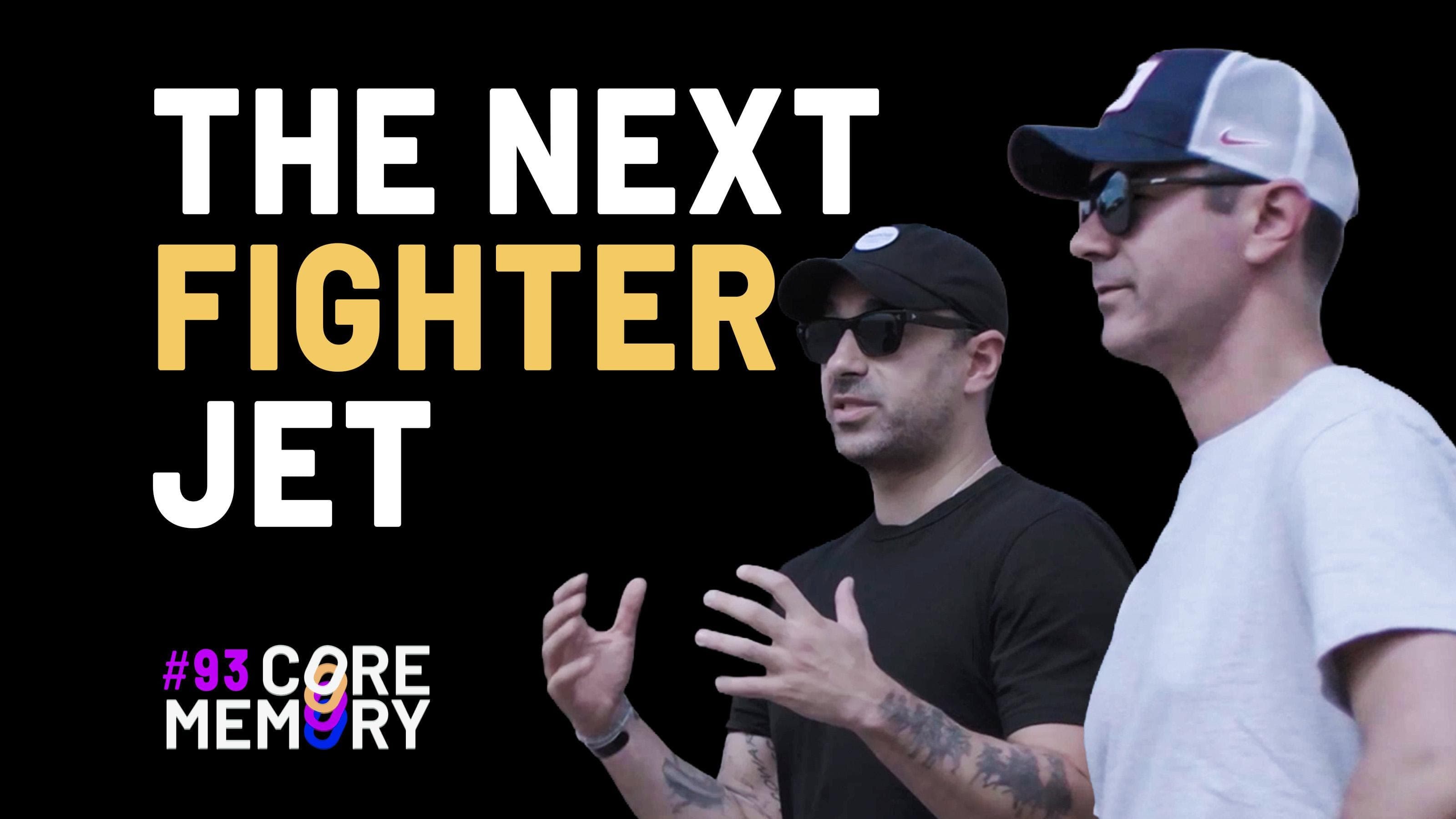
The Man Who Sees The Future - EP 94 Neal StephensonCore Memory · Oct 28, 2026
Pablos Holman has one of the most-watched TED Talks of all time, and that’s sort of the least interesting thing about him.
For the past 30 years or so, Holman has been traveling amid the most inventive and eccentric tech circles. He grew up in the wilds of Alaska and turned into a hacker extraordinaire. He helped start the rocket company Blue Origin with Jeff Bezos and sci-fi author Neal Stephenson. And he helped Bill Gates, Nathan Myhrvold, and Edward Jung create an invention factory at Intellectual Ventures.
If you like our stories, videos and podcasts, please do subscribe. All of this stuff takes a team to produce, and we could use your support.
These days, Holman is running a venture capital firm that scours the world for the biggest ideas from wild-eyed inventors missed by others. He published a book this year that captures some of his thoughts on invention and where our civilization is heading.
In this episode, we dive into the book, Holman’s bizarre career and the future of science and research and development. I think you will be surprised and entertained.
Our show is sponsored by Brex, the intelligent finance platform. Like thousands of ambitious, innovative companies, we run on Brex so we can spend smarter and move faster. And you can too. Learn more at www.brex.com/corememory
The podcast is also made possible by E1 Ventures, which backs the most ambitious founders and start-ups.
No summary for this episode yet.
Unknown
In the 90s, you know, we were trying to raise the alarm about how insecure computers were.
Speaker 4
And so we would just, you know, try to terrify people by stealing their passwords and credit card numbers and stuff. And I started doing that live on stage.
Speaker 2
I saw it like a TED Talk. Yeah. You end up doing it.
Speaker 4
Oh, yeah. Yeah. So then what happened? Yeah. Initially, I was just, you know, trying to scare other hackers, but that's preaching to the choir. So I was kind of the first hacker to sort of take the fun things hackers could do and go to other audiences that had never in those days, a hacker was synonymous with a criminal. So I started going to audiences like normal, you know, normal people and scaring the shit out of them.
Speaker 1
This podcast is sponsored by Google. Hey, folks, I'm Amar, product and design lead at Google DeepMind. We just launched a revamped vibe coding experience in AI Studio that lets you mix and match AI capabilities to turn your ideas into reality faster than ever. Just describe your app, and Gemini will automatically wire up the right models and APIs for you. And if you need a spark, hit I'm feeling lucky, and we'll help you get started. Head to ai.studio slash build to create your first app.
Speaker 2
Today's guest is Pablos Holman. Hello. Hey, man. How are you? Good to see you. I'm rocking. Good to see you. I'm going to introduce a bit of your background, and then we'll get to the book. Sure, whatever works. As an author, I always want to get the book in there early, but we just met a little while ago. However... Kind of, it's not like I ran in your circles. I just know a lot of people. For sure. You know, mostly you did a stint at intellectual ventures working with Nathan Mirvold and I assume Bill Gates is part of that. And I've written about them a lot and know Nathan. Cool. You worked at Blue Origin, which I have not spent a lot of time with Jeff, but I've covered space, obviously. Yeah. A lot. So you were in the early, early days of Blue Origin. And then I would say an inventor, a hacker, a renowned public speaker. And you've worked.
Speaker 4
Side hustle.
Speaker 2
And you just kind of worked. We're going to obviously get into it. All these fantastic, interesting jobs. Across the tech industry. And then you have a book out, Deep Future. Let me get my fingers out of the way. And this just came out about like a month ago. Yeah, like less than a month ago. It was a couple weeks ago. Okay. And it says creating technology that matters. Yeah. I mean, I went through it. It's like. It's right. I like that you. call out in the preface that you actually wrote it because some people don't do that.
Speaker 4
And I don't, I don't call it out, but they also don't write it.
Speaker 2
They don't write it. That's what I meant. That's what I meant. But your, your style was, I love it. It's, it's like, I mean, it's very engaging and, and just, it flows. It's like, it's, it's an easy read on, on, on deep tech on, on subjects that, that might be sometimes intimidating.
Speaker 4
Yeah. Thanks. Well, I'm, I'm, I'm not trying to be an author, you know, like you're probably a legitimate author. I'm just writing out of desperation. But I guess the side effect of that is you get a lot of heart and soul and a lot of what I really care about is in the book and things that I know about and I've worked on. So it's probably a little more unique than lots of other books, but people seem to love that, so...
Speaker 2
And I thought we'll get into the heart of the book in a second. There, there is stuff that you write about in here that I was going to get to pretty quick, but, but just super quick. I mean, like do, do tell people what's, what, what is the thrust? Why did you write this book?
Speaker 4
You know, I wrote it because I'm a computer nerd. I grew up early with computers and so my early part of my career was computer hacking, you know, just trying to, you know, break and build computers. And, um, By probably the late 90s, we had done a lot of that. And then I started thinking, well, maybe we could use these computers to advance other kinds of technologies. And Blue Origin was really the first chance I got to do that. And that was more about trying to, how do you go to space? But computers play a big role in making that possible. And at the same time, so I sort of veered into what we would call deep tech around 2001.
Before it was cool. Before it was cool. Everything I ever did was before it was cool. I've never gotten to be cool because I'm always way too early, but I've been right a few times. And, um, Then what happened is the, at the same moment, you know, the Silicon Valley, which I'd been kind of a, you know, I'm from sort of the Silicon Valley of the eighties and nineties, where we were really just trying to build all kinds of technologies. And then what happened, I'd say around the early 2000s is Silicon Valley just leaned a hundred percent into software to the detriment of doing anything else. And so we are at this moment where And we're 20, 25 years into that.
And we're kind of running out of things to do with software. So we had to redo all of our stuff as web apps in 2000 and then mobile apps in 2008 or something. And then now we have to redo them all as software. AIs, but basically it's just software going after the same markets and same businesses and so occasionally get a winner, but it's missing out on all the other amazing technologies in the world that could help really solve big problems and really go after bigger industries, and that's what we call deep tech. These days, I'm totally focused on that. I eventually got to- As a venture capitalist.
As a venture capitalist. I run a venture firm, but venture capital is a term that lacks nuance because What I'm doing, it really is more like Shackleton than, I don't know, Mr. Bean or something. This is a very intense kind of venture capital because we only invest in extremely high-tech stuff, so deep tech breakthroughs. It's a lot of robots, lasers, nuclear reactors, things that scare other investors, but we invest, we're usually the first investor for these kinds of mad scientists. It's a wild ride. We do a lot of them. So, yeah, we have probably the most wild portfolio in venture ever.
Speaker 2
All right, what do we do at Core Memory? We cover innovative, fast-moving, forward-thinking companies, which is why Core Memory is sponsored by Brex, because Brex is the intelligent finance platform for many of these companies, 30,000 companies from startups to the world's largest corporations. rely on brex's technology for their finances they've got smart corporate cards high yield business banking and expense automation tools that are fantastic i hate doing my expenses and brex's ai's and software run right through those expenses figure out where we're spending money and take care of so much stuff for you so you don't have to waste your time on it yourself Go to brex.com slash core memory to learn more and just, you know, get with the program. Let's get going. Let's get out of this archaic finance software and move toward the future. Core memory and Brex. I noticed when we met, you have these kind of iconic glasses. Oh, man. They're even on the book.
Speaker 4
I don't think I've ever talked about them on a podcast. So these glasses were made back in decades ago when Oakley was in their heyday. And their designers were like miniature gods. They could do whatever they wanted. And they built this factory to make titanium frames in I think Arizona or maybe New Mexico, I forgot, and Nevada, somewhere around there. And to cast a pair of frames like this takes 425,000 watts of energy. And there's all these volatile gases in the casting process. It's investment casting. So you destroy a mold for every single pair. So it was just insanely intensive to do. And the story I heard is the factory eventually blew up. These gases caught fire and nobody will ever make glasses this way again. But what people don't realize is they're way overbuilt. I've been wearing the same pair for 20 years.
Speaker 2
What are they made out of?
Speaker 4
Titanium alloy.
Speaker 2
Titanium, okay. and um and so uh they're the best glasses ever made they fit my face really well they curve around and correct my peripheral vision they last forever you could drive over them with a truck they're super tough so um so i've been wearing them because i'm in labs all the time i need safety glasses anyway so i just and the one
Speaker 4
thing i use more than my phone or my computer is my glasses so I have overbuilt them. And I've been wearing them so long. And at first when I wore them, people just thought they were weird. But there is a thing with sunglasses. Like sunglasses and sneakers can be super weird. So you can't dress totally weird all the time or people think you're weird. But even a banker can wear like Oakley sunglasses and Yeezy sneakers and get away with it. But if you take the lenses and make them, you know, clear instead of mirrored or whatever then they're not sunglasses anymore they're glasses and now they look weird anyway so whatever for years people thought they were weird but now i get compliments every day i've been complimenting my glasses like twice already today so somehow they are veering into cool which probably means i need to uh you know again once again i was a decade or two early and time to make new glasses i guess but now now everybody thinks they're just part of me i'd be in disguise if i took them off so this is they ended up on the cover of the book yeah
Speaker 2
When I said you were a public speaker, what did you say? You said by accident?
Speaker 4
Well, so I inadvertently became like a wildly successful public speaker. Not because I'm good at it or trying or because I planned it. No one ever taught me what to do. I made it up. But what happened is in the 90s, we were trying to raise the alarm about how insecure computers were. And so we would just try to terrify people by stealing their passwords and credit card numbers and stuff. And I started doing that live on stage. You ended up doing it. Oh, yeah. Yeah. So then what happened? Yeah. Initially, I was just, you know, trying to scare other hackers, but that's preaching to the choir. So I was kind of the first hacker to sort of take the fun things hackers could do and go to other audiences that had never in those days, a hacker was synonymous with a criminal.
So I started going to audiences of normal people and scaring the shit out of them. And it was just for my own entertainment. I thought it was funny. But people loved it. And so I got invited everywhere. And for me, it was this great... experience because if you go speak at an event you know they treat well but you get to hang out with the other speakers they're usually interesting people and so I figured out it was this like Trojan horse to meet smart and interesting people so then I started just going all over the world speaking just to hang out with the other speakers for no good reason just because I like smart and interesting people and then um And then, you know, a few years into that, and if you watch those videos, like one of them became like the, it probably still is like the biggest video on YouTube about hacking, just because it was there early and everybody who searched YouTube for hacking ended up watching me.
And so it has a quarter, I don't know, like 25 million views or something. You've seen it? Yeah.
Speaker 2
It's the TED talk I saw. It had like 27. Yeah. And it's in 240p.
Speaker 4
Like I didn't even know the cameras were rolling. So I'm on stage just kind of screwing around. You know, I don't even have a, I don't even know if I had a plan. So I certainly had no point. And anyway, so that speaking career kind of took off because shortly after that, I realized, oh, you know, maybe I should have a point. So I started trying to make a useful point. And I started, and I also started showing the inventions and, So it was like half hacking, half inventions, and then eventually I sort of retired out of the hacking stuff, hacking computers anyway. Now I'm trying to hack everything else in the world.
But it was a cool experience for me because I got to build this huge network of people all over the world. So now I've got Nobel Prize winners on speed dial. So I'm kind of cheating at life because I just call a phone a friend for everything I do. It's pretty awesome. And then I became very successful as a legitimate public speaker, I guess you could say, because if you think about businesses, they all have been told they need to innovate or die. So you got CEOs and executives, and they know, I got to innovate or die. But the dying part, they sort of get. The innovation part, it's not really their job.
So they think I might know something about it. beating executives over the head about innovation. Because I can sort of distill some of the super technical things that are coming, explain them in a way they can sort of get their heads around and understand. And I like to do that. And so now I do a lot of public speaking, but it works. It's still a great way to meet a lot of folks that I wouldn't otherwise.
Speaker 2
Yeah, I think in the video I saw, It was kind of comical now watching it in 2025 to some degree. There's a bit that I ran into where you were doing this demo of, I mean, I was in a hotel. I think you were like, oh, I was staying at the hotel all you guys were probably staying at last night. And it had web TV. Oh my God, yeah. And then you're intercepting people's traffic and you're showing like, well, I could probably tell if you were trying to dial up a porn video or watch TV or buy a movie.
Speaker 4
Yeah, that was a fun one. So some other hackers had figured that out. A guy named Major Malfunction, Johnny Long. These guys had figured out just hackers hanging out in a hotel room were going to get bored. So they figured out... You just plug a USB infrared transceiver into your computer and you can send any code you want. And you can send codes the remote is not supposed to send. And what people don't realize is in a hotel system, you have all these TVs, you know, a thousand of them, one for a room on the same network. And then they're all controlled through different codes that your remote can't send, but mine can't.
And so in those days, it was like 19 out of 20 hotel TV systems were vulnerable to this attack. And so I could control what every other TV in the hotel was doing. I could see what they were doing. And so a lot of them had a web browser on the TV. So I could just watch people doing stuff on their TV. So yeah, it was wild. But look, in those days, I could get away with this stuff and kind of, you know, the law enforcement didn't know what to do with hackers, you know. And I was friends with the CEOs of all the tech companies anyway, or founders, a lot of them. So I could kind of get away with stuff.
But yeah, now you couldn't probably do any of that.
Speaker 2
Yeah, I loved that the audience was like, look at this. And I'm like, can he do that? Where were the cops? Oh, yeah.
Speaker 4
I made a lot of friends that way. Made a lot of friends by stealing people's passwords.
Speaker 2
Well, in the book you write about, you've got a pretty brief autobiographical portion, but you write in there that you wanted people to know where you're coming from, and you did come to all this very unconventional route, I would say. So you were born in Alaska, and you said your mom and her girlfriend, I think they lived in New York, maybe? Yeah. They wanted to get married, and they figured out Alaska had a good— Surplus of males. Yeah. Right. And that's how you end up being born in Alaska.
Speaker 4
Yeah, so that was in 1969. They determined there were no good men in New York City and resolved to drive to Alaska to find husbands. I mean, there's no Google Maps, so they didn't know where Alaska was. They asked at every gas station which way to Alaska. And at the time, it was like nine-to-one men in Alaska. It was crazy because all of them were imported to work in the oil industry. And fewer women went. And so my mom and her girlfriend drove a Volkswagen Beetle. They showed up in Alaska and had the shortest mini skirts in the state and their pick of husbands. And they picked a couple of good ones and it worked out. Yeah. So when I was born, Alaska had been a state for like 12 years. So it was like a really wild west kind of place, you know, everybody that was there aside from the native Alaskans and there weren't that many of them. Um, everybody older than me came, moved there from somewhere to get away from something or somebody. And so they were very, it was a very independent minded, but like rugged, uh, you know, very resilient kind of people where I grew up.
Speaker 2
Were you in Anchorage or in the boonies? I started out in Anchorage and then I ended up in the boonies for, for formative years.
Speaker 4
And, um, But by boonies, I was in the relatively cosmopolitan boonies because we had road access. So there's only a three-hour drive from Anchorage with nothing but nature in between. I've since learned that there's nowhere else in America where you can drive three hours with nothing. The next stop is Anchorage. That's three hours of driving in a small town called Soldada. So how does a kid out there in that time end up with one of the first Apple computers? Well, my dad had put some of the first computers in the oil industry. And at that time, that was the big rich industry. And so he didn't, he wasn't really a computer guy, but he ran the, like what was called drafting department where they, the engineering designs.
And so they were putting these designs on computers for the first time doing CAD in the 70s, early 70s. And so when Apple needed, when they made the first Apple II, I think they just needed to sell them to somebody. And the oil industry was rich. They're like, hey, want to buy some computers? And my dad's like, I'll take one. And so he bought a computer for me. I don't know if it was for me or if he just thought we should get one, but I took it over. And my little brother, I think, still has never used a computer. He's good for other things. But yeah, so I got one of the first Apple IIs ever made.
And by extension, one of the first computers in Alaska, and certainly one of the first computers in Sultana. So there was just hardly anybody around who had ever seen a computer, much less knew more about it than me. And that's why... My entire experience was autodidactic. I'm the same kid that 10 years earlier would have been a muscle car tuner or something. An Apple II was something you operated with a screwdriver. You'd pop off the top and pop some chips out and try and solder on new ones, stuff like that. It was like a Jeep. And then the thing didn't have graphics. It couldn't do anything.
All you could do is crash it and reboot it. And so then eventually I figured out, like, there was this thing called Sector Editor where you could see the actual data on the disk, on a floppy disk. And there wasn't much data because these things didn't hold much, but you could actually read through the actual... not binary, but hexadecimal representation of binary. So you could read hexadecimal. So I learned to read hexadecimal not much longer, you know, like what, something like five years after I learned how to read, you know, the alphabet. So then... Then I was trying to figure out what this stuff means, like just another language.
I learned English growing up, but here's the next one. So I started learning to read hexadecimal and figure out what this stuff means. And a lot of it you can't read because it's machine language. It's for the computer. But you eventually see the patterns and figure out, OK, this thing keeps popping up. What happens if I change it? And you can change it. In a sector editor, you can edit that to some other code. And first, it's just like this random walk. where you're like trying different things and then eventually you convert and all that kind of seems to not crash. So let's do more of that.
And then, uh, so the first language I kind of sort of learned was 6502 assembly language, which is machine language for an Apple II. And then, uh, that's, that's completely masochistic. Like nobody would do that on purpose, but. But you learn a lot about what the ones and zeros are doing, and that was kind of where I started. And then all through the late 70s, early 80s, you know, nobody could learn more than me. I had 16 hours a day with nothing but freezing cold outside, so I... just poking at this thing. And then by the time I got a modem and was on a mainframe and I could pick the brains of computer science professors, and they didn't know as a kid, there's no pictures on the internet in those days.
So I could kind of learn faster and I could devote more time to it, I think, than probably anyone on earth. So I was able to learn a lot about computers in those days. And then maybe by the late 80s, software engineering became a real thing. It became professionalized. There are lots of people who are way better coders than me because they learned And I learned by like reverse engineering. So, so then, then, you know, everything kind of got systematized and professionalized, but I had that early start and I always just kept with computers, like trying to learn the new things.
Speaker 2
Did your parents try to get you to go outside?
Speaker 4
Oh yeah, totally. I have. I have letters sent home from school that my mom saved, like pink slips saying, hey, this kid probably should spend more time with actual humans than with the computer because he's getting a little weird. Things like that, for sure. And nobody could imagine that I wasn't wasting my time. They all thought this was a complete waste of time. I had a skateboard and And my parents would say, like, why don't you go skate? Like, because that seemed like a better waste of time than the computer. So this is just an unfathomable thing to imagine now in a way. But at the time, like, it was just a computer was a completely unproven entity.
But, you know, Revenge of the Nerds, I was right. Computers got faster and more powerful. And now here we are. So that was the start for me. how do you how did you end up you i know you've spent some time in silicon valley but it feels very much like you were in this washington the seattle tech scene how do you end up yeah i think spiritually i was always from like silicon valley um took me a while to get out of alaska and into silicon valley but i did and had companies here in the 90s and then um And then this sock puppet attack killed the last one. It was a, we were doing AI for the stock market in the late nineties, early 2000, 2000.
Speaker 2
And, um, and then you had a company trading stocks. Yeah.
Speaker 4
We had automated companies called Zego. We had automated, uh, AI systems that could read the news, figure out what stock it was about, figure out if it was good or bad news, figure out how to trade on it. And, um, That hadn't been done before. Like 100% of trading was humans in those days. Now it's 0%. So it was groundbreaking stuff. That was all working great. We had huge brokerage customers like Merrill Lynch and E-Trade and stuff like that. But in a cavitation like .com, an event where the whole market flips when a bubble pops, then everything gets shut down. It doesn't matter your merit. It doesn't matter what you're doing.
We had customers, revenue work, you can ask, but we got wiped out with everything else because investors can't deploy in capital. If you're venture funded, that's just one of the risks you take on. And we're going to see that happen again pretty soon with AI companies. But in the meantime, it can be a great ride. So we It ended up in San Francisco in those days, became a ghost town overnight. Everybody fled, which on one hand was kind of cool because it had just started getting saturated with these opportunists that had come in for the gold rush of .com, and they kind of sucked, we thought, anyway.
But then pretty quickly realized, oh, yeah, the nerds can't stay. And so, cause we couldn't start companies, we couldn't do anything. And, you know, it was the most, maybe top two, most expensive city in the world. So in the summer of 2001, I was like, well, We're not busy. Let's go on a road trip. So we drove up to Seattle to see friends because in Alaska, as far as Alaskans ever get is Seattle. So we had a bunch of friends there. My brother was there. And if you, like the fact that I made it to California is like a historic event. Alaskans are stuck in Alaska, but all the planes go to Seattle.
So anyway, so we knew people in Seattle. So we went to visit Seattle and we realized Oh, for the price of our apartment, we could get a whole neighborhood in Seattle because at the time it wasn't booming. And so we figured out, well, if we're going to lay low, let's do it here. So we went to Seattle. But on my way, as I went to Seattle, I figured as long as I'm near an airport, I can go wherever and do whatever. But almost instantly ended up... going to Blue Origin. At the time, there were like two people there
Speaker 2
Yeah, wait, you make that sound real easy. I've never actually read a book about Blue Origin, and for some reason, mostly... Yeah, I don't think there is one yet. Yeah, there's some that have done a bit, but I've never... I've covered every rocket company, I think, except Blue Origin, mostly because they used to be quite secretive, and then...
Speaker 4
I think less secretive and more just quiet. Yeah, like they didn't have something to show, so why talk?
Speaker 2
But like in the origin story, as just the tidbits that I have is Jeff Bezos wants to do something in space. He's kind of friends with Neil Stevenson, the sci-fi author, and they're thinking about things they could do. It sounds like you were kind of there with- Well, so when I showed up, so- I think Neil was hanging out with Jeff and Jeff was explaining as well documented
Speaker 4
now that since he was a kid, he wanted to do space stuff. And Neil was like, well, how about now? I'm just like, okay. And so they kind of got... This is in 2001. This is in 2000, I think in 2000 even. And then... So then they had... So then Neil had roped in a couple of physicists and they started looking for like a building that got a... When I showed up, they had gotten a building in south of what's called Soto, the industrial neighborhood in Seattle. And they had bought out the remains of a crusty old machine shop because there used to be all these machine shops supporting Boeing back for decades. But all these guys were getting old and ridiculous. you know they would have retired but they knew anything else to do if they went stayed home so they kept going to work and doing nothing and these machine shops became you know you could buy for a song so we bought a whole machine shop Just to get the tools, but the crusty old machinist came with it. So anyway, so we had a machinist and then we hired some more. But anyway, when I showed up, it was basically just Neil and Keith Rosema. And for the audience is Neil Stevenson, so science fiction novelist.
Speaker 2
Legendary science fiction author, yeah.
Speaker 4
Yeah, so Neil is, in the book I said that nerds are often atheists, but even so they respect a few nerd prophets, and Neil is chief among them, which is true. Neil wrote some of these novels that created the first practical visions of things like virtual reality and snow crash and of of even the chatbots we experience now in the Diamond Age. It's incredible stuff. So anyway, Neil is delightful. But point is, he was spending about half his day writing novels and the other half working on Blue Origin. And then Keith was there full time and we had some other folks. But the point is they just needed warm bodies and I was available and knew how to work computers. And we need some computer stuff. So that's how I ended up there.
Speaker 2
Okay, since day one, the Core Memory podcast has been supported by the fine people at E1 Ventures. They are a young and ambitious VC firm in Silicon Valley, investing in young and ambitious companies and people. Thank you so much to E1 Ventures for all your support. Originally, Jeff, he didn't want to do rockets. It was kind of like, let's find a better, different way.
Speaker 4
It's not that he didn't want to do rockets. He just wanted to do the best thing. And if you're going to start 50 years later or whatever, later than NASA, you might as well take some time to evaluate your options. And so in 2001, that's when I was there, we started trying to find alternatives to rockets and see if any of them were better. And we had a huge advantage over NASA's era because we had computers and we had a lot of smart physicists and stuff that could help. We looked at alternatives like other ways of going to space besides a rocket. A problem with a rocket is it's 90% fuel. So you burn 90% of that thing every time you launch it. You build this huge thing, you just can't carry that much stuff to space.
Speaker 2
The physics of getting out of Earth fairly work.
Speaker 4
It's real simple, yeah, because if I put you on a rocket, I need fuel to move you to space, but now I need fuel to move that fuel. And so it's just this exponential fuel problem. And so a rocket is... You know, highly developed, but it is not really a great way to go to space. So that's where we're at. So we looked at other ideas and there are really cool ones. Some of my favorites are like, one of them is this idea that we didn't, so I think a couple of NASA people came up with it, but Neil got fixated on it, which was to make a 20 kilometer high steel tower. So it looks like the Eiffel Tower, same aspect ratio maybe, but just a hell of a lot bigger.
And it sounds kind of crazy, but, you know, like turn Earth into a lollipop or something. But it... There's no technology needed to do it. It's a lot of steel, but less than other things we've done with steel. The railroad system is a lot more steel. If you did that, then you could just drag things up an elevator. That's efficient. Then lob them into space from the top. That was the idea. That might still work, you know, like nobody could prove it wouldn't work. It just sounds crazy, but it's not. And then another one, which is what I think we will eventually do, and we are very close now to being, this is just getting more practical every year, is you build a craft that's going to fly space, but instead of hauling fuel, you just beam energy to it.
And so we have beam forming and beam steering capability. You could use radio waves or lasers to beam energy to this craft. And then it could turn that to propulsion. Maybe it doesn't get to space as fast as a rocket, but it can just slowly ascend into space. That would be awesome. And so in those days, the problem we had was that NASA and Russia had already spent billions and billions and billions on rockets, and we could inherit all that. and start on their shoulders. And so it eventually just became clear that if we could make the rocket reusable, so we're not like throwing it away after every launch, the economics of it would be a lot more practical and we'd just get the bigger wind faster doing that than starting from scratch.
Yeah, and there are now... Obviously, SpaceX and Blue have done it.
Speaker 2
We've got SpaceX doing that, but then we still do have some people trying kinetic launch, like slingshots and giant guns.
Speaker 4
Oh, man, there's such cool stuff. I'm sure you've seen Longshot.
Speaker 2
So we did a video, go to our YouTube channel.
Speaker 4
Oh, yeah, that's right.
Speaker 2
Check out long shot. It's pretty awesome. And then I wrote the first story ever, I think on spin launch, which was this centrifuge and they're still kind of going at it, but it's, they're kind of changing a little bit.
Speaker 4
So that, yeah, that one's a little tough. Um, and, and, you know, those things are really cool. I think they're kind of, uh, special purpose. Like you can't move humans or any biological stuff. Um, in those types of launch systems. Because you throw the object into a wall of atmosphere at ridiculous tree forces. But they'll get, I think the, I think the kinetic launch thing, like the launch hostile railgun thing, you know, they're doing a practical thing for version one, but I think, you know, if you project out in the future, the thing will be on, uh, superconducting, you know, tracks. So there's no friction and it'll be, you know, electric propulsion, you know, electromagnetic propulsion and, uh, uh we'll be able to just lob fuel up and supplies and you know energy bars and red bull up to astronauts you know what did you make of how jeff's mind worked on oh man in those days well that honestly i'm not really a space nerd obviously i'm a computer nerd and you know space is cool but um What was amazing to me is that I didn't come in with this, but what I left with was what I really learned from Jeff, which is when you look at what Blue Origin's mission is, people think it's just like billionaires with their big swinging rockets having a pissing contest in space.
That's not really what's going on. I mean, I get that it's good for memes, but what's actually happening, the vision for Blue Origin is thinking about the future of humanity. If you believe in humans and you believe that we are something special, and I do, I had that part already, but, and you think it's worth preserving, then you would want to look at like, all right, what are the, what's the long-term, you know, prognosis for this species? And what it is, is in the best case scenario, earth just melts into the sun. That's if we escape like a whole bunch of other real existential threats, like, you know, like, you know, comets and asteroids and shit bombarding us and wiping us out as, you know, fairly well theorized about what happened to dinosaurs, right?
So we have, you know, we have those risks. And so in the very long run, you do need a plan B for humans. And, you know, if not like a planet B. And so one way or another, and I think, you know, lots of people are on this now because Elon has popularized this notion of multi-planetary species. But the point is, yeah, you want a backup plan. And if not for the exploration, which again, doesn't really turn me on that much, but a whole generation a few years older than me grew up on Heinlein and Star Trek. And so they have that in them. And I think there's some merit to it. But the point is, Whatever that is, you can't do it in 10 years.
We live in a world, especially in the US, where we're tuned for 10 years. We can do 10-year projects, lots of them. We're really good at 10 years. Anything longer than that, too long. A project like Blue Origin's vision is how do you get humans thriving in space? Not just visiting, but like literally thriving in space. Maybe you spend your whole life in a space colony or on Mars and then turn Earth into a wildlife refuge. that you come visit once or twice in your life, something special. This is a really special place. Jeff's vision is so much about making Earth as awesome as it can be and using space as a way to do that.
Move heavy industry into space. Do the mining on asteroids. Do your manufacturing and construction nasty stuff. Do it in space. And leave the good stuff, maybe the people even, on Earth. And so that's all cool. And regardless of what you think about those visions, to me, the part I took away from it is, hey, here's somebody who's learned to think on longer time horizons. Think on... about generations yet to come. I'd never done that before, but what helped me about it so much, even if you didn't care about that, I thought it was very valuable for me because now when I look at things, I start that way.
I say, okay, Look at any problem that you think sucks in the world. Like, okay, you know, I'll go back to electric cars, let's say. Like in 100 years, are we going to keep burning shit in our car or will we just do this, you know, electric thing? And it's not hard to sort of come up with an answer. Almost everybody would think, oh, yeah, in 100 years for sure they'll all be electric. And in 100 years, all the problems that might stymie you could be addressed. It's like government regulation and regulatory capture and assholes in business and whatever. All that stuff, it's not hard to imagine in 100 years, maybe you could address all that.
So I cheat when I look at technologies. I look at that and say, okay, 100 years, would we keep burning gas or would we do electric cars? Okay, it's going to be electric. So then you can start to say, okay, we know what the future is really going to be, very likely, or our highest conviction based on what we know what it would be. Could we do it in 10? And so then you could say, all right, what would it take to do that in 10 years? And you could see like Tesla was built essentially in less than 10 years, 10 years to model S or less. And so that's kind of what that is. That's an expression of, oh, we want to be electric.
Could take 100 years. Right now, we're on the 100-year plan, but could we do it in 10? And what would that take? And sometimes you can sort of craft that and believe in it, and then we can co-opt the machinery of startups and the machinery of venture capital, and we can start to go after these things that looked impossible. And I think a lot of times, at least my lens is really about, can you find a new technology that gives you a force multiplier? Because if I find a new technology that that's 10 times better, now that 100 years maybe goes to 10. And so I'm looking for those things. And when you were hanging out with Neil Stevenson, I would find that really intimidating.
Speaker 2
And it must be strange for him to Maybe it's awesome, but just to get so much stuff, right. Does he just, does he just walk around and think the rest of us are, are like mental?
Speaker 4
I, I, well, I really love Neil. Um, I mean, for a year or so, I'm not psychophantic at all, which I think is a big part of why I am able to sort of hang in there in places I shouldn't be. Neil is really wonderful human. I have a lot of respect for him. He's done a lot for me. We've worked together on all kinds of weird stuff for decades. Some of it's in the book. A whole bunch more is not. And we don't work on anything anymore. So, but I would say, and I don't think he knows this, like I've never said this, but like, I'm a Neil Stephenson fan. Like I spent my career trying to implement the things in his novels.
Yeah. And you'll get that idea kind of reading deep future book. But Neil wrote a book called Cryptonomicon in the 90s, which was about cypherpunks. And that's what I was doing. It's not directly, it's a novel, but it's inspired by what cypherpunks were doing trying to make cryptocurrencies in the 90s. And the book came out in like, I want to say like 98 or something. And I've been a fan since Snow Crash came out, and that was in 92. So before the internet, it's either 88 or 92. I think it was 92. So I'm a big Neal Stephenson fan, and I think Neal has to write about these things. I have to figure out how to build them, and we'll see in the long run if I succeed.
But I think what's wonderful about Neal, he's got a... super curious mind he is um you know i think he's the kind of guy he grew up in ames iowa which is all super educated scientists um and i think that neil had something in him like identifies as that but he got on a different track and i think he just it's so interesting because like neil is probably like he's got a little bit of uh rebel spirit in him, like a little bit too much to go work as a scientist and play that game because it's very structured now and it's different than it was in maybe his era and before. And so I don't think he wanted to do that, but he's a math nerd.
He loves, and he could have easily just stuck in academia his whole life, but somehow he ended up Just some personality tick or something. He got out of that, and the novel thing worked out. And so he didn't go back on that track, but I think he sort of like on the inside still identifies as that. So he's very smart, very well-educated, extraordinarily well-read, and... and he loves to play with these ideas, but also map them to practical things to do. So he, like me, we want to build things that exist or that are real, that solve problems, like just the academic pursuit of like, of just for, just for science's sake, figuring things out and playing with ideas.
That's not good enough. We want to like build things. And so there, there's a kind of a, makeup in him that's like that. And so anyway, yeah. So Neil is also kind of oddly like, you know, introverted in the sense that he doesn't need a lot of social action. I'm the other way around. I need people. So I'm aggressively like, I'm on a plane all the time just trying to go where people are because that's how it feeds my mind. I need conversations. Doubt. And Neil can learn more from books and reading and thinking. And so he's able to stay put and get a lot done. Yeah, I don't know. Yeah, one of my favorite people on earth.
Okay. Sorry. I'm going to go fast through this one bit just because there's a lot of things I
Speaker 2
still want to ask you.
Speaker 4
No, we've got time, or I do anyway. I'm long-winded. I guess you can cut this down if you need to.
Speaker 2
No, no, no. I love this. You worked at Intellectual Ventures. I'm going to give my version of the context on this. There's this company that was set up by Nathan Mirvold, Edward Young, backed by Bill Gates and some other wealthy people, and was both awesome and controversial in my estimation. One part of this was they wanted to gather a whole bunch of smart people together. invent a lot of things, did a number of things that were kind of tied to some of Bill Gates's humanitarian efforts and things like that. Of course, they end up getting pilloried pretty hard in the press at one point because they were held up as this example of ultimate patent troll, this idea that they were just going to think up things in a room and pat them, and then they may or may not ever turn into something, but people would have to come to them and buy a license to their intellectual property.
It's been roughly, I want to say like 15, almost 20 years since they hatched that idea. I followed it in all the various capacities. I think I'm the rare reporter that actually went and chased down some of their inventions that turned into startups and things like that. I've got a pretty deep soft spot for Nathan Mirvold. He's the world's ultimate polymath is like the most, one of the most fascinating people you can talk to and hang out. So, okay, given all this context and for a while, it was like this big, bright, shining object that was both exciting and controversial. People talk about it less these days.
Right. like what was your experience like and, and what are we to make of IV with all this hindsight now? Okay. That's a lot. Yeah. Um, did this work or was it a good idea, bad idea?
Speaker 4
Let me start, let me start. There's a couple of things there, but let me start with this one. You know, um, If you try to name artists that you know or know of, we were like painters. How many painters do you think you could name? Quite a lot.
Speaker 2
Okay.
Speaker 4
How about music artists, you know, singers? A lot. Also actors? Yeah. Try inventors.
Speaker 2
Yeah, well... That aren't dead. That aren't dead. I know one who worked for IV, which is Lowell Wood, who I think has the most patents from Thomas Edison. I probably could do a few, but... More than most people, but still a few.
Speaker 4
But I'm in a weird job. Yeah, fine. But even so, nowhere near...
Speaker 2
We don't have these iconic figures.
Speaker 4
It's not a legitimate career choice. And the thing about it is we don't count inventors amongst our creative class. We are pretty good at celebrating creative people of other types, but not inventors. They don't count, but you could probably live without all of the painters, all of the singers, all of the actors. Without inventors, you would not be here today. None of us would. I think they're our most important creative class, and we have completely thrown them under the bus in our modern society.
Speaker 2
And so you're kind of excluding, like, do I count? I don't want to derail us. I just want to put boundaries around this. Do we exclude Sergey Brin and Larry Page for coming up with PageRank?
Speaker 4
Well, that's an interesting one. Okay, let's look at PageRank. So PageRank was their algorithm that made Google the vastly superior search engine starting, and it was about 2001, right now. And they beat all the competition because everybody else had shitty algorithms by comparison. PageRank was a really cool insight where it kind of used all the pages on the web as like a voting mechanism for which was the most valuable page for a given topic. And that's how it ranked search results. And that turned out to be so useful that Google was a rocket ship. They had a patent on PageRank. So a patent is the only mechanism we have for rewarding an inventor for their effort.
Now, we don't celebrate patents anymore, and we don't celebrate inventors. What we celebrate are entrepreneurs. We celebrate the people who can... Steal that patent, make a product, sell it and make a shit ton of money, go public and make everybody rich. So we celebrate that. And that's why our biggest success stories these days are not inventors. They are entrepreneurs. And some of them built amazing businesses, even with no invention. You know, what did Uber invent? What did Airbnb invent? What has Instagram invented? These are big success stories and there's no actual technology invention that they brought to the table.
I think we're a little miscalibrated on that. I think that what would be better is if we could take those inventions and inventors, pair them up with our best entrepreneurs. What if you gave Travis from Uber, a nuclear reactor, and made the world better by bringing a real technology to bear that can help make the world better in some way. And so that's what I'm trying to figure out how we do. Intellectual ventures was an early attempt to figure out how do we course correct on this? How do we fund inventors? How do we fund invention? And we tried a bunch of different things. I don't think it makes sense for me to try and pick apart all of it, and probably at this point, it's not even that interesting to the audience, but I'll talk about the part we did, which was the in-house invention.
That's what I worked on. So we built a lab. Again, this is another weird thing where Nathan had started doing intellectual ventures, but had always wanted to build a lab, and then he saw that Danny Hillis and Bran Farrin had this cool lab in L.A. What was that, Applied Machines? It was called Applied, I want to say Applied Invention. Applied Materials? No. Applied Minds. That was the first one. Now it's called Applied Invention. But anyway, they had a cool lab. And so Nathan's like, I want a cool lab. So he invited Neil, actually, to come over and see what he's doing. Neil drug me and Keith, who were the other folks from Blue Origin.
This is 2007. We'd all left Blue by now. But we were the guys you call, I guess, if you want to make a bat cave. So he called us and we came and showed up. And we don't get details. But the point is, we built this invention lab. And what Nathan wanted to do was invent in all the areas except for software, basically. I mean, we did some software. But by and large, it was about inventing. Because a new technology... So we have scientific research. That's your academic labs. That's basic research. And we have some funding for that. Never enough. But basically, we have a system for scientific research.
Their job is to discover how does the world work. You know, what does all this mean? That's one thing. That is not the same thing as invention. At the other end, you got your entrepreneurs. That's commercialization. Take something and go find a market, find a product, serve customers. In the middle, that's invention. So the invention is the part where you take the output of scientific research and try and apply it to a problem. Does this new discovery, new algorithm, new chip, new sensor, new whatever, change anything humans have ever done? Can we do it faster, cheaper, better, maybe in a more humane fashion?
Like that's the goal of invention. So you, every day we get these. We get them from, you know, you just read journal articles, you know, read science and nature. And I love IEEE Spectrum. Shout out to those guys. They're the best. They're my favorite thing in my news. Every day it's cool new discoveries, cool new shit for the future. It's like a Lego box that just keeps growing. So anyway.
Speaker 2
Have I told you about core memory?
Speaker 4
Oh, do.
Speaker 3
Oh, yeah.
Speaker 4
Oh, that's right. Oh, yeah. I did your show. Well, you know, your show is awesome because what you do is you make these things accessible. I'm just kidding. To a wider audience that doesn't want to read journal articles. I'm kind of in a weird spot where I want to get these things before you find out about them. So I'm kind of, you know, I'm not your audience, even though I do watch the videos because they're, because you get to go all these cool places. So the point is. I was joking.
Speaker 2
I triple E is fantastic. It is fantastic.
Speaker 4
And especially compared to some of the other things that used to be. So point is invention is that spot in the middle and we don't have a system to fund it, to support it, to help out. And when you look at inventors, and I know a lot of them, you know a lot of them, these are very special people. These are people who sacrifice a lot. They sacrifice, they could have been Bitcoin miners, they could have made a FinTech company, they could have been a SaaS hole investor, they could have been all these other things. They've sacrificed on that to try to figure out a new thing, something that the world doesn't have that's never been done before.
Those people are special, and we don't support them. They're in a garage with crazy hair and a DeLorean, and they can't afford Uber Eats delivery. And then if you imagine that person, and then once they got their thing, they got to write a patent. I don't know if you've read, I mean, patents, I used to love reading the old patents. They're beautiful. They're works of art. Now, if I invent something, lawyers turn it into 800 pages. I can't even tell what I invented anymore. It's a complicated game. But now you've got to get a patent. If you're a great inventor, you might get three a year. A patent is basically 10 years before the startup.
We're all very familiar with the failure rate of startups. But a patent is 10 years before the startup because you have to, yeah, I got the patent, but now it's all this work just getting to the point where somebody might invest and make a startup. So you're going to be wrong so much. You're going to be wrong almost all the time because you can't guess 10 years in advance what the market's going to want, what other technologies might come, what the competitive landscape's going to be, who's going to get hit by a bus in the meantime. Like everything could go wrong. So the only solution to that extreme risk is the power law.
That's shots on goal. Now, we all understand this from venture capital, because that's what venture does. Venture says, okay, I'm gonna take $100 million, gonna put it in 10 startups. Nine of them are gonna go to shit, and one of them's gonna pay for all the failures. That's the 10 to one game. At Intellectual Ventures, in the lab, we were in the 1,000 to one game. So we would get 1,000 patents on our own inventions and try and get one of them to pay for all the failures. And you can't guess at the beginning which one. So you have to get all 1,000. A patent for us cost 150, 200 grand in its lifetime.
So you do that 6,000 times. We did 6,000 patents on our own inventions. And at our scale, we get enough hits to make it all work. But I don't know anybody else on earth who works at that scale. So that's what I'm saying. There's a real fundamental problem here with how we support inventors. Now, you can bitch and moan about intellectual ventures, having too many patents, buying too many patents, suing people for infringing on their patents or whatever. But until you have a better idea about how we're going to invest in and support invention, I don't want to hear it.
Speaker 2
Yeah. I mean, you hit on this, but yeah, for some people who don't know, I mean, I spent quite a bit of time with intellectual ventures, and there were worlds that I was not aware of, which is that there are these inventors, these scientists all around the world, and they really are kind of struggling sometimes, and they're coming up with these ideas, and they're sometimes not... really wired to deal with all the mechanics that go with it, or they're this lone wolf a little bit. And so there was this hope to put some of this structure, offer them some money, make this into a way to support them.
One of the inventions that came out, which you write about in your book, was TerraPower. I mean, TerraPower came out of intellectual ventures the original idea was that you would take the the waste nuclear matter from from other nuclear reactors and kind of reuse it and and create energy um that story has been playing out for 20 years plus and and let's get into that for a second so Again, I'm kind of curious what we learned because so we were trying to do this amazing thing, take this waste energy, harvest it, use it. And then a bunch of things happened, one of which was like the US. So Bill Gates was behind this company.
I mean, he was chairman, I think, the biggest funder.
Speaker 3
Yeah.
Speaker 2
At that time, this is kind of... This is, I mean, I would say this is like peak Bill Gates, richest man in the world, super powerful, you know, just sort of could not get it done in the United States. The people most interested were China.
Speaker 4
And then- So we, I could sort of add some color. I mean, first, just so it's clear, I don't work for intellectual ventures anymore. And I don't speak for or work for TerraPower at all. And I am very far removed from them and what they're doing now. So take my comments as historical. So the TerraPower reactor is, you could think of it as the most advanced nuclear reactor. We call them Gen 4 reactors. And what this is, is a We call it a nuclear reactor, but really it's more like a nuclear waste recycling machine. You take the uranium left over from making reactors and making bombs. We have a lot of that.
You put it in our reactor, in the TerraPower reactor. It's called a traveling wave reactor. And it can enrich that fuel and burn it inside so there's no enrichment process anymore. So that gets rid of the proliferation risk, which is about people stealing nuclear fuel to make bombs. That goes away. In this reactor, you fuel it once and it runs for like 50 or 60 years. And because of how it's enriching the fuel, there's never a critical mass of fissionable material, meaning it can't melt down like a Chernobyl or something. You only have a little bit. If something went wrong, you just kind of fizzle out like a cigar in the rain.
So that reactor design has never been built in the world. TerraPower was working on building that, and we wanted to build a test core, but starting in 2007, so we're 18 years in now, and that whole time, the US government had no way of approving any new reactor technology. The NRC regulates nuclear in the US, and my take in those days is that the NRC was kind of an anti-nuclear activist group. We didn't build many reactors of any kind, but certainly no new reactor technology. And that's really sad because this is a reactor that's way more efficient than today's reactors. It's unquestionably safe.
It can't melt down. It recycles nuclear waste. There's nothing not to like about it. We weren't allowed to build it. The story I put in the book, which is not quite apocryphal, but undocumented, let's say, we asked the NRC and the Department of Energy to help us get it approved to build a test score. They told us the guy who does that, retired like seven years ago. We have no way of approving any new reactor technology. And they told us to take it to Russia or China and see if we could do it there. So this is 2010, 11, 12, somewhere around there. And we did. So we got a deal with Xi Jinping to build a reactor core in China.
This part is documented. TerraPower worked on it for a few years, and then Trump won's trade war, killed it. So that was the state of nuclear reactors. And all those years from 2000, probably nine or 10 to today, I've been trying to beat people over the head about nuclear reactors and show them what the TerraPower reactor could do and show them why it's better and show them why we should build it and get people excited about it. And most of my, that whole time, people just kind of would nod along and be like, yeah, Pablos is crazy. Good luck with that. The last year, no one argues with me anymore.
Everybody's like nodding along, oh yeah, totally, for sure, reactors, let's do it. So I think there's this, a couple things have changed around reactors. When we were kids, the world conflated a nuclear reactor with a nuclear bomb, and then we outlawed the wrong one. And if we had done it the other way around, you never would have heard of global warming. So that's what's possible, but we live on the wrong fork in history, and we're still not being honest with ourselves about that. And so, you know, sometimes when you get this, because we're such story-powered creatures, you get the wrong story in your head, well, then you have to course-correct, and that could take generations.
My daughter thinks Chernobyl is a TV show for old people.
Speaker 2
Yeah. We did have, we had Fukushima, you know.
Speaker 4
How many people died from Fukushima?
Speaker 2
True, although major national, you know, international story. Yeah, it's story. We got the story. And seem to, because I've noticed the same thing. I mean, part of this, I guess, is the administration that's taken over is a little more willing to do some of these. But I think it's the bigger, it's like, why has the public...
Speaker 4
I'll give you a couple things. In our lifetime, so one, I think you've got to wait out generations to course correct on a story. I think we're at that point now where we can do it.
Speaker 2
Also, Chernobyl was like a hit show, man.
Speaker 4
It's a hit show for old people. Yeah. But our kids are going to tell us off. Dad, you suck. We should be building reactors to save the environment. That's literally what they believe now, and it's awesome. The bigger driver is that in our lifetime, the biggest industry was oil. Who do you think staffed Congress in the 80s, in the 90s, in the 2000s? Well, that was probably Shell and Chevron. These are the biggest companies. They had the most money, the most to gain. Now, biggest industry is hyperscalers. And to power all those chips they got from NVIDIA, they're going to need nuclear reactors.
And they also learned their lesson of trying to ignore DC for decades. That didn't work. Microsoft learned it early. The rest have learned since. You can't ignore what's happening in DC. So now they're engaged and they're making it happen. So in the last year... Congress has flipped. Most bipartisan bill ever, I think, was the Advance Act passed last year to push for making nuclear reactors in this country. The NRC is completely overhauled. They're being super supportive. They're helping get reactors out the door. We have national labs all over the U.S. that have lots of talent, lots of engineers, people who've been doing R&D on nuclear, even through the dark ages, and they're ready to go.
So we can do it. And then, of course, in the last month, Trump signed a bunch of executive orders to free up nuclear reactors. We have a company, because of the TerraPower scar tissue, I don't work on advanced reactors anymore. But What we do have ability to approve are what are called pressurized water reactors. So traditional reactors, all the ones we have in the country right now are called pressurized water reactors. And we have this company that made a design for a small one and it'll fit through a manhole. Which company? It's called Deep Fission.
Speaker 2
Okay.
Speaker 4
And Deep Fission's reactor, they bury it a mile deep in a borehole.
Speaker 2
Oh, these are the guys out in Berkeley. They're in Berkeley. Oh, I've written about them. Yeah, good. Okay, good.
Speaker 4
Yeah. So they're kicking ass. So I'll tell you, as of yesterday, I think it was yesterday, this week, So deep fishing was on a fast track to design and get approved a reactor core in two years, then go build it, a test core for a year or so, and then go into commercial production after that.
Speaker 2
Didn't they want to start out just burying waste?
Speaker 4
They did that. That's a different company. Same team started a different company called Deep Isolation.
Speaker 2
Ah, this is why.
Speaker 4
And they bury waste underground. It's totally safe.
Speaker 2
So they were using fracking technology to bury waste.
Speaker 4
Yeah, drilling, yeah.
Speaker 2
Okay, this is why. Okay, so I've written about demisolation.
Speaker 4
Okay, cool. And so now eventually they figured out, oh, let's just put the whole reactor down there. And they've worked that out. So that whole timeline of like four years to commercialize, the U.S. government is pushing them to do it in one. They have already this week approved them to do it in one.
Speaker 2
That's correct. Okay, yeah. To commercialization. They were stuck in neutral for years.
Speaker 4
These guys are not in neutral.
Speaker 2
No, no, no. But I mean, going back a few years.
Speaker 4
That took them a while. The whole world has flipped. We are doing nuclear reactors for real now. So in one year, they'll have a reactor deployed to prove it all works. This is an unquestionably safe reactor. It's a mile from anyone's backyard. There's 10 billion tons of rock between the reactor and anybody. No radioactivity can get to the surface. This is the fastest, cheapest, best idea for how to deploy nuclear reactors I've ever seen. After they build that one, we build a fucking gigafactory, make thousands of them and deploy them. We could put them under a data center, under a skyscraper, under a neighborhood, anywhere in the world. That's what is coming. And we are going to do that. And it's going to make the world so much better because we have not delivered enough energy for all the people that we made on this planet. I want to solve that.
Speaker 2
Okay, and if people are interested, we did a whole episode as well with Standard Nuclear, which is using this triso fuel or producing triso fuel.
Speaker 4
That's another cool idea, and there are a bunch of folks doing different. I'm not going to shoot holes in anybody's reactor design here because I think we need 1,000 silver bullets, and I hope they all succeed. TRISO is really cool. That's a different kind of way of fueling a reactor that is also very safe. But it's advanced and we have to figure out how to get it approved. And maybe we will because the NRC is helpful now. So you're talking about the AI companies having this huge demand for these data centers.
Speaker 2
They're having a lot of sway. Now we can see what China's doing on the energy front. For sure. Like marching far ahead of the U.S. if we don't do stuff like this. However, early in our chat, you also... I wanted to go back on one comment because... You said something about the AI industry is about to face its own kind of dot-com bubble. Something to that effect.
Speaker 4
Again, AI industry is not a very nuanced term, but we have a lot of companies that are raising a lot of money. And you have to understand the... the life cycle of capital, that money comes with strings attached. Investors don't just hand out money for fun, they're doing it because they want a return, they want that money back, they want more back than they gave out, and the reason is they needed to invest in the next things that are coming. You know, right now, AI companies have raised so much money that a couple of things have happened. One, they've drawn a lot of capital. They sucked the capital out that would have been available for other things.
So nothing else gets funded right now, which is a difficult problem for a lot of other things. The second thing is, you know, if you've raised $100 billion, well, your investors want a trillion back. Nobody's ever returned a trillion dollars on a venture investment in all of human history. Maybe they'll be happy with only half a trillion, but where's that money going to come from? Divide half a trillion by however many people there are on earth and how much money a month you got to get charged from them and then cut out the ones that don't have any money and you're looking at, you know, you're going to have to start spending your electricity bill or your auto mortgage on AI stuff.
Pretty soon you'll have to spend your house mortgage on AI stuff in order to justify the amount of capital deployed to do this. So there is a bit of a mismatch here, and that sets you up for a bubble. I think these bubbles are important. They're necessary in a way. And Hopefully, we are good stewards of all the computational capacity. We're building with that money. At least it's going into building computational capacity instead of just buying ads on Instagram. But we need to make good use of that. And it's very speculative. We don't know if we're going to make this stuff useful enough to justify the investment fast enough to stave off the bubble.
So look, I'm not trying to predict the future here, but that's If you don't understand those dynamics, at least as well as I do, you probably should not be trying to make investments in this space. And in the book, you do write about things like we talked about, TerraPower.
Speaker 2
You address some AI things. You talk about putting things like solar panels in space. I mean, some of these big ideas. Like you, I have been chasing things like that for many, many years. However, in the last... couple years, even the New York Times is writing about deep tech now. I know. So, okay, is this good or bad for you? So you've written this whole book about this career you've dedicated towards this and a whole bunch of new ideas that you think can solve big problems. However... the world is in some ways swung towards your thinking, which I think is good. But do you feel that this takes some of the wind out of your clarion call to action?
Speaker 4
I'm not actually just trying to be unique and weird. I've always been... And focus on what's technically possible. That's kind of my North Star. And then what do we got to do to bring those things to life so they can fulfill on their potential? I've been frustrated because, look, nobody loves software more than me. I told you, my best friend from childhood is hexadecimal or whatever. So I think there's a, you know, it's not that I'm down on computers. It's just that I think we've been aiming them in the wrong, you know, not the wrong things, but like pretty low targets. So I don't think I'm going to run out of excitement for deep tech.
I mean, it's most of what's going on in the world is stuff that deep tech can affect. You know, in the book, the way I describe it is, you know, I added up all the revenues of all the software companies in the world. So that's Microsoft, Meta, Facebook, everybody. Combined total revenue is about $2 trillion a year. And if you add in all the hardware, so NVIDIA and Intel and everybody else and services or whatever, you can maybe get to 5 trillion. So the entire tech industry is that's in the news every day that we're all wound up about, our biggest companies, is about maybe $5 trillion. Global GDP is over $100 trillion a year.
So that other 95% remains completely untouched by Silicon Valley. That's energy, which we've talked about. It's shipping, food, construction, manufacturing, sanitation. These are trillion-dollar industries, multi-trillion-dollar industries, all of them. And Silicon Valley has been turning a blind eye to them. So all the investors in Silicon Valley, these are the people who are supposed to be investing in technologies that bring disruption. What are they doing? They're disrupting Yellow Cab. What about disrupting General Electric, General Motors, General Mills, General Dynamics? Let's go after the big industries, bring the superpowers we get from new technologies, but go after the big opportunities.
All these investors, they measure TAM. If you're investing in Zoom or Slack, you might be, you know, happy with a TAM. TAM means total addressable market. Market of like tens of billions. Amazing. You know, we got a company making cargo ships that are autonomous and they're sailing so they don't need fuel.
Speaker 2
I've seen these guys. What's their name?
Speaker 4
Laid on robotics.
Speaker 2
Okay.
Speaker 4
Small, just amazing idea. Where are they? In Seattle. Okay. And these guys have all the tech working to make a boat sail itself across the ocean. But the day that, right? It sounds like crazy tech. It's the lowest tech thing we do. But the day that first ship sails, there's no technical risk anymore. Like it's moving containers. Anybody who can move containers can get paid to do it. That's a $2 trillion industry. It's as big as software, just shipping alone. Getting Happy Meal toys from China to Los Angeles. Okay. The day that ship sails, No more technical risk. There was never any market risk.
I've got a $2 trillion industry. So do I sell that to Maersk or do we build the next Maersk? And when you look at the history of successes in Silicon Valley, one of the things we learned, we don't fix industries. We replace them with startups. right? Uber replaced the taxi industry with startup. Airbnb replaced hospitality essentially with startup. Facebook replaced media with startup. This is what we're doing. So why would we go after those piddly little industries? Let's go after the big ones. That's deep tech. That's what I'm trying to convey to the... So one, if you're an investor, I think you're missing out if you're not aimed at the bigger problems in the world.
That's what we mean here. If you are a founder, you're missing out. You could be building something. Look, nerds all want to build cool shit. They want to build robots and reactors and rockets like I do, right? They're just busy building spam filters because that's where the money was. But now the money's in everything else. And then three, so I know what I think is like, if you're just working in your career, like why would you build those things when you could go build cool shit? So that's what I'm trying to convince people of with the book. It's like, hey, you could also build cool stuff.
Speaker 2
Yeah, this is, I've been beating some of these drums. In 2012, I wrote a story, quoted this guy, Jeff Hammerbacher, who had left Facebook. Yeah. Because he was so pissed that his life had ended up being like an ad algorithm designer. And he said, you know, he borrowed this Allen Ginsberg quote and said something about like the best minds of my generation are trying to make ads on the internet. And it was always as polarizing as he has become. It was kind of the thing that I liked about Elon when I did the book was that He was rising up during that moment when Silicon Valley had swung so hard towards SaaS software and consumer stuff and was making machines and he was doing it in California, no less.
We were told you definitely couldn't make stuff in America and for sure couldn't do it in California. And I remember I went to L.A. and walked into the SpaceX factory for the first time. First of all, I totally expect people to say it was in LA and I'm like, oh, it must be, you know, out near Mojave or something because you can't have a rocket factory like in the city and then no, it's like five minutes from LAX and, and then, yeah, I'd expected to see like one rocket and now there were thousands of people working on, on stacks of these things. And so, yeah, that's when I, I kind of, I got excited.
Cool. So, and, and, um,
Speaker 4
Yeah, you could think of like, I mean, I don't know Elon's story, but like I think we just kind of graduated from software early. You know, we got into it early and we got through it and then we moved on to other things. And I think we're at a point now where this whole generation of what we think of as software nerds, we need them to come help us build these other things.
Speaker 2
Yeah, it's weird what I was... a cub cub baby reporter semiconductor companies were still a thing yeah i was i remember i was in this moment where a lot of money got spent on you had these great computer companies you had sun microsystems ibm hula packet and they all designed every part of the computer the chip the storage system the file system the operating system the networking and it was expensive but that's that's how you you got a difference and that's how you showed You knew what you were doing. And back then, everyone was looking for the next big chip. And so they would all spend tons. Semiconductor companies were like the height of what a VC would fund. Because you knew it would be a minimum five, six years before you see the first product. It's going to cost millions to billions of dollars to get that first one out. And then I remember the day all of that stuff started to dry up. Intel had just kind of like won everything. Yeah. And, and that's when I felt things turn. It was like, it was like, okay, well, we're not doing that anymore.
Speaker 4
Yeah.
Speaker 2
And, and software has started to like get into everything. And so we're, you know, we're going to chase this easy, easier money. You, you, you find out on software, you know, that's okay.
Speaker 4
We had to do it, but let's not fool ourselves. That's not where, you know, that's not the end.
Speaker 2
Yeah, it's hilarious to me. Now there's so many chip startups because everyone's trying to figure out this AI piece.
Speaker 4
Actually, we've done a few things in that space, advanced semiconductor lithography, new algorithms, new chip architectures and There's very few investors. It's a worrisome thing because the demand for higher performance compute is at a fever pitch, but there's so few investors, even in Silicon Valley, who will invest in anything to do with silicon or its successors.
Speaker 2
Well, I feel like we've lost some of that. A lot of it, yeah. The talent, you know, people who could even assess that. So when you, you're talking earlier about this network that you have and scouring the world for inventors. And, you know, if I think about over the last... 10 or 12 years. There are certain VCs that come to mind, like Lux, Founders Fund, someone like Steve Jurvetson. I mean, there's people who I know have been... Playground Global, we're sitting in... Yeah, in their office. ...right now, you know, pretty famous for this. Playground. Yeah. Famous for investing in deep tech-type things. How... Is what you do or the people you find different to how they would go about it?
Speaker 4
Well, those guys all run pretty big funds at this point. So they can't practically do what I do. I mean, not that I would expect them or anyone else to because it's kind of wild ride. But I'm a feeder for them. So I'll be the guy who invests the first check coming out of a lab and into a startup. And at that stage, you know, we're looking at. you know, a half written patent, wires sticking out of metal, you know, DeLorean on blocks. Um, it's kind of a mess. The team's not complete. That's really where we kick in. Cause we're just focused on the technology itself. I'm there to figure out, is this tech real?
Can it be a big, you know, force multiplier? Um, And then get it shaped up so that other venture investors could come in. And they're very important. We need them. All our companies need an investor like a Playground or a Lux or someone like that to come in and help them. Those firms will do much fewer deals. They'll put in more capital than we can. They'll sit on the board. They'll know the whole industry. They'll see all the deals in that industry and pick the winners. So we really, you know, those guys are all very important. And it's so part of the reason we are at this inflection point is that they've pioneered building a deep tech venture ecosystem.
And they've been successful enough that they can do that kind of thing. So we do hundreds of these things. We do a lot of them. And so we're a feeder for those guys.
Speaker 2
How do you people, when you worked at IV, I mean, you guys literally had like databases of inventors. And I imagine you spent years running around the world meeting all these people. Is that the net effect? Is that you've just built up? Like, how are these people finding you?
Speaker 4
Yeah.
Speaker 2
Or you're finding them.
Speaker 4
Yeah, you kind of can't find them. If you think about my founders, they're very heads down in a lab or a garage. They're doing their thing. They're not going to tag conference or whatever. So you got to make them find you. And so because I got an early start and partly because of the public speaking and because of the work at Blue Origin in the lab. People know me for working on these kinds of crazy projects, and I've gotten to do a lot of the things these founders want to do. And so I try to make myself available to them. I'm not available to everyone else, but to those inventors, I make myself available to them, and I want them to know to call me the I want to be the first call when they have something that is ready to get on a commercial track.
We can't invest in research projects, but when they have an invention that's like, all right, science works, now let's figure out how to make a company and then I can help with that. And we can often invest earlier than anyone. So that's what I focus on and I stay focused on that. And it's the only thing I do because hardly anybody else could do that. And I can just because of having worked on so many technologies, largely at the lab, and then because of that crazy network of folks who can help me. And so I think it's very important for me to do the thing that only I can do. So we do that.
Speaker 2
Okay, well, you've been so generous with your time. I have one last question. I also feel like we only scratched the surface. That's always true.
Speaker 4
I mean, there's so much there. We could have just spent two or three hours, I'm sure, just on IV or something like that alone.
Speaker 2
I've never seen a dedication like this in a book before. Oh, yeah. It says, for Blake, will you marry me? Without you, my future wouldn't be very deep at all. Is this legit? It's legit.
Speaker 4
So my girlfriend and I have been together about five years. I've been planning to propose, but... you know there were a lot of constraints on this proposal like it had to be uh with friends you know with cameras when her hair was done her nails were done uh you know like we just kind of like a lot of constraints and um so I needed a cover story for the proposal and so I put the proposal in the book but that's like months and months before it publishes this is
Speaker 2
This is what I was trying to figure out was the order of operations.
Speaker 4
I know, this is completely over an engineered proposal. So I put it in the book, but then I had to tear that page out of all the preview copies and make sure nobody saw it, and I couldn't let her see the book. And then we had kind of a launch party for the book with friends in New York at the World Trade Center. And so I talk about the book and take questions for like an hour, and I said to her, hey, Come on stage. There's a part of the book I wanted to say for you to read and told her to open up and read the first thing you see. And so she read that and that was in front of our friends and that was Rosalyn. And she did say yes. So now we're engaged.
Speaker 2
Okay.
Speaker 4
And the whole surprise worked out, but it was dicey for a while.
Speaker 2
Congratulations. Is that a first? I don't know.
Speaker 4
Probably not, but... um all right well we'll show the book awesome time and it's i think i would say like hopefully people get the idea you don't need a phd to read this book it's a soulful book i wrote every word myself i mean i think that you know if you read it and don't like it i'll give your money back like it's well you i mean you have a
Speaker 2
voice you have a distinct writing style you i'll say this um Okay, and then, sorry, for people who aren't watching, again, it's called Deep Future, Creating Technology That Matters. And you've got a really distinctive writing style. It's fast-paced. It's cool the ground that you cover in this book. You will learn quite a bit about different areas. And no bullshit. I mean, your writing style is just really engaging and extraordinarily clear. Yeah.
Speaker 4
I read the audio book too.
Speaker 2
Did you? Okay. I think it's very important. I've never done that. Everyone tells me I should. Yeah, you got to do it. Yeah, but by the time I finish a book, it's like I can't. I'm so sick of it. Yeah, I get it. The thought of doing that is fine to me.
Speaker 4
Yeah, you write different kind of books, so maybe you don't have to, but.
Speaker 2
Wait, I lied. I have one more question for you because I marked this. There were a few things I marked. I know in my head we've gotten most of them. But you wrote, the future of technology is going to be global. We're going to diffuse technology advancement out of Silicon Valley around the world. But if we're being honest, which we usually aren't, most of the world has no chance of competing. Why? Silicon Valley has all the money. VCs are elitist assholes who just want to invest in with their old frat buddies. The tech all comes from Stanford. There's a bit of truth in those statements, but they are mostly used as excuses. A little bit later, you kind of get into Israel and how it has done. It definitely has like a mini Silicon Valley or, you know, and I agree with you. I think Shenzhen probably... Tell me your thoughts on Silicon Valley's place in the world as technology seems to be getting better everywhere, and especially as China on many fronts seems to be outpacing the valley from what I can see.
Speaker 4
So the beautiful thing about Silicon Valley, and again, I don't live here now, but I think the Silicon Valley that I come from is the big Silicon Valley in the sky that we have in our minds. And what was great about it for me is that I remember when I lived here, I could just go flag down a barista or a homeless guy on the street and tell them a crazy idea about putting solar farms in space. And what would happen 100% of the time, no matter who you're talking to, it's like, oh, cool, man, my buddy might be able to help. You know, uncle might be able to invest. My old, you know, roommate might be able to work on the team.
You know, everybody's in on the game in those days at least. And to some extent that's true now and especially wherever the hype cycle is like in AI, that's true right now. Everybody here is trying to help each other out. They're calibrating against what other founders are doing. There's a support system. And I personally have had the experience when I had a startup fail. The next day, my investor is calling to find out not what happened to his money, but what I'm doing next. Imagining that happening anywhere else in the world is almost impossible. In some places in Europe, if you have a startup fail, they'll open a criminal investigation to find out how you fucked up with the money.
So it's a different cultural vibe. I don't know how to change those cultures to be like Silicon Valley. I'm not optimistic about that. I think you've got to play to your strengths. And so Silicon Valley has a very important thing to learn from. What I see that I think is a bad idea is to try to emulate Silicon Valley without being competitive. If you're going to try and beat us at our own game, you need to be honest with yourself about how good we are at it here and then figure out how you're going to do better. And I think that's a good way to think about everything. If you're pissed off about Elon and SpaceX or whatever, then no problem.
But instead of just bitching about it on threads, go build a better SpaceX. Show us how. That's what the world needs to do. So I think there's a... There's a problem right now, and you could say in some ways, I think Israel did succeed at that with tech startups. Shenzhen has succeeded that in a different, I'd say different cross-section of skills, but they've definitely blown us away. I think we live in a world where... We all grew up thinking China was copying everything we did, and we were right. But we should probably now be much more concerned about how we're going to copy China because they're kicking our ass at so many things.
And we need to step up. We need to play that major league game. So I think what I'm trying to do in the book with my comments about Silicon Valley is antagonize people to be honest with themselves about what we did that worked. If you think that we did things that suck, which is lots of things that we did that suck, no problem. Show us how to do better. That should be everybody's MO. Look around the world, see who's doing the best, and then do better. And we aren't doing a good job of that in a lot of cases. We're not. And we're not being honest with ourselves about it. And then outside the U.
S., I think people are not being honest with themselves about what works in Silicon Valley that they could or should emulate. And so, you know, what I don't like seeing is people... I've been all over the world, and I've been to the Silicon Valleys of Europe and Latin America and all, and I just see a lot of cosplay. And that's not good enough. So I want them to either do one of two things. Figure out how you're going to kick our ass, which I'll help. Like that's what needs to get done. Yes, Silicon Valley sucks in a bunch of ways. We need to do better. If you want to take that on, I'll help.
That's cool. Or figure out what you can do that we suck at. and lean into that. So for example, I think the winning strategy is probably invent something in Israel, make a prototype, send it to Germany to be engineered, send it to China to be manufactured, send it to the US to be marketed. Something like that is a winning roadmap. And these cultures, these places should figure out what are we gonna be good at? What plays to our strengths? And they all have amazing, you travel everywhere I go. I mean, there's amazing things about these cultures, things that I know we suck at. I think all south of the equator, Latin America and Africa, I mean, these places are amazing because you know what they have that we don't?
Proximity to problems. You know, they have the front row seat to the problems that billions of people have. All of those problems we have solved for rich people here. So we don't get to see them. We aren't trying to solve them. We're missing out. Those are going to be the places that they have proximity to problems. They'll probably figure out the solutions. Now they need to figure out how do they use the machinery of startups and venture to get the new technologies to life and scale them quickly and all that. So there's work to do there. So I just think I'm not complaining about anybody in particular.
But I think a lot of people are operating on these sort of cartoon notions of what different cultures are like, and that might be the culture of Silicon Valley or the culture of Saudi Arabia or the culture of what's going on in Germany. So the cartoon version doesn't help you very much. So get a real version of what's going on and figure out what you're going to be good at and go for it. That's what we need.
Speaker 2
As someone who makes a technology travel show, I could not agree more. Okay, cool. Like almost, I think probably everything you said. I have similar experiences and thoughts. Yeah, I bet. Yeah, cool. You are far more eloquent on them than I am. All right, man. Well, I've taken up a ton of your time. Thank you so much for coming in.
Speaker 4
Yeah, my pleasure. I'm excited about this and what you're doing, and hopefully we get a whole lot more of stuff for you to cover. I mean, that's where it's coming. Yeah.
Speaker 2
Keep it coming. So, yeah, all those, all you inventors reaching out to Pablo's, you know, don't be shy. Reach out to me, too. Yeah, yeah.
Speaker 4
That's right. Well, I can, you know, I can get them started. And then when they've got some to show, I'll send them back to you. There we go.
Speaker 2
There we go. All right, man. Thanks so much. Yep. Thank you. Core Memory Podcast is hosted by me, Ashley Vance. It is produced by David Nicholson and me. Our theme song is by James Mercer and John Sortland. The show is edited by the John Sortland. Thanks as always to Brex, anyone ventures for making this possible. Please visit our sub stack, YouTube and podcast channels to get more of what core memory makes. Thanks y'all.