Netflix blockbuster dealGlobal News Podcast · Dec 5, 2025
Main Topic: The podcast covers various global news stories, including the situation in Gaza, the increase in carbon dioxide levels, the death of Kenya's former Prime Minister Raila Odinga, the meeting between Syria's interim president and Vladimir Putin, and the rise of AI-created erotica.
Key Points:
Participants:
Takeaways:
Palestinians in Gaza are reportedly stockpiling food amid anxiety the aid flow will stop, if the Israel-Hamas ceasefire doesn't hold. Israel has warned that it will reduce humanitarian supplies, if Hamas doesn't soon hand over the remaining dead hostages. Also: warnings about a big increase in the amount of carbon dioxide in our atmosphere; what does that mean for the future? Kenya has declared a week of national mourning for the former prime minister, Raila Odinga, who's died at the age of eighty. Syria's interim president is meeting Vladimir Putin in Moscow -- where he's expected to ask the Russian leader to hand over the former dictator, Bashar al-Assad - and the rise of AI-created erotica.
The Global News Podcast brings you the breaking news you need to hear, as it happens. Listen for the latest headlines and current affairs from around the world. Politics, economics, climate, business, technology, health – we cover it all with expert analysis and insight. Get the news that matters, delivered twice a day on weekdays and daily at weekends, plus special bonus episodes reacting to urgent breaking stories. Follow or subscribe now and never miss a moment. Get in touch: [email protected]
Ray Winstone
Hello, it's Ray Winstone. I'm here to tell you about my podcast on BBC Radio 4, History's Toughest Heroes. I've got stories about the pioneers, the rebels, the outcasts who define tough.
And that was the first time that anybody ever ran a car up that fast with no tires on. It almost feels like your eyeballs are going to come out of your head. Tough enough for you.
Subscribe to History's Toughest Heroes wherever you get your podcast.
Pause
Host
Kenya has declared a week of national mourning for the former Prime Minister, Raila Odinga, who's died at the age of 80.
President William Ruto described him as a giant of democracy and a fearless freedom fighter.
Mr Odinga ran for president unsuccessfully five times, but was hugely influential across sub-Saharan Africa.
Salim Lone
He was an astonishing person. He continued to challenge election outcomes, but the reality is not that he challenged them. For two elections, we're not sure.
Like in 2007, the international community helped making prime minister because they knew he had won.
Richard Kogoye
One of the most significant political leaders, not only in Kenya, but also even, as you pointed out, across sub-Saharan Africa.
He'd contested the presidency five times and never won. He was also very controversial at the same time, I should say that, because even at one point when he lost one election, he saw himself as the people's president.
So he inspired a generation of politicians across the continent, more so those who are really keen on pushing for political reforms, defending human rights, and also ensuring that there's equality when it comes to distribution of wealth and basically national resources.
So that's largely how people view Raila Odinga. But of course, there's also a controversial side of him, because he made political pacts with people that he contested or vied against.
But all he said is the basis of this was really just to bring about political stability and just a semblance of normalcy in some of those very hotly contested elections and post-election periods.
Yes, because he was the prime minister, wasn't he, for the president who beat him essentially in the presidential race.
Yes, and that was between 2008 and 2013. And I think that's one of the most fiercest, you know, political campaigns that we'd experience and really plunge the country near, you know, a situation which would be considered to be civil war.
And because of talks which are mediated by the former UN Secretary General Kofi Annan, And he became prime minister in that government.
And through that, he was able actually to introduce a new constitutional order because we had a new constitution, a new system and electoral governance that really altered Kenya's political landscape since 2013.
And what do you think his legacy will be, not just in Kenyan politics, but obviously the influence he had beyond Kenya as well?
He had a lot of strong international connections, I should say that. And if you look even at how political governance is done in countries, say, like in Zimbabwe, we saw Poa showing agreements just after what he did in Kenya.
When the courts nullified the controversial elections in 2017, we saw the same also happening in Malawi.
So he has a lot of admiration also abroad because of the way that he was able to conduct himself.
And just basically he staying power you know for years despite you know election setbacks he was able really to push and just to you know inspire and to challenge a lot of people
That was Richard Kagoye
Pause
Host
Also in this podcast. The most surprising element is that we are surprised that we reach a new peak. A new high for carbon dioxide levels.
Carlo Biontempo
The main factor has been our additional influx of greenhouse gases into the atmosphere.
If we continue on this path, we are very likely to see the exceedance of the 1.5 degrees.
Justin Rowlett
What it means is that the concentration of this really important global warming gas is increasing more rapidly than before.
It's a really significant increase in the rate of increase of concentration in the atmosphere.
Back in the 60s, it was about 0.8 parts per million in addition every year.
In the last year that the WMO, the World Meteorological Office, has looked at, 2023 to 2024, it was 3.5 parts per million in addition.
Now, what the World Meteorological Organization says it thinks is happening is not only are man-made emissions of CO2 continue to increase, but at the same time, there's been an upsurge in emissions from wildfires in 2024.
And at the same time, the carbon sinks, the processes on Earth that absorb carbon dioxide. So the oceans, the soils, the plants and forests have become less effective.
Now, they're saying that's a function, they think, of our warming world.
So the unpleasant conclusion that you can draw from this is that concentrations of the gas are likely to increase.
The rate of increase of concentration, I should say, is likely to speed up yet further.
And they describe this as a vicious climate cycle, driving up concentrations of CO2 in the atmosphere and thereby increasing global temperature.
And one last kind of depressing word of warning, I should say.
I mean, this is not just an issue for today or tomorrow. CO2 stays around in the atmosphere for hundreds, sometimes thousands of years.
So the gases that we release now, the gases that are concentrating in the atmosphere now will continue to warm the planet for hundreds, if not thousands of years to come.
So fundamental changes in the global climate as a result of this increasing concentration of CO2.
Pause
Host
We begin in Gaza, where humanitarian aid and imported food is becoming available.
Mahmoud Ahmed Rostam
We finally found some different food supplies.
We found different products like vegetables and fruits.
We couldn't get any kind of fruits like two or three months ago, but now we could find it.
Now also some eggs, some snacks and biscuits.
Tomorrow I think we could get access to chicken and meat, but the prices will be high because it would be the first time to have meat and chicken and such products at the market since like six or eight months ago.
We can see or witness some slight improvement in the food situation, especially here in central Gaza.
And we can see also trucks for humanitarian aid are coming through the crossing.
But this amount of trucks are not enough for two million people here in Gaza.
We need more and more of food and diversity and the kind of food that we are eating.
Rushdie Abu-Alouf
More aid are getting into Gaza in the last three, four days.
Yesterday, up to 600 trucks were transferring to Gaza.
Not all of them are aid. Some of them are just local vendors in Gaza put more food from Israel.
So we have seen an increase in the number of trucks coming in.
And for the first time fuel and cooking gas was allowed.
You know, the hospitals and the other essential operations in Gaza needs fuel and Israel was not allowing fuel for a very long time.
So there is some sense of relief, but it's still far from enough and far from what is needed, which is about 600 trucks every day for at least two months, according to UN agencies, to create some sort of food stability and overcome the crisis.
And what are people in Gaza telling you about the situation now and how they are feeling?
Well, it's a mixed feeling and people who have received the Palestinian prisoners from jail, they are still in celebrating mood.
I've seen a lot of happy videos from the people welcoming their sons and others were worried about Hamas delaying the handover of the hostages because they can't locate them or they're deliberately delaying this process.
But this has created some negative mood in Gaza because they believe Israel might respond by force, maybe stopping the plan to open the Rafah crossing.
And other people are still, you know, in a shock when they see how the scale of destruction in some of the places, about 90% of Gaza City, the main city, was completely destroyed.
People keep like posting videos and pictures of before and after their homes and even before and after their loved ones died during the war.
So it's a mix of feeling, you know, hoping that this ceasefire would bring a permanent end to the war and feel that this obstacle of the second phase might end the ceasefire.
And what about the security situation? What's that like at the moment?
Because we've heard, you know, in the last few days, people are still being killed inside Gaza.
And what more do we know about that?
Yesterday, there was seven Palestinians killed by Israeli gunfire in two different places.
Israel said that they were trying to approach the yellow area.
It's the line that both Hamas and Israel agreed that the Israeli troops would reposition within Gaza.
Hamas said that this is a serious violation to the seashell and the mediators will have to talk to Israel to stop any what they called aggression against the people of Gaza.
The security situation is a little bit better than during the war, especially after Hamas militants launched this campaign against what they said, gangs and criminal activity and people who collaborate with Israel.
But this has also triggered a big fear among Palestinians as internal fighting would be resumed.
and they experienced this internal fighting a couple of times, especially 2007 when fighting between Hamas and its rival Fatah was close to a civil war.
So people do fear about this and many of them also were criticizing Hamas during the public execution of some of the people, saying that this will damage the image of the Palestinians internationally and Hamas should be treating people a better way and put them in a prison or give them a fair trail before they kill them in the street.
Pause
Host
So what do we know about those claims of delays and the wrong body being sent back to Israel?
Israel says one of four returned on Tuesday night definitely wasn't an Israeli hostage.
In a statement, it reiterated that Hamas had to make all efforts to return the remains of those taken on October 7th, two years ago.
This was a key part of Donald Trump's peace deal.
Sebastian Usher
These are, again, young Israeli men who had been kept since the start of war, some of them from the Nova Festival, the famous music festival, where some of the worst atrocities were committed by Hamas and other factions
We beginning to hear more and more stories I think because the hostages were living hostages have now been released We hearing both from those who are coming out but also from those who have been out for some time much more detail about what they actually went through and the horrific conditions that they were held in.
And what can Hamas do if it can't find all the bodies?
Obviously, the ceasefire is kind of dependent on them returning all the hostages dead and alive.
I mean, can they even find all these deceased hostages because Gaza is in ruins.
Well, it's not just Hamas. I mean, the Red Cross said that they didn't believe that it was possible to find all the hostages in the situation that Gaza is in.
So, I mean, Hamas has made that point.
I mean, I'm not sure that the dead hostages will be the breaking point.
I think it's the disarmament of Hamas, which is really what President Trump and the Israeli government is zeroing in on.
But you will certainly have far right voices like Ben Gavir and Smodrich who will use the fact that the soldiers aren't being returned for whatever reason as the impetus for resuming the war.
So in a highly combustible situation that's adding more fuel.
And on the other side the remains of 45 deceased Palestinians who'd been held in Israel have been returned to Gaza and what do we know about them?
They have. I mean in Israel you had the four bodies as we've seen before were given forensic tests, and it was quite quickly established who they were, but one wasn't a hostage.
In Gaza, it's a far more difficult situation.
I mean, the bodies have been taken to Nasser Hospital, one of a few hospitals that still has the ability to actually do these kind of forensic tests.
Families are waiting to find out.
I mean, it's not even known quite in what circumstances these Palestinians died.
Was it in Palestinian jails or was it that they died on the battlefield?
I mean, Israel, in its search for hostages, took bodies.
And now these are presumably some of those bodies that are being returned.
But it just gives a sense of the difficulties, the emotional issues facing people on both sides.
I mean, families are waiting in Gaza to know whether these bodies belong to their relatives or not.
And it may take a while for them to find that out.
Pause
Host
The UN's Climate Agency says there was a record increase in carbon dioxide levels in the atmosphere last year.
Carlo Biontempo
The most surprising element is that we are surprised that we reach a new peak.
The main factor has been our additional influx of greenhouse gases into the atmosphere.
Justin Rowlett
What it means is that the concentration of this really important global warming gas is increasing more rapidly than before.
It's a really significant increase in the rate of increase of concentration in the atmosphere.
Back in the 60s, it was about 0.8 parts per million in addition every year.
In the last year that the WMO, the World Meteorological Office, has looked at, 2023 to 2024, it was 3.5 parts per million in addition.
Pause
Host
Kenya has declared seven days of national mourning for the former Prime Minister, Raila Odinga, who's died at the age of 80.
President William Ruto described him as a giant of democracy and a fearless freedom fighter.
Salim Lone
He was an astonishing person. He continued to challenge election outcomes, but the reality is not that he challenged them. For two elections, we're not sure.
Like in 2007, the international community helped making prime minister because they knew he had won.
Richard Kogoye
One of the most significant political leaders, not only in Kenya, but also even, as you pointed out, across sub-Saharan Africa.
He'd contested the presidency five times and never won. He was also very controversial at the same time, I should say that, because even at one point when he lost one election, he saw himself as the people's president.
So he inspired a generation of politicians across the continent, more so those who are really keen on pushing for political reforms, defending human rights, and also ensuring that there's equality when it comes to distribution of wealth and basically national resources.
So that's largely how people view Raila Odinga. But of course, there's also a controversial side of him, because he made political pacts with people that he contested or vied against.
But all he said is the basis of this was really just to bring about political stability and just a semblance of normalcy in some of those very hotly contested elections and post-election periods.
Yes, because he was the prime minister, wasn't he, for the president who beat him essentially in the presidential race.
Yes, and that was between 2008 and 2013. And I think that's one of the most fiercest, you know, political campaigns that we'd experience and really plunge the country near, you know, a situation which would be considered to be civil war.
And because of talks which are mediated by the former UN Secretary General Kofi Annan, And he became prime minister in that government.
And through that, he was able actually to introduce a new constitutional order because we had a new constitution, a new system and electoral governance that really altered Kenya's political landscape since 2013.
And what do you think his legacy will be, not just in Kenyan politics, but obviously the influence he had beyond Kenya as well?
He had a lot of strong international connections, I should say that. And if you look even at how political governance is done in countries, say, like in Zimbabwe, we saw Poa showing agreements just after what he did in Kenya.
When the courts nullified the controversial elections in 2017, we saw the same also happening in Malawi.
So he has a lot of admiration also abroad because of the way that he was able to conduct himself.
And just basically he staying power you know for years despite you know election setbacks he was able really to push and just to you know inspire and to challenge a lot of people
That was Richard Kagoye
Pause
Host
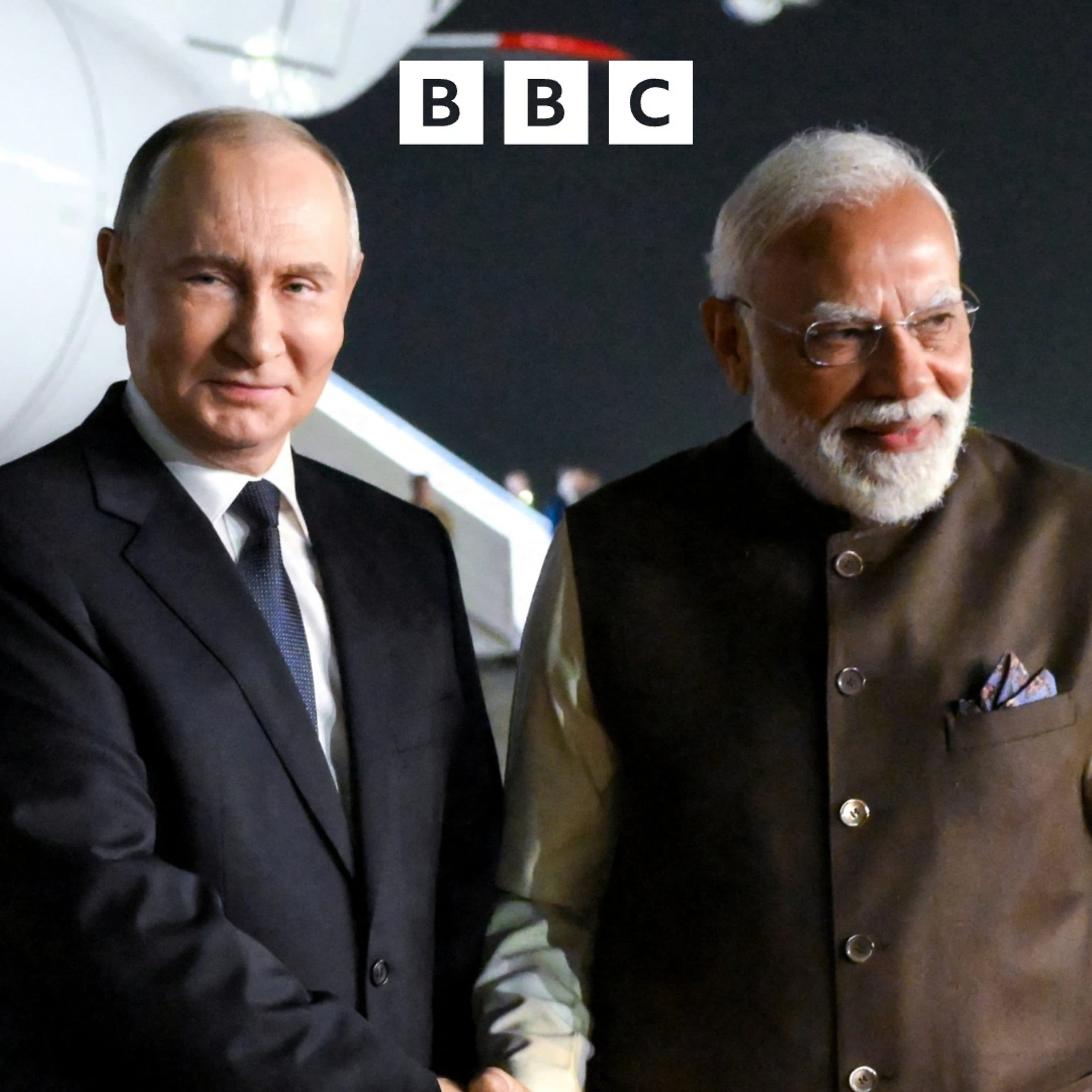
Syria's interim president is meeting Vladimir Putin in Moscow, where he's expected to ask the Russian leader to hand over the former dictator Bashar al-Assad.
Lina Sinjab
This visit marks a turning point in relations between Russia and the new Islamist-led government in Syria following the fall of Bashar al-Assad, who is under Moscow's protection.
President Shahraz expected to call for the handover of Mr. Assad to face prosecution, something that will be difficult for Russia to do.
It is thought that hundreds of Syrian officers with blood on their hands are also under the protection of Russia.
For its part, the Kremlin will want to discuss the future of the military bases it has in Syria.
Russia was also granted investment projects by the Assad regime and wants to explore how to protect its interest in the country.
Pause
Host
There's been criticism of a mass crackdown on underground churches in China after authorities detained dozens of pastors in one of the larger ones, according to a spokesperson.
The US in particular has condemned the move and human rights organisations and advocacy groups are calling for the immediate release of detained pastors and church leaders.
Celia Hatton
My mom had called me to tell me that they were no longer able to contact my dad or anyone around him.
So around like Friday morning in DC time was probably when they've started to detain or house arrest my father at first.
But later on, we have confirmation now that he is also detained with the 21 other people in this detention center in Bay High.
Did your father know or sense perhaps that this kind of crackdown was coming?
I think so. Around six months prior to this, there's been a level of harassment by the police towards a lot of the members of our church congregation from all across the country.
And they were collecting information on the church, on the leaders of the church, on the organization structure and financial structure.
And we also heard from other churches around that there's also a similar uptick of harassment.
there was already a sense that this was going to be another wave of persecution that was going to come that was going to be a widespread across China type of a persecution of churches and perhaps like Zion Church is now currently looking like it's one of the first ones but I think they were expecting something but they just weren't sure when it would be and I think it happened quicker than we all expected
Why is Beijing targeting churches like your dad's?
First of all, we have to see this as like a bigger wave and it's not just a particular church.
So it's not part like because like my dad had said something or someone in the church had like made a statement that drew like the anger of a particular person in the CCP.
We see that oftentimes when there are tensions with the US or just in general, or if there are internal economic pressures, then they usually look for some sort of like a tightening of control of everything else that is organized or has a voice in the society.
I mean, it's interesting, isn't it? Because on the one hand, the Chinese constitution protects freedom of religion for, quote unquote, normal religious activities.
And on the other hand, we're seeing this widening crackdown, especially targeting your dad's church, a huge church with very well publicized links to the United States.
Do you really think it might have something to do with worsening U.S.-Chinese relations?
My dad's case is now well publicized because he has connections in the U.S.
I think part of it is just this tightening of control, especially at a time where they might be going through difficult economic situation.
The Zion Church is unusual, isn't it? Your dad really pioneered this hybrid model where some prayer sessions are held online, others are held in person.
Can you tell me about that?
The government had made it so that no other place would ever rent out even a small room to the Zion Church or anyone associated with Zion.
They had placed facial recognition cameras in the lobby of our church to be able to know every single member was of our church.
Like every single 1,500 people who have attended our church were on their list.
Pause
Host
Staying in China, 60,000 maps that were being shipped out have been seized by customs officers who claimed the way the documents represented the world threaten China's territorial integrity, particularly their portrayal of areas in the South China Sea, the border with Japan and the labelling of Taiwan.
Stephen McDonnell
These were, in the words of China's customs administration, problematic maps.
And as such, the export of all 60,000 of them has been blocked.
According to officials in the eastern province of Shandong, the maps left out important islands in disputed parts of the South China Sea and mislabeled Taiwan province, without explaining just how the self-governed island claimed by the mainland was actually labelled.
Crucially, the documents omitted the line using nine thick dashes placed on all Beijing-approved maps to justify its claims to vast areas of the South China Sea, even shoals and reefs far from its shores.
China Customs didn't say which country will now not be receiving its maps, but a video of them showed that at least some were published in English.
Maps, globes and other documents printed in China have been blocked from export in the past, but not on such a large scale.
The Chinese government has tried to strengthen its hand in territorial disputes with neighbours like Vietnam the Philippines and Japan by pressuring other countries to accept boundaries drawn up on its own maps
But Beijing's claims to nearly all of the South China Sea have not gained much acceptance beyond the Chinese mainland.
Pause
Host
The makers of the advanced chatbot, ChatGPT, have announced a major policy shift, saying they will soon allow erotica on the platform as part of a wave of tweaks due to land before the end of the year.
Stephanie Prentice
Well, Charlotte, this has all come from a social media post from Sam Altman.
He's the CEO of OpenAI, which makes ChatGPT.
And he's saying the platform's safety restrictions are generally being relaxed.
So he starts by saying they'll be more personalized, have more personality, be more human-like, do things like use more emojis.
Then at the end, he drops in that it intends to treat adult users like adults in his words and allow erotica for people that have verified their age and he calls that age gating.
His general messaging is that the platform is currently less useful or enjoyable than it could be as they've been cautious with it so far.
And I guess one of the big concerns will be the safety of users on this platform.
Absolutely.
And safety generally is something OpenAI has been dealing with.
So on that adult content side of things, Sam Altman did say that users will have to be age verified.
He didn't give any details of how that would be managed.
But a major concern for a more personalised or friendly chatbot is the impact it could have on mental health, particularly as more and more people report using it as a best friend or a therapist.
There's actually already a term called AI sycophancy and that reflects a tendency for chatbots to just agree with users.
We have seen a few high-profile cases where that has taken a dark turn.
So the parents of a teenager sued OpenAI just a few months ago, alleging that it assisted him in taking his own life.
In another recent case, a Canadian man became convinced he was a maths genius and he could save the world from the internet.
So OpenAI has indicated its latest model, that's chat GPT-5, shows lower rates of that sort of sycophancy and is better at flagging concerning behaviour.
I mean, a lot of people will say you can't trust tech companies, though.
They're going to put their business before the safety of their users.
Yeah.
So I think we've come a long way since that famous early meta mantra of move fast and break things when it comes to the internet.
There is a lot more accountability on a policy level generally.
But just like social media suddenly took off and then the negative repercussions became clearer in time, AI is potentially on an even faster track.
Major markets are pushing full steam ahead with it.
And all of these major tech companies are in a race with each other.
So for some people, this does just feel like a giant experiment with potentially extremely high risks for some users.
Also worth reflecting though that some users posting online since this OpenAI announcement as saying they're extremely happy with these proposed changes.
Pause
Host
Finally, who is Cyrus the Great?
Edith Hall
Cyrus the Great was the greatest ever emperor of the Medo-Persian Empire.
He was born in the early 6th century BCE and he conquered practically every other kingdom from Anatolia, that's the western seaboard of what's now Turkey, all the way to central Asia and called himself Lord of the Four kingdoms.
And why this comparison?
Why is there a celebration and a link with Jews and Jewish history?
So Cyrus is huge if you are Jewish.
He is a star of the Old Testament.
What he did was he conquered Neo-Babylon, of which the emperor was Nebuchadnezzar II.
And Nebuchadnezzar had been very nasty.
He had driven all the Jews out of Israel and sent them to Babylon, kept them in captivity and demolished the worst, the first temple of Jews, which actually housed the Ark of the Covenant and stole everything in it.
Cyrus said, no, you guys can go back.
Please go back.
Not only can you go back, you can take a lot of these objects with you and I will give you loads of money to rebuild your temple.
So he's regarded as the great restorer, the first return of the Jews to Israel and their whole terrible long history of exile.
So in 1947, when the Jewish state, sorry, just after the Second World War, can't remember the precise date, when the Jewish state is founded, it was seen as another return.
And so Cyrus's name was very current.
It's incredible for Donald Trump because Cyrus is the only non-Jew who is named a messiah, a saviour, in the whole Old Testament.
He's actually named Messiah because he's restored the kingdom of Judah.
It's certainly not, I mean, if people don't understand quite that significance, when you say it's quite, you know, it's quite big praise from those who feel like that.
It's astonishing to me.
Go on, say why it's astonishing.
Well, because it's an emperor 2,600 years ago, it's got it could not be a bigger compliment to Donald Trump to be likened to Cyrus the Great the actually saviour of the nation and it's as if it's been shown that the Jews have somehow been displaced again by something and have been restored again as if they've been in in such an incredible exile as they were before
And the other undercurrent which is well I suppose it's for those who have made the comparison, the return of those hostages who are still alive would be... I haven't interviewed those people who put these banners up, but that would be presumably the link.
Yes, exactly.
People, individuals have been restored, but the symbolism is far greater than that.
It's a restoration of the sort of whole idea of Israel and the Jews' right to Jerusalem and to their temple there.
Pause
Host
And that's all from us for now, but there will be a new edition of the Global News Podcast later.
If you want to comment on this podcast or the topics covered in it, you can send us an email.
The address is globalpodcast at bbc.co.uk.
You can also find us on X at BBC World Service.
Use the hashtag Global News Pod.
This edition was mixed by Volodymyr Muzetska.
The editor is Karen Martin.
I'm Charlotte Gallagher.
Until next time, goodbye.
Ray Winstone
Hello, it's Ray Winstone. I'm here to tell you about my podcast on BBC Radio 4, History's Toughest Heroes.
I've got stories about the pioneers, the rebels, the outcasts who define tough.
And that was the first time that anybody ever ran a car up that fast with no tires on.
It almost feels like your eyeballs are going to come out of your head.
Tough enough for you?
Subscribe to History's Toughest Heroes wherever you get your podcast.