--:-- Asma Khalid: This BBC podcast is supported by ads outside the UK. America is changing and so is the world. But what's happening in America isn't just a cause of global upheaval. It's also a symptom of disruption that's happening everywhere. I'm Asma Khalid in Washington, DC. I'm Tristan Redman in London. And this is The Global Story. Every weekday, we'll bring you a story from this intersection where the world and America meet. Listen on bbc.com or wherever you get your podcasts. You're listening to the Global News Podcast from the BBC World Service.
--:-- Oliver Conway: Hello, I'm Oliver Conway. We're recording this at 13 Hours GMT on Monday 11th August. Israel faces condemnation over the targeted killing of an award-winning Al Jazeera journalist and five others in Gaza. The remains of a British scientist who died in 1959 are found in a melting glacier in Antarctica. And Colombian presidential hopeful Miguel Uribe has died two months after being shot at a political rally. Also in the podcast, the seas around Britain have their warmest ever start to the year. These sorts of conditions are more of what we would expect to see in the future as a result of climate change. By the end of the century, we expect to be in permanent marine heatwave. We look at the impact on sea life and would you run a marathon in a shopping mall? But we start in Gaza where funerals have been held for five journalists killed in what Al Jazeera calls a targeted assassination.
--:-- Oliver Conway: The five Al Jazeera journalists and one other died when an Israeli airstrike hit their tent. Israel says it was deliberately targeting one of them, Pulitzer Prize-winning correspondent Anas Asharif, who it says was a Hamas operative. That has been vehemently denied by Al Jazeera. The BBC understands that Mr Asharif worked for a Hamas media team before the current conflict. He had recently been warning that he feared for his life after a smear campaign. A message prepared by him in case he died has now been shared online. Here's part of it read by a BBC producer. If these words of mine reach you, know that Israel has succeeded in killing me and silencing my voice. I lived the pain in all its details, and I tasted the pain and loss repeatedly. And despite that, I never hesitated to convey the truth as it is, without falsification or distortion. Don't forget Gaza.
--:-- Oliver Conway: Israel has long been critical of Al Jazeera, which is one of the few organisations with reporters on the ground in Gaza. Israeli MP Moshe Terpaz told the BBC that Anas Asharif was drawing a salary from Hamas, something that hasn't been verified. At the document I'm looking at, he has his serial number in Hamas. Whoever served knows that when you get into an army, you have your serial number. He had his serial number in Hamas. He got a few hundred dollars salary in Hamas, and his role was head of rockets shooting at Israel. Al Jazeera and media freedom groups have strongly denied those accusations. They say reporters are being silenced. It's estimated that more than 186 journalists have been killed in Gaza since Israel's offensive began.
--:-- Oliver Conway: We heard more from Jodie Ginsberg, CEO of the Committee to Protect Journalists. This deliberate targeted attack on a tent housing journalist next to a hospital in Gaza City has wiped out Al Jazeera's entire Gaza City reporting team, including Anas al-Sharif, who is a journalist that CPJ, the Committee to Protect Journalists, the organisation I run, warned just a couple of weeks ago was in grave danger because of the smears being circulated about him. The latest smears came after Anas gave a report on air in which he cried in reporting the level of starvation being experienced by the Ghazan people, including the journalists who were reporting on the war.
--:-- Oliver Conway: And what it's important to remember is this is not just about Anas al-Shariz, this is not the first time we've seen Israel accuse a journalist of being a terrorist without providing any credible proof. And of course, what that does, if you accuse a journalist of being a terrorist, is it undermines their credibility and creates doubt among the public about what that individual is reporting. And so this is all part of a systematic attempt to discredit all Gazan journalists. The other thing that's important to say is this wasn't just Anas al-Sharif that was targeted. This was an entire news crew. At least five people were killed in that attack in a tent that was known to be a place from which journalists operated. And journalists are civilians and must never be targeted in a war.
--:-- Oliver Conway: It's certainly clear that Israel is striving to control the narrative both through the silencing of journalists, through the attacks on media facilities that we've seen, the communications shutdowns. You may remember that the BBC, BBC's Jeremy Bowen reported, I think last week, that he wasn't able to film, his crew wasn't able to film the aid drops that Israel were carrying out, wasn't allowed to show people the devastation being experienced by people inside Gaza. We've seen Al Jazeera newsrooms shut down in Israel. We've seen independent news outlets like Haaretz, Israeli news outlets targeted by Israel. And clearly this is all part of a systematic attempt to control the narrative and censor the information that's coming out of Gaza.
--:-- Oliver Conway: Jodie Ginsberg of the Committee to Protect Journalists. Since the October 7th massacre by Hamas, Israel hasn't just been targeting Gaza. Israeli pressure on Palestinian civilians in the occupied West Bank has also risen sharply, with increased settler attacks and military raids. There's also been an acceleration in the building of Israeli settlements, which are illegal under international law. In Tulkam, hundreds of homes and buildings have been demolished and turned into military outposts after Palestinians were forced to leave.
--:-- Oliver Conway: Jeremy Bowen joined some people returning to their former home for the first time. Just going through the door now. You can smell cinders. You can smell it. There's been a fire here. We're in the flat. I mean, it's absolutely burnt out. Everything's gone. She's upset. She's crying. Coming back to your home for the first time after so many months of seeing this must be dreadful. When I saw it, I thought, this isn't a house. It's a nightmare. I wish I was dreaming and hadn't seen the house like this. What did we do to deserve this? We are just civilians. Our dreams, our joys, our gatherings, everything was in this house.
--:-- Oliver Conway: Our international editor, Jeremy Bowen. Now. The sound of a pack of stray dogs in the Indian capital Delhi. Following a string of attacks, the Supreme Court there has ordered the authorities to round up all the strays in the city and put them in shelters. It's estimated there are currently around 700,000 of them roaming the streets. Here's our South Asia regional editor, Anbarasan Etirajan. The judges described the menace of stray dogs in the Indian capital as extremely grim and warned that any individual or organisation obstructing the roundup would face legal action.
--:-- Oliver Conway: They have also asked the authorities to build a shelter for around 5,000 stray dogs and provide enough workers to sterilise and immunise the animals. Nearly 2,000 dog bite incidents are reported in the city every day, leading to rabies infection in some cases. Similar attempts to relocate or sterilise strays have not been successful in the past. Animal rights activists say relocation amounts to cruelty as stray dogs have adapted to living on the streets.
--:-- Oliver Conway: Anwarasan Etirajan. The remains of a British scientist who died in an accident in Antarctica in 1959 have been found in a melting glacier. Dennis Bell fell into a crevasse while working for the organisation that became the British Antarctic Survey. He was just 25. A recent expedition came across bones, a wristwatch, a radio and a pipe. Our climate and science correspondent Georgina Ranard has been following the story.
--:-- Oliver Conway: Dennis Bell, who was nicknamed Tink, was a meteorologist who went to work for the Falkland Island Dependency Survey in 1958. And I spoke to his brother David, who's in his 80s now, and he described his big brother as quite a character, a talented engineer, always taking things apart, and someone with a great sense of humour who loved practical jokes. He also loved the husky dogs that were used at the time to get the men around the glaciated island, and there's lots of photos of him with those dogs.
--:-- Oliver Conway: And he was there to send back weather reports to the UK, sending them around every three hours on the radio. He had to fire up a generator in the freezing conditions to do that. He was involved in mapping a glacier, and this is when this tragic accident happened in July 1959. He'd gone out with a colleague and there was heavy snowfall. He went ahead to encourage the dogs but had gone without his skis and the accounts from the time describe how he disappeared because he'd fallen into a crevasse.
--:-- Oliver Conway: His friend shouted down and they did actually hear back from him and they sent down a rope. He was hauled back up to the lip of this hole in the crevasse but tragically he tied the rope to his belt and it broke just as he reached the lip and he fell again and when his friends called back they had no reply. And they did look for him in sort of terrible weather conditions for hours but eventually had to go back to the hut and he was never found until this year when this Polish team of scientists came across these bones.
--:-- Oliver Conway: Yeah, do we know any more about how they found these remains? It's actually very close to the Polish Antarctic Research Station and this team had gone out near the base and accidentally came across these bones and these artefacts. I think it was quite a shock for them but they went in four trips to collect these bones and the artefacts. The bones were sent back to London for DNA analysis and that's when Dennis's brother and sister were given the news that their brother had been found after 65 years.
--:-- Oliver Conway: And just another example of things being discovered as a result of melting glaciers. Yeah, so scientists, of course, very alarmed at the rapid pace of change in Antarctica. The ecology glacier where he was found is in a rapid state of disintegration, leaving ice and rock, which is where the bones were found. And the Polish team who found him say they do want to do a lot more research on this phenomena and also maybe establish protocols about what to do when these type of remains are found.
--:-- Oliver Conway: And that was Georgina Rennard. Staying with global warming in 2025 has brought a wave of record-breaking temperatures across the world. The seas around the UK have had their hottest ever start to the year. BBC analysis shows average water temperatures are more than 0.2 degrees Celsius higher than any year since 1980. But the consequences are only just beginning to unfold, as our climate editor Justin Rowlat reports.
--:-- Oliver Conway: Heather Hamilton and her dad David are keen snorkelers. They've been going out into the seas around Cornwall virtually every week since Heather was a little girl. But in recent years, they've seen some big changes. Huge blooms of jellyfish-like creatures called salps for example. They're normally rare in uk waters. When you're above the water, you'd have no idea that they're even there. And as soon as your head goes submerged, you're seeing these big chains. But yeah, it just felt very kind of out of this world, something I've never seen before.
--:-- Oliver Conway: And then there are the octopuses. Hundreds of them. I've been snorkelling 30 odd years. I've never seen an octopus. End of May, we saw about 10 of them. Scientists say there's been a big increase in sightings of some other warm water species. Blue sharks, conger eels, mauve stinger, jellyfish, humpback whales, and even the world's second largest whale species, fin whales. But there is a cost to this change. Declines in cooler water species off the southwest coast like cod and haddock.
--:-- Oliver Conway: Caroline Rowland is the head of oceans, cryosphere and climate change at the Met Office. These sorts of conditions are more of what we would expect to see in the future as a result of climate change. And in the worst case scenario as the climate changes by the end of the century, we expect to be in permanent marine heatwave. And warming seas don't just bring new species. The Whelk fishermen of Whitstable have seen the impact marine heatwaves can have first hand.
--:-- Oliver Conway: If you put a pot anywhere shallower than about 10 metres in depth, you just wouldn't catch anything. Catches had always been good until 2022. Then sea temperatures in the Thames estuary went above 20 degrees Celsius for more than 60 days. After two or three months of abysmal catches, we ended up selling one of the boats. We shouldn't forget that warmer seas can also damage marine ecosystems and the human livelihoods that depend on them.
--:-- Oliver Conway: Our climate editor, Justin Rowlatt. And still to come on the Global News Podcast. The world is simply built for people and now humanoids can just step right into it. Factories, hospitals, homes, without needing to redesign the whole environment. We hear from the World Robot Conference in Beijing. America is changing. And so is the world. But what's happening in America isn't just a cause of global upheaval. It's also a symptom of disruption that's happening everywhere. I'm Asma Khalid in Washington, D.C. I'm Tristan Redman in London. And this is The Global Story. Every weekday, we'll bring you a story from this intersection, where the world and America meet. Listen on BBC.com or wherever you get your podcasts.
--:-- Oliver Conway: In June, the Colombian senator Miguel Uribe Torbay was giving a speech at a campaign rally when he was shot several times in the head at close range. In the weeks that followed, vigils were held praying for his recovery. But despite a prolonged period of treatment, Mr Uribe has now died. He was seen as a possible candidate in next year's presidential election. I heard more from our online Latin America editor, Vanessa Bushluter.
--:-- Oliver Conway: Miguel Uribe had undergone several surgeries during his time in hospital, and just on Saturday, the hospital where he was being treated had released an update on his condition saying that he'd had a bleed to the central nervous system and that another surgery was required. And then his death was confirmed this morning by his wife. And what is known about his suspected killer? There was a man, a teenager in fact, a 15-year-old, who was arrested just shortly after the shooting happened. He'd been seen fleeing from the scene and he was carrying a gun which police say was used in the shooting.
--:-- Oliver Conway: The 15-year-old had been charged with attempted murder which will presumably now be changed to a charge of murder now that the senator has died. The teenager himself has denied those charges. But what police are still trying to establish is what might have been the motive for the killing, because they don't think this 15-year-old was what they call the intellectual author, the man who planned this killing, that he was just hired to carry it out. And the investigation is still very much underway to find out who was the person who may have ordered it.
--:-- Oliver Conway: Now, for many Colombians, this must recall the dark days when political killings were rife there. What are the implications for the presidential race now? As you mentioned, Mr Uribe was a pre-candidate for the election. So he was running for his party as one of the candidates to be chosen to run. So there's still four other candidates in his party who want that post, who want that top job. What I think is likely to happen now that he has died is for Colombian society to discuss the issue of safety much more.
--:-- Oliver Conway: I mean, safety and violence have been at the forefront of Colombian politics in the last months anyway. But with this tragic death and this brazen attack during a daylight rally in Bogota, this is becoming to the forefront even more. And that was Vanessa Buschlutter.
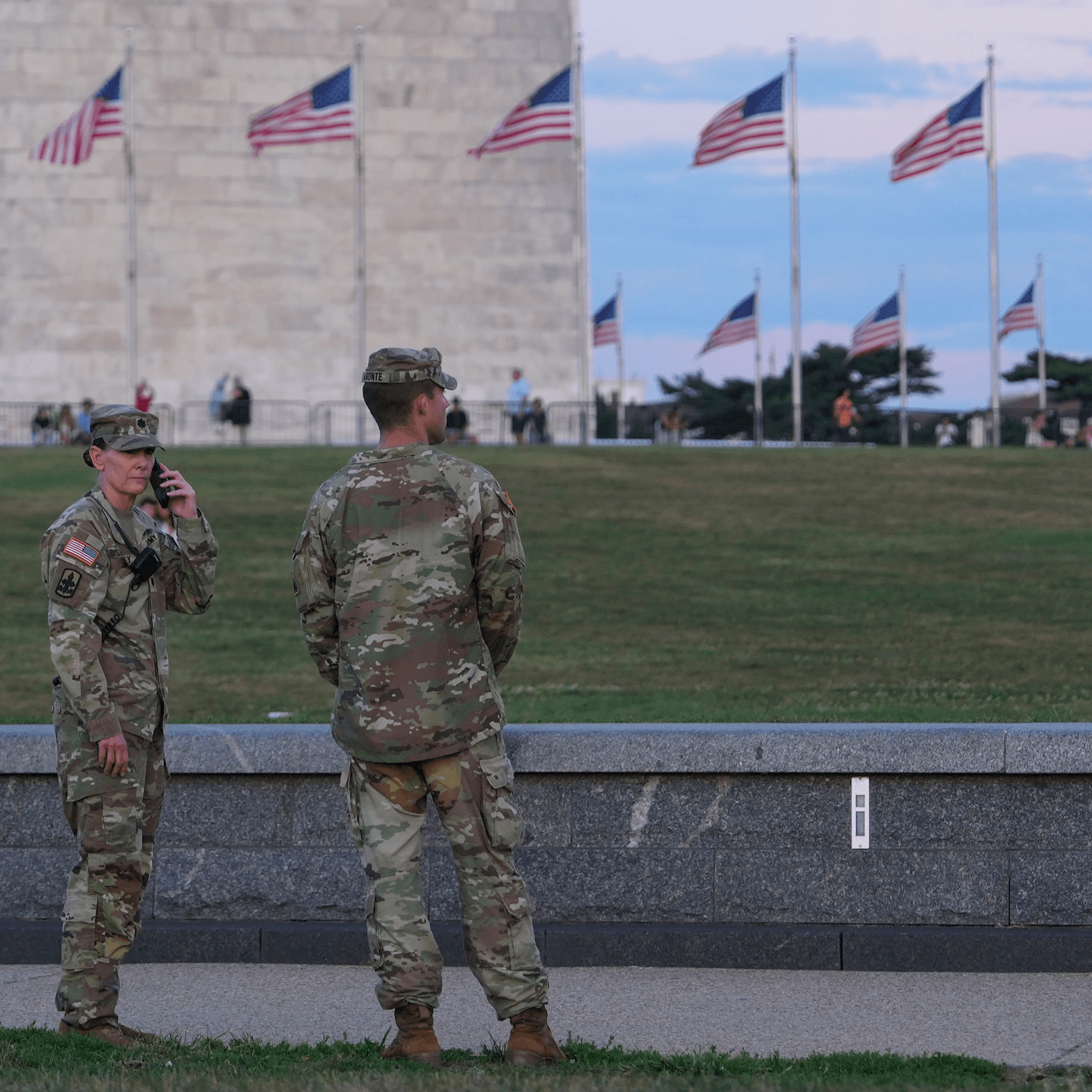
--:-- Oliver Conway: I'm going to make our capital safer and more beautiful than ever. The homeless have to move out immediately. Those are the words of Donald Trump talking about clearing Washington DC. But how would that work in practice? The District of Columbia is run by a locally elected government under congressional oversight, and any attempt to take over the city would raise constitutional, legal and political concerns.
--:-- Oliver Conway: Donald Whitehead of the National Coalition for the Homeless spoke to Rich Preston. Homelessness is not a crime. People are forced into homelessness. In the studies that we've seen, when encampments are moved, actually crime doesn't go down, it actually goes up. It is more likely that a person experiencing homelessness will be the victim of a crime than actually be involved in a crime themselves.
--:-- Oliver Conway: President Trump says it's important for him. And in fairness, the mayor of D.C. has somewhat echoed his sentiments here, saying that D.C. needs cleaning up, tidying up. How bad is the homelessness problem in Washington? There are right now somewhere in the neighborhood of 6,000 people experiencing homelessness in D.C. The issue of homelessness has increased, but it's increased because of structural failures.
--:-- Oliver Conway: The failure to keep housing prices at a level where people can afford to live. $2,300 is what an apartment might cost in D.C. And you cannot afford housing at that rate. So the president promised to address prices and inflation, and we haven't seen that. We see this attempt to attack people who are the most vulnerable in our society. Donald Whitehead of the National Coalition for the Homeless.
--:-- Oliver Conway: Last month, a piece of rock from Mars sold at auction in New York for $4.3 million. It was first discovered two years ago in a part of the Sahara Desert in Niger. But now, as Richard Hamilton explains, there are calls for the meteorite to be returned to the West African nation. This is the largest piece of Mars on planet Earth. A promotional video by Sotheby's expert on science and natural history, Cassandra Hatton.
--:-- Oliver Conway: This is a 54-pound chunk of the Martian surface. The piece of the red planet, which goes by the rather unromantic name of NWA 16788, fetched an astronomical sum at the auction house. Meteorites can fall anywhere on Earth, But because of the favourable climate for preservation, lack of vegetation and human disturbance, the Sahara has become a veritable gold rush for meteorite prospectors.
--:-- Oliver Conway: The desert is often a place where meteorites are found because there's no cover. Libya, Niger, Algeria, these are places where meteorites are known to come from. Among those campaigning for the rock to be returned to Niger is Paul Sereno, professor of paleontology at Chicago University. He also founded Niger Heritage, which tries to ensure ancient artefacts, dinosaur fossils and even extraterrestrial objects are repatriated.
--:-- Oliver Conway: The region of Niger, the borders cannot be controlled and that's not going to stop individual people from coming in and migrants and this kind of thing. So there's always going to be traffic and that's how this passed out. They actually have a modern airport. I put a nice New Jersey Heritage exhibit in it. And they have scanners. And you cannot leave with anything that does nothing to stop a 54-pound meteorite from leaving the country.
--:-- Oliver Conway: The question of who actually owns these chunks of rock is coming under increasing scrutiny. Although Niger passed its own law in 1997 to protect its heritage, which includes minerals, Professor Sereno believes the rock could have been smuggled out of the country illegally. Sotheby disputes this saying it was exported from Niger and transported in line with all relevant international procedures.
--:-- Oliver Conway: The military government in Niger has now launched an investigation into the discovery and sale of this meteorite. Paul Sereno hopes that the Sotheby's auction will prove a turning point. Richard Hamilton, did you spend your weekend dancing and pouring drinks perhaps? Well, those were some of the activities carried out by robots at the World Robot Conference in the Chinese capital Beijing.
--:-- Oliver Conway: Crowds gathered around demonstration areas from more than 200 companies to see the progress made in human-like robotics in the past year, including robots that can give massages, play football and even take part in boxing matches. Tom van Dylan runs Green Kern which advises organizations on emerging tech. He was at the conference. It's a bit like walking into a sci-fi movie kind of halfway through you know it goes all the way from robotic dinosaurs to robot bees coffee making arms.
--:-- Oliver Conway: What really stood up for me most is just how much of society was there to visit it. It wasn't just engineers, there were lots of young people there, lots of old people. So it's really become much more of a normalized thing. This is my fifth visit to this conference. And at its core, it is all about kind of adding value to whatever businesses these robots want to support.
--:-- Oliver Conway: For the robot bees, actually it's mostly about measurements so you can put them into dangerous areas and have them check air quality nearly like centimeter precision especially because they're so small they can get into areas of factories that are normally inaccessible dangerous to get to. And I think in the area of robotics the discussion about whether humanoids are actually a good idea anyway come up a lot you know is this just kind of a marketing ploy to make robots more human or not.
--:-- Oliver Conway: But actually, in the last six months, I have to admit, kind of tipped away from being a sceptic to being a believer, because I think, you know, the world is simply built for people and now humanoids can just step right into it. Factories, hospitals, homes, without kind of needing to redesign the whole environment. Tech expert Tom van Dylen.
--:-- Oliver Conway: Now, it's only natural to want to move away from someone when they start coughing over you. But it seems our bodies are keen to take immediate action against any threat of infection. Researchers in Switzerland have discovered that the human immune system kicks in simply at the sight of a sick person. We heard more from global health professor Matt Fox.
--:-- Oliver Conway: They used virtual reality. So they had people wearing these virtual reality headsets and they had these avatars that they built, some of which looked like they were showing signs of some kind of illness that would probably be infectious. And they compared that to what happened when people were approached by avatars that didn't look infectious. So first they looked at just brain activity.
--:-- Oliver Conway: What parts of the brain are firing when you come into contact with somebody who looks infectious versus somebody who doesn't? They looked at some behavioral responses. How do we react to being touched when we're also observing somebody coming towards us that looks infectious? And then they looked at immune responses and hormonal responses in the blood by taking samples before and after people were approached by these avatars.
--:-- Oliver Conway: And they found that in terms of brain activity, the areas of the brain associated with the fight or flight responses were being triggered. They also found that if you looked in the LUD, the participants were exhibiting signs of an immune response that would be consistent with gearing up to fight an unknown pathogen. Matt Fox.
--:-- Oliver Conway: Finally, would you run a marathon inside a shopping mall? In Dubai, a new fitness initiative is encouraging people to do just that, adding running tracks to some of the city's biggest shopping centres as temperatures outside top 50 degrees Celsius. Stephanie Prentice told us how it works.
--:-- Oliver Conway: Despite the fact that running a marathon past a lot of shops or places selling tasty snacks doesn't seem like the best idea, for Dubai at least, it really makes a lot of sense. So August is usually the hottest month there, temperatures getting up to about 50 degrees Celsius. So running outside, not just uncomfortable, but potentially unsafe.
--:-- Oliver Conway: At the same time, the malls are emptier than usual in August because tourists sometimes stay indoors, locals sometimes leave the region because of that heat. So the government's plan is to get people running around the shopping malls in the morning or what it calls a mall-a-thon or mal-a-thon on your preference. And it's all gone down pretty well.
--:-- Oliver Conway: Let's take a listen to some of the runners. It's very fun also that you can participate while you are listening some music and there is no headache. Especially in the early morning. If you run outside, it's not healthy at all because the temperature outside is around 40 to 50 degrees Celsius. So it's not good for the health. Inside the mall, we have air conditioning, first aid and water. There's everything you need.
--:-- Oliver Conway: So these are actually really big events there. In some malls on weekends, there are podiums, there are medals, there are prizes. And the organisers really are stressing that running for any length of time, at any pace, even walking, is encouraged. Yeah, so the temperature obviously a factor, but it sounds like they're making a wider push on exercise and sporting activity in general here.
--:-- Oliver Conway: Yes, this is part of a general push on exercise and health in Dubai and the UAE. Dubai is generally seen as a car-loving culture. People don't walk around that much. And the crown prince there, he's young, he's very active himself. He's really pushing for active living. So on a serious note, the UAE does generally have fairly high obesity rates. They're higher than the global average.
--:-- Oliver Conway: And in Dubai, in particular, those rates are very high. And projections do seem to say that this will keep rising. So the mall-a-thon, while fun, is actually part of a quite serious push for healthy living. Now, the UAE also has a weight loss challenge that launched this year. That's got a number of cash prizes. They're actually calculated on the weight loss exactly but this year's winner got around $4,000.
--:-- Oliver Conway: There's also something in Dubai called the 30 by 30 challenge. Now that's pushing people to exercise 30 minutes a day for a month. And in some malls we also see things like these cute electric bikes that people can get on and they pedal and they create healthy smoothies. So the mall-a-thons really are part of a larger movement we're seeing in the UAE, in that region, to basically adapt sports and wellness to a desert climate.
--:-- Oliver Conway: We're seeing indoor football, indoor obstacle courses, things like that. But with global temperatures rising, places that are already very hot are clearly going to become difficult to even be outdoors walking around, let alone running around. So we could see even more of these kind of reimaginings of indoor public spaces. Stephanie Prentice.
--:-- Oliver Conway: And that is all from us for now, but the Global News Podcast will be back very soon. This edition was mixed by Philip Bull and produced by Tracy Gordon and Nikki Verrico. Our editors, Karen Martin. I'm Oliver Conway. Until next time, goodbye. It's also a symptom of disruption that's happening everywhere. I'm Asma Khalid in Washington, D.C. I'm Tristan Redman in London, and this is The Global Story. Every weekday, we'll bring you a story from this intersection, where the world and America meet. Listen on BBC.com or wherever you get your podcasts.