Netflix blockbuster dealGlobal News Podcast · Dec 5, 2025
Main Topic: The podcast covers various global news stories, including a tragic accident in Lisbon, Portugal, where a funicular crashed into a building, killing at least 15 people and injuring 18 others. Other topics include the aftermath of the Jeffrey Epstein sex abuse scandal, China's military parade to mark the 80th anniversary of the end of World War II, and a new study on the benefits of incidental physical activity.
Key Points:
Participants:
Takeaways:
At least 15 people have died after the Gloria Funicular crashes in the Portuguese capita, Lisbon. Some of those killed were foreign nationals. Also: victims of the convicted sex offender, Jeffrey Epstein, call for all the files on the case to be released, and new research says that even one minute of vigorous physical activity, can be a life saver.
The Global News Podcast brings you the breaking news you need to hear, as it happens. Listen for the latest headlines and current affairs from around the world. Politics, economics, climate, business, technology, health – we cover it all with expert analysis and insight. Get the news that matters, delivered twice a day on weekdays and daily at weekends, plus special bonus episodes reacting to urgent breaking stories. Follow or subscribe now and never miss a moment. Get in touch: [email protected]
Valerie Sanderson
This is the Global News Podcast from the BBC World Service. I'm Valerie Sanderson.
Audio clip plays
America's Social Casino. Download the Moto Casino app today.
Audio clip ends
In the shadows and flames, primals will fall, and from the blood and ash, new gods will rise. Poppy was never meant to awaken, and consequences are devastating, stirring ancient powers from their slumber, transforming Castile and Kirin in ways the fates couldn't foresee. The great conspirator has returned to stop the primal of death. The gods have awakened, harboring blood-soaked secrets, and every choice can undo everything. The primal of Blood and Bone, perfect for fans of Sarah J Maas and Rebecca Yaros. Available in print, e-book and audio book.
This is the Global News Podcast from the BBC World Service. I'm Valerie Sanderson. In the early hours of Thursday, the 4th of September, these are our main stories. One of the best-known tourist attractions in the Portuguese capital, Lisbon, the Gloria Funicular, has crashed, killing several people.
Audio clip plays
Victims of the convicted sex offender Jeffrey Epstein call for all the files on the case to be released. China flexes its military muscles to the world. We hear a Chinese perspective.
Audio clip ends
Also in this podcast, we mark 10 years since Germany opened its borders to Syrian refugees and a million people arrived in Europe. And new research says that even one minute of vigorous physical activity can be a lifesaver.
Audio clip plays
Not leaving things at the bottom of the stairs and taking them up when you've got a pile, but taking them up every single time is all part of exercise. And I love the fact that it's now being proven to be of a real benefit to us.
Audio clip ends
We start in the Portuguese capital, Lisbon, where, as we record this podcast, at least 15 people have been killed and 18 others injured. when the city's famous Gloria Funicular cable railway derailed and crashed into a building.
Audio clip plays
This woman witnessed the accident.
Audio clip ends
It fell about a metre and a half and made a huge crash. It was packed. Just as we were going to help, we saw another tram coming downhill. The only thing we could do was turn and run towards the avenue.
Audio clip plays
I look back, I'm sure I saw at least one person manage to get out. They were on the sidewalk when the tram hit the building.
Audio clip ends
Some foreign nationals are thought to be among the dead. This method of travel is one of Lisbon's most popular tourist attractions and the Gloria Funicular, with its distinctive canary yellow colouring, hauls around three million passengers up and down one of the city's steepest hills every year.
Audio clip plays
BBC's Alison Roberts is in Lisbon and she gave me the latest.
Audio clip ends
Alison Roberts
Here on the scene in the very centre of Lisbon, there are large numbers of emergency service personnel on the ground still. We know that the PJ criminal police have already been on the scene looking to see if they can start their investigation into the causes of the accident.
Audio clip plays
Meanwhile, we know that 15 people have been confirmed to have lost their lives in this awful incident. And 18 people are in hospital and five of them, we believe, are seriously injured.
Audio clip ends
So there's a lot of concern about those individuals. The authorities here have expressed their great sorrow and their condolences to the victims and their families. The mayor of Lisbon has declared three days of mourning in the city and the national government has declared a day of national mourning for tomorrow.
Audio clip plays
Is the wreckage still there or have they managed to clear it? No, very much so. It's really quite a large vehicle, this cab of the funicular, and it crashed onto its side as it became derailed and crashed into a building.
Audio clip ends
So I think, first of all, that forensic work is going to have to take place before they're going to be removing that vehicle. But we certainly haven't seen anything of that kind being lifted out of the quite narrow street in which the funicular normally operates.
Audio clip plays
And we understand it was absolutely packed with people at the time. Well, the authorities said that there were at least 20 people injured. And at this time of day in the summer, there would be a lot of tourists using it.
Audio clip ends
This is a vehicle that goes up and down every 10 or 15 minutes on this very steep street between the Baisha downtown area and the Baihuahua, a popular bar and restaurant neighbourhood. And so it's very likely that it was pretty full.
Audio clip plays
Most of the people in the vehicle, which can take up to 40 people, are normally standing and not sitting. And that's quite likely to have been the case that a number of people were standing and not sitting when the accident took place.
Audio clip ends
And this was the funicular Gloria, wasn't it? I mean, one of the most famous tourist attractions in Lisbon.
Audio clip plays
Yes, of the three old funiculars, this is the one that's the most visible, the most central and the largest and the most used, in fact. It's really an attraction in its own right, but also used as a means of transport, not only by tourists, but also by locals.
Audio clip ends
So anyone who lives in the city will have passed by it many, many, many times and they'll be doing that again in the next days. and weeks and looking at it with shock and horror and thinking how on earth could this have happened?
Audio clip plays
It's been operating for almost 150 years, since 1885, and there's never been any incident of this kind before now. And presumably there would have been regular safety checks?
Audio clip ends
Yes, and the company that operates Lisbon's buses, trams and funiculars has said that the last major general maintenance check was carried out in 2022, then normally carried out every four years, that there was an interim check carried out last year, and that there are daily, weekly and monthly checks carried out on all of these vehicles.
Audio clip plays
These vehicles do have a driver. So there would have been someone who was there operating and trying to ensure that everything was working as it should.
Audio clip ends
We don't know what happened to that person or those people, because one of the other vehicle also seems to have had a bit of a problem, although it didn't come off the rails, but we know that it fell back a metre and a half at least. So we don't have any news about that.
Audio clip plays
But there's clearly going to be a major investigation into what happened. The other funiculars in the city have not stopped operating so far as we know that at this time of day, they wouldn't be operating anyway. But as I say, the company that runs them says that the regular checks were being and had been carried out.
Audio clip ends
Valerie Sanderson
Survivors of the deceased sex offender Jeffrey Epstein have been holding a rally outside Congress in Washington, calling for more files to be released. The event was organized by two members of Congress and follows the publication of more than 30,000 files on the case on Tuesday.
Audio clip plays
Our North America correspondent, Neda Tofik reports.
Audio clip ends
Neda Tofik
Several of Epstein's victims stood on the Capitol steps with the Democrat Congressman Rojana and the Republican Thomas Massey, demanding transparency, accountability and action.
Audio clip plays
The administration has been under pressure to release all of the documents related to Epstein after President Trump promised to do so during his election campaign.
Audio clip ends
Among the victims that spoke and met with politicians behind closed doors was Marina Lacerda, a previously unidentified victim in the 2019 federal indictment against Epstein. She spoke publicly for the first time.
Audio clip plays
The worst part is that the government is still in possession right now of the documents and information about that could help me remember and get over all of this maybe and help me heal.
Audio clip ends
They have documents with my name on them that were confiscated from Jeffrey Epstein's house and could help me put the pieces of my own life back together. But I don't have any of it. And I know the same is true for many of these women.
Audio clip plays
Another one of Epstein accusers Lisa Phillips said the victims would begin working together to compile their own list of people involved with the sex offender
Audio clip ends
The two congressmen said they are just two signatures shy of the 218 needed to force a vote on their bill pressing the Justice Department to release all of the files related to Epstein's case and his close circle.
Audio clip plays
Ned Tofik.
Audio clip ends
Valerie Sanderson
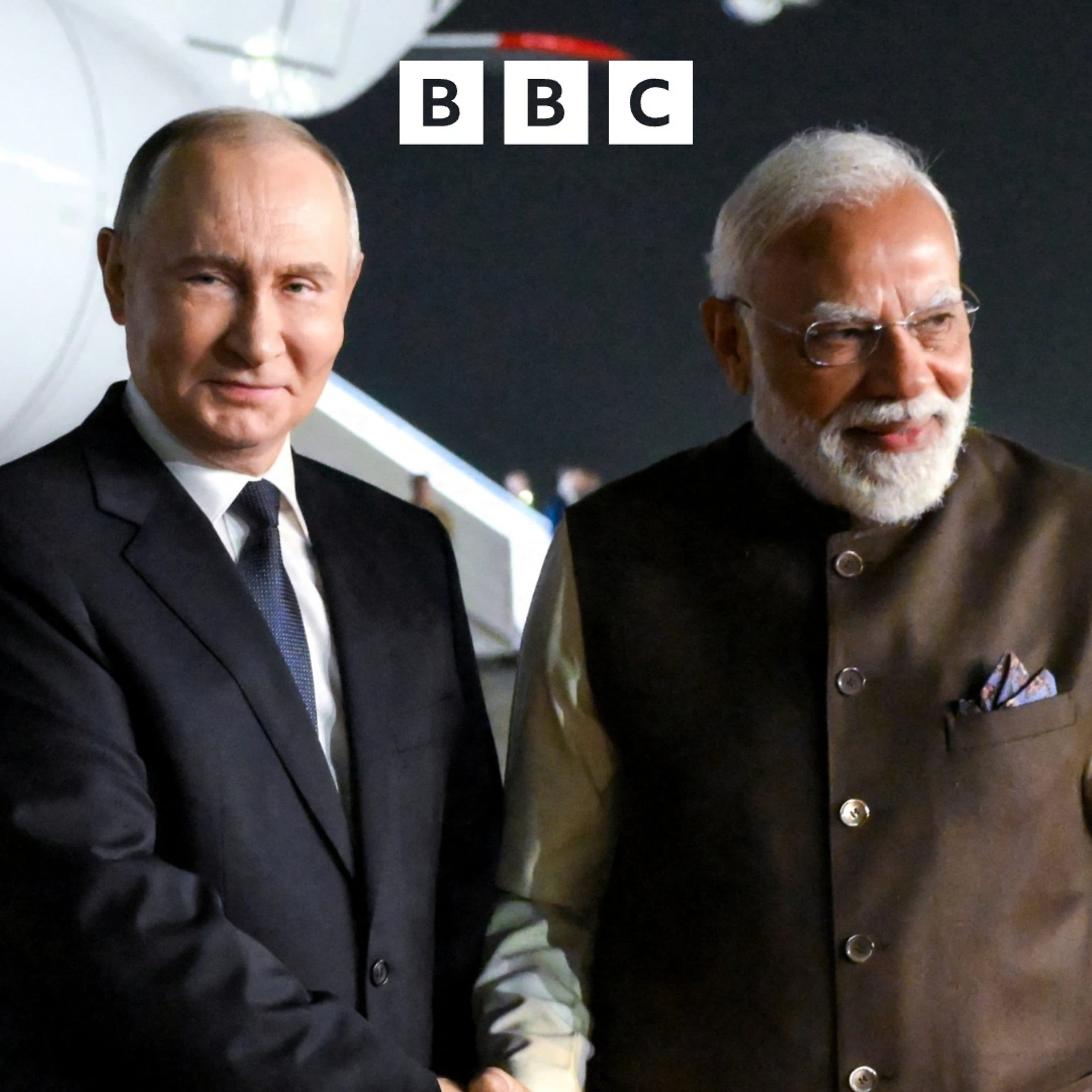
China's Victory Day parade on Wednesday to mark the 80th anniversary of the end of the Second World War was a huge show of military and political might. President Xi Jinping hosted more than two dozen world leaders, including Russia's President Putin and North Korea's leader Kim Jong-un.
Audio clip plays
Professor Da Wei is director of the Center for International Security and Strategy at Tsinghua University in Beijing.
Audio clip ends
Professor Da Wei
I think there are two images. The first image is this event of the parade commemorating the victory of World War II. The image is like China is a major player in World War II and played an important role in World War II.
Audio clip plays
And also China is an important contributor to the international order established after World War II.
Audio clip ends
The second image is China has a lot of friends and partners all over the world.
Audio clip plays
You say part of this is reminding people of the role that China has played since the end of the Second World War in supporting the international order that emerged after it.
Audio clip ends
Yet some would say that the whole point of that was that it was a rules-based system.
Audio clip plays
Yet one of the guests of honour at the parade today was President Putin, who has invaded a neighbouring country in defiance of the belief in post-1945 that might should not be right.
Audio clip ends
Of course, we honor China, honor the international order, sovereign countries, you know, territory, integrity. This is the principle honored in the UN Charter.
Audio clip plays
China, of course, support that very much.
Audio clip ends
So you can say, yes, Russia violated international law by invading another country. But if we are fair enough, let's say many Western countries, particularly the United States, also violates international law.
Audio clip plays
But we still need to work with the United States.
Audio clip ends
Whether a country violates international law is one thing, but whether we should work with them, try to solve the problem.
Audio clip plays
And also like President Trump met with Putin in Alaska recently.
Audio clip ends
So I don't think a lot of people in the West criticize Trump for that.
Audio clip plays
I suppose the question that is asked by some who were not at the parade and who were not invited to Beijing is whether the fact that the images presented to the world were of Mr. Xi flanked by President Putin and Kim Jong-un and a display of much military might that is not historical from 1945 but is right now of the present, whether that rather undermines the suggestion that China is intending to project to the world an image of peace.
Audio clip ends
I think, you know, in the West, people always say peace through strength, right? The United States always say peace through strength.
Audio clip plays
You need strength to maintain the peace. China, I mean, at least among the major countries in the world, is probably the most peaceful country in the world.
Audio clip ends
We have not launched any war in the past four decades. Probably this is the only country.
Audio clip plays
But some of your neighbours say that China harasses them and uses its military might to threaten them.
Audio clip ends
That's how they feel. But that's not a war, right? Not yet.
Audio clip plays
Yes, I don't think it will not be in the future. So it's not a war.
Audio clip ends
Valerie Sanderson
Just one minute of exercise a day could add years to your life. That was the eye-catching headline in the Times newspaper here in the UK.
Audio clip plays
It referred to a new study which looked at more than 3,000 Americans with an average age of about 50 who said they didn't go to the gym or do regular exercise, such as running or playing a sport.
Audio clip ends
So, can this really be true? Professor Emmanuel Stamatakis is from the University of Sydney and he led the study.
Audio clip plays
Professor Emmanuel Stamatakis
Here we are talking about incidental physical activity, so strictly speaking it's not exercise what most people would understand by exercise.
Audio clip ends
Most people would understand gyms, running, swimming. Here we are talking about incidental physical activity that is done as part of day-to-day daily routines, daily living, doesn't need any time commitment, any special preparations, you don't need to spend money, you don't need to go to clubs.
Audio clip plays
It's things we're doing as part of our day-to-day routine, walking up the stairs, for example, instead of using the lifts and carrying shopping and playing with kids, doing gardening, things like that.
Audio clip ends
I would be very, very keen to reword, rephrase the headline of London Times because I really don't think that the message that one minute of vigorous exercise can sort you out is helpful.
Audio clip plays
What are findings really reflect is that those people who don't do any structured exercise, they don't go to gyms, they don't go for runs. For those people, those who day in, day out do five, six, seven, eight, very short bouts of high intensity activity that is part of their day-to-day routines, they seem to potentially be getting some significant premature mortality benefit, have lower risk of premature mortality.
Audio clip ends
So it's very, very important to pitch this kind of research and these findings right because this is not about silver bullets of any kind.
Audio clip plays
People who don't do any incidental activity, to be able to incorporate five or six or seven short bouts between 20 seconds, 30 seconds, up to one minute, it will take a little bit of effort.
Audio clip ends
Of course, it's a lot more feasible than joining a gym, getting a personal trainer, spending money.
Audio clip plays
It has a lot of many feasibility advantages, but behavioural change and habit formation is difficult.
Audio clip ends
Valerie Sanderson
Rosemary Conley has been teaching and writing about diet and fitness for more than 50 years. So what does she think about this latest research?
Audio clip plays
Rosemary Conley
I'm absolutely behind the professor here. I think it's wonderful news because for most people, they don't want to join the gym.
Audio clip ends
They don't want to go to a class or whatever and then they feel well I don't do any exercise at all so I'm basically I've written myself off what this does is give us hope like going up the stairs and not leaving things at the bottom of the stairs and taking them up when you've got a pile but taking them up every single time is all part of what the professor is suggesting and that is exercise ideas that we've been teaching for years and years and years and I love the fact that it's now being proven to be of a real benefit to us.
Audio clip ends
And similarly, if you've got a dog, we use those sort of slinger dog ball throwers, but chasing after it, chasing after the dog, chasing after the children, anything that makes us a bit out of puff.
Audio clip plays
And if we can do that several times a day, that has to be good for us because basically it's saying to our heart, let's work a bit harder.
Audio clip ends
I love the fact it's part of everyday living.
Audio clip plays
Valerie Sanderson
Still to come. Do standing ovations at festivals mean a film will do well at the box office? We'll be right back.
Audio clip ends
Motor Casino. American Social Casino. Download the Motor Casino app today.
Audio clip plays
Go on, get a little out there. Into the big heart of Nevada. Where you can go off-road and off the map.
Audio clip ends
Hi, I'm Cindy Crawford and I'm the founder of Meaningful Beauty.
Audio clip plays
When Dr. Sabah and I decided to do a skincare line together, he said to me, we are going to give women meaningful beauty.
Audio clip ends
And I said, that's exactly right. We want to give women meaningful beauty, which means each and every product is meaningful. It has a reason to exist. It's efficacious. You're going to get results. And then you just go out and live your life.
Audio clip plays
Meaningful beauty. Confidence is beautiful. Learn more at MeaningfulBeauty.com.
Audio clip ends
According to a nationwide survey conducted by GeneSight, nearly 9 in 10 Americans who've been diagnosed with depression or anxiety believe that mental health medications are somewhat or very effective.
Audio clip plays
However, despite that belief, more than half of those individuals say they have avoided taking medication due to concerns about potential side effects.
Audio clip ends
That's why Dr. Whitney Brown, a family and psychiatric mental health nurse practitioner based in Alabama, often recommends genetic testing to our patients as part of their treatment journey.
Audio clip plays
Dr. Whitney Brown
As part of my treatment plan, I offer the GeneSight test, which analyzes how a patient's genes may influence how they metabolize or respond to certain mental health medications.
Audio clip ends
It gives me insights and takes out some of the guesswork that can be associated with prescribing them.
Audio clip plays
If you or someone you love is facing challenges with depression or anxiety, talk to your doctor about how genetic testing may help.
Audio clip ends
To learn more, visit genesight.com.
Audio clip plays
Valerie Sanderson
That's genesight.com.
Audio clip ends
A civilian leader in a rebel-held part of Sudan's Darfur region says 270 bodies had been recovered after a landslide on Sunday buried a mountain village.
Audio clip plays
The head of the local authority said hundreds of people were thought to be trapped under the debris.
Audio clip ends
The African Union has called for a truce to allow aid to reach the victims. The area is under the control of the Darfuri rebel group, the Sudan Liberation Movement, and James Copnell spoke to its leader, Abdel Wahid Mohammed Al-Nur.
Audio clip plays
James Copnell
In that area, there is a very deep valley, like a rift valley. And that valley, most of it is Lamath, because it's a volcano area.
Audio clip ends
People found that place is the safe, so it became like a village, including a lot of people from different areas.
Audio clip plays
Do you have any idea how many people were killed?
Audio clip ends
Abdel Wahid Mohammed Al-Nur
the ground under the mat. That is an incredibly high death toll and already some people are saying but no there couldn't be that many in a place of that size.
Audio clip plays
How do you respond to that?
Audio clip ends
As I told you those places were empty nearly empty. Then people went there for their safety as Jabal Marra now, more than 5 million people escaped from across the Sudan, Khartoum, Gazira, Khurdufan, and of course Darfur.
Audio clip plays
And people came there because we took a neutral position and created our area like a safe haven.
Audio clip ends
You said that some people might possibly still be alive under the mud. Is there any way in which rescue operations can take place in the current conditions there?
Audio clip plays
You know that we call national, international, regional, because we feel at SLM, we feel helpless because we don't have any kind of equipment to rescue them.
Audio clip ends
We are able to create security to people, but because we run out of food, run out of anything, this is why we're continuously calling UN and any humanitarian organization to come.
Audio clip plays
Humanity has no borders. This is why we call upon them everywhere, every country who really believe in human rights, that those people have right to live.
Audio clip ends
Valerie Sanderson
Human rights groups have criticized burkina faso's military junta for a new law banning same-sex relationships and criminalizing homosexuality last year.
Audio clip plays
Neighboring Mali adopted a similar law joining nearly 30 African nations that forbids same-sex relations. South Africa remains the only country on the continent to allow same-sex marriage.
Audio clip ends
Audrey Brown spoke to Larissa Kudjui, researcher on LGBT rights in Africa at Human Rights Watch.
Audio clip plays
Audrey Brown
The law doesn't only condemn same-sex sexual conduct, but also what they call promotion of homosexuality.
Audio clip ends
Larissa Kudjui
It implies not only advocating for LGBT rights, but also being a person who advocates for human rights for LGBT and also people who speak in favour of the respect of human rights for LGBT people.
Audio clip plays
So it's broad. I think it's on purpose that it's that vague, but the consequences are there.
Audio clip ends
People who are homosexual are leaving the country, they live in fear, they close themselves in their house, they cannot leave their places.
Audio clip plays
And then people who are human rights advocate and who have happened to advocate for respect of human rights for LGBT are also feeling targeted by the law.
Audio clip ends
What was the law before? Was there specific law pertaining to same-sex relationships in Burkina Faso before this?
Audio clip plays
Not at all. There was nothing. But it doesn't mean that there was something that was accepted.
Audio clip ends
But Burkina Faso is one of those countries where people felt a bit more safe because there were no provision of the law containing same-sex sexual conduct or advocating for LGBT rights.
Audio clip plays
But it's no more the case and things have been escalating since October 2023.
Audio clip ends
Before that, there were small events, homophobic speeches and some homophobic attacks. But it was quite isolated.
Audio clip plays
But we saw that coming. We saw that increasing. Why do you think it was the case that it escalated over the last couple of years?
Audio clip ends
We should point out, of course, that there were two military coups and President Ibrahim Taure came to be the leader of Burkina Faso.
Audio clip plays
Are those events linked, from what you know?
Audio clip ends
I think when a country is not stable politically, when human rights are not being respected, the most vulnerable, the people who are less protected by the state, are the first ones to bear the consequences of this political instability.
Audio clip plays
And Ibaima Tauri is not known to respect human rights. And what he cares more about is the image that he's sending to his allies and supporters.
Audio clip ends
I mean, he's following the global tendency of anti-right policies.
Audio clip plays
Valerie Sanderson
It's 10 years since more than a million people arrived in Europe in what was then the biggest movement of population since the Second World War.
Audio clip plays
Our special correspondent, Fergal Keane, witnessed the influx in the summer of 2015 and has gone back to retrace the journey into Europe from the Greek island of Lesbos.
Audio clip ends
Fergal Keane
This is the story of how Europe has transformed from open arms and solidarity to crackdowns and fences.
Audio clip plays
It's dusk on Lesbos and I'm looking across at Turkey. It's just six miles, just under 10 kilometres across the sea there.
Audio clip ends
It's quiet now but it wasn't like that ten years ago thousands of people arriving every day at that time it was the biggest migration of people since the second world war I was here at this exact spot as people came
Audio clip plays
The Greek island finds itself on the front line of the migrant crisis These scenes are repeated day after day night after night all along the coast here and on other Greek islands.
Audio clip ends
But most people made it clear to me that this was just the beginning. They wanted to get off Lesbos and go north into Europe.
Audio clip plays
Very soon, their problems began. There was tear gas at the Macedonian border, Fences going up in Hungary.
Audio clip ends
It's a warm, sunny morning on the banks of the Danube here in the Hungarian capital, Budapest.
Audio clip plays
Of all the countries in Europe, Hungary was the first to begin erecting a fortress against the arrival of migrants.
Audio clip ends
And I've come here to meet the EU minister, Janos Bóka.
Audio clip plays
Janos Bóka
When you look, for example, today the British government is discussing legislation about tightening its rules on migration, you see it all over Europe now.
Audio clip ends
Do you feel vindicated?
Audio clip plays
Absolutely. Not only because most of the country is doing mostly what we have been doing for the past 10 years, but also because of the domestic political situation.
Audio clip ends
We see that our migration policy has huge public support in Hungary.
Audio clip plays
Fergal Keane
We're heading south now out of the capital at Dorseged, close to the Serbia-Hungary border. and that's where tens of thousands of people crowded into the railway station back in 2015.
Audio clip ends
My name is Tima Komac. I am a lawyer. A part of my legal work is working with refugees.
Audio clip plays
Tima Komac
What is the situation like for migrants now in Hungary?
Audio clip ends
Basically, there is no legal way to enter the Hungarian territory.
Audio clip plays
No, the whole system has been changed and now basically we can say that there is no Hungarian refugee system.
Audio clip ends
So that's the legal system. But if you go down to the border from here, it's about 20 minutes away, it's worth looking at what they're trying to do in pure physical terms.
Audio clip plays
Both of these gentlemen here are dressed in camouflage and they're standing next to their jeep.
Audio clip ends
This is a kind of citizen's patrol, but it's paid for by the state.
Audio clip plays
They go up and down the border looking for migrants who've managed to get through the fence.
Audio clip ends
Fergal Keane
I'm sad, I'm angry and I'm worried about the future. For me, what's been happening for the past ten years is the occupation of Western Europe.
Audio clip plays
Politicians come and go. They make promises about protecting our borders, but they see that it's not working.
Audio clip ends
In a way, you sort of expect to hear hard-line positions about migration in Hungary.
Audio clip plays
But the rise in support for far-right politics across Europe tells you that it's much more than a phenomenon in Hungary.
Audio clip ends
I'm going to Sweden to see the situation there. Ten years ago, Sweden admitted the most asylum seekers per head of population in Europe.
Audio clip plays
Today, the numbers are among the lowest in the EU.
Audio clip ends
I'm walking up through a leafy suburb in Karlstad in central Sweden, and just at the corner, I can see a man waving towards me.
Audio clip plays
He's somebody I haven't seen in ten years.
Audio clip ends
Abdul Menem came here with his family to escape war in Syria. He cleans apartments now.
Audio clip plays
Abdul Menem
Getting to Sweden was Abdul Menem's dream. But now a surging far-right blames migrants for rising gang crime.
Audio clip ends
The government says the issue is more complex. Abdul Menem blames the politicians.
Audio clip plays
There are politicians only talking about this, encouraging anti-immigrant sentiment and opposing immigration to the point that they are trying to pass a law to deport people back to their countries.
Audio clip ends
Fergal Keane
Back on Lesbos, there are freshly dug graves of asylum seekers in an olive grove that's been made into a cemetery.
Audio clip plays
They're among the 30,000 who've died trying to reach Europe by different routes in the last decade.
Audio clip ends
However the polarised debate on migration develops, the human desperation driving people to risk everything is the enduring and complex reality that won't go away.
Audio clip plays
Valerie Sanderson
Standing ovations are pretty common at film festivals.
Audio clip plays
This week in Venice, viewers of two films took to their feet for a whopping 15 minutes.
Audio clip ends
But does it mean those movies will do well at the box office? Andrew Quither has been finding out.
Audio clip plays
Andrew Quither
Let's have a round of applause. But for me, or even for you, that applause belongs to The Smashing Machine, starring Dwayne The Rock Johnson, about the MMA fighter Mark Kerr at the peak of his career.
Audio clip ends
And that was just part of a much longer 15-minute-long audience appreciation at the Venice Festival on Tuesday, one minute more than De Toro's Frankenstein on Sunday.
Audio clip plays
Leila Lateef
Does she view a standing ovation as a measure of success?
Audio clip ends
Oh, absolutely not. It's a sign of enthusiasm, and enthusiasm can come from many different avenues.
Audio clip plays
Someone like The Rock, who's been in these franchises for a long time, I do think the film was very good, but some absolute trash has gotten some long standing ovations in the past.
Audio clip ends
I wouldn't view it as a marker of quality.
Audio clip plays
To be at these festivals is to have big ambitions too, and with award season just months away, Oscars, Golden Globes, Grammys and Tonys are all up for grabs.
Audio clip ends
So does a standing ovation pave the way to award success? Or is there a longer campaign to build?
Audio clip plays
When it comes to like Oscar campaigns, I'm just thinking of someone like Brendan Fraser with The Whale, who got a very long standing ovation at Venice as well.
Audio clip ends
People get very moved by this. So you combine to a story almost around it where it's just like, well, wouldn't it be nice?
Audio clip plays
And we've just seen him get this beautiful standing ovation and finally have his wonderful comeback story.
Audio clip ends
The Oscars are not about what the best film is, they're about what the best Oscar campaign is, in my opinion.
Audio clip plays
Hafiz Aliz Ross
The premiere has a lot of pomp and it is a lot of studio executives and people involved in the making of that film trying to create a moment for it.
Audio clip ends
And it has become not necessarily about the film, but about the beginning of awards campaigns at time, about the perception that they want to create for this film within media.
Audio clip plays
But when you are in the room, sometimes you do get swept by it and sometimes you do find the ridiculousness of it.
Audio clip ends
You might remember I mentioned De Toro's Frankenstein, which now sits in second place for this year's longest applause in Venice at 14 minutes.
Audio clip plays
So is any film worth that length of time?
Audio clip ends
For me to be applauding for 15 minutes, it would take a very rigorous exercise regime.
Audio clip plays
I do have to agree that Guillermo del Toro's Frankenstein is just a beautiful, beautiful film.
Audio clip ends
So if I was to stand and applaud continuously for a competition film at the Venice Film Festival, we would definitely be for that one.
Audio clip plays
Valerie Sanderson
And that's it from us for now, but there'll be a new edition of the Global News podcast later.
Audio clip ends
If you want to comment on this podcast or the topics covered in it, send us an email.
Audio clip plays
The address is globalpodcast at bbc.co.uk.
Audio clip ends
You can also find us on X at BBC World Service.
Audio clip plays
Just