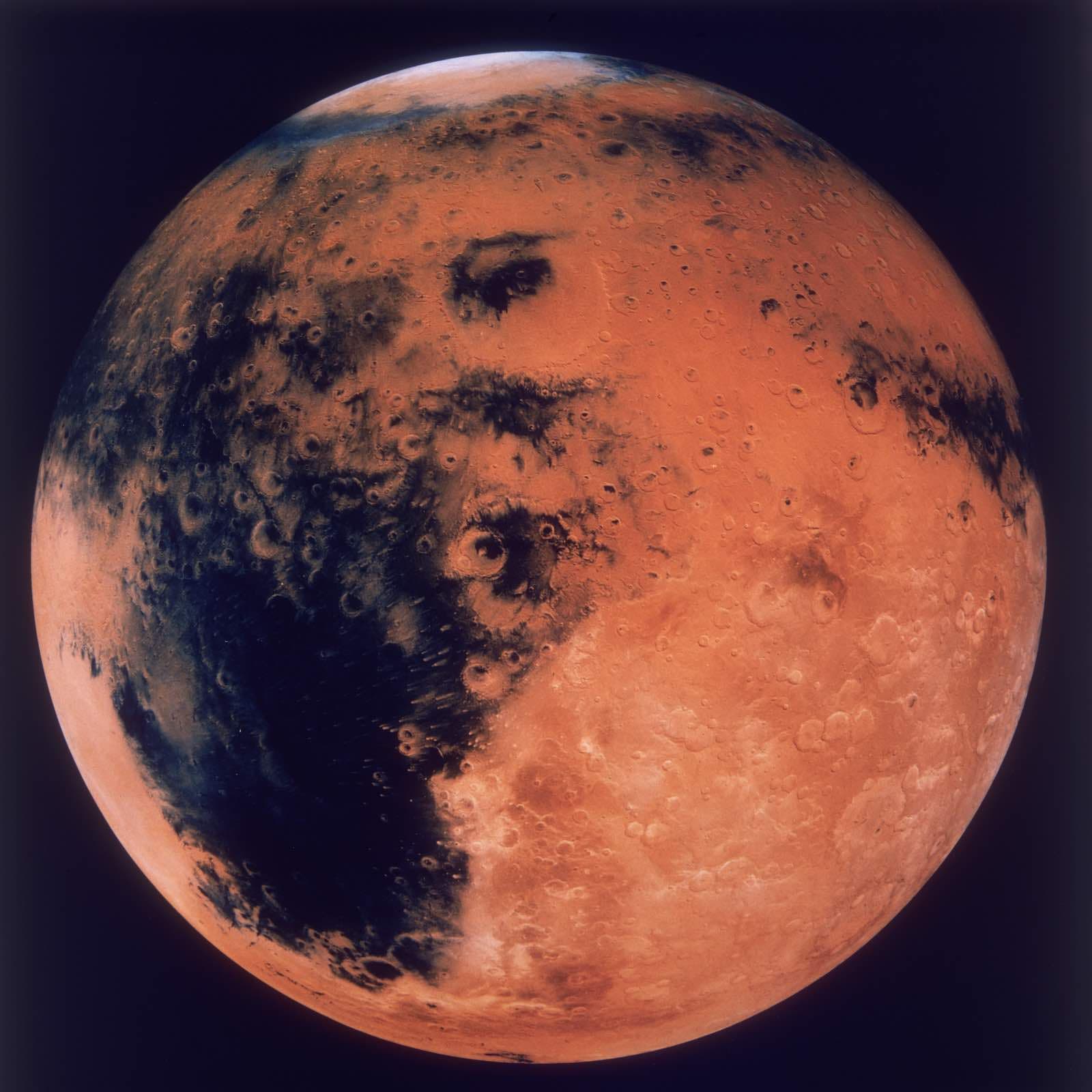
They lived on Mars for a year. Sort of.Apple News Today · Jul 9, 2024
Main Topic: The episode discusses the unprecedented pressure on the world's food supply, specifically in California, due to drought, extreme weather conditions, and government regulations. It highlights the impact on farmers, the economy, and national security.
Key Points:
Participants:
Takeaways:
Theme music fades out
John Bickley
This episode is brought to you by LifeLock. Between two-factor authentication, strong passwords, and a VPN, you try to be in control of how your info is protected. But many other places also have it, and they might not be as careful. That's why LifeLock monitors hundreds of millions of data points a second for threats. If your identity is stolen, they'll fix it. Guaranteed or your money back. Save up to 40% your first year. Visit LifeLock.com slash podcast for 40% off. Terms apply.
Pause
The world's food supply is under unprecedented pressure. The war between Russia and Ukraine is causing shortages of wheat and fertilizer. Plus, record inflation and extreme drought in California are all combining to create the perfect food supply storm.
Pause
In this special episode of Morning Wire, we'll break down the implications for the future of farming in California, including its impact on food prices across the country. Thanks for waking up with us. It's April 17th. This is your Sunday edition of Morning Wire, and happy Easter.
Pause
delivered to your door at a consistent, affordable price. Visit goodranchers.com slash wire or use code wire at checkout to get $30 off and free shipping today. Lock in your price today with a Good Ranchers subscription and say goodbye to food inflation.
Pause
Over the past few years, we've heard a lot about droughts and wildfires in California. Daily Wire reporter Charlotte Pence-Bond spoke to local farmers and leaders in California's Central Valley to get some insight into what's happening with the drought, how we got here, and what can be done to mitigate the effects.
Pause
Charlotte, thanks for being here.
Charlotte Pence-Bond
Thanks for having me on, John.
Now, Charlotte, you live in that area. What are the conditions there now?
John Bickley
California is very dry right now. One study says this is the driest decade in more than a century. Another study published in Nature looked at tree rings, and it suggests that this could be the driest period in 1,200 years.
Charlotte Pence-Bond
According to a government drought monitor, more than 93% of the state is in a severe drought. Around 40% is in extreme drought. And a recent survey from the Department of Water Resources found that the snowpack is down nearly 40% and California's major water reservoirs are also below their historical averages.
All of this has huge implications for agriculture, which is California's largest industry. California supplies two-thirds of the country's fruit and nuts and one-third of its vegetables. Just a massive contributor to the nation's food supply.
Now, this drought isn't new. One study says it's been going on for 22 years now. How are farmers responding to it?
John Bickley
Well, farmers are adapting. Some are abandoning agriculture altogether. They're using their land for other purposes, and others have already shifted to more lucrative crops while some are leaving their acres of land just empty. All of this drives up the cost of food but it also leads to a lot less variety in the produce aisle.
Charlotte Pence-Bond
So this is iceberg lettuce. In this area, typically we grow lettuce for the Thanksgiving, November market, and the Easter, March, April market. And that's because we have hot summers and cold winters.
Justin Diener
[speaking as a guest] California, which is led primarily by the Central Valley and maybe a few other areas, produces about a quarter of the nation's agricultural output. Now, I think that's in dollar terms. So we're producing higher value crops, so we're maybe not producing a quarter of the nation's food output. Calorically, but we're producing the things of higher value strawberries, oranges, almonds.
We farm around 2,500 acres, of which about 1,800 acres is within this contiguous lander, part of kind of the original ranch that was formed here by my relatives. And we farm tomatoes, garlic, and almonds at this point.
Charlotte Pence-Bond
His family has a deep history of farming and water innovation in this area of California. So his great uncle and aunt moved to Five Points, California in 1930. They saw that there was a serious need for water even then.
In 1952, his great uncle and other landowners got together to create the Westlands Water District. This is the largest agricultural water district in the U.S., and it essentially acts as a contractor delivering water to local farms.
Jose Gutierrez
[speaking as a guest] This is our second year of a zero percent allocation, and we are receiving no CVP water this year, and we didn't receive any CVP water last year either.
He explained that who gets water is dependent on a priority system. Some other contractors and wildlife refuges, they're a higher priority than the Westlands Water District. Some of those priorities have been largely set by historical water rights.
Charlotte Pence-Bond
So basically, farmers aren't getting the water they need delivered to them.
Jose Gutierrez
Yeah, they're not.
So what are they doing instead? Well, some farms use wells like Justin's family. He showed me one of the wells they used to pump the water and it was very loud.
Justin Diener
So we're probably burning between 250 to 300 gallons of diesel in a day's time. And that diesel cost us $4.20 on Monday. And that's up significantly because fuel prices have gone up quite a bit.
Charlotte Pence-Bond
Some farmers actually just leave their land uncultivated and empty. That's called fallowing.
Janine Jones
[speaking as a guest] The last couple droughts led to around 500,000 acres of land being left fallow. And if the drought persists, that amount going to double.
Jose Gutierrez
If you can imagine every time an acre of land is fallowed, somebody losing a job. And there's just less food being produced.
Charlotte Pence-Bond
The mayor of San Joaquin, Julia Hernandez, told me that fallowing affects more than just farmers. 50% of our community is our migrants, migrant workers. A large percentage of our community is agriculture workers. And so the direct impact on fallow land is the loss of jobs.
Jose Gutierrez
Justin, the farmer I spoke to, he told me about his family's experience with fallowing. He said this year they're farming just 60 percent of the land that they control.
Justin Diener
Depending upon what happens, if we don't have surface water next year and SGMA regulations come into full effect next year, I could be looking at the reverse of that, where I'm farming maybe 40% of the land and having 60% of the land fallow. 60% fallow, that's a huge portion.
Charlotte Pence-Bond
What about the California government? How is it responding to all of this?
John Bickley
Well, part of the issue is that the state has very strict environmental rules that mandate the use of water to certain ecological goals.
Charlotte Pence-Bond
One of the more controversial policies that we hear a lot about is that the state will release water from upstream storage into the Sacramento and San Joaquin rivers for several reasons, but also to protect endangered species there.
Jose Gutierrez
Those specifics are issued by the State Water Resources Control Board, but this has been criticized as dumping water into the ocean.
Charlotte Pence-Bond
In 1992, Congress also passed the Central Valley Project Improvement Act, which mandates that 800,000 acre-feet of water have to go to fish and wildlife each year.
Justin Diener
And unfortunately, according to Justin, some of these protected fish species, they're still declining despite the water policies.
Charlotte Pence-Bond
At the end of the day, the populations, for a variety of reasons, continue to decline. And I don't know if the approach we've taken is really serving the purpose of maintaining the viability of the species, whether that's the Delta's pelt or the various salmon species.
John Bickley
So the water allocation policy regarding fish isn't having the intended effect.
Charlotte Pence-Bond
But the larger issue is, does it even make sense to continue this amount of farming specifically in California? Obviously, the region has a lot of sunlight. It's got great soil, but it is, in the end, a desert.
Janine Jones
[speaking as a guest] Now, drought is a normal part of California's climate, so we expect droughts to occur. But this is really occurring in a background of warming conditions that are exacerbating drought impacts and leading to really an overall warming and drying of the climate.
Another government regulation coming down the line is called SGMA or the Sustainable Groundwater Management Act. It was passed in 2014 and it mandates that local agencies have to create and carry out plans for certain basins and those have to become sustainable within 20 years of those plans being put forward.
So the reality is there going to be less availability to pump water in this valley which is going to change farming here forever.
Charlotte Pence-Bond
A lot of people have decided they don't want any part of it because of the difficulty they've seen their parents struggle with. Because, how do we make money? How do we do this consistently and provide a decent lifestyle and livelihood versus the perceived value that they could get for selling the land?
So there are a number of farms for sale today in this area because they don't have theirs that want to take it on.
John Bickley
So what can be done here? Is there anything that can be done to help farmers get through the drought?
Charlotte Pence-Bond
There are some proposals, but they're more long-term solutions. President Biden's budget includes money for water efforts, but it focuses a lot more on environmental issues.
Janine Jones
And remember, low water delivery doesn't just affect farmers, it affects the entire community. Westlands released a study showing how agricultural production in the Westlands water district creates over $4.7 billion in economic activity and more than 35,000 jobs.
Charlotte Pence-Bond
The area surrounding Westlands is also relatively poor compared to the rest of California. And it appears that poverty can be affected by water delivery.
Janine Jones
And that's just the local factor. Right. The rest of the country does depend on California for food, as you mentioned.
Charlotte Pence-Bond
Yeah. And there's also a national security implication to all of this. And people in the region are really aware of that.
Janine Jones
If we don't support local farms, we're going to be more reliant on foreign sources of food. This becomes a problem when supply chain issues come up, but also just when basic food safety is in question.
Charlotte Pence-Bond
A researcher behind one study actually discussed the global side in a press conference. Russia invading Ukraine. The inflation impacts. We were already seeing price increases in transportation costs and in resources and materials.
Janine Jones
Agriculture relies on fertilizer. I mean, this has been in the news lately. A lot of that comes from Russia.
Charlotte Pence-Bond
In the past, I would argue that growers and imports from other countries have been our flexibility that allow us to circumvent and to moderate the swings that are caused by the unpredictability of the water supply.
Janine Jones
But that has to change.
Charlotte Pence-Bond
But Justin is optimistic despite the struggles created by these policies and the environment in general.
Justin Diener
I think there's definitely a future here. We just have to be creative and invest in the future and try to make things better.
John Bickley
Well, let's hope he's right.
Charlotte Pence-Bond
Charlotte, thanks for bringing us this story and giving us a chance to hear from some of the farmers.
John Bickley
It's my pleasure, John.
That was Daily Wire's Charlotte Pence Bond, and this has been a special edition of Morning Wire. That's all the time we've got this morning. Thanks for waking up with us. We'll be back tomorrow with the news you need to know.
If you like this podcast, subscribe to our Morning Wire newsletter, available exclusively to Daily Wire members. Get the Morning Wire newsletter delivered straight to your inbox when you join at dailywire.com slash subscribe. Use code MORNINGWIRE to try a Reader's Pass membership and get your first month for only 99 cents.

