--:-- [Upbeat music fades out]
--:-- John Bickley: Welcome to Morning Wire, I'm your host, John Bickley.
--:-- Georgia Howe: And I'm Georgia Howe.
--:-- John Bickley: This episode is brought to you by LifeLock. When you visit the doctor, you probably hand over your insurance, your ID, and contact details. It's just one of the many places that has your personal info. And if any of them accidentally expose it, you could be at risk for identity theft. LifeLock monitors millions of data points a second. If you become a victim, they'll fix it, guaranteed, or your money back. Save up to 40% your first year at LifeLock.com slash podcast. Terms apply.
--:-- John Bickley: Opening statements in Donald Trump's historic hush money trial saw the two sides lay out their cases. The fact that we are actually talking about this case being presented in a New York courtroom leaves me in utter disbelief. Plus, what do we know about the jurors who will decide the fate of the former president?
--:-- Georgia Howe: I'm Daily Wire editor-in-chief John Bickley with our guest co-host, Sage Steele, host of the Sage Steele Show. It's good to be back.
--:-- Sage Steele: It's Tuesday, April 23rd, and this is Morning Wire. Columbia University cancels in-person classes as tensions escalate on that campus and spread to several others. What actions are colleges taking to protect Jewish students from harassment and violence by anti-Israel protesters?
--:-- John Bickley: If you do not leave, you will be arrested. We will give you time to leave. If you do not leave, you will be arrested. And should sleeping on the sidewalk be illegal? The Supreme Court heard oral arguments Monday in a case that pits cities who want to clean up homeless encampments against activists who don't.
--:-- Georgia Howe: Thanks for waking up with Morning Wire. Stay tuned. We have the news you need to know.
--:-- Brandon: Hey guys, producer Brandon here. Balanced Nature is our go-to way to get whole food ingredients every day. They use an advanced cold vacuum process that encapsulates fruits and vegetables into whole food supplements without sacrificing their natural antioxidants. The capsules are completely void of additives, fillers, extracts, synthetics, pesticides, or added sugar. The only thing at Balance of Nature fruit and veggie capsules are fruits and veggies. Go to balanceofnature.com and use promo code WIRE for 35% off your first fruits and veggies set plus $10 off each additional set. That's balanceofnature.com, promo code WIRE.
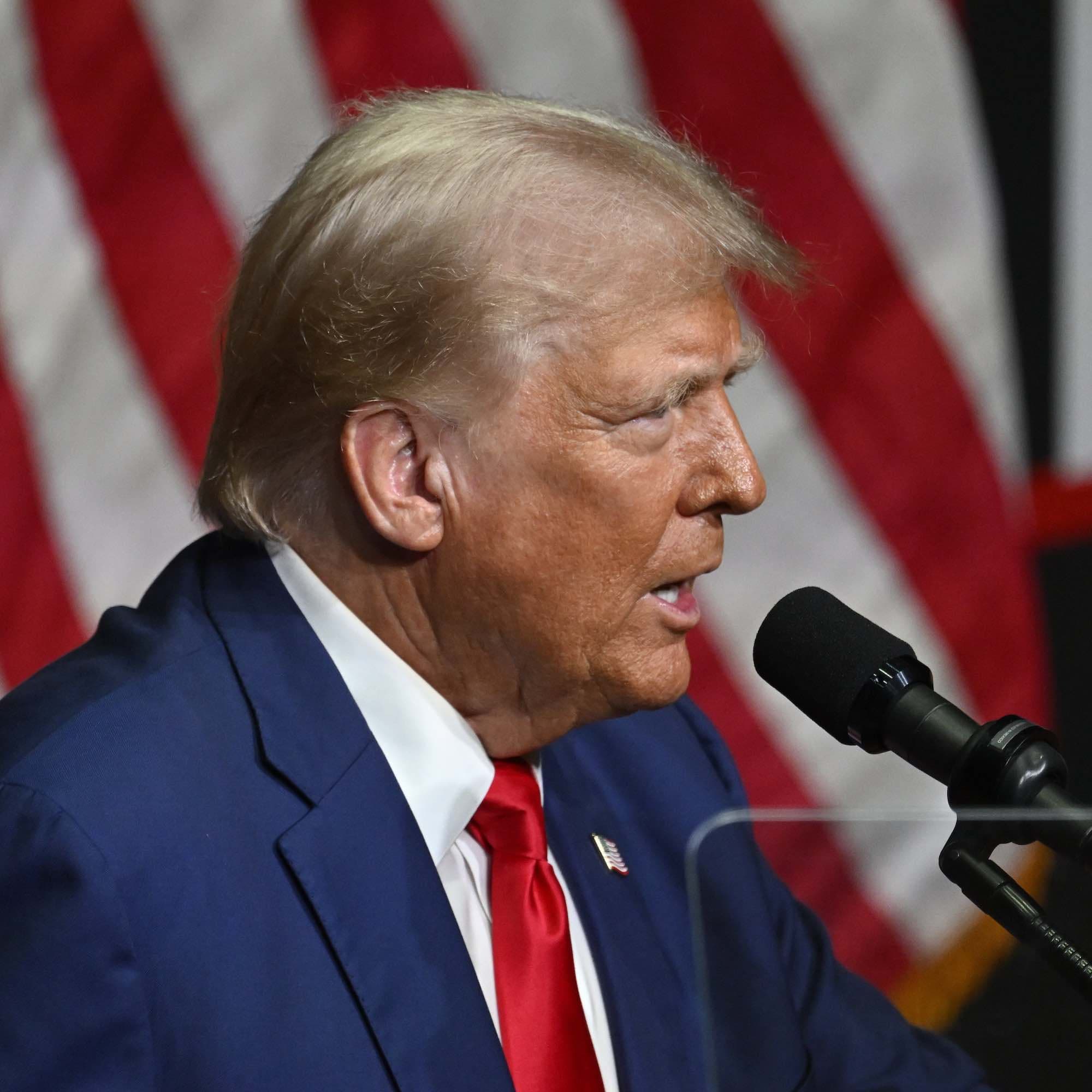
--:-- John Bickley: The jury is set and opening arguments are underway in New York City as prosecutors call witnesses and lay out their case against former President Donald Trump. Here with the latest on the case against Trump and what we know about the jurors who will decide his fate is Daily Wire senior editor Cabot Phillips.
--:-- Cabot Phillips: Hey, Cabot.
--:-- John Bickley: So another eventful day in Manhattan. What did we learn yesterday?
--:-- Cabot Phillips: Yeah, on Monday, prosecutors used their opening statement to paint a picture of a wider scheme in which Trump allegedly worked with his lawyers and media contacts to run what they called a catch-and-kill scheme in which they would find potentially damaging stories and then pay for them to go away before they saw the light of day. As part of that effort, the state called upon David Pecker as their first witness. He's the former publisher of the National Enquirer magazine who prosecutors allege paid off folks who were prepared to go public with damaging information on Trump. As the state put it, those efforts, including the alleged Stormy Daniels payment, constituted, quote, election fraud, plain and simple.
--:-- John Bickley: In the words of Manhattan prosecutor Matthew Colangelo, quote, we will never know and it doesn't matter if this made the difference for him in the election. Prosecutors also hinted that they would be providing financial records, phone calls and text messages proving that alleged legal activity took place. So a lot more is coming.
--:-- Cabot Phillips: Yeah. So that's the argument from prosecutors. What do we expect to hear from Trump's defense?
--:-- John Bickley: Well, during their opening statements, Trump lawyers said flat out that no crimes had been committed. They argued that he was simply defending himself against false allegations that could potentially hurt his reputation and family They also made the point that even if he was trying to keep the story from going public to protect his campaign that would not be illegal In their words quote there is nothing wrong with trying to influence an election It's called democracy. The former president's lawyers also claimed in their opening statement that the case all hinged on whether Trump had criminal intent, something they say is impossible to prove. And we should note that many legal experts outside of this case do agree with the Trump team, including former federal prosecutor Andy McCarthy, along with George Washington University law professor Jonathan Turley, who calls the whole case, quote, an embarrassment.
--:-- Cabot Phillips: The arguments today did, in fact, capture all the problems here. You know, you had this misdemeanor under state law that had run out. This is going back to related to the 2016 election. And they zapped it back into life by alleging that there was a campaign finance violation under the federal laws that doesn't exist.
--:-- John Bickley: Now, jury selection was last week. We now have the jurors set. What do we know about the jurors who were selected?
--:-- Cabot Phillips: Yeah, for obvious reasons, we don't know exactly who was on the jury, but we do have some details on their lives that give some insight into potential political leanings. The group features five women and seven men, the majority of whom are college-educated, white-collar workers. The most common answer is when asked which media outlets the 12 follow were at the New York Times and CNN, though juror number one, the foreman, said he also follows Fox News. Juror number five, an English teacher and woman of color, has been viewed as potentially more favorable to Trump after telling the court that she thinks he, quote, speaks his mind. And I'd rather that than someone who's in office who you don't know what they're thinking. But again, it's worth reiterating. This jury is comprised of folks living in one of the bluest precincts in the whole country. So they're almost certain to skew liberal.
--:-- John Bickley: The Trump team has raised concerns over whether these 12 jurors are even capable of being unbiased. At that point, we heard from a potential juror who was dismissed because of scheduling conflicts, but was later vocal with the media afterwards about her disdain for Trump. I'm not a fan. There are all issues being supported that regard women and reproductive health that I do not agree with. And I think all of that needs to be addressed. Now, remember, this is important because that potential juror made it through the first round of screening, which required her assuring the court that she was not biased against Trump. Obviously, that does not seem to be the case. And for that reason, Trump supporters have expressed major concerns that some of the 12 seated could secretly harbor those same opinions and use the trial as a chance to go after it.
--:-- Cabot Phillips: Yeah, well, one day closer to seeing which way the jury goes on that. Kevin, thanks for reporting.
--:-- John Bickley: Anytime.
--:-- Brandon: If you need a better way to simplify your business finances, then you need to check out Ramp. Ramp is the corporate card and spend management software designed to help you save time and put money back in your pocket. Businesses that use Ramp save an average of 5% in the first year, and now you get $250 when you join Ramp. Just go to ramp.com slash wire. That's ramp.com slash wire, R-A-M-P dot com slash wire. Cards issued by Sutton Bank and Celtic Bank, member of FDIC. Terms and conditions apply.
--:-- John Bickley: Tense standoffs continued Monday on college campuses, which saw anti-Israel protesters arrested at Yale and fresh reports of harassment of Jewish students at Columbia. The situation in New York has escalated to the point that the city's mayor is weighing in. We all know how this country holds dear the right to voice one's opinion, but that voicing of opinion, I don't believe personally, should call out the level of hate that we're seeing and the level of threats that we're seeing.
--:-- Georgia Howe: Here to discuss is Daily Wire contributor David Marcus.
--:-- David Marcus: Hey Dave so we got anti protesters effectively taking over the campus of Columbia now and encampments spreading to Yale MIT Michigan What are we seeing on these elite college campuses Morning John
--:-- John Bickley: In the past few days we now seen arrests at both Columbia and Yale, including the daughter of Congresswoman Ilhan Omar, who now says that she is suspended and homeless as a result of her actions. A Jewish professor at Columbia, Shai Davidai, who had been critical of the school's response to anti-Semitism, had his ID deactivated for his own safety, he was told? Wait, wait, wait. Everybody, my card has been deactivated. I am a professor here. I have every right to be everywhere on campus. You cannot let people that support Hamas on campus and me, a professor, not go on campus. Let me in now. Columbia ordered all classes to be remote out of fears for safety for Jewish students, after some really horrible things were chanted at Jews, such as go back to Poland on or around the campus. Anger's mounting at Columbia's president, Minouche Shafiq, including a call from New York Congresswoman Nicole Malliotakis for her to resign. It's a messy and potentially dangerous situation that may be spreading across the country now.
--:-- David Marcus: New England Patriots owner Robert Kraft, a Columbia grad, also said he will no longer donate to his alma mater. Yeah, significant announcement there. The protests have taken the form of the occupation of areas on these college campuses with tents and food tables, with the idea of staying until demands are met. What law enforcement challenges does that present to authorities? I mean, going back to Occupy Wall Street, these encampments make law enforcement very nervous. OWS was eventually shut down because of sexual assaults at the Chaz Autonomous Zone in Seattle in 2020. We saw murders. On Sunday night, occupiers used more tactics from Occupy Wall Street as they formed a human chain to physically force student journalists out of the encampment while using what's called a human microphone, a kind of call in response to organize the altercation. Here's some of that audio. We ask that you please respect our privacy and our community guidelines, which you have so far disrespected. What's clear is that these people think they are in control of this space and making the rules for it.
--:-- John Bickley: The NYPD has been standing by to remove the encampment for a second time, but the administration has been hesitant to allow them to do that. So there really has been a stalemate that's left many Jewish students fearful. On Monday, Columbia did ask the police to have a presence on the border of the campus, but not inside, which underscores how dangerous the situation can be, especially if it's not limited to just Columbia students.
--:-- David Marcus: Yeah. Now, hundreds of tents along with blankets and supplies don't just appear out of thin air. Do we know where the funding for these encampments is coming from?
--:-- John Bickley: Great question. And not exactly, but that may change very soon. Congress, as part of its investigations into college antisemitism, has demanded documents from many schools, including Harvard and Columbia and others, detailing how much money they receive from Mideast countries, such as Qatar, and how these funds are used. I would expect all of that to be under a sharper magnifying glass going forward.
--:-- David Marcus: Well, let's hope we don't see this all spin even more out of control on these campuses. Dave, thanks for joining us.
--:-- John Bickley: Thanks for having me.
--:-- John Bickley: The Supreme Court heard oral arguments yesterday in the case of City of Grants Pass versus Johnson. The case deals with the question of whether or not the homeless have a constitutional right to sleep and camp in public. Here to talk with us about the case is Judge Glock the director of research and a senior fellow at the Manhattan Institute.
--:-- Judge Glock: Thanks for coming on.
--:-- John Bickley: So first how did this case get up to the Supreme Court?
--:-- Judge Glock: So this case is just the latest in a series of cases in the Ninth Circuit Court of Appeals going back to 2018. The basic arguments of those rulings was that under the Eighth Amendment clause against cruel and unusual punishment, it was unconstitutional for cities to criminalize sleeping outside if people didn't have any alternative. Basically, if there were not enough shelter beds in a city for the homeless, the city had to allow them to sleep outdoors. The most recent case dealt with this small city of Grants Pass, Oregon, and sort of extended those previous rulings. The Ninth Circuit now said it was unconstitutional issue civil fines against people sleeping outside, and the cities could not forbid people from using things like bedding.
--:-- John Bickley: If this ruling has been around in the Ninth Circuit for a few years now, why is the Supreme court hearing this case now?
--:-- Judge Glock: That's a good question. It could just be the consequences have become much more clear. We've seen unsheltered homelessness out on the streets rise rapidly in the whole country, and it actually increased almost twice as much in the Ninth Circuit states as elsewhere. It's also possible the Grant's Pass case just showed the slippery slope problem in the original rulings, and that once the courts allowed people to sleep and use bedding outside, did they have to allow them to erect tents or start fires to keep warm or even defecate in public. All those issues came up in the oral argument yesterday.
--:-- John Bickley: And how did the justices wrestle with those issues yesterday?
--:-- Judge Glock: The justices really got into the weeds on how cities and states deal with homelessness. Many took issue with the part of the Ninth Circuit ruling that said each city had to have enough shelter beds for all of the homeless in order to forbid public sleeping. The justices were also worried about things like how a police officer on the ground could understand what sort of shelter beds were available, what alternatives the homeless person had, and so forth. It was really difficult to understand all of the questions and how those would play out in practice.
--:-- John Bickley: In the questions yesterday, what were the specific legal issues that the Supreme Court discussed?
--:-- Judge Glock: The main legal debate really wasn't about the Eighth Amendment. It was about this older 1960s-era Supreme Court decision that said it was unconstitutional to punish a drug addict merely for being a drug addict, as opposed to punishing him or her for the act of taking drugs. basically the Supreme Court said that the government could punish you for your conduct, but not for what they called your status, just the type of person you were. In this case, the Ninth Circuit claimed the city of Grants Pass was punishing people for this quote-unquote status of being homeless, and that sleeping and putting bedding down were just parts of that status. But this brought up a lot of questions from the justices. They were questioning whether or not homelessness was always purely involuntary status. They asked, what if someone wouldn't move back with their family because they didn't like how they were treated? Or what if someone wouldn't go into a shelter because they wanted to keep their pets?
--:-- John Bickley: One shelter in Grants Pass did actually have open beds, but it required participation in religious services and had other rules. And if those sorts of shelters were open, justice wondered if that meant the homeless actually did have alternatives.
--:-- Judge Glock: So what are the prospects for this case now going forward?
--:-- John Bickley: Well, most commentators before the oral argument expected the Supreme Court to overturn the Ninth Circuit. And after listening to this case, I have to say that still seems like the most likely outcome. When the Supreme Court took up this case, the problem was they knew they would have to make a decision about homelessness law for the entire country. And in the oral argument, they didn't sound very eager to impose those Ninth Circuit rules everywhere.
--:-- Judge Glock: Well, we'll look forward to seeing how they rule in a few months.
--:-- John Bickley: Thanks so much for having me.
--:-- Judge Glock: Thanks for coming on.
--:-- [Closing music starts playing]
--:-- John Bickley: That was the Manhattan Institute's Judge Glock. Thanks for waking up with us. We'll be back this afternoon with more news you need to know.