--:-- Tracy Mumford: From the New York Times, it's the headlines. I'm Tracy Mumford. Today's Monday, April 14th. Here's what we're covering.
--:-- Tracy Mumford: In retaliation for President Trump's aggressive tariffs, China has hit back and suspended the export of some critical minerals and magnets. The rare earth materials are crucial to many auto manufacturers, tech companies, and the aerospace industry. They're used in everything from cars to spacecraft to the chips that go in smartphones. They're also critical to military contractors. The materials are used in drones and missiles. And there's almost nowhere to get these materials except China.
--:-- Tracy Mumford: For now, shipments have been halted while the Chinese government rolls out new regulations on who can ship the materials where. Once that's done, China will have the oversight in place to permanently block shipments to some companies if it wants, including American military contractors. How much the current suspension will disrupt the supply chain depends on how much factories have stockpiled. Some keep little to no extra material on hand because of how expensive it is. But other companies started stocking up months ago, nervous about just this kind of situation.
--:-- Tracy Mumford: Meanwhile, are there any plans for Presidents Trump and Xi to speak? Right now, we don't have any plans on that. There appears to be no end in sight for the trade standoff between the U.S. and China. The Times has learned that President Trump is open to negotiating directly with China's President Xi Jinping but that he's waiting for Xi to call him personally. For the moment, the Chinese government seems to be wary of that scenario.
--:-- Tracy Mumford: Today at the White House, President Trump will host the president of El Salvador, Najib Bukele, who's become a high-profile partner in Trump's deportation efforts. The administration is currently paying El Salvador millions of dollars to jail migrants that the U sent there claiming with little evidence that they violent gang members. Bukele, who referred to himself as the world's coolest dictator, has led his own crackdown on alleged gang members. In the process, he's been accused of undermining democratic institutions in his country. There have been mass arrests and jailings, often without any trials.
--:-- Tracy Mumford: The meeting between Bukele and Trump comes after the administration says it sent 10 more migrants from the U.S. to El Salvador this weekend, where they're being held in a sprawling megaprison. Secretary of State Marco Rubio said the closer ties between the two countries have, quote, become an example for security and prosperity in our hemisphere.
--:-- Tracy Mumford: Last night, we experienced an attack not just on our family, but on the entire Commonwealth of Pennsylvania here at the governor's residence. In Pennsylvania, authorities are investigating an arson attack on the governor's mansion this weekend that caused significant damage to the property. One of the state troopers assigned to our detail banged on our door, woke us up and told us we had an emergency and needed to leave immediately.
--:-- Tracy Mumford: The state's Democratic governor, Josh Shapiro, said he and his family were forced to evacuate the house early Sunday morning after it was lit on fire. Officials have arrested a 38-year-old man who they say jumped a fence, evaded state troopers guarding the mansion, and set off a homemade incendiary device. He's been charged with attempted murder, arson, and terrorism. Law enforcement officials haven't identified a motive yet, though Shapiro noted that the attack came the same night that his family had hosted other members of the local Jewish community to mark the beginning of Passover.
--:-- Tracy Mumford: This type of violence is not okay. And I don't give a damn if it's coming from one particular side or the other. Directed at one particular party or another, it is not okay. And it has to stop.
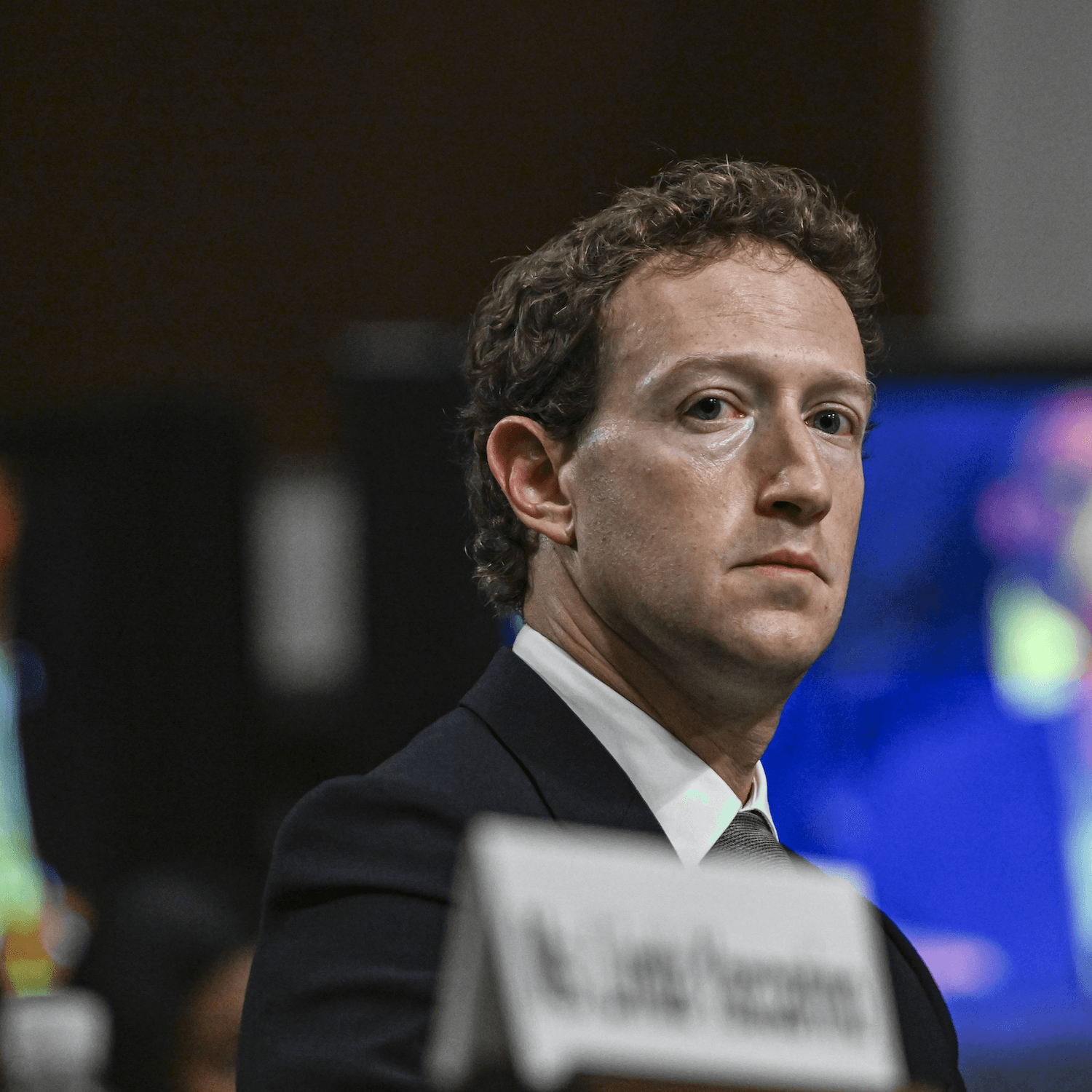
--:-- Tracy Mumford: Today, the social media giant Meta, Facebook's parent company, will face off with the U.S. government in a landmark antitrust case. The federal government will argue that the company broke the law when it acquired Instagram and WhatsApp, essentially claiming it was buying up the smaller companies to illegally try to maintain its social media dominance. They want to force Meta to sell off the two apps.
--:-- Tracy Mumford: But legal experts say it's going to be an uphill battle for the government to make its case. It will have to prove that Meta only became as powerful as it is because of those acquisitions. And Meta's expected to argue that the popularity of other platforms, like TikTok and Reddit, prove that there's still plenty of competition in the marketplace.
--:-- Tracy Mumford: My colleague David McCabe, who covers tech policy, says this case will be a test of the Trump administration's relationship with Silicon Valley. In some corners of the tech industry, there was optimism about President Trump's election to a second term. Executives and investors had grown frustrated by the way that regulators in the last administration would block really big tech companies from buying other firms.
--:-- Tracy Mumford: But as President Trump begins his second term, it does seem like the scrutiny of the tech industry's biggest players is not letting up. As part of the trial, Meta's CEO Mark Zuckerberg is expected to testify. In the past few weeks, he's been trying to lobby the Trump administration to settle the case, making several trips to the White House and to Mar-a-Lago.
--:-- Tracy Mumford: And finally... Our skill set, our expertise in secret doors and hidden doors is unparalleled. For the last few months, I've been looking into this niche area of the economy that I would call, like, the panic industry.
--:-- Tracy Mumford: I always try to make my bomb shelters double as wine cellars, gun rooms, tornado shelters... which is basically companies around the U.S. that are catering to people who are very afraid of things like civil unrest and pandemic and myriad of other things.
--:-- Tracy Mumford: My colleague Coralie Craft has been covering the recent surge in people spending big on home renovations they think will help them survive doomsday scenarios. What I found is that these companies that build things like bunkers and panic rooms and you know hidden gun closets and things like that are saying that business is booming.
--:-- Tracy Mumford: They are getting a ton of inquiries. I came across some really surprising installations, they call them. Like, for example, there's a family outside of Phoenix, Arizona, off of their den in the middle of their home. If you press a concealed button, a wall panel opens up and reveals a gun range inside that, you know, is stocked with weapons.
--:-- Tracy Mumford: There is a company called Safe that is building a house for a client that's in an undisclosed location that has a moat that can be lit on fire at will. At that location, there is also a tunnel that is essentially a giant microwave, meaning that it can heat up as a way to, let's say, repel potential intruders.
--:-- Tracy Mumford: Just truly some wild stuff that feels like they come straight out of the movies and things I just had no idea people were building in their backyards. Multiple people who run these companies told me that they saw a massive uptick after the pandemic and then like with all the political turmoil. The interest just really surged.
--:-- Tracy Mumford: And what they're seeing is that people, even like middle class people and people who are more interested in spending like 20 or 30 or even $10,000 on installations in their homes to make them feel safer. They're just seeing a lot of that. And it's become kind of a huge segment of the industry, which I think really speaks to the broadening of this market.
--:-- Tracy Mumford: Those are the headlines today on The Daily. If I can't bring in that product and I run out of what's in my warehouse now, then I no longer have revenue coming into my business. And what that means is I can no longer pay my employees. I can no longer pay my loans. And in about six months, I could very, very possibly lose my home.
--:-- Tracy Mumford: An inside look at how Trump's high tariffs on Chinese-made goods are hitting one small business in Minnesota. That's next in the New York Times audio app, or you can listen wherever you get your podcasts. I'm Tracy Mumford. We'll be back tomorrow.