--:-- [Theme music fades out]
--:-- Host (Annie Minoff): Welcome to The Journal, our show about money, business, and power. I'm Annie Minoff. It's Tuesday, April 29th.
--:-- [Soft music continues in the background]
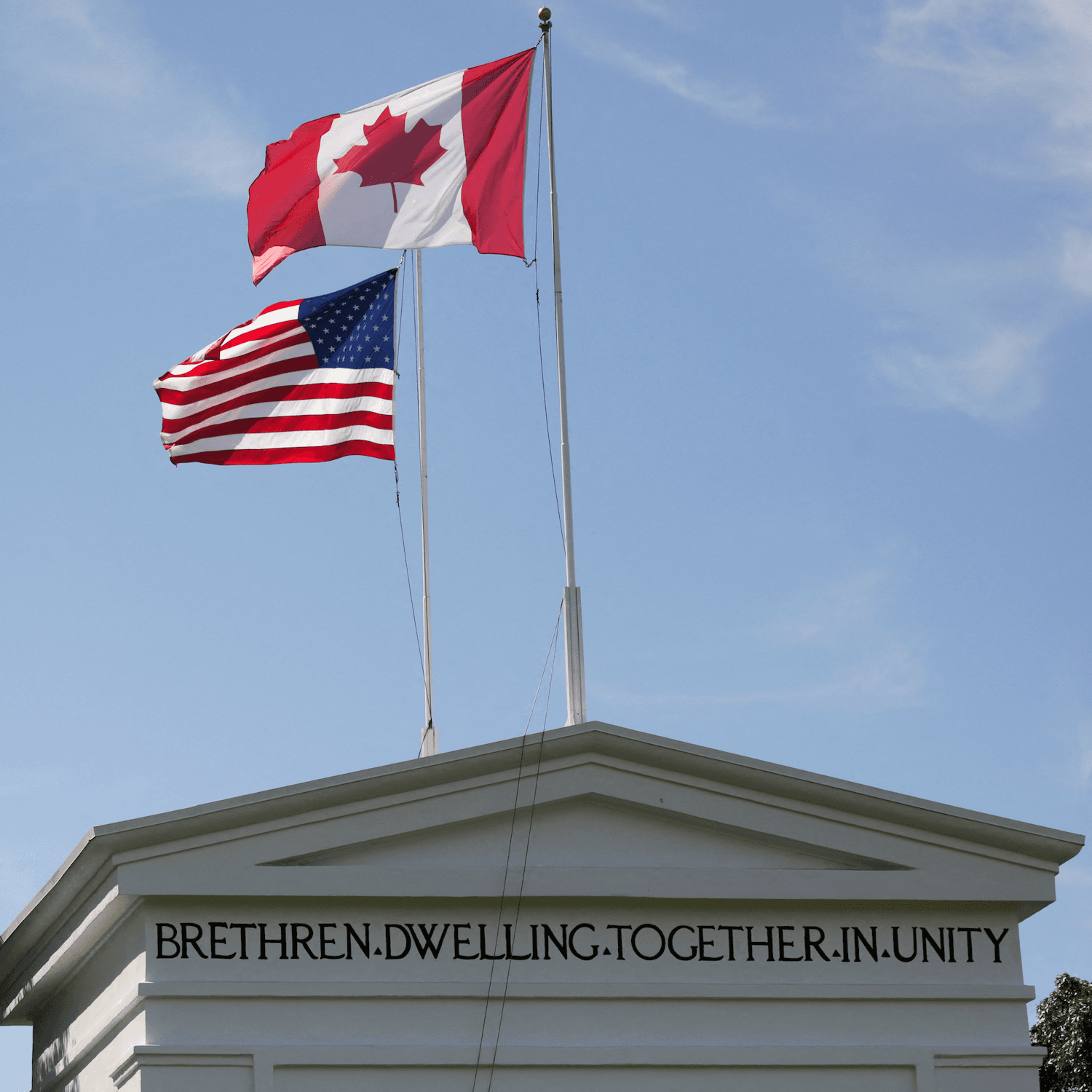
--:-- Host (Annie Minoff): Coming up on the show, how Canada's Prime Minister won by standing up to President Trump. Historically, the relationship between Canada and the U.S. has been pretty cozy. The countries are really wedded together. You know, there's many families that have relatives on both sides of the border. Canadians love to travel to the U.S. and vice versa. I think Canada is the only country that has teams in the National Hockey League, NBA, and Major League Baseball.
--:-- [Soft music continues]
--:-- Host (Annie Minoff): The two countries' economic ties also run deep. 80% of Canada's exports go to the U.S. Canada is the largest foreign exporter of oil and gas and hydropower to the United States. It sends a lot of cars to the U.S. A lot of the Detroit manufacturers build cars here, about a million cars a year, and auto parts to the U.S. as well. Canada sends a lot of lumber, a lot of natural resources broadly. The two countries share a supply chain, so it's really hard to overstate just how close the countries are and to what extent the border between the two countries, at least from a business standpoint, is a bit of a fiction.
--:-- [Soft music continues]
--:-- Guest (Vipal Manga): That's how it used to be. But recently, the U.S.-Canada relationship has taken a big hit. Soon after coming into office, President Trump started imposing tariffs on America's trading partners including Canada. He levied 25 percent tariffs on steel and aluminum which really impacts major sectors of Canada manufacturing economy. He leveled tariffs on automobiles and auto parts and continues to threaten tariffs and reduce access for Canadians to the U.S. market. That threatens to send Canada into a deep recession. The Bank of Canada has warned that a trade war with the U.S. could reduce Canadian standards of living. It's that serious.
--:-- [Soft music continues]
--:-- Guest (Vipal Manga): But it wasn't just economic. Trump also threatened Canada in a way that was much more existential. The real shock to Canada's psyche was this idea that Trump floated publicly that Canada should become the 51st state. What I'd like to see Canada become our 51st state. We give them protection, military protection. That was deeply offensive to many Canadians and, frankly, very frightening.
--:-- [Soft music continues]
--:-- Host (Annie Minoff): And so how have Canadians been feeling about their southern neighbor, the U.S.? Well, they're quite angry. I mean, you know, there's this whole idea of elbows up that, you know, Canada is going to fight back against the U.S. And I do think the country has become unified in a real fundamental way. Canada is a huge country with very disparate regions and there's a lot of internal fighting. And in many ways, there have been schisms forming in Canadian society that for now, at least, Trump, the common enemy, has papered over.
--:-- [Soft music continues]
--:-- Host (Annie Minoff): Some Canadians have started wearing blue Canada is not for sale hats. Others are boycotting American whiskey. And instead of selling Americanos, some coffee shops are selling Canadianos. That was the backdrop to Canada's election. And as a candidate, Mark Carney was able to tap into Canadians' anger. What resonated with Canadians emotionally was this sense of we're not going to back down. We're really strong, but we're tough and we're going to definitely hit back.
--:-- [Soft music continues]
--:-- Guest (Vipal Manga): We're facing the most significant crisis of our lifetimes because of President Trump's unjustified trade actions and his threats to our sovereignty. He also tapped into this idea. I don't think he sugarcoated it. And Canadians appreciated that, that sending up to the U.S. and changing this relationship is going to be very painful for Canadians. But he also reminded Canadians that, you know, the country would stick together and help each other. And I think Canadians really like that.
--:-- [Soft music continues]
--:-- Host (Annie Minoff): And so let's talk a bit about Carney. What's his background? He was born to two school teachers in Fort Smith, Northwest Territories, which is in the subarctic. I mean, it's not even considered far north, but it's far. And he grew up wanting to play hockey, but he ended up going to Harvard and Oxford to study economics. From there, he became a globetrotting investment banker for Goldman Sachs and worked there for 13 years. And then decided, you know, I'm going to go into public service.
--:-- [Soft music continues]
--:-- Host (Annie Minoff): Carney would go on to run Canada's central bank. This was at a crucial moment, during the 2008 global financial crisis. And then by 2012, he had become such a rock star in central banking, if you can imagine that. Imagine such a thing. That he was recruited by the U.K. government to become the Bank of England's governor. Carney would run that bank during another crisis, Brexit. And became the face of the UK trying to deal with this massive change in their own society.
--:-- [Soft music continues]
--:-- Guest (Vipal Manga): So he a guy who dealt with crises before specifically economic crises. He has, so he definitely has a reputation for keeping a cool head under fire and being able to deal with extremely complex issues in a very thoughtful way.
--:-- [Soft music continues]
--:-- Host (Annie Minoff): Then, Carney got a chance to lead on his home turf. Justin Trudeau has announced he's stepping down as the prime minister of Canada and as the leader of his party. After Trudeau's resignation earlier this year, Carney stepped in to replace him, and he soon called for an election. The new prime minister, Mark Carney, has called a snap federal election for the 28th of April. That'll be just a five-week campaign.
--:-- [Soft music continues]
--:-- Host (Annie Minoff): In only five weeks, Carney gained enough support to win. Was Carney's rise surprising to you? I think it was. You have to remember that in January, right before Justin Trudeau quit. The Liberal Party had been in power for about nine years, and they were about 20 points beneath the Conservatives in the polls, dead in the water. And then Carney came along, and I was skeptical that he'd actually be able to turn it around.
--:-- [Soft music continues]
--:-- Guest (Vipal Manga): And I'm not sure if Trump hadn't continually mentioned the 51st state that he would have turned it around. It's a remarkable comeback. I don't think anything like this has ever been seen in Canadian elections.
--:-- [Soft music continues]
--:-- Host (Annie Minoff): So how is Carney planning to take on Trump? That's next. Carney went on the message that he would stand up for Canada and its economy. But that economy was shaky even before Trump took office. The Canadian economy was completely in the doldrums. We were looking at a potential recession. There was stagnant productivity. Inflation was high. And the biggest problem facing Canadians was lack of housing. There weren't enough houses being built. Rents were skyrocketing. It was a real problem.
--:-- [Soft music continues]
--:-- Guest (Vipal Manga): And those problems continue to persist. And tariffs, I would imagine, have made that worse. Yes. We've already seen signs of a slowdown. The data is still a little bit mixed. But the Bank of Canada has definitely warned that you could see a big hit to GDP going forward. We've already seen some auto plants start to close in Ontario, which is the industrial heartland and the country's most populous province.
--:-- [Soft music continues]
--:-- Host (Annie Minoff): So the tariffs are already starting to have a big impact. Carney has already taken some action against Trump's tariffs. He imposed counter tariffs against the U.S. earlier this month. And he's looking to strike a new trade deal with Trump. He does want to renegotiate a deal for access to the U.S. market. And he's once doubled down on trading relationships that Canada already has with Europe. And they're also part of the TPP deal that includes a lot of Asian countries.
--:-- [Soft music continues]
--:-- Host (Annie Minoff): So as the trade relationship with the U.S. becomes shakier and something that Canada can't rely on, Carney's looking to deepen that relationship with other countries. Very much so. And, you know, we've got some indications that he might push for deeper integration with the European Union in terms of being a member of the European economic area like Norway or Iceland. It's not clear that Europe would necessarily be open to that, but I think that's where his head is at.
--:-- [Soft music continues]
--:-- Guest (Vipal Manga): He wants to find other allies. But could any of these potential deals with other countries or blocs like Europe actually replace the U.S.? I don't think so. Nothing can replace the U.S. Again, Canada so close to the U.S. and they bonded so closely together that I don't think there's any expectation that the loss of access to the U.S. market is easily replaceable.
--:-- [Soft music continues]
--:-- Host (Annie Minoff): So he's looking to diversify the trade relationships, but that only goes so far.
--:-- [Soft music continues]
--:-- Host (Annie Minoff): What about this idea that Trump has floated repeatedly of making Canada the 51st state? What can you expect to see from Carney about that? Carney has said that he demands respect from Trump, that Canada is only going to deal with Trump as a sovereign nation. President Trump is trying to break us so that America can own us. That will never, that will never, ever happen.
--:-- [Soft music continues]
--:-- Guest (Vipal Manga): Trump has already kind of tempered his tone a little bit. His antipathy for Justin Trudeau ran so deep that he stopped calling Trudeau prime minister. He called him Governor Trudeau. He's been calling Carney prime minister so far. So there's something of an improvement there.
--:-- [Soft music continues]
--:-- Host (Annie Minoff): Carney's liberal party fell short of a majority in the parliament. That means that Carney will have to work with rival politicians to get things done. How much can Carney really do when it comes to standing up to Trump? How much leverage does he have? How much power does he have?
--:-- [Soft music continues]
--:-- Guest (Vipal Manga): I think Canada has a lot more leverage than the U.S. realizes. Again, the supply chains are really tightly enmeshed. So breaking those apart will also hurt the United States economy. And I'm not sure if the U.S. policymakers realize just how deeply wedded those two economies are.
--:-- [Soft music continues]
--:-- Guest (Vipal Manga): The other thing that Canada has is an abundance of natural resources. They have lots of oil and gas, and Canada can use that sort of as a card. The other thing that Carney, maybe more than any other leader in the world, understands how the financial system works, he's an expert in the plumbing. Right. This is his superpower. That is his superpower.
--:-- [Soft music continues]
--:-- Guest (Vipal Manga): And I do think that having that knowledge gives Canada a lot more soft leverage, if you will, over the U.S. than the U.S. might realize.
--:-- [Soft music continues]
--:-- Host (Annie Minoff): I do think that this is a big wake-up call for Canada. That, you know, sort of the easy days of them just being able to send supplies, natural resources and goods to the U.S. are over and that they're going to have to find other ways to grow.
--:-- [Soft music continues]
--:-- Guest (Vipal Manga): Carney has called all this a tragedy, and I think he really means it's a global tragedy. It's a tragedy for Canadians. In some ways, it's a tragedy for the U.S. in the way that this global order that the U.S. itself created is now being broken by the U.S. But he's also very pointedly said, this is our new reality. We have to deal with it.
--:-- [Soft music continues]
--:-- Host (Annie Minoff): Before we go, our series Trump 2.0 is wrapping this week. If you have any questions about the Trump administration and how its first 100 days in power went, email us and let us know. Please send a voice note to thejournal at wsj.com.
--:-- [Soft music continues]
--:-- Host (Annie Minoff): That's all for today, Tuesday, April 29th. The Journal is a co-production of Spotify and The Wall Street Journal. If you like our show, follow us on Spotify or wherever you get your podcasts. We're out every weekday afternoon. Thanks for listening. See you tomorrow.