--:-- [Sound of a news theme music fades out]
--:-- Host (Jessica Mendoza): Welcome to The Journal, our show about money, business, and power. I'm Jessica Mendoza. It's Tuesday, June 10th.
--:-- [Sound of a news theme music fades out]
--:-- Host (Jessica Mendoza): Protests on the streets of Los Angeles are now on their fifth day. Driving the demonstrations are President Trump's immigration policy, and specifically, raids conducted by Immigration and Customs Enforcement, or ICE.
--:-- Guest (Michelle Hackman): So ICE did this operation in L.A. starting on Friday. They raided a few workplaces. There was a garment factory and then the parking lot surrounding areas of a Home Depot in this very Latino neighborhood.
--:-- Host (Jessica Mendoza): That's our colleague Michelle Hackman, who covers immigration policy. She's been following the Trump administration's deportation efforts, which are now happening in places where undocumented folks go to look for work.
--:-- Guest (Michelle Hackman): Immigrants who are working in the country illegally, often, day laborers, people who work in construction or being hired to help out with people's homes or gardening or whatever, will gather in the parking lot of a Home Depot looking for work. And so for ICE, it's like an easy target to go there and just figure out everyone's immigration status and arrest everyone who doesn't have papers.
--:-- Host (Jessica Mendoza): As news of the raid spread, people began to take to the streets and spots around L.A. County, including at the Federal Detention Center downtown. As protesters gathered, ICE started escalating using sort of pepper spray and in some cases flashbangs.
--:-- Guest (Michelle Hackman): That made the protests bigger and more aggressive, which caused a larger law enforcement response and so on and so forth.
--:-- Host (Jessica Mendoza): Protests against immigration raids turning chaotic. Multiple Waymo cars lit on fire. Again, these are driverless vehicles there in downtown LA.
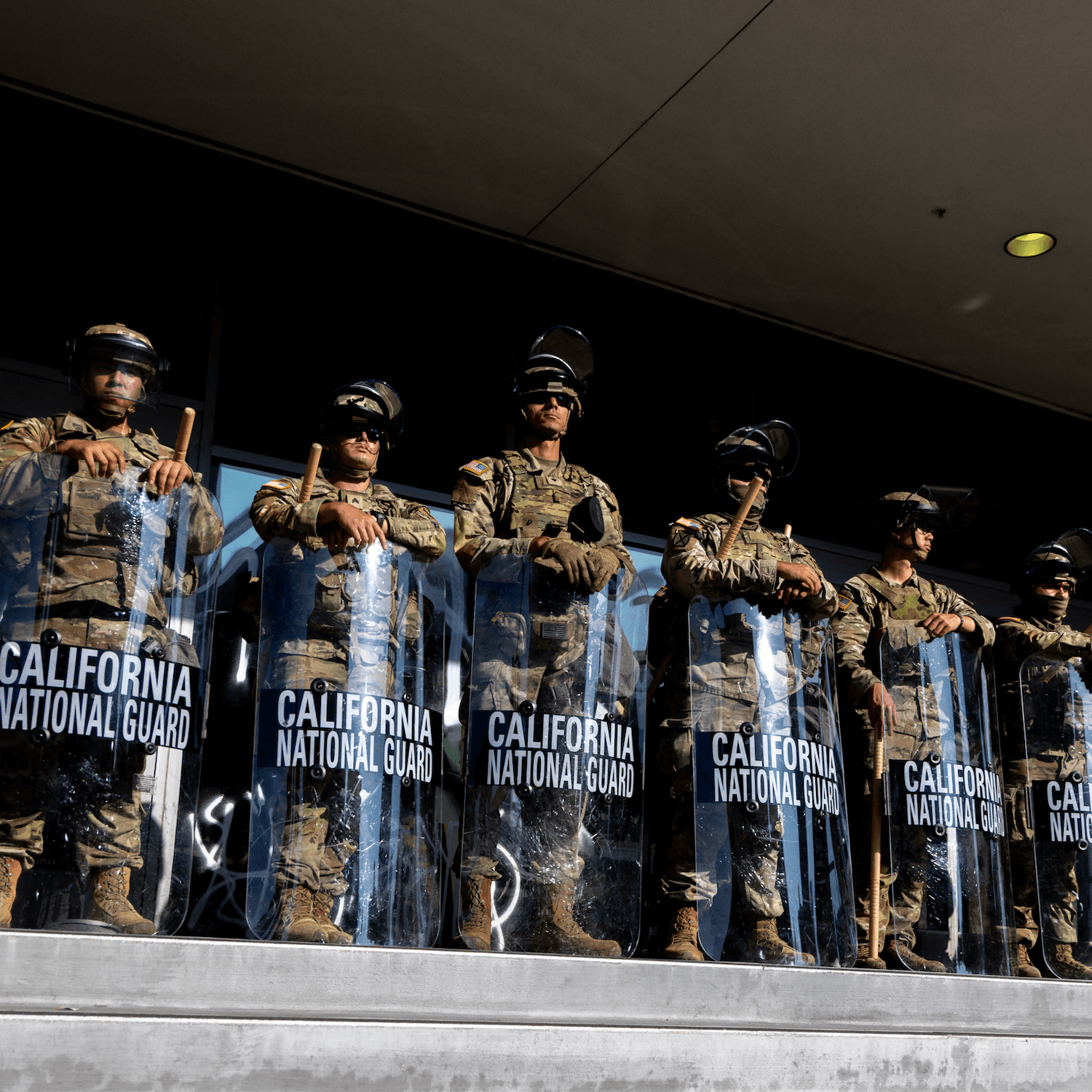
--:-- Host (Jessica Mendoza): At one point, there were 6,000 protesters in the streets, hundreds of National Guard troops now on the ground, deployed by President Trump. The U.S. military is set to deploy about 700 Marines to the L.A. area in response to the protests.
--:-- Host (Jessica Mendoza): The raids that kicked off the protests in L.A. are part of a larger push from the Trump administration in recent weeks. I've really seen raids at workplaces like this, at Home Depots, at construction sites happening all over the country. We're talking about, you know, all the way from Martha's Vineyard to Puerto Rico, just everywhere.
--:-- Guest (Michelle Hackman): And these immigration raids aren't just increasing in number. They're also becoming more aggressive, as the administration amps up its efforts to hit its deportation goals.
--:-- Host (Jessica Mendoza): President Trump promised to do a mass deportation, and they think a mass deportation is arresting and deporting a million people a year, and they're nowhere close to that. And so they want these ICE raids to be as public and visible as possible.
--:-- Host (Jessica Mendoza): Welcome to The Journal, our show about money, business, and power. I'm Jessica Mendoza.
--:-- Guest (Michelle Hackman): Trump talked about mass deportations all the time on the campaign trail. We are going to have the largest deportation effort in the history of our country. We're bringing everybody back to where they came from. We have no choice. We have no choice.
--:-- Host (Jessica Mendoza): But our colleague Michelle Hackman says that during Trump's first months in office, the actual number of arrests and deportations hasn't matched the tough talk.
--:-- Guest (Michelle Hackman): External critics were angry that not enough people were being arrested and deported. And so pressure has sort of been mounting on the administration. Even it has gone all the way up to President Trump, you know, apparently in White House and Oval Office meetings, he will yell at people and say, why aren't arrests higher? Why aren't deportations higher?
--:-- Host (Jessica Mendoza): And so that pressure has trickled down through the Department of Homeland Security and to ICE where people have now been handed daily arrest quotas.
--:-- Guest (Michelle Hackman): And the arrest quotas started pretty early in the administration but they only gone up. So, you know, they started at 1,200 a day. They've risen in May to about 3,000 a day, which ICE is nowhere close to meeting.
--:-- Host (Jessica Mendoza): To reach those quotas, the administration needed to do more. And the person who stepped up is one of Trump's most senior aides and the architect of the president's immigration agenda.
--:-- Guest (Michelle Hackman): The person who is the visionary behind Trump's immigration policy is a guy named Stephen Miller. He's now the deputy chief of staff at the White House. And he is one of the most nitty gritty people I have ever spoken to on immigration.
--:-- Host (Jessica Mendoza): And it should be as simple as, are you lawfully in the United States? No, if you are not, then you should go home. In a sane country, that would be the system.
--:-- Guest (Michelle Hackman): And what does he want when it comes to immigration? What are his goals? Ultimately, his goal is to reduce the population of immigrants in America. He's a really, really fervent believer that immigration is the cause of a lot of the nation's ills.
--:-- Host (Jessica Mendoza): And I would say that that is really motivational for him in a way that is rare to encounter.
--:-- Guest (Michelle Hackman): Miller sent a message to the leadership at ICE to boost daily arrests. And in late May, Stephen Miller basically summoned a meeting at ICE where he had the leadership from around the country come into D.C.
--:-- Host (Jessica Mendoza): And he was there basically to read them the riot act.
--:-- Guest (Michelle Hackman): So, yeah, what happened at that meeting? Can you tell us what was said, what you've learned?
--:-- Guest (Michelle Hackman): Yeah. So, you know, according to people who were in the meeting, he was very aggressive with people, was saying, you don't need to go develop law enforcement target lists. Just go out there. Arrest illegal aliens. That's exactly what he said.
--:-- Host (Jessica Mendoza): Go to 7-Elevens. Go to Home Depots.
--:-- Guest (Michelle Hackman): And he looked around at the room and he said, I bet if I grabbed a few of you guys right now, we could go outside on the street and make 30 arrests right now.
--:-- Host (Jessica Mendoza): And he even did a show of hands. You know, who here thinks they can do this?
--:-- Guest (Michelle Hackman): And it was made really clear to people that not only were they being exhorted to sort of implement the president's agenda, but if they don't, that their jobs were on the line.
--:-- Host (Jessica Mendoza): Did ICE have the resources to immediately scale up raids in this way?
--:-- Guest (Michelle Hackman): No, they didn't. ICE is really short-staffed, and so the government has sort of been redeploying agents from across the entire federal government, from the FBI, the DEA, to form teams to go out and do these arrests.
--:-- Host (Jessica Mendoza): Michelle says that ICE has started doing a bunch of new things to arrest more people.
--:-- Guest (Michelle Hackman): For instance, ICE has started showing up at immigration courts around the country. After hearings have finished and migrants walk out of the courtroom, agents arrest them.
--:-- Host (Jessica Mendoza): So there was one case that my colleague spoke to this lawyer who has a client who had actually entered the country legally under a Biden administration program, had applied to enter the country.
--:-- Guest (Michelle Hackman): Once his legal status expired, he was in a court process. And what happened was the court, as soon as it was dismissed and he walked outside of the courtroom, agents were there to arrest him.
--:-- Host (Jessica Mendoza): In that particular case, Michelle says the ICE agents refused to show a warrant.
--:-- Guest (Michelle Hackman): This is kind of alarming for immigrants and immigrant advocates because for the longest time, the message has been follow the process, go to your court hearing, you know, follow the law.
--:-- Host (Jessica Mendoza): And so if people are following the law, showing up at their hearings, getting arrested there, that is almost certainly going to deter some people from going to court, going to government interviews, things like that.
--:-- Guest (Michelle Hackman): In addition to making arrests at courthouses ICE agents are conducting raids in other types of public spaces like that Home Depot parking lot in L or a Mexican restaurant in Missouri where agents arrested 12 workers
--:-- Host (Jessica Mendoza): They're going to restaurants and just saying, we want to, we're going to barge in, we're going to interview everyone in your kitchen, we're going to take anyone who doesn't, can't immediately prove to us, you know, they are a U.S. citizen.
--:-- Guest (Michelle Hackman): And the tactics that agents are using are becoming more forceful. Routinely, you see ICE agents covering their faces, not identifying themselves, dressed in sort of militaristic gear like they're going to war, you know, rather than arresting people.
--:-- Host (Jessica Mendoza): We've seen more aggressive tactics. You know, they ask someone to get out of their car, they immediately go and smash someone's car window. That's new.
--:-- Guest (Michelle Hackman): ICE agents have also detained people without warrants.
--:-- Host (Jessica Mendoza): So ICE, typically when they make an arrest, they have what's called an administrative warrant. So that means they have someone's name. They're looking for someone specific. They go to their house.
--:-- Guest (Michelle Hackman): And administrative warrants are not criminal warrants. So it doesn't allow you to knock down someone's door and barge into their house. You have to kind of wait for someone to leave their house, which is often why ICE is arresting someone when they leave to go to work or taking their kids to school or something like that.
--:-- Host (Jessica Mendoza): You know, one of my colleagues actually did a ride-along with some ICE officers in San Antonio, and she witnessed this man that they wanted to arrest, and they decided that the best way to do it was while he was driving his kids to school with his wife in the car.
--:-- Guest (Michelle Hackman): You know, they decided they wanted to do it then because his wife was in the car, so maybe the wife could stay with the kids. And so they just did it, and the wife actually started yelling at the officer, or is like, I can't believe you did this in front of our children.
--:-- Host (Jessica Mendoza): She asked if she could kiss her husband, and they didn't even respond to her. They just took him.
--:-- Guest (Michelle Hackman): All these aggressive new tactics have led to fear among immigrant communities. And the Trump administration is hoping that that fear will encourage migrants to leave the country on their own.
--:-- Host (Jessica Mendoza): That's next. Michelle, so all these efforts, are they working? Is the Trump administration arresting and deporting more people?
--:-- Guest (Michelle Hackman): Yeah. So the really interesting thing is, you know, we've seen all these really aggressive tactics from ICE, but the tactics themselves are not boosting arrests.
--:-- Host (Jessica Mendoza): And so to me, what it's saying is some of these tactics are almost like a show. that the Trump administration is putting on to broadcast to its supporters and opponents alike, like, look, we're doing immigration enforcement. We're serious about this, even if it's not showing up in the numbers.
--:-- Guest (Michelle Hackman): So just to be clear, both arrests and deportations are not necessarily up. They are up somewhat, but not nearly the levels that Trump promised.
--:-- Host (Jessica Mendoza): You know, Trump has talked about a mass deportation being a million deportations in a year. They are nowhere close to that.
--:-- Guest (Michelle Hackman): I think the best number I've been able to surmise is that they've made about 100,000 arrests since they've taken office, which is a higher pace than Biden. But listeners have to remember that every arrest doesn't turn into a deportation. It's hard to deport someone. A lot of those people actually end up getting released.
--:-- Host (Jessica Mendoza): ICE has stopped regularly publishing arrest data. Although the agency's new tactics haven't made a huge dent in arrests or deportations, Michelle says they are having a different effect.
--:-- Guest (Michelle Hackman): They want people to be scared and self-deport. So they've done multiple things. They have set up a program where people can report their self-deportations through an app.
--:-- Host (Jessica Mendoza): And they're even claiming that they're paying people $1,000 once they successfully left the country. It's not clear to me how many people have actually received that money.
--:-- Guest (Michelle Hackman): They're trying to make the specter of your arrest, your detention, and your deportation so scary and unpleasant. And to some extent, it's having an effect.
--:-- Host (Jessica Mendoza): You know, I speak to immigration attorneys and to community groups who say that people are choosing to leave. Or people are, you know, making plans for what happens to my U.S. citizen children if I get arrested and deported.
--:-- Guest (Michelle Hackman): So I think some of these fear tactics, at least for now, are working.
--:-- Host (Jessica Mendoza): What does the White House or ICE say about all of these techniques?
--:-- Guest (Michelle Hackman): So I actually spoke to Tom Homan, the White House's boarders are. And people say unofficially that he is the person sort of directing ICE operations.
--:-- Host (Jessica Mendoza): And he says, you know, this is law enforcement doing its job. You know, this is not anything out of the ordinary.
--:-- Guest (Michelle Hackman): And he said, you know, if you're seeing someone cover their face, it's because they're under pretty severe threat. You know, anyone who is out there doing an arrest with their face visible is risking having their face broadcast on social media or on the Internet.
--:-- Host (Jessica Mendoza): The Trump administration defends its tactics for arrests. A White House spokesperson said that, quote, keeping President Trump's promise to deport illegal aliens is something the administration takes seriously.
--:-- Host (Jessica Mendoza): What do all these protests say to you about how Trump's immigration policy is going so far?
--:-- Guest (Michelle Hackman): You know, it's interesting because polling shows us that overall, immigration is one of the areas where voters still approve of President Trump's performance.
--:-- Host (Jessica Mendoza): And when we've polled on this question of do you support mass deportation, a small majority of people support the idea.
--:-- Guest (Michelle Hackman): But when you drill down, and this is where I find it interesting, is that, you know, if you ask, do you support deporting criminals? Yep, most people do.
--:-- Host (Jessica Mendoza): But, you know, if you ask the question, and I think this is the way the Wall Street Journal poll has asked it, do you support deporting people with no criminal record who have lived in this country at least 10 years? Support really, really plummets.
--:-- Guest (Michelle Hackman): And so what people are saying is, I thought you were going after criminals. You know, this really doesn't look like criminals if you're going to Home Depot and just arresting our hardworking neighbors.
--:-- Host (Jessica Mendoza): And that's what's angering people in California and could be something that turns people against Trump's immigration policy.
--:-- Host (Jessica Mendoza): On Tuesday, Defense Secretary Pete Hegseth was called before Congress for questioning. He defended the deployment of active military to L.A. and said that the plan is to keep troops there for 60 days.
--:-- Host (Jessica Mendoza): Meanwhile, public unrest is spreading to other parts of the country. Violence broke out in San Francisco on Monday night, and protests are being planned in Oakland, Atlanta, and New York City.
--:-- Host (Jessica Mendoza): So what are you going to be looking at next? What are you expecting to see?
--:-- Guest (Michelle Hackman): I'm going to be watching these protests for sure. Do the protests expand? How severely does the government try to quash them?
--:-- Host (Jessica Mendoza): You know, so far in L.A., the National Guard is there, but they haven't actually really intervened in any way. So that could get ugly or it could end, you know, in a fizzle.
--:-- Host (Jessica Mendoza): I'm also going to be looking at whether ICE becomes more sophisticated in actually bringing up its numbers and how it's going to translate those into more deportations.
--:-- Host (Jessica Mendoza): That's all for today, Tuesday, June 10th. The Journal is a co-production of Spotify and The Wall Street Journal. Additional reporting in this episode by Elizabeth Fendel, Ruth Simon, and Tarini Parti.
--:-- Host (Jessica Mendoza): Thanks for listening. See you tomorrow.