--:-- Jessica Mendoza: Welcome to The Journal, our show about money, business, and power. I'm Jessica Mendoza.
--:-- [Discussion continues with an advertisement]
--:-- Jessica Mendoza: Welcome back to The Journal. Today, we're talking about the crisis at Tylenol. Earlier this month, the head of a big company got a text message. In the message, there weren't any words, no photos, no GIFs, just a link. Kirk Perry, who is the CEO of Kenview, which makes Tylenol, received a text message that had a link to a Substack post that was written by an online health influencer that talked about the purported link between acetaminophen, which is the active ingredient of Tylenol, and autism. And who did this text message come from? It came from a pretty important person, the Secretary of Health and Human Services, Robert F. Kennedy Jr.
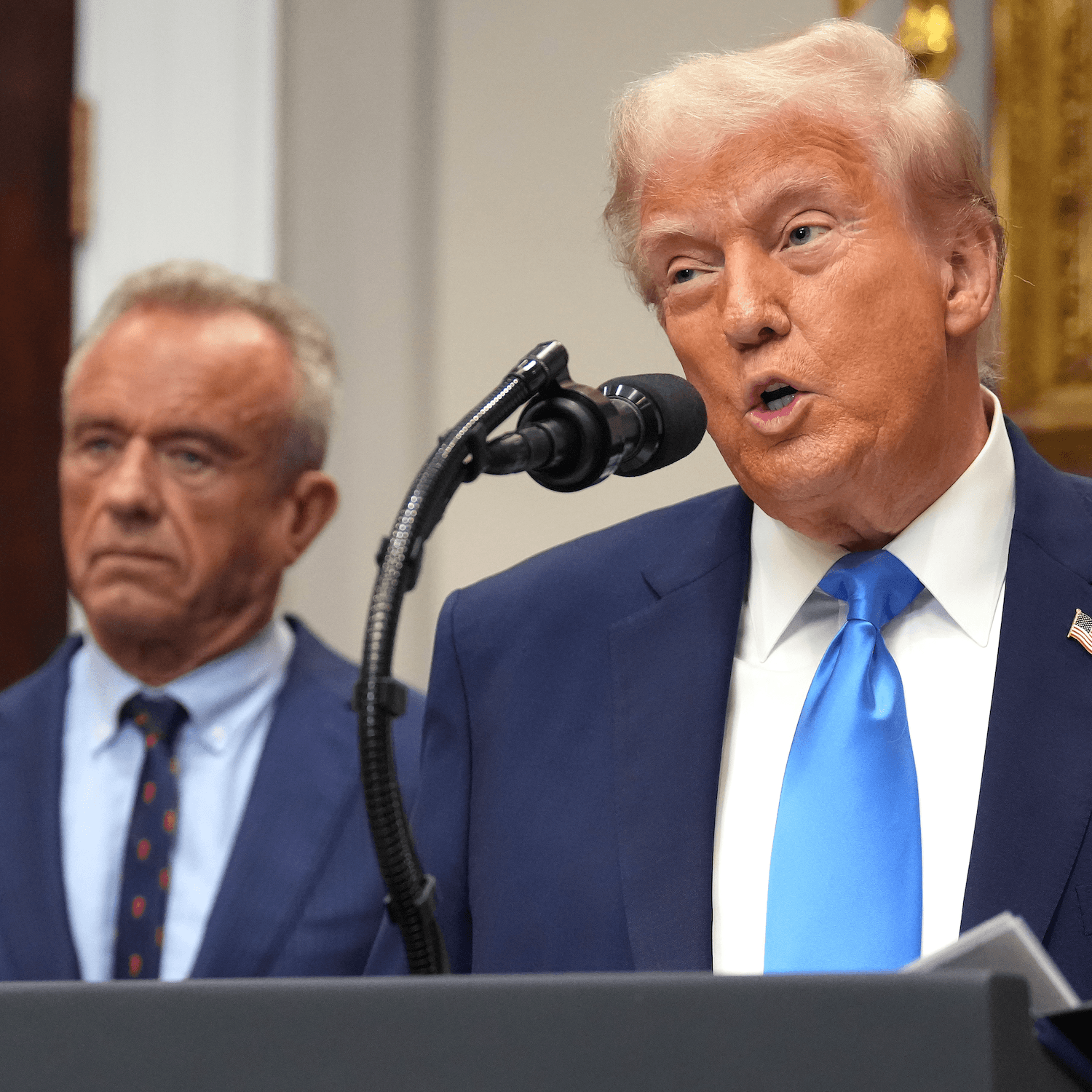
--:-- Peter Loftus: That text message, according to our colleague Peter Loftus, was the moment that the head of the company that makes Tylenol realized he had a big problem on his hands. His attempts to convince the Trump administration, including RFK Jr., that Tylenol was safe had failed. Within days, President Trump held a press conference where he gave a damning condemnation of the decades-old painkiller, saying it potentially causes autism. But with Tylenol, don't take it. Don't take it. And it threw the company into a whirlwind of chaos.
--:-- Jessica Mendoza: I think it's fair to call it a crisis over one of its top products and one of the most famous brands in American industry.
--:-- Peter Loftus: The CEO of the company in the middle of this extraordinary brand crisis, the guy who got that text from RFK, is Kirk Perry. Previously, he spent his career as a brand marketing executive for major companies like Procter & Gamble and Google. He'd also been CEO of a market research firm.
--:-- Jessica Mendoza: So before all that, what was his backstory? So Kirk Perry was raised in Detroit. His parents were assembly line workers, including at Ford. He ended up being the first in his family to go to college and graduate from college. Perry is also a devout Christian and has spoken publicly many times about his work and faith together.
--:-- [Audio clip of Kirk Perry speaking]
--:-- Jessica Mendoza: Now 59, Perry had hoped to be fully retired, not in the middle of a brand firestorm. He left full-time work earlier this year. And he basically left his last job, his last day-to-day job in February, and thought that he would be enjoying a life of elk hunting, coaching football, you know, continuing to serve on boards and having some foot in the business world, but not necessarily a day-to-day job.
--:-- Peter Loftus: One of the boards he served on was Kenview. In July, that company fired its then-CEO, and the board asked Kirk Perry if he would step in. So just a few months after Perry retired, he unretired. The board of Kenview asks him, will you be the interim CEO? Will you do it? And he says yes and he fully acknowledges that this is the shortest retirement ever because he had just left his last job in February and he thought his life was starting on a new chapter.
--:-- Jessica Mendoza: So much for elk hunting. Right. That going to have to wait.
--:-- Peter Loftus: Kenview makes a lot of big brand names that you see at your local drugstore or supermarket. Like Aveeno. For softer, smoother skin. Neutrogena. Neutrogena. Weightless hydration that goes deep. And Listerine. For whole mouth health, Listerine. Wash your mouth.
--:-- Jessica Mendoza: But the company itself is actually quite new. That's because in 2023, it was split off as an independent company from Johnson & Johnson, the more than 100-year-old pharmaceutical and healthcare giant, and the previous makers of Tylenol.
--:-- Peter Loftus: When Kenview first spun off into its own company, it was doing well. But its beauty division started to flounder, and its wide range of products wasn't generating enough sales. By earlier this year, Kenview's stock was down, and its board of directors wanted to turn the company around.
--:-- Jessica Mendoza: When Kirk Perry first became CEO, it seemed like the main task at hand was to try to turn around the company's skin and beauty products, brands like Neutrogena and Aveeno, because that seemed to be the biggest source of concern for investors.
--:-- Peter Loftus: They felt that Kenview was not really doing enough to exploit these brands to really improve sales and profits. What Perry and company leadership were not thinking as much about was Tylenol. It was one of the parts of the business that was doing well, even in the face of a lot of competition.
--:-- Jessica Mendoza: How important is Tylenol to Kenview's business? I mean, especially because you can buy generic acetaminophen for cheaper. Right. Basically everywhere.
--:-- Peter Loftus: Yeah, everywhere you go. You can go into a CVS and they'll put their store brand right next to the Tylenol brand. It'll look the same. They'll even say, like, compare our price to what Tylenol is charging. It's usually lower, which is actually a testimony to the strength of the brand of Tylenol because it does sell well.
--:-- Jessica Mendoza: Analysts say it makes up about 10% of the company's sales. So considering that they have dozens and dozens of brands, that's a pretty good percentage.
--:-- Peter Loftus: I think Kenview sees it as an important product to sustain. But shortly after Kirk Perry came on as interim CEO, it seemed a new crisis was brewing. RFK Jr. was on a massive effort to find answers to what he calls an autism epidemic.
--:-- Jessica Mendoza: We're going to look at vaccines, but we're going to look at everything. Everything is on the table. Our food system, our water, our air, different ways of parenting, all the kind of changes that may have triggered this epidemic.
--:-- Peter Loftus: And by late summer, the administration had set its sights on acetaminophen. Kenview had learned that RFK was considering identifying acetaminophen use during pregnancy as a potential cause of autism.
--:-- Jessica Mendoza: He had a meeting with RFK. And in the meeting, Kenview's leaders, including Kirk Perry and the company's chief scientific officer, tried to make the case with a couple main points, which is that they felt that looking at all the past studies, yes, there had been studies that were suggesting an association, but there were other studies that showed the opposite, that they felt there was no clear evidence that using acetaminophen during pregnancy would cause autism.
--:-- Peter Loftus: According to Pete's reporting, Kenview's leaders also made the argument that if a pregnant woman is experiencing pain or fever, there aren't great alternatives to acetaminophen. Other pain relievers are generally not recommended during pregnancy.
--:-- Jessica Mendoza: Kennedy agreed that there weren't safe alternatives, according to people familiar with the matter.
--:-- Peter Loftus: So those were the main points that the Kenview executives tried to make in the meeting. And they felt that the meeting was cordial. Apparently, RFK also discussed conducting additional research and requested that Kenview schedule additional meetings with other health officials under him, which they proceeded to do.
--:-- Jessica Mendoza: So they came away from this meeting thinking that maybe it went well and that the request for additional meetings was a good sign. They felt heard. They felt like they were open to hearing what, you know, Kenview's side of it.
--:-- Peter Loftus: Right, right. The company knew a Trump administration autism report was coming, but Pete found in his reporting that the board didn't seem too concerned. At a regularly scheduled board meeting, there wasn't much discussion of Tylenol and autism.
--:-- Jessica Mendoza: And then, Kirk Perry got that text from RFK Jr. that essentially argues that there is, in fact, a link between Tylenol use and autism.
--:-- Peter Loftus: Right. I'm thinking of those sort of siren emoji in my head is like what I would be thinking if I got that text.
--:-- Jessica Mendoza: Suddenly, Kenview had a full-blown crisis on its hands. That's next.
--:-- Jessica Mendoza: Welcome back to The Journal. We're talking about the crisis at Tylenol. In a press conference last week, President Trump gave an animated speech on acetaminophen. Which is basically commonly known as Tylenol. During pregnancy, it can be associated with a very increased risk of autism. And so taking Tylenol is not good. I'll say it. It's not good. President Trump, he starts to urge women, pregnant women, to just tough it out if they can.
--:-- Peter Loftus: In his words, yeah. In his words, to tough it out. That's our colleague Peter Loftus again. So basically implying that they should try to avoid using it. And even if they have a fever, just try to tough it out.
--:-- Jessica Mendoza: So ideally you don't take it at all, but if you can't tough it out or if there's a problem, you're going to end up doing it.
--:-- Peter Loftus: So this goes beyond what even RFK Jr. was saying about acetaminophen. It's certainly different language.
--:-- Jessica Mendoza: An important point here is that for a pregnant woman to get a fever poses some real risks to both herself and to her fetus. It's been shown to potentially lead to miscarriages and birth defects if it's not treated. And even that fever itself has been linked to an increased risk of autism in the baby.
--:-- Peter Loftus: And actually, I'd like to back us up for a second. Can you kind of just explain what this link between Tylenol or acetaminophen and autism is?
--:-- Jessica Mendoza: Sure. So, well, first of all, there have been numerous studies that show an association. And so those studies that show an association are basically concluding that women who use acetaminophen during pregnancy, when they do give birth, that those children have higher rates of autism than whatever they're being compared to, say, children born to women who did not use acetaminophen during pregnancy.
--:-- Peter Loftus: So there have been studies that show this and that have been published in credible medical journals. The key word in those studies is association, which is different from causation.
--:-- Jessica Mendoza: Many researchers believe the association exists because women take acetaminophen when they're sick and that the fever or infection is the likely trigger for autism instead of the drug.
--:-- Peter Loftus: Also, there have been other studies published in credible medical journals that report there isn't an association between autism and acetaminophen.
--:-- Jessica Mendoza: I don't think there's a clear consensus. I think, I mean, I think a lot of people recognize that there's conflicting data.
--:-- Peter Loftus: So I think there's a recognition that the data is inconclusive. And to the extent that, you know, major medical societies could be considered a consensus, many of them feel like there's not proof of causation.
--:-- Jessica Mendoza: In his press conference, Trump went further than others in his administration. That same day, the Food and Drug Administration gave guidance that was more nuanced than the president's, saying, quote, a causal relationship has not been established, and there are contrary studies in the scientific literature.
--:-- Peter Loftus: Kenview has faced lawsuits about Tylenol and autism in the past, but in 2023, a judge sided with Kenview, saying there wasn't sufficient evidence of causation. Those cases were dismissed, though some plaintiffs have appealed.
--:-- Jessica Mendoza: And what was Kenview's immediate response after that press conference? What did they say?
--:-- Peter Loftus: Well, their immediate response was to say that there's no evidence that acetaminophen causes autism. And to reemphasize the point that it's the safest alternative to treat pain and fever during pregnancy.
--:-- Jessica Mendoza: And, you know, they've really been pointing to what outside groups have said, such as, you know, the medical group that represents OBGYNs.
--:-- Peter Loftus: They been trying to take a clear stance in defense of the product safety. They been using the Tylenol social media account on Instagram to post statements and to provide links to a website that has a frequently asked question section that it tries to address concerns about the product.
--:-- Jessica Mendoza: Also, Tylenol's label already recommends that pregnant women should talk to a doctor before taking the drug.
--:-- Peter Loftus: Still, some damage has already been done to the company. Kenview shares fell something like 7%, and they hit their all-time low in one day.
--:-- Jessica Mendoza: And so I think there was real concern that not only might it have an effect on sales of Tylenol, but that it could also damage the brand generally.
--:-- Peter Loftus: As for Kirk Perry, he's been dealing with this crisis by leaning on his religion and consulting regularly with a pastor friend.
--:-- Jessica Mendoza: Kenview also canceled future meetings with Trump administration officials. In a memo to staff, Perry said, quote, difficult as it has been, it's clear to me that this team is guided by science and passionate about caring for others.
--:-- Peter Loftus: How big a deal is this for Kenview? It is a big deal for Kenview because it's really calling into question one of their top brands and in a way that we just really haven't seen much in the past.
--:-- Jessica Mendoza: It's not very common for the president of the United States to get up at the White House and just single out a medicine and say, you shouldn't take this.
--:-- Peter Loftus: So that's something that they're going to have to really contend with out of the possibility that, you know, a large number of people will heed that advice.
--:-- Jessica Mendoza: One thing Tylenol does have going for it, the brand has contended with major PR crises before. And how it handled one case back in the 1980s is still considered the gold standard for public relations responses.
--:-- Peter Loftus: In that case, at least seven people died when someone added cyanide to Tylenol bottles. The killer was never found.
--:-- Jessica Mendoza: At the time, Johnson & Johnson was the company that sold Tylenol. And they responded eventually by pulling all Tylenol off the shelf, by redesigning the packaging so that it would be tamper-resistant.
--:-- Peter Loftus: So these are things that are so common for us to see today that there would be like a seal under the cap.
--:-- Jessica Mendoza: Well, that didn't always used to be the case. And also handing out coupons to try to encourage once the redesigned bottles came back on the shelves.
--:-- Peter Loftus: But I think it earned them a lot of goodwill over the years. And, you know, apparently this has been like a case study in business schools that's held out as a good way to manage a brand crisis.
--:-- Jessica Mendoza: Is there anything from those experiences that you think Tylenol can draw on for this current public crisis?
--:-- Peter Loftus: Well, I would say yes and no, or I would say yes and it's different. But the difference is that there's a disagreement over what the problem is.
--:-- Jessica Mendoza: And depending on how much people listen to what Trump says, like, Kenview might have a very different view than some of its potential customers of what the remedy might be.
--:-- Peter Loftus: And so I think that leaves Kenview in perhaps more of a bind. It's much harder to tell what concrete steps they can actually take because, as you said, they're not seeing eye to eye on what the problem is.
--:-- Jessica Mendoza: What does this moment tell you about what it's like for pharmaceutical companies dealing with the Trump administration?
--:-- Peter Loftus: Well, they're dealing with Trump 2.0, which seems much more willing to embrace this Make America Healthy Again movement.
--:-- Jessica Mendoza: You know, my sense is that a lot of pharmaceutical CEOs, while they feel like they're able to get an opportunity to make their case and go down and have meetings like the one that Kirk Perry had with RFK, that they're not always sure if they're being heard.
--:-- Peter Loftus: And so there's a lot of uncertainty about, you know, what's the administration going to do next? And this applies to things not just drug safety, but, you know, when it comes to drug prices and tariffs and other policy elements, I think the drug industry just feels like they've perhaps lost their footing a little bit.
--:-- Jessica Mendoza: That's all for today, Tuesday, September 30th. The Journal is a co-production of Spotify and The Wall Street Journal. Additional reporting in this episode by Brianna Abbott, Alyssa Luckpat, Sarah Ashley O'Brien, and Andrea Peterson.
--:-- Peter Loftus: Thanks for listening. See you tomorrow.