China-Backed Hackers Use Anthropic AI to Automate CyberattacksWSJ What’s News · Nov 13, 2025
Podcast Episode Summary:
The podcast episode, "Dueling Economic Visions," focuses on the economic speeches given by Kamala Harris and Donald Trump. The hosts, Ryan Knudsen and Molly Ball, discuss the main economic priorities of each candidate and how they differ from one another.
Key Points:
Participants:
Takeaways:
Theme music fades out
Ryan Knutson
Welcome to Red, White, and Who. I'm Ryan Knutson.
Molly Ball
And I'm Molly Ball. It's Friday, September 27th.
Ryan Knutson
So, Molly, it feels like this week was economy week on the campaign trail because both Kamala Harris and Donald Trump both gave big economic speeches.
Molly Ball
Ryan, I'm gonna let you know a little secret: every week is economy week in the campaign. Oh, because the economy is the biggest issue in the campaign. So the candidates are constantly trying to give voters the impression that they are focused on it.
Ryan Knutson
So, to quote the famous political consultant James Carville, who coined the phrase in the 1990s, it's the economy, stupid.
Molly Ball
You know, James Carville has gotten a little too much credit for a very obvious observation, which is that, you know, how the economy is doing is obviously always a focus of politics.
Ryan Knutson
And in literally every poll, I feel pretty good saying the economy writ large is people's number one issue.
Molly Ball
When you ask them, what's the issue that is going to inform how you decide to vote for president or really for any other office? It's the top of people's minds because it's their well-being, right? It's their ability to support themselves and their families.
Ryan Knutson
So, yes, the candidates both did give big, quote-unquote, economic speeches this week. But it's not the first time either of them have done that.
Molly Ball
They just want voters to think that this is what they care the most about and that the thing that voters are concerned with is also the thing that they are paying the most attention to.
Ryan Knutson
So, to give James Carville perhaps even more credit than he's due, it is the economy. Stupid.
Molly Ball
Why do you keep calling me stupid, Ryan? This is really mean. It's not me. It's James. It's Carville.
Ryan Knutson
From the Journal, this is Red, White, and Who. Our show about the road to the White House.
Molly Ball
I'm Ryan Knudsen. And I'm Molly Ball.
Ryan Knutson
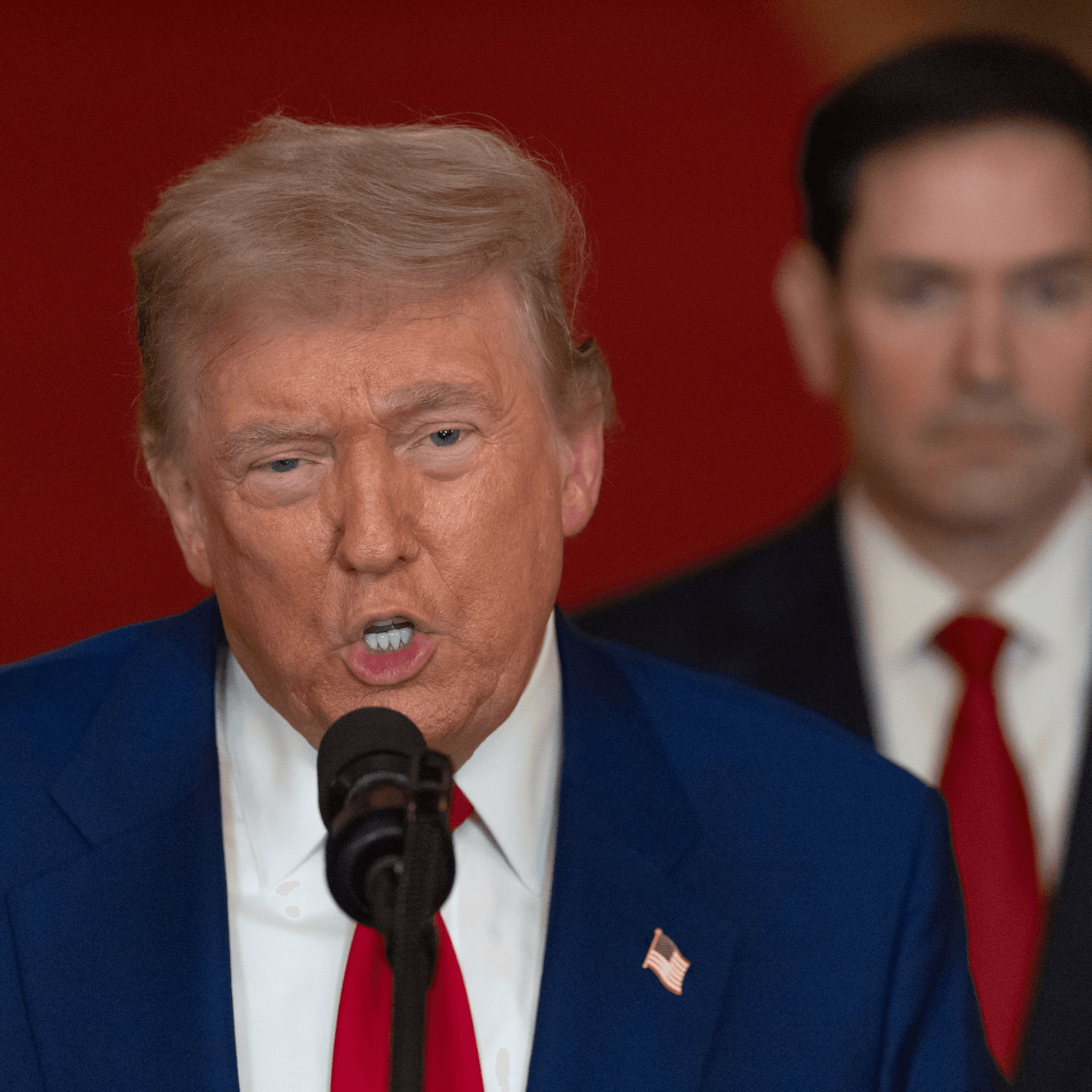
All right, so let's start by talking about Donald Trump's speech, which he gave earlier this week in Savannah, Georgia.
Sound effects: applause
Donald Trump
Thank you very much, everybody. Thank you. And hello, Savannah. And I love Georgia. We love Georgia.
Ryan Knutson
He talked about some of his economic priorities, which were that he wants to slap tariffs on companies that don't manufacture things in the United States, but want to sell things here.
Molly Ball
We will put a 100% tariff on every single car coming across the Mexican border. And tell them the only way they'll get rid of that tariff is if they want to build a plant right here in the United States.
Ryan Knutson
He wants to lower corporate tax rates to encourage companies to move to the U.S. And he also said that he wants to set up special zones on federal lands with ultra-low taxes to encourage new industries to set up shop there.
Molly Ball
These will be ideal spots for relocating entire industries that we've taken in from other countries. They're going to come in.
Ryan Knutson
Well, an interesting thing about Trump's economic vision is some of it is the traditional Republican idea that could derisively be called trickle-down economics, where, you know, you cut taxes, particularly on businesses, you cut regulations, and that enables growth to flourish, companies to thrive, and therefore everybody gets richer.
Molly Ball
The rising tide lifts all boats because the economy is growing. Now, traditionally, Republicans would say you have to cut spending as well, balance budgets, reduce the deficit. Trump almost never talks about that.
Ryan Knutson
And the other thing that he loves is tariffs. He has never met an economic... Yeah, so if it feels like if we could boil Trump's economic plans down to one word, it's tariffs. Tariffs, tariffs, tariffs, tariffs.
Molly Ball
That's right. He has never met an economic problem that he didn't think could be solved by a tariff.
Ryan Knutson
Now, a tariff is a duty, a tax on imported goods. Trump erroneously says it's a tax on foreign countries. He makes it sound like, you know, these foreign governments are essentially paying a fee in order to enter U.S. markets and put their goods here.
Molly Ball
But what economists almost unanimously say is that actually, you know, the foreign companies are paying these tariffs and what they do is they just add that amount to the price of the goods.
Ryan Knutson
So it just causes prices to go up and increases inflation.
Molly Ball
You know my colleague Paul Kiernan who covers economic policy for us did this hilarious story about a week ago about the fact that voters love these policies but economists hate them.
Ryan Knutson
And one of the policies that he wrote about was tariffs. And when we polled regular people, what do you think of this idea of an across-the-board 20% tariff.
Molly Ball
47% to 40%, the voters liked it. Economists disliked it by a 0% to 100% margin.
Ryan Knutson
100% of economists say they don't like this across the board. 100% of economists said this was a bad idea, but a plurality of voters, nearly half of voters thought this was a good idea.
Molly Ball
Why do voters seem to like this idea of tariffs if economists don't?
Ryan Knutson
Well, people like the idea that we should manufacture things in America. People like the idea that foreign countries are going to pay for things, even if that's not true.
Molly Ball
People also love policies that seem to make other people pay for things.
Ryan Knutson
So let's talk now about Kamala Harris's big economic speech.
Sound effects: applause
Kamala Harris
Good afternoon, everyone. Good afternoon. Well, it's good to be back in Pittsburgh.
Molly Ball
What were some of the things that stood out to you about her speech this week in Pittsburgh?
Ryan Knutson
It's interesting when you think about sort of the word clouds that come out of these candidates' speeches, right? What are they emphasizing? What are the big themes that come out?
Molly Ball
And you hear Harris talking a lot about opportunity. The opportunity economy. The middle class.
Ryan Knutson
She's talking a lot about reducing costs for people through government subsidies. Under my plan, more than 100 million Americans will get a middle class tax break.
Molly Ball
That includes $6,000 for new parents during the first year of their child's life.
Ryan Knutson
She also talked about helping small businesses. Well, in 2024, it is almost impossible to start a business on $5,000.
Molly Ball
Which is why, as president, I will make the startup deduction 10 times richer, and we will raise it from $5,000 to $50,000.
Ryan Knutson
And she talks about investing in the industrial sector, which the Biden administration has done through large incentives for manufacturing companies.
Molly Ball
She talks about reducing the cost of housing as well by cutting red tape and cracking down on what she calls corporate landlords.
Ryan Knutson
So while Trump talks in sort of macro terms about the economy as a sort of institution and about making, you know, everybody richer and bringing back the factories, Harris is much more likely to talk about it on sort of an individual level about these sort of small bore things that the government can do to help you and solve problems in your life.
Molly Ball
And we will work to reduce other big costs for middle class families. We will take on bad actors who exploit emergencies and drive up grocery prices by enacting the first ever federal ban on corporate price gouging.
Ryan Knutson
What do economists say about her plans?
Molly Ball
Well, it depends which plans you're talking about. And it depends which economists you're asking.
Ryan Knutson
There are some things like, you know, when she first proposed cracking down on price gouging in the grocery market, a lot of economists heard that as a form of price controls, and this is something that economists broadly think is a terrible idea.
Molly Ball
Right. A lot of economists say that they don't like price controls because they can distort markets and possibly lead to shortages.
Ryan Knutson
Yes, exactly.
Molly Ball
So, for example, in that same survey that we did, we asked about penalizing companies that engage in price gouging for food and groceries.
Ryan Knutson
72% of people like that policy, 13% of economists like that policy, and 68% of economists dislike it.
Molly Ball
So that is another policy. It's not quite as lopsided as tariffs, but just about in the sense that voters love it, economists hate it.
Ryan Knutson
So one thing that I found really interesting listening to both Trump and Harris' speeches this week was how much emphasis they both put on manufacturing.
Molly Ball
When it's actually a very small part of the economy these days. I think only about 8% of jobs in the U.S. are manufacturing jobs, which is down significantly from a generation ago.
Ryan Knutson
I think it's nostalgia. I think it's a romantic image that we have of a bygone America that was full of sort of farms and factories, right?
Molly Ball
It's just this cherished ideal that we have, this romantic ideal of the way the economy functions that's kind of out of date.
Ryan Knutson
We have in large part a service economy today. But both candidates are pledging to bring back American manufacturing, and there's a real audience for that.
Molly Ball
How much do you think voters are paying attention to the actual details of either candidate's economic policies?
Ryan Knutson
Like, how much of a difference do you think these various messages are going to make for either candidate?
Molly Ball
I think voters are much more in tune to the vibes. It's the vibes. Should we update Carville's thing? It's the vibes, stupid. It's the economy vibes. the vibes economy.
Ryan Knutson
Throughout most of this campaign, Trump has had a pretty big lead on the economy, according to most polls.
Molly Ball
Do you think that lead is sustainable for him, or has Harris been able to chip away at that?
Ryan Knutson
One thing that is interesting is that Harris has really narrowed the gap here.
Molly Ball
You know, Biden was behind Trump by double digits in most polls when voters were asked, who do you think would do a better job with the economy?
Ryan Knutson
Harris is still behind Trump in most polls, but she's narrowed that gap considerably.
Molly Ball
And so a big part of the reason that she talking about an issue that is a weakness for her is she thinks she has an opportunity here to convince voters that she is not Biden that even though she part of this administration she does represent what she calls a new way forward.
Ryan Knutson
And she has staked out some policy terrain that is somewhat different than the Biden administration.
Molly Ball
And so at a time when voters are broadly grumpy, when voters broadly think that the country and the economy are headed in the wrong direction, she's managed to narrow that gap with Trump on the economy in large part because she's been able to convince people that she represents change in some way.
Ryan Knutson
Meanwhile, people are starting to vote right now because early voting has begun officially in five states.
Molly Ball
So we're going to talk about the role that early voting and mail-in voting are going to play in this year's election right after the break.
Ryan Knutson
We'll be right back.
Sound effects: music and sound effects
This episode is brought to you by State Farm.
Sound effects: music and sound effects
Checking off the boxes on your to-do list is a great feeling.
Molly Ball
And when it comes to checking off coverage, a State Farm agent can help you choose an option that's right for you.
Ryan Knutson
Whether you prefer talking in person, on the phone, or using the award-winning app, it's nice knowing you have help finding coverage that best fits your needs.
Molly Ball
Like a good neighbor, State Farm is there.
Ryan Knutson
Hey, business owners. We know you know the importance of maximizing every dollar.
Molly Ball
With the Delta SkyMiles Reserve Business American Express card, you can make your expenses work just as hard as you.
Ryan Knutson
From afternoon coffee runs to stocking office supplies and even team dinners, you can earn miles on all your business expenses.
Molly Ball
Plus, you can earn 125,000 bonus miles for a limited time through October 29th.
Ryan Knutson
The Delta SkyMiles Reserve Business Card. If you travel, you know.
Molly Ball
Minimum spending requirements and terms apply. Offer ends October 29th, 2025.
Ryan Knutson
All right, so a few weeks ago at the end of the podcast, we asked people to tell us how they feel about mail-in voting.
Molly Ball
And we got a lot of responses.
Ryan Knutson
And it seems like, at least among our listeners, their feelings about it are pretty unequivocal.
Molly Ball
They do it and they love it.
Ryan Knutson
I just want to say I do plan to vote by mail.
Molly Ball
and I think it does make a difference.
Ryan Knutson
I think particularly because it gives me the option to sit down and thoughtfully go through my ballot.
Molly Ball
I am planning to vote by mail, and that is primarily because I have problems walking and standing for long periods of time.
Ryan Knutson
Sometimes it's the only way I'm able to vote.
Molly Ball
I work full-time, sometimes 48 hours or more a week.
Ryan Knutson
On top of that, I go to school full-time.
Molly Ball
So Tuesdays are not always a day that I'm able to make it to the polls, wait in line sometimes for hours, and kept a vote.
Ryan Knutson
That was Carson Voss and Julie Brinkman, who are both in Maryland, and Skylar Court, who's in Arizona.
Molly Ball
But Molly, this is a form of voting that was such a big deal in 2020 during the pandemic.
Ryan Knutson
A lot more people voted by mail that year than they had in the past.
Molly Ball
And it seemed like it was pretty controversial because Trump and a lot of Republicans heavily criticized it.
Ryan Knutson
What has happened in the last four years? Has it become easier to vote by mail in the U.S. and more common since then or more difficult?
Molly Ball
So you've really put your finger on the unique combination of circumstances that made mail-in voting such a flashpoint in 2020.
Ryan Knutson
Because of the COVID pandemic, a lot of states as an emergency measure expanded people's ability to vote without leaving their home and coming in touch with other potentially infectious human beings.
Molly Ball
In 2020, actually only one-third of voters actually voted in person on Election Day.
Ryan Knutson
So in addition to the pandemic, you also had Donald Trump sowing these unwarranted doubts about mail-in voting, saying that it was uniquely susceptible to fraud.
Molly Ball
This has been studied by a lot of academic political scientists, and it is not true that mail-in voting is uniquely susceptible to fraud.
Ryan Knutson
Rates of fraud in all types of voting, actually, but including mail voting, are infinitesimally low and certainly do not rise to the level of affecting election results.
Molly Ball
Does mail-in voting give either party an advantage?
Ryan Knutson
So there's not a partisan valence to this.
Molly Ball
You know, in a lot of states, it was Republicans who decades ago really drove the push for mail balloting because their voters may tend more to be elderly.
Ryan Knutson
And therefore, it may be easier for them to vote if they can vote without leaving their houses.
Molly Ball
It is not the case. You know, Utah is a pretty red state.
Ryan Knutson
They've had all-mail elections for a while now.
Molly Ball
It hasn't turned Utah into a blue state.
Ryan Knutson
It doesn't make a difference in terms of, you know, who wins elections, Democrat or Republican, whether jurisdictions do or don't encourage mail voting.
Molly Ball
So help me understand what's going on in the Trump campaign then, because I hear Trump still criticizing mail-in voting.
Ryan Knutson
In fact, just in a speech just the other day, he said it was stupid.
Molly Ball
You can start right away. You know that, right?
Ryan Knutson
Now we have this stupid stuff where you can vote 45 days early.
Molly Ball
And then, in that same speech, he also encouraged his supporters to go out and do it.
Ryan Knutson
Go out and make a plan to vote early, vote absentee, or vote in person on Election Day, but you got to get out and vote.
Molly Ball
So, what is going on here?
Ryan Knutson
Well, Trump, as we all know, cannot let go of this false notion that he actually won the 2020 election, that it was rigged and stolen.
Molly Ball
But his campaign wants their voters to vote.
Ryan Knutson
And from a campaign strategy perspective, you want your voters to vote in any way possible.
Molly Ball
And mail voting, you know, as we heard in that montage, people really like being able to vote by mail.
Ryan Knutson
And from a campaign perspective when you can get people to turn in those ballots early you can cross them off your get out to vote list
Molly Ball
You know people can track their ballots
Ryan Knutson
Campaigns can track those ballots and see who voted
Molly Ball
They can see which of the voters they targeting have already turned in their ballots.
Ryan Knutson
And so it reduces the number of voters that they then have to turn out on election day.
Molly Ball
So I recall in 2020 that it took several days to get the results of the election, in part because so many states were having to open up the mail-in votes, lay them out, and tabulate them that took longer than normal.
Ryan Knutson
Is that going to happen again this year in 2024?
Molly Ball
It's certainly possible.
Ryan Knutson
So I want to zero in here on Pennsylvania because this is a state that we know is close, that we know is a pivotal swing state, that could be the deciding state for the whole election.
Molly Ball
In Pennsylvania, there is a state law that says they cannot start counting or even processing those mail ballots until the day of the election, until election morning, essentially.
Ryan Knutson
Some states allow the vote counters to start doing that processing or even vote counting as the votes come in.
Molly Ball
They open the ballots, they check the signatures and other requirements, they flatten out the ballots and get them ready to feed into the machines.
Ryan Knutson
That's all very laborious and time-consuming and requires a lot of labor.
Molly Ball
So the fact that they couldn't start doing that with these millions of ballots until the day of the election really slowed things down and meant that we were waiting for days to find out who won Pennsylvania in 2020.
Ryan Knutson
Now, you might think in the intervening four years, they fixed this problem.
Molly Ball
But the Pennsylvania legislature spent years arguing about this and could not come to agreement.
Ryan Knutson
It's a split legislature.
Molly Ball
The Democrats and Republicans could not agree to fix this state law.
Ryan Knutson
So it is still the law in Pennsylvania that they can't start opening and counting the ballots until Election Day.
Molly Ball
I will say it might not be as bad this time as it was four years ago.
Ryan Knutson
We're not in the middle of a pandemic.
Molly Ball
They do have more funding and infrastructure for this vote count.
Ryan Knutson
They have a little bit more practice at it than they had when they were doing it for the first time.
Molly Ball
But we still could be waiting a while for the votes to be counted in Pennsylvania.
Ryan Knutson
But I do want to emphasize that just because we don't know the winner on election night does not mean anything untoward is happening.
Molly Ball
It is a normal and expected part of the process.
Ryan Knutson
And because of the partisan split, where you have a lot more Democrats voting by mail and a lot more Republicans voting on Election Day, it very well may again be the case like it was in 2020 that the Election Day count looks better for Trump.
Molly Ball
And then the votes that get counted after Election Day start to move the needle toward Harris.
Ryan Knutson
Again, that's not anything nefarious happening.
Molly Ball
It's just because of this partisan split on how people tend to vote.
Ryan Knutson
And these are legitimate votes being legitimately counted.
Molly Ball
So I want to ask you quickly about Nebraska.
Ryan Knutson
We talked a few weeks ago about how it splits its electoral votes and how if the race is extremely tight, there is a scenario where that one electoral vote that comes from the area around Omaha could deliver a victory for Harris.
Molly Ball
They call this area around Omaha the blue dot.
Ryan Knutson
And there's now been some action around that.
Molly Ball
So I think we should make this a recurring feature, the Nebraska update.
Ryan Knutson
And we should have a little jingle.
Molly Ball
And in every show, we can tell people what's happening in that one district in Nebraska.
Ryan Knutson
Nebraska. Nebraska.
Molly Ball
And what is happening is, I don't know if the Trump campaign or Senator Lindsey Graham were listening to our show, but they suddenly decided that they wanted to change this Nebraska law that divides up their electoral votes.
Ryan Knutson
Because it could be decisive.
Molly Ball
It could be the tipping point that hands the election to Kamala Harris if this one district in Nebraska, the blue dot, goes blue.
Ryan Knutson
So they started pressuring the Republican unicameral legislature in Nebraska to change this law and make it winner-take-all like 48 of the other states.
Molly Ball
But it looks like they did not succeed.
Ryan Knutson
After about a week of heated debate among Nebraska Republicans.
Molly Ball
There were a couple of holdouts, including one former Democrat who's now a Republican legislator, but who is term-limited out, so not susceptible to being pressured with a primary challenge and so forth, and who stood firm, said he did not want to change this law.
Ryan Knutson
So nothing has changed in Nebraska.
Molly Ball
We still have the potential for that blue dot to throw the election to Kamala Harris.
Ryan Knutson
Well, so this has been such a pleasure as always.
Molly Ball
What are you going to be watching for over the next seven days until we talk again?
Ryan Knutson
Well, next week is a very exciting week.
Molly Ball
It is our last debate week in this campaign, as far as we know.
Ryan Knutson
Veep, yeah. It's the Veep debate.
Molly Ball
We're going to have the big old Vance versus Walls, a real late in the alphabet face-off on Tuesday night in New York City.
Ryan Knutson
I will be there.
Molly Ball
I will be very interested to see what they talk about.
Ryan Knutson
Great. All right.
Molly Ball
Thanks, Molly. Don't forget, if you have a question for Molly you want answered on a future episode, send us an email or voice message to thejournal at wsj.com.
Ryan Knutson
That's thejournal at wsj.com.
Molly Ball
Red, White, and Who is part of The Journal, which is a co-production of Spotify and The Wall Street Journal.
Ryan Knutson
Our senior producer is Rachel Humphreys.
Molly Ball
Our producer is Pierce Singe.
Ryan Knutson
Our editor is Catherine Whalen.
Molly Ball
I'm Ryan Knudsen. This episode was engineered by Peter Leonard.
Ryan Knutson
Our theme music is by So Wiley and remixed by Peter Leonard.
Molly Ball
Additional music this week from Peter Leonard.
Ryan Knutson
Fact-checking by Amelia Schoenbeck.
Molly Ball
Artwork by James Walton.
Ryan Knutson
Special thanks to Kate Linebaugh, Sarah Platt, Ben Pershing, and the whole Journal team.
Molly Ball
Thanks for listening.
Ryan Knutson
We'll be back with another episode of Red, White, and Who next Friday morning.
Molly Ball
See you then.