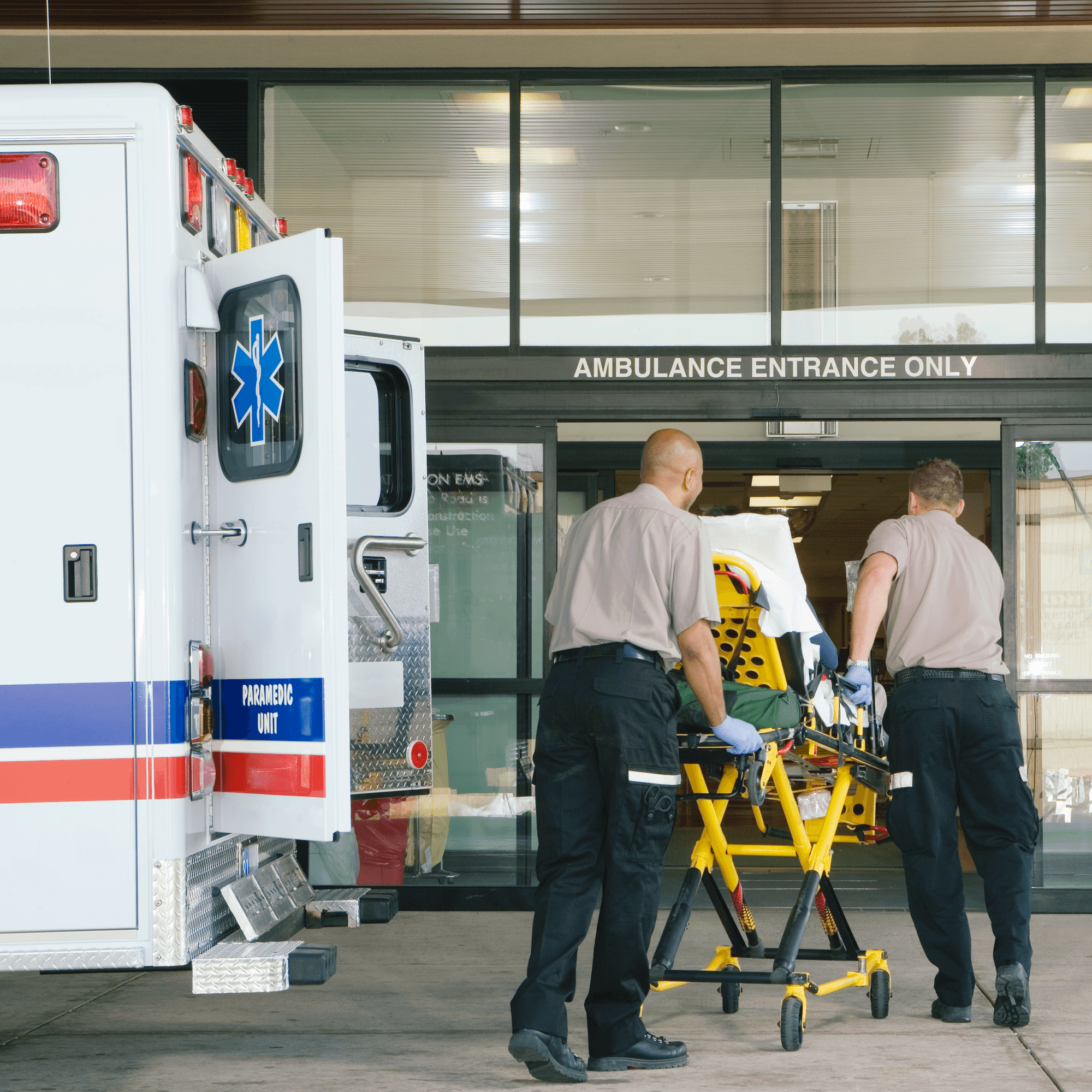
How private equity transformed U.S. emergency roomsApple News Today · Oct 8, 2024
Main Topic: The COVID-19 public health emergency in the United States is ending, and Dr. Karen Landman, Vox's in-house epidemiologist, discusses the implications and the government's response to the pandemic.
Key Points:
Participants:
Takeaways:
Sean Rameswaram
Today is the day. Today, the 11th of May, 2023, is the day that the COVID-19 public health emergency ends in the United States.
Music fades out
But what exactly does that mean? I asked Dr. Karen Landman. She's Vox's in-house epidemiologist.
Dr. Karen Landman
[pauses] Did we do it? Is COVID finally over?
Sean Rameswaram
No, come on. Nobody is saying that.
Dr. Karen Landman
Oh. This just means that the money's run out.
Sean Rameswaram
Democrats in Congress tried to get funding extended for the public health emergency, and Republicans said no. And actually, a bunch of Democrats also said no.
Dr. Karen Landman
And so the funding for a bunch of COVID-related stuff and for a bunch of non-COVID-related stuff that does actually have a huge impact on health is gone.
Sean Rameswaram
What that means for the United States of America, coming up on Today Explained.
Music starts playing again
Support for Today Explained comes from Adio. Adio is an AI-native customer relationship management platform that Adio says is built for the next era of companies.
Music continues to play
A powerful data structure adapts to your business model, syncs in all your contacts in minutes, and enriches your business with actionable data.
Dr. Karen Landman
[interrupting] Adio says it also allows you to create those email sequences, those real-time reports, those powerful automations, which they claim can help you build what matters most, your company.
Sean Rameswaram
You can go to adio.com slash todayexplained to get 15% off your first year.
Music continues
That's A-T-T-I-O dot com slash todayexplained.
Music fades out
Support for this show comes from Macy's.
Dr. Karen Landman
[skeptical] Layering is an art form.
Sean Rameswaram
[laughs] All it takes is a bit of intention, style, and, of course, the perfect cold-weather staples.
Dr. Karen Landman
[sarcastically] So find the perfect look for you with the help of Macy's Fall Fashion Guide, your one-stop shop for fall's latest trends and must-haves, curated by their experts.
Sean Rameswaram
From leather to denim to cozy knits, find everything you need to piece together your new fall look.
Dr. Karen Landman
[sighs] Explore the Macy's Fall Guide for yourself and shop in-store or online at Macy's.com.
Sean Rameswaram
Today explained.
Music starts playing again
Now you say, now France says. Today explained.
Dr. Karen Landman
[laughs] Good job.
Sean Rameswaram
So the COVID funding from the federal government is ending as of today.
Dr. Karen Landman
So now we're going back to pre-COVID funding for a lot of stuff.
Sean Rameswaram
Not to say that we haven't, you know, reached a point in the pandemic where hospitalizations and deaths are in a way better place than they were.
Dr. Karen Landman
They are. We are probably at the lowest point for hospitalizations and deaths that we've been for almost the entire pandemic.
Sean Rameswaram
So tell me what changes immediately and how are we going to notice those changes?
Dr. Karen Landman
One of the biggest changes is going to be that COVID-related testing and vaccination and treatment, instead of being paid for out of the big U.S. government bucket that was paying for it, those are going to get shifted to insurance payments.
Sean Rameswaram
So that means that Medicare and Medicaid are going to pay for those things, sort of, for the people who are on those types of insurance.
Dr. Karen Landman
And when I say sort of, I mean like Medicare is going to pay for a lot of this stuff for its beneficiaries.
Sean Rameswaram
But people who get Medicaid, there's going to be some state by state differences in what gets paid for and how much.
Dr. Karen Landman
People who are on private insurance, everybody's going to have different rules depending on what their insurance company decides they want to cover and how much of it they want to cover.
Sean Rameswaram
And then people who are paying out of pocket who are uninsured, which is still something like 8% of Americans, they're going to have to pay for everything out of pocket when it comes to COVID testing, COVID vaccinations and COVID treatment.
Dr. Karen Landman
Another big change is that something that was implemented to keep people from being uninsured during COVID, that measure is going to expire.
Sean Rameswaram
And that measure was this sort of Medicaid auto renewal.
Dr. Karen Landman
So people who qualified for Medicaid, instead of having to requalify every year like they had before the pandemic, they were allowed to just kind of stay on Medicaid.
Sean Rameswaram
Now that's going to change.
Dr. Karen Landman
It's going to go back to the way it was where states have to kind of re-approve everybody who applies for Medicaid every year.
Sean Rameswaram
That means a number of things.
Dr. Karen Landman
It means, number one, that there are going to be gaps in people's coverage, which we know translate to people not getting the care they need and sometimes incurring debt.
Sean Rameswaram
Even if that sometimes gets paid for afterward, it often really discourages people from getting care when they're not covered.
Dr. Karen Landman
So basically anything that the federal government was paying for, if you could assume the federal government was paying for it, if money was falling out of the sky to help this pandemic, it's drying up.
Sean Rameswaram
That's it. That's it. For what it means for the COVID public health emergency to run out.
Dr. Karen Landman
Yeah. Well, Karen, let's use this opportunity here, this sort of end of the emergency, to talk about how the federal government did in its response to COVID-19.
Sean Rameswaram
Not just the funding, but the politics and the response from the CDC, all of it.
Dr. Karen Landman
Let's talk about the full package three some years into this pandemic.
Sean Rameswaram
And let's start with what we got right before we talk about what we got wrong.
Dr. Karen Landman
Yeah, it's definitely easier to start with what we got right because it's a much shorter list.
Sean Rameswaram
Ouch. Sorry, facts.
Dr. Karen Landman
So I think the resounding victory here was warp speed.
Sean Rameswaram
Warp one, Mr. Soudan. Warp one, sir.
Dr. Karen Landman
Which was the enormous infusion of billions of dollars into developing, testing and deploying a vaccine for COVID.
Sean Rameswaram
This was the former president, right?
Dr. Karen Landman
Yes, that man helped get that into progress.
Sean Rameswaram
And he really made that happen, along with a lot of other people who knew it needed to happen.
Dr. Karen Landman
It's built, actually, interestingly, on the foundations of the response to SARS.
Sean Rameswaram
So George W. Bush deserves the credit.
Dr. Karen Landman
Thank you.
Sean Rameswaram
Now watch this drive. Let's not get hysterical.
Dr. Karen Landman
But the national agency that was started after BARDA under the Bush administration, you know, helped kind of organize the funding for Warp Speed.
Sean Rameswaram
BARDA was created to be able to respond to a coronavirus pandemic like this.
Dr. Karen Landman
We focus on chemical threats, biological threats such as anthrax, nuclear threats, radiological threats, pandemic influenza and emerging infectious diseases.
Sean Rameswaram
We can get anything done in this government if we have a framework to get the money to the people who need it.
Dr. Karen Landman
And so that actually existed.
Sean Rameswaram
Sounds good.
Dr. Karen Landman
Right. We see later that it didn't exist for a lot of other important things.
Sean Rameswaram
And that was a problem and remains a problem.
Dr. Karen Landman
But for this, we had a mechanism to get money to people to do research.
Sean Rameswaram
There also had been some developments in science a few years prior that really set up researchers to kind of know that mRNA vaccination was going to be a fast route to making a vaccine quickly and making it one that was nimble.
Dr. Karen Landman
So, you know, meaning that could be changed.
Sean Rameswaram
So that was some like a nice setup to actually knock this one out of the park.
Dr. Karen Landman
So we got vaccination, at least creating the vaccine, right.
Sean Rameswaram
Okay. So we did the vaccines right.
Dr. Karen Landman
We mobilized quickly, efficiently, and arguably miraculously.
Sean Rameswaram
Kind of.
Dr. Karen Landman
We hate using the word miracles in science because it was science that did it.
Sean Rameswaram
It was humans making choices, not just an accident of fate or the universe.
Dr. Karen Landman
It was people making good choices that made this happen.
Sean Rameswaram
And scientists working hard and being curious and doing the work.
Dr. Karen Landman
So that was great.
Sean Rameswaram
We also did some other stuff in science and in public health and in kind of more thinking a little more broadly about what health means in supporting people.
Dr. Karen Landman
You know, we stepped up investment in people's ability to feed their kids and people's access to Medicaid.
Sean Rameswaram
That was that was all good. Right.
Dr. Karen Landman
Cares and the American Rescue Plan, big pots of funding that did a lot for a lot of people early on.
Sean Rameswaram
And, you know, loosening telehealth restrictions helped people get care.
Dr. Karen Landman
As we just said, a lot of this is going to get rolled back.
Sean Rameswaram
So it was kind of this experiment that worked, but that doesn't mean that we're going to keep doing the thing that we tried because politics.
Dr. Karen Landman
But in any case, so we, you know, and like scientists jumped on this.
Sean Rameswaram
There's a lot of excitement and we got a lot of expansion of knowledge in different areas of science.
Dr. Karen Landman
Understanding indoor air quality, for example, that's a big one.
Sean Rameswaram
Like we learned so much about what we need to do to protect people from infectious particles indoors.
Dr. Karen Landman
The work to improve the air students will share started last year.
Sean Rameswaram
In this one junior school alone, $600,000 has gone towards ventilation upgrades that will increase the amount of fresh air coming in and to pay for unit ventilators with high-grade filters in portable classrooms.
Dr. Karen Landman
As a humanity, I think there's a lot of stuff that we are kind of aware of now that we weren't before.
Sean Rameswaram
And some of that is kind of neat.
Dr. Karen Landman
It's kind of cool that people know what epidemiology sort of is.
Sean Rameswaram
There's so many of them on Twitter.
Dr. Karen Landman
I know, they're everywhere now.
Sean Rameswaram
I think there was a lot of advance in science, and that was great.
Dr. Karen Landman
And the trick will really be, you know, applying this going forward and not letting some of the other problems that came up prevent us from learning from this experience.
Sean Rameswaram
Okay, so we funded a lot of science.
Dr. Karen Landman
We learned a lot as a species about disease.
Sean Rameswaram
We vaccinated this country for the most part, with a couple exceptions.
Dr. Karen Landman
Is that the whole list, Karen, or do we need to make more time on the show?
Sean Rameswaram
For successes?
Dr. Karen Landman
Yeah. I don't think so.
Sean Rameswaram
I don't think that's nearly as interesting as the problems.
Dr. Karen Landman
So I think we can move on.
Sean Rameswaram
Okay. Sorry. Can we use that?
Dr. Karen Landman
We're going to use that.
Sean Rameswaram
Support for today's show comes from Adio.
Dr. Karen Landman
What is Adio?
Sean Rameswaram
Adio is an AI-native customer relationship management system built specifically for the next era of companies.
Dr. Karen Landman
They say it's extremely powerful, adapts to your unique data structures and scales with any business model.
Sean Rameswaram
According to Adio, Adio takes less than a minute to set up.
Dr. Karen Landman
And within seconds, you will have your email and calendars synced.
Sean Rameswaram
You'll see all your relationships in a fully-fledged platform, they say, all enriched with that actionable data.
Dr. Karen Landman
And they say you can build AI-powered automations and use its research agent to tackle some of your most complex processes so that you can focus on what matters, building your company.
Sean Rameswaram
You can join industry leaders such as Flatfile, Replicate, Modal, and so much more.
Dr. Karen Landman
You can go to attio.com slash todayexplained to get 15% off your first year.
Sean Rameswaram
That's attio.com slash todayexplained.
Let's be honest. Are you happy with your job? Like, really happy?
Dr. Karen Landman
The unfortunate fact is that a huge number of people can't say yes to that.
Sean Rameswaram
Far too many of us are stuck in a job we've outgrown, or one we never wanted in the first place.
Dr. Karen Landman
But still, we stick it out.
Sean Rameswaram
And we give reasons like, what if the next move is even worse?
Dr. Karen Landman
I've already put years into this place.
Sean Rameswaram
And maybe the most common one, isn't everyone kind of miserable at work?
Dr. Karen Landman
But there's a difference between reasons for staying and excuses for not leaving.
Sean Rameswaram
It's time to get unstuck.
It's time for Strawberry.me.
Dr. Karen Landman
They match you with a certified career coach who helps you go from where you are to where you actually want to be.
Sean Rameswaram
Your coach helps you get clear on your goals, create a plan, build your confidence, and keeps you accountable along the way.
Dr. Karen Landman
So don't leave your career to chance.
Sean Rameswaram
Take action and own your future with a professional coach in your corner.
Dr. Karen Landman
Go to strawberry.me slash unstuck to claim a special offer.
Sean Rameswaram
That's strawberry.me slash unstuck.
Don't come to the front during a pandemic because you figured out how to start a podcast.
Today Explained is back with Dr. Karen Landman here at Vox.
Dr. Karen Landman
Karen, it sounds like you're stoked to talk about what we didn't get right in this COVID emergency in the United States.
Sean Rameswaram
Here is your chance. Where do we begin?
Dr. Karen Landman
Well, first, I just want to normalize us completely failing to learn from public health problems in the past.
Sean Rameswaram
We've done this before.
Dr. Karen Landman
Like, we had SARS back in the early 2000s.
Sean Rameswaram
Are we prepared for any kind of epidemic?
Dr. Karen Landman
Do those masks really work?
Sean Rameswaram
I mean what happens?
Dr. Karen Landman
The great fear here Martha is that if we get large numbers of cases our hospitals are not ready to handle those.
Sean Rameswaram
There is H1N1.
Dr. Karen Landman
President Obama decided to declare the epidemic a national emergency of swine flu, and around the country, people were lining up, waiting for hours to get vaccinations.
Sean Rameswaram
And each time, there were signals that, when the big one hit, we were going to have some problems.
Dr. Karen Landman
And we just didn't really listen to those signals.
Sean Rameswaram
You know, this isn't the first time that we've been in a situation where the need for some big solutions is really staring us in the face.
Dr. Karen Landman
And we're kind of letting politics and other priorities dictate what we do instead of those signals.
Sean Rameswaram
So I think one of the big things that we did wrong is that we just really undervalued and underestimated how important and how powerful human nature is.
Dr. Karen Landman
And just kind of undervalued social science more broadly.
Sean Rameswaram
I talked to 10 different experts about what the U.S. government did right and what they did wrong around COVID.
Dr. Karen Landman
And one of these experts talked about the Dunkirk effect, which is sort of where, do you know what Dunkirk, what happened at Dunkirk?
Sean Rameswaram
Christopher Nolan?
Dr. Karen Landman
Exactly.
Sean Rameswaram
If you see the movie or read a book or just read the Wikipedia, What happened was that in the face of an onslaught of an attack, normal people, civilians banded together to come up with a solution.
Dr. Karen Landman
The leisure boats.
Sean Rameswaram
Aren't you waiting on the Navy?
Dr. Karen Landman
They've asked for the moon, stolen the labrum.
Sean Rameswaram
Under, Captain.
Dr. Karen Landman
And this sun.
Sean Rameswaram
I remember.
Dr. Karen Landman
I remember from the film.
Sean Rameswaram
And history.
Dr. Karen Landman
What are you doing?
Sean Rameswaram
You do know where we're going.
Dr. Karen Landman
France.
Sean Rameswaram
Oppenheimer, July 21st.
Dr. Karen Landman
So the Dunkirk effect is basically about how people band together to help their community when they're faced with a disaster.
Sean Rameswaram
But this person was like, Dunkirk only lasts a few weeks.
Dr. Karen Landman
Then you need policy to come in and do things.
Sean Rameswaram
You need institutions to do things.
Dr. Karen Landman
Human nature isn't going to be enough to get us through this.
Sean Rameswaram
And they're absolutely right.
Dr. Karen Landman
Like behavioral scientists just weren't part of the policymaking early on.
Sean Rameswaram
And really, when I talk about warp speed being a success, like that means that we made a great vaccine.
Dr. Karen Landman
Right.
Sean Rameswaram
But it doesn't mean that we spent a lot of energy trying to figure out how to get vaccines into arms, how to overcome vaccine hesitancy, which was not new with COVID.
Dr. Karen Landman
That had been a burgeoning issue for more than a decade.
Sean Rameswaram
But it wasn't really part of the study early on.
Dr. Karen Landman
We took a punitive approach to a lot of public health policy rather than a harm reduction approach, you know, meaning we made mask mandates in a lot of places in the United States, which suggests that if you don't wear a mask in certain situations, you're going to get punished.
Sean Rameswaram
You're going to get fined without really thinking about what we already know about how people do when they're faced with punitive policies instead of policies that encourage you to reduce your own harm and think about your community.
Dr. Karen Landman
We got a little finger wavy, you're saying.
Sean Rameswaram
We got very finger waggy, not just individuals, but our policymakers.
Dr. Karen Landman
And we're still doing that.
Sean Rameswaram
That's still the dynamic.
Dr. Karen Landman
I love going into a store that still has a sign on that says you must wear a mask and no one's wearing it.
Sean Rameswaram
People just literally forgot to take the signs down.
Dr. Karen Landman
Now it's just embarrassing.
Sean Rameswaram
It's just like a reminder of how we failed.
Dr. Karen Landman
That's behavioral science, bro.
Sean Rameswaram
I'm not your bra.
Dr. Karen Landman
We could have thought about that.
Sean Rameswaram
We could have studied it and even just like take an action based on what we know about behavioral science and about the effects of having punitive policies in place versus harm reduction.
Dr. Karen Landman
But we didn't.
Sean Rameswaram
We didn't study the costs of interventions.
Dr. Karen Landman
We only really studied the benefits.
Sean Rameswaram
And, you know, that might be in part because a lot of the costs are in the Department of Social Scientists.
Dr. Karen Landman
And that maybe led us to assume that too much is better than not enough.
Sean Rameswaram
I mean, I think school closures are a great example of this.
Dr. Karen Landman
We always would rather do something than not do anything.
Sean Rameswaram
That's human nature, behavioral science.
Dr. Karen Landman
But there are costs to doing that.
Sean Rameswaram
And we saw a lot of those costs in a lot of ways.
Dr. Karen Landman
We didn't really value implementation science, which is a whole field of how you turn interventions that are supposed to help people on and how you get people to use them and then also how you turn them off.
Sean Rameswaram
So, you know, we're just we're looking at we were looking at all of these interventions through the lens of clinical trials, which is a very nerdy, very sciencey, very narrow, really, way to understand public health.
Dr. Karen Landman
And that doesn't really account for all the human nature and all the nuance that goes into determining whether people are going to do what you tell them.
Sean Rameswaram
So we've got problems of like behavioral science, implementation science.
Dr. Karen Landman
Do you think had we done a better job here, we'd be a little less divided as a country than we are now?
Sean Rameswaram
Because, of course, the pandemic created a lot of anti-vaxxers and broke up a lot of families and friendships over over these social aspects.
Dr. Karen Landman
You know, I think it's very, very hard to say whether we would have been in a different place because we had an administration when this started.
Sean Rameswaram
I don't know if you remember that was hell bent on using this to political gain.
Dr. Karen Landman
And I have to say, I don't think that that trend has receded.
Sean Rameswaram
There's the same guy we talked about in the beginning with the Operation Warp Speed.
Dr. Karen Landman
Yep.
Sean Rameswaram
But there are a number of people I've talked to who, looking at the way COVID played out globally, how even in countries where things seem to go well early on, things didn't go well later.
Dr. Karen Landman
And a lot of people have told me that they're not sure that there was anything that would have really changed the way this played out early on.
Sean Rameswaram
Really?
Dr. Karen Landman
Yeah.
Sean Rameswaram
Like a different president, a more behavioral, informed approach?
Dr. Karen Landman
Yeah, I was sort of surprised by this.
Sean Rameswaram
I think a lot of folks felt that the wheels were already turning on a lot of the problems.
Dr. Karen Landman
And they weren't just turning in this country.
Sean Rameswaram
You know, a lot of the issues that we faced with vaccine distrust, they're not uniquely American.
Dr. Karen Landman
A lot of the issues we faced with mandates backfiring, not uniquely American.
Sean Rameswaram
So I think there were a lot of folks who felt like you know human nature would have eventually become a really big problem no matter what given the set of options available to us back when this started
Dr. Karen Landman
There's just a little bit of hopelessness about whether we actually had what we needed back then to get it right.
Sean Rameswaram
You said earlier that we didn't listen to signals from prior emergencies.
Dr. Karen Landman
Had we listened, what else could we have done?
Sean Rameswaram
This is another big area of failure.
Dr. Karen Landman
Which is that we were not prepared.
Sean Rameswaram
Our public health systems and our healthcare systems just suffered from our total failure to invest in them ahead of the pandemic.
Dr. Karen Landman
And that is a decades-long problem.
Sean Rameswaram
You know, capitalism is one of our core tenets.
Dr. Karen Landman
And so a lot of what we do, the choices that we make, are guided by those priorities.
Sean Rameswaram
So some examples.
Dr. Karen Landman
Let's just start by talking a little bit about public health and why underfunding public health set us up here.
Sean Rameswaram
So we continue to fund public health the way we had for years, which is through line items in the congressional budget.
Dr. Karen Landman
So that means that instead of getting one giant pot of money that's pretty similar year to year and being able to figure out how to allocate it within the agency, CDC gets a whole bunch of line item amounts of money.
Sean Rameswaram
And those line items kind of align with different sections of the CDC.
Dr. Karen Landman
So like HIV and AIDS will get a certain amount of money and chronic disease will get a certain amount of money and like respiratory diseases will get a certain amount of money.
Sean Rameswaram
And so that money can only really be used by those eight little sections or centers within the CDC.
Dr. Karen Landman
It gives the CDC a lot less flexibility and also subjects them to big changes depending on the mood and the way the wind's blowing in Congress.
Sean Rameswaram
So we did not change that method of getting CDC funding.
Dr. Karen Landman
So that system had to kind of be made on the fly.
Sean Rameswaram
Are we going to do better next time, Karen?
Dr. Karen Landman
Oh boy, I have to tell you, I did not hear a lot of hope from the folks I talked to.
Sean Rameswaram
On this end.
Dr. Karen Landman
Yeah, there was...
Sean Rameswaram
So some future host of some future show will be asking some future epidemiologist the exact same questions I'm asking you now at the end of the next pandemic?
Dr. Karen Landman
I mean, it may not be that far away.
Sean Rameswaram
It might still be you, Sean.
Dr. Karen Landman
Oh, no.
Sean Rameswaram
Sorry.
Dr. Karen Landman
Lots of really smart people have put their heads into figuring out what we should do differently.
Sean Rameswaram
The amount of despair that I heard from people on whether our politicians could be trusted to do what they need to do to implement some of the most basic recommendations was just, it was very saddening.
Dr. Karen Landman
I think we are not in a place in the United States where our leadership is really motivated that much by what's best for people.
Sean Rameswaram
A lot of them are really motivated by staying in power.
Dr. Karen Landman
It's really hard to countenance.
Sean Rameswaram
In the absence of good politics, Karen, do we as a people, if we end up living through another global pandemic, are we better equipped to do it?
Dr. Karen Landman
You think?
Sean Rameswaram
We got to be, right?
Dr. Karen Landman
Having lived through it, having had the experience.
Sean Rameswaram
I mean, some of us, at least, we'll know maybe to wear a mask if it's airborne.
Dr. Karen Landman
OK, yeah, there are some of us who will wear a mask immediately and still have some of us.
Sean Rameswaram
Some of us never took him off.
Dr. Karen Landman
I still see him sometimes out in the wild.
Sean Rameswaram
I've seen some interesting stuff lately about political polarization as a risk factor for poor public health outcomes.
Dr. Karen Landman
And that resonates more with me than almost anything else I've heard.
Sean Rameswaram
It just makes so much sense when you think about it.
Dr. Karen Landman
Right.
Sean Rameswaram
And has political polarization gotten better in the last few years?
Dr. Karen Landman
I would very much argue no.
Sean Rameswaram
And there are data to back that up.
Dr. Karen Landman
I think the tribalism and the political polarization that we are seeing now is worse than it was back when the pandemic started, and it was bad then.
Sean Rameswaram
But it's not better.
Dr. Karen Landman
We're still you know shaking our fingers at each other about this pandemic when everything over the last three years plus a whole bunch of behavioral science tells us that is not the way to get people to change their behavior.
Sean Rameswaram
But we've kind of become the basest versions of ourselves now.
Dr. Karen Landman
And um it seems like it's going to take a long time for us to bounce back.
Sean Rameswaram
Okay one major takeaway from this pandemic weirdly i did not think this would be it stop wagging your finger at people never good idea.
Dr. Karen Landman
Not neighbor to neighbor, not health department to citizens.
Sean Rameswaram
That was not the way to convince people to do anything.
Dr. Karen Landman
Still not.
Sean Rameswaram
Whether you're a progressive or not, and whether the finger wagging is directed at progressives or not, you should be able to appreciate that finger wagging doesn't work.
Dr. Karen Landman
Dr. Karen Landman. Read her at Vox.com.
Sean Rameswaram
Our show today was produced by Victoria Chamberlain.
Dr. Karen Landman
[no response]
Sean Rameswaram
We were edited by Matthew Collette, mixed by Paul Robert Mounsey, and fact-checked by Laura Bullard.
Dr. Karen Landman
[no response]
Sean Rameswaram
Sorry, uh, facts.
Dr. Karen Landman
[no response]
Sean Rameswaram
I'm Sean Ramos for them.
Dr. Karen Landman
[no response]
Sean Rameswaram
The rest of the team here includes Halima Shah, Avishai Artsy, Hadi Mawagdi, Amanda Llewellyn, Miles Bryan, Siona Petros, and my co-host Noelle King.
Dr. Karen Landman
[no response]
Sean Rameswaram
Our supervising producer is Amina Alsadi.
Dr. Karen Landman
[no response]
Sean Rameswaram
We had some extra help this week from Jolie Myers and Michael Raphael.
Dr. Karen Landman
[no response]
Sean Rameswaram
We use music by Breakmaster Cylinder.
Dr. Karen Landman
[no response]
Sean Rameswaram
And congratulations are in order for Patrick Boyd.
Dr. Karen Landman
[no response]
Sean Rameswaram
Today Explained is distributed by WNYC on public radio stations across America.
Dr. Karen Landman
[no response]
Sean Rameswaram
We're part of the Vox Media Podcast Network.
Dr. Karen Landman
[no response]
Sean Rameswaram
If you like email, you can email us anytime.
Dr. Karen Landman
[no response]
Sean Rameswaram
TodayExplained at Vox.com.
Dr. Karen Landman
[no response]
Sean Rameswaram
We read those emails.
Dr. Karen Landman
[no response]
Sean Rameswaram
And I don't even like emails.
Dr. Karen Landman
[no response]
Sean Rameswaram
Bro.