--:-- [Theme music fades out]
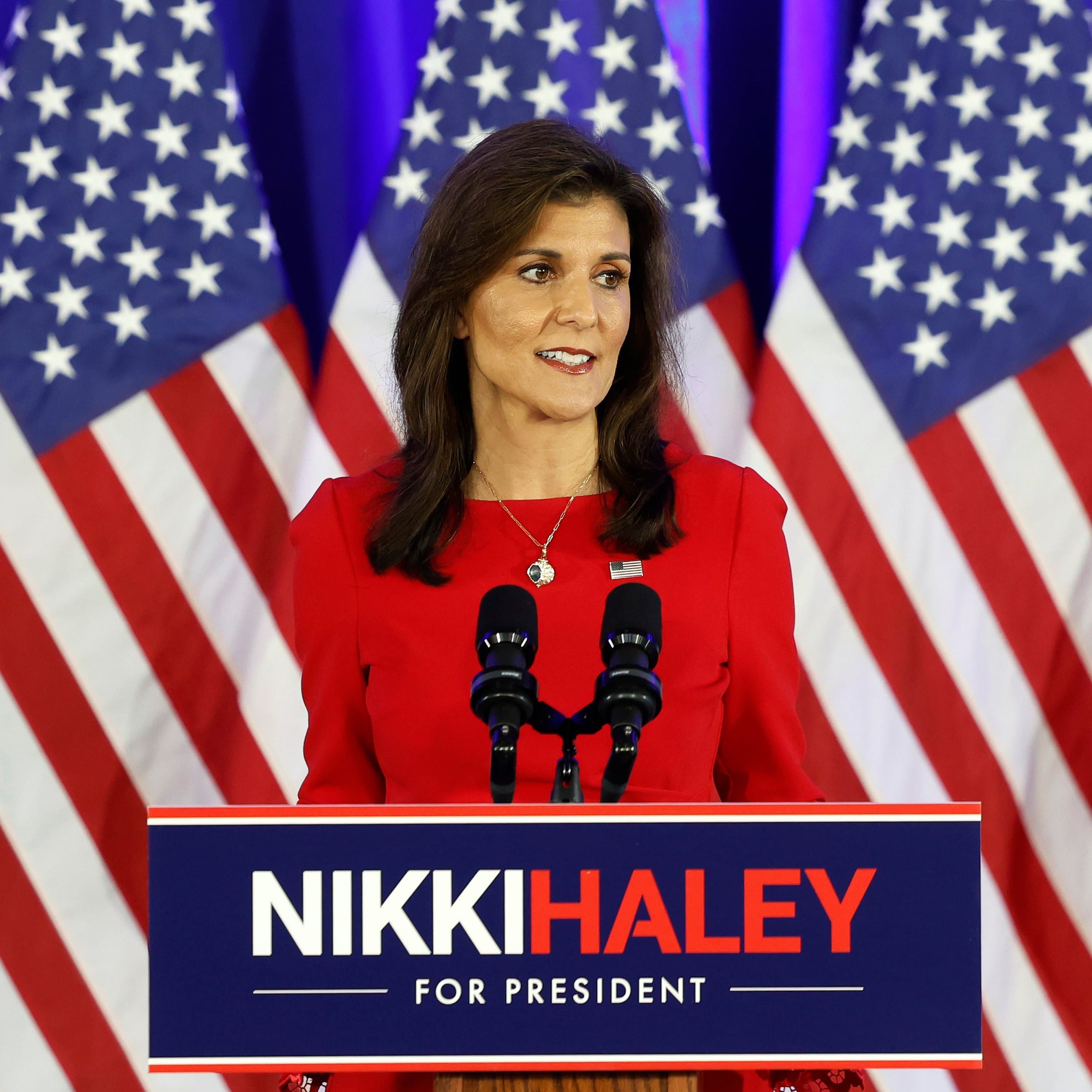
--:-- Alana Casanova-Burgess: It's Today Explained. I'm Alana Casanova-Burgess, filling in as host on this Super Tuesday. Elections everywhere in the U.S., all at once. This could be Nikki Haley's last stand, and folks are mad at Biden about his support of Israel's war in Gaza. But we'll start with the Senate race in California.
--:-- Melanie Mason: This was a seat that was occupied since 1992 by Senator Dianne Feinstein, who is, you know, was this legend of California politics, a real institution.
--:-- Alana Casanova-Burgess: Whoever gets the seat, it automatically catapults them to a new level of notoriety, a new level of prominence in the Democratic Party. Israel is a major talking point for candidates in that race, and it's shaking up primary contests across the country.
--:-- [Supporter announcement]
--:-- Alana Casanova-Burgess: Support for Today Explained comes from the FIFA World Cup of all things. The FIFA World Cup 26 is coming to North America next summer. It is the ultimate celebration of sports and culture.
--:-- [Supporter announcement]
--:-- Alana Casanova-Burgess: Having a night out with your friends is awesome. Dealing with hangovers sucks. Meet Senorita, the THC-infused margarita that lets you skip the booze but keep the vibe.
--:-- [Supporter announcement]
--:-- Alana Casanova-Burgess: So there's a Senate primary today in California. There are a whopping 27 candidates on the ballot. But there are four big ones, three Democrats and one Republican.
--:-- Melanie Mason: I can give you a little bit about each of them and the case they're making as to why they should be the next senator from California. Do you want to start with Congressman Adam Schiff from Burbank? Or I guess as we've heard Trump call him. You little pencil neck. Pencil Nick, Shifty Schiff, there's like so many nicknames.
--:-- Alana Casanova-Burgess: And there's been nothing better for Adam Schiff than the fact that he has this antagonist in Trump.
--:-- Melanie Mason: He buys the smallest shirt collar you can get. And it's loose. Adam Schiff has been a congressman representing the Los Angeles area since 2000. And he was seen as kind of a pretty establishment, fairly centrist Democrat who had been on the House Intelligence Committee, had been involved mostly on sort of foreign affairs, national security side.
--:-- Alana Casanova-Burgess: And then the Trump impeachment comes and he became the main house manager for the first Trump impeachment and has become sort of a face of the resistance, as it were, to former President Trump.
--:-- Melanie Mason: You can't trust this president to do the right thing, not for one minute, not for one election, not for the sake of our country. You just can't. He will not change. And you know it.
--:-- Alana Casanova-Burgess: Between that and the January 6th committee really has sort of positioned himself nationally as somebody who would take on Donald Trump.
--:-- Melanie Mason: When our democracy was in danger, he stood up. Adam Schiff took on a corrupt president. He fought to protect our values and the rule of law. He's not exactly like the flashiest candidate, but he has somehow become the celebrity candidate because he has such a national following, which in practical effect means that he has raised just gobs of money.
--:-- Alana Casanova-Burgess: And so he has been sort of the consistent front runner from the beginning, in part because of this national profile and in part because he has more money than God.
--:-- Melanie Mason: All right. So Adam gobs of money Schiff. Then we've got Katie Porter, right? She's Congresswoman from Orange County. And I'm picturing her with a whiteboard, right? That's how we know her. That's how she would love for you to picture her, because that's definitely been the branding that she has done.
--:-- Alana Casanova-Burgess: Congresswoman Porter got elected in 2018. She was part of that 2018 wave that was in reaction to the Trump presidency. And she is very infamous for having this whiteboard that she's used in congressional hearings to sort of take down CEOs or take down members of the Trump administration back then.
--:-- Melanie Mason: CEOs will use tactics like, could you repeat the question? I'm sorry I didn't catch all that. I couldn't follow all of the numbers you were throwing out there. I think the whiteboard helps prevent that. She's a former law professor, so she's incredibly good at distilling these bullet points of key information and making it very digestible.
--:-- Alana Casanova-Burgess: She was also seen as a pretty formidable candidate coming into this race because of that celebrity that she had and the fact that there were a lot of people who were quite loyal to her more assertive brand of politics.
--:-- Melanie Mason: And then you have Barbara Lee, long-serving congresswoman from Oakland, sort of activist of the bunch. Yes, and she really has kind of captured the longstanding admiration, particularly of progressives, because of this really fateful vote that she took back in 2001 in the aftermath of September 11th.
--:-- Alana Casanova-Burgess: She voted against the Authorized Use of Military Force Act, which is sort of what laid the groundwork for the war in Afghanistan, the war in Iraq.
--:-- Melanie Mason: And she has really run on that. I didn't quit when I refused to give the president completely unlimited war powers after September 11th. And in the face of countless death threats, I was the only no vote. I didn't quit then and I won't quit now.
--:-- Alana Casanova-Burgess: Her problem is she just has not been able to raise many like the other two Democrats that she's running against.
--:-- Melanie Mason: So all of those compelling storylines, she doesn't really have the ability to communicate that to the voters.
--:-- Alana Casanova-Burgess: Okay, so three Democrats, one Republican in the race, Steve Garvey, former baseball player?
--:-- Melanie Mason: That's right. Former Dodger, former Padre. Deep right field. Way back. Carter Van back to the wall. It's gone. Home run, Garvey, and there will be tomorrow.
--:-- Alana Casanova-Burgess: I used to have a Steve Garvey autographed glove as a kid, even though I actually was too young to ever see him play.
--:-- Melanie Mason: But, I mean, that just goes to show, like, Steve Garvey, people know him in California. If you're a baseball fan, you know Steve Garvey. He is certainly kind of iconic in that sense.
--:-- Alana Casanova-Burgess: But this is his first time as a candidate and it shows I mean he is running as this pretty squishy Republican who won really take positions on really any issues at all.
--:-- Melanie Mason: He, for example, voted for Trump twice, but won't say if he will vote for Trump again in this election. I will look at the two opponents. I will determine what they did. And at that time, I will make my choice.
--:-- Alana Casanova-Burgess: Well, California, I think what they say is true. Once a Dodger, always a Dodger.
--:-- Melanie Mason: He also just really isn't running very much of a campaign. But for reasons that I'm sure we will get to, that doesn't matter because Adam Schiff, the Democrat, is sort of doing it for him. And that has accrued to his benefit a lot.
--:-- Alana Casanova-Burgess: OK, but this is a different kind of primary, right? This is not Democrats and Republicans are in different buckets. This is a free for all kind of.
--:-- Melanie Mason: That's right. So California in the last couple election cycles has adopted this top two primary, which means that it doesn't matter what party you're in. Just the top two vote getters of the primary election will advance to the November general.
--:-- Alana Casanova-Burgess: So there is a possibility that you could have two Democrats advance or a Democrat or Republican.
--:-- Melanie Mason: The latest Berkeley IGS poll has Republican Steve Garvey on top with 27 percent support among likely voters, followed by Schiff with 25 percent, Porter 19 percent and Lee 8 percent.
--:-- Alana Casanova-Burgess: Adam Schiff has consistently polled among the top Democrats. But Steve Garvey, as the Republican, has been moving up and up and up.
--:-- Melanie Mason: It seems that he's really coalescing the Republican vote behind him. And Katie Porter seems to be battling a little bit more to try and get into that second spot. And that's looking harder and harder for her to do.
--:-- Alana Casanova-Burgess: And then Congresswoman Lee has just consistently not really been able to pull above double digits.
--:-- Melanie Mason: You mentioned earlier that Schiff has been sort of promoting Garvey.
--:-- Alana Casanova-Burgess: Yeah. So because Schiff has so much money that he can spend, he basically has money to run two campaigns.
--:-- Melanie Mason: So he's running his own campaign where he has advertisement that's his own bio, his own sort of positive vision. talking about what he would do with Senate.
--:-- Alana Casanova-Burgess: And then he's running this other set of ads that technically are anti-Garvey ads.
--:-- Melanie Mason: Two leading candidates for Senate, two very different visions for California. Steve Garvey, the leading Republican, is too conservative for California. He voted for Trump twice and supported Republicans for years, including far-right conservatives.
--:-- Alana Casanova-Burgess: There are millions of Republicans in this state, but the reality is, is looking ahead, in a state as blue as California, A Schiff-Garvey matchup almost virtually ensures that Schiff would be the next senator from California.
--:-- Melanie Mason: We don't obviously make 100 percent predictions, but the math would be extremely difficult for Steve Garvey going forward.
--:-- Alana Casanova-Burgess: So we've got essentially Schiff, the Trump antagonist, Katie Porter, the explainer, Barbara Lee, the activist. And among them, are we seeing any actual policy differences or just vibes?
--:-- Melanie Mason: I'd say mostly vibes. I think there's two areas that have emerged as a point of difference. And one of them I will say I did not have on my bingo card going into this race. And this was a question of earmarks.
--:-- Alana Casanova-Burgess: Katie Porter has really put her foot down. Earmarks are about inviting corruption, conflicts of interest and rewarding people's donors.
--:-- Melanie Mason: The other two Democrats say, of course, we need earmarks. Earmarks are ways that we can pay for housing programs or homelessness programs in our communities.
--:-- Alana Casanova-Burgess: The other issue where there is some genuine policy differentials and I think does reflect a larger conversation is about the Israel-Hammoth war.
--:-- Melanie Mason: As soon as Hamas's attack on Israel happened on October 7th, Congresswoman Lee, who, remember, is this anti-war activist, has sort of been a hero in the party because of that, immediately came out.
--:-- Alana Casanova-Burgess: Literally, the next day came out and called for an immediate ceasefire.
--:-- Melanie Mason: The only way Israel is going to be secure is through a permanent ceasefire. The only way that is going to happen is with a political and diplomatic solution.
--:-- Alana Casanova-Burgess: And she had really put a marker down early, I would say much earlier than most of the progressives in her party, who very quickly, I think, coalesced around the ceasefire idea or the ceasefire concept as something to rally around.
--:-- Melanie Mason: Congressman Adam Schiff on the other side has been sort of steadfast in not calling for a ceasefire.
--:-- Alana Casanova-Burgess: I don't know how you can ask any nation to ceasefire when their people are being held by a terrorist organization.
--:-- Melanie Mason: Katie Porter has sort of found herself a little bit in the mushy middle. So I've called for a release for all the hostages, resources to rebuild Gaza, making sure Israel is secure and a free state for Palestinians where they can thrive.
--:-- Alana Casanova-Burgess: But just the fact that she sort of put herself in this middle ground position so that she could say that she supported some form of ceasefire, I think in a way symbolizes Democrats, or at least some Democrats, growing concerns about how Israel is conducting this military operation and a sense that there is a real uneasiness out there.
--:-- Melanie Mason: And increasing that pressure, calling for some form of ceasefire is a way to do that.
--:-- Alana Casanova-Burgess: I think that there are people who feel very, very strongly about this issue, just as we've seen across the country.
--:-- Melanie Mason: There are people who come out and protest. There are people who say that this will be a determinative issue.
--:-- Alana Casanova-Burgess: But I think that if we're talking more broadly about the electorate as a whole, I don't think that this is necessarily an issue that is determining what people's vote is going to be.
--:-- Melanie Mason: And so I think for the people who care very deeply, it might be that single determining factor. but I do not think that's the case for the majority of voters.
--:-- Alana Casanova-Burgess: Melanie Mason, Politico.com.
--:-- [Supporter announcement]
--:-- Alana Casanova-Burgess: A lot of voters might not be deciding based on Israel, but that's not stopping interest groups from pouring money into competitive primaries.
--:-- Melanie Mason: How that's reshaping this year's election, ahead on Today Explained.
--:-- [Supporter announcement]
--:-- Alana Casanova-Burgess: Support for Today Explained comes from Chime. Nobody likes fees and complicated banking, says Chime. And Chime gets that, says Chime.
--:-- [Supporter announcement]
--:-- Alana Casanova-Burgess: Chime is a financial technology company that says they understand that every dollar counts. So when you set up direct deposit through Chime, they say you get access to fee-free features, such as free overdraft coverage, getting paid up to two days early with direct deposit, so much more.
--:-- [Supporter announcement]
--:-- Alana Casanova-Burgess: That's Chime.com slash explained. Chime feels like progress.
--:-- [Supporter announcement]
--:-- Alana Casanova-Burgess: Chime is a financial technology company, not a bank. Banking services and debit card provided by the Bancor Bank N.A. or Stride Bank N.A. Members FDIC.
--:-- [Supporter announcement]
--:-- Alana Casanova-Burgess: Not all journalism is the same. Take The Guardian. Our coverage has something unique. Fierce independence. Nobody owns us or tells us what we can and can't say.
--:-- [Supporter announcement]
--:-- Alana Casanova-Burgess: So we're free to report the whole picture. We connect what's happening in Washington to the rest of the globe. Expose corruption wherever we find it. And give fresh perspective on everything.
--:-- [Supporter announcement]
--:-- Alana Casanova-Burgess: From wellness and soccer to culture, the climate and more. Read, watch, and listen to The Guardian for free at theguardian.com.
--:-- [Supporter announcement]
--:-- Alana Casanova-Burgess: more experts who they say are ready to help you take your business to the next level. With more than two decades of experience, Upwork has a simple and ambitious goal to pioneer a better way of working.
--:-- [Supporter announcement]
--:-- Alana Casanova-Burgess: Companies at every stage turn to Upwork to get things done and find more flexibility in the way they staff key projects and initiatives by accessing a global marketplace full of top talent.
--:-- [Supporter announcement]
--:-- Alana Casanova-Burgess: Plus, Upwork makes posting your job easy with no cost to join. You can register, browse freelancer profiles, get help drafting a job post, or even book a consultation.
--:-- [Supporter announcement]
--:-- Alana Casanova-Burgess: You can visit Upwork.com right now and post your job for free. That is Upwork.com to post your job for free and connect with top talents ready to help your business grow.
--:-- [Supporter announcement]
--:-- Alana Casanova-Burgess: That's U-P-W-O-R-K.com, Upwork.com.
--:-- [Theme music starts]
--:-- Alana Casanova-Burgess: Explained. 2024 Explained. Today Explained is back. I'm Alana Casanova-Burgis. Ross Barkin writes about politics for the New York Times Magazine and other places.
--:-- Ross Barkin: Lately, he's been looking at the fracture in the Democratic Party over Israel and Palestine.
--:-- Alana Casanova-Burgess: For the last few decades, it was almost impossible to find a Democrat who was willing to criticize the actions of the Israeli government in any way.
--:-- Ross Barkin: That consensus has only started to erode in the last few years. You've seen the rise of a new, younger left.
--:-- Alana Casanova-Burgess: You've seen Democrats enter Congress like Ilhan Omar, like Rashida Tlaib, like Summer Lee, like Jamal Bowman, who are willing to criticize the Israeli government.
--:-- Ross Barkin: Most of those politicians are in the squad. The squad is now around eight Democrats. The squad didn't exist at all until 2019.
--:-- Alana Casanova-Burgess: So that's important to keep in mind. You have a very different political dynamic today than you did a decade ago or 20 years ago.
--:-- Ross Barkin: And that is definitely playing into what you see today. And you've also seen a strengthening of the pro-Israel lobby, APEC, the American Israel Public Affairs Committee, has always been very powerful.
--:-- Alana Casanova-Burgess: But in recent years, it's started to play a much more significant role in primaries.
--:-- Ross Barkin: And another organization that's related, Democratic Majority for Israel, has been in particular focusing on Democratic primaries.
--:-- Alana Casanova-Burgess: This election, AIPAC is expected to spend approximately $100 million just to try to unseat progressive members of Congress who dare to speak out about what's going on in Gaza.
--:-- Ross Barkin: AIPAC and DMFI, who are separate, there is a difference. Democratic majority for Israel only endorses Democrats.
--:-- Alana Casanova-Burgess: APEC, on the other hand, is long-funded Republicans and pro-Israel Democrats, and they have no problem giving money to Trump Republicans.
--:-- Ross Barkin: Democratic majority of Israel draws the line at that.
--:-- Alana Casanova-Burgess: But when it comes to Democratic primaries, the two are completely aligned in that they each want to defeat, crush, eliminate the progressive Israel skeptical left.
--:-- Ross Barkin: So you mentioned AIPAC, you mentioned the Democratic majority for Israel. How are they participating in these primaries in ways that maybe we haven't seen them do that before?
--:-- Alana Casanova-Burgess: They are spending and will spend enormous sums of money in Democratic congressional primaries. That is new.
--:-- Ross Barkin: Democratic majority for Israel really came on the scene around 2022 when they spent a lot of money to defeat Nina Turner, who was a high level member of Bernie Sanders' campaign, a former state senator who's running for congressional seat in Ohio.
--:-- Alana Casanova-Burgess: The American Israel Public Affairs Committee has inserted its way into many Democratic primaries over the past couple of years, specifically targeting progressive candidates such as myself.
--:-- Ross Barkin: I still got the battle scars, y'all. They spent heavily against her in favor of her opponent who won the race, Chantel Brown.
--:-- Alana Casanova-Burgess: Typically what APEC would do was donate money in general elections to both parties to keep a kind of consensus.
--:-- Ross Barkin: They're still doing bipartisan donations, but their focus has changed from keeping Republicans and certain Democrats in the pro-Israel fold and the Israel hawk fold to really coming hard against this Israel skeptical or even politicians who are willing to lightly criticize Israel.
--:-- Alana Casanova-Burgess: There's a few policy positions that APEC and DMFI particularly revile. One is conditioning military aid to Israel.
--:-- Ross Barkin: This is something that has become increasingly accepted on the progressive left, that if the U.S. is going to continue to fund Israel, it can't be a blank check.
--:-- Alana Casanova-Burgess: In 2022, to Andy Levin, who's a Jewish Zionist in favor of a two-state solution, also progressive. He was the president of a synagogue, someone who traveled to Israel many times, who believed fully in the project of Zionism.
--:-- Ross Barkin: He was pushing legislation to condition military aid to Israel. AIPAC can't stand the idea that I am the clearest strongest Jewish voice in Congress standing for a simple proposition that there no way to have a secure democratic homeland for the Jewish people unless we achieve the political and human rights of the Palestinian people.
--:-- Alana Casanova-Burgess: APEC opposed him furiously, and he lost his re-election to Haley Stevens, who is still in Congress and who is an unflinching supporter of Can you talk about what the AIPAC spending and the DMFI spending result in? Like attack ads, are those ads actually mentioning Israel?
--:-- Ross Barkin: They will run ads that have nothing to do with Israel, and they'll attack politicians based on whatever their polling says makes them most vulnerable.
--:-- Alana Casanova-Burgess: For example, in California, they're targeting a state senator, Dave Min, who's running for Katie Porter's open house seat.
--:-- Ross Barkin: And they're attacking him over a drunk driving incident, not over any alleged insufficient support of Israel. Dave Min wants your trust, but Min was arrested for drunk driving, putting us all at risk.
--:-- Alana Casanova-Burgess: More voters in California will care about Dave Min driving drunk than Dave Min supposedly not supporting Israel enough.
--:-- Ross Barkin: And that is often the approach they take. And there's a reason they do it. It's an approach that usually works.
--:-- Alana Casanova-Burgess: What about the other side? Are there groups more critical of Israel also getting involved in primary campaign spending?
--:-- Ross Barkin: To an extent, but they just have a lot less money. So the traditional player has been J Street, but they are somewhat marginalized in this moment.
--:-- Alana Casanova-Burgess: J Street is something of the liberal counter to AIPAC. They are Zionist. They are supportive of Israel, but they are willing to criticize the Israeli government, criticize Benjamin Netanyahu, and they endorse candidates who take those positions.
--:-- Ross Barkin: but J Street unendorsed Jamal Bowman and they're not helping the squad members in the APEC DMFI onslaught.
--:-- Alana Casanova-Burgess: So J Street is not really in play here.
--:-- Ross Barkin: Jewish Voice for Peace is trying to be more involved. They are a growing and very professionalized anti-Zionist organization that is behind a lot of the big attention-grabbing protests you see, like the occupation of the Statue of Liberty or Grand Central Station.
--:-- Alana Casanova-Burgess: Here at home, an almost surreal scene inside Grand Central Terminal tonight as hundreds of demonstrators took over the place, calling for a ceasefire in the war. Shut it down! Shut it down!
--:-- Ross Barkin: They have a political action arm that they use to endorse candidates. They will be volunteering. They'll probably be sending some money there, but on a much, much smaller scale.
--:-- Alana Casanova-Burgess: There's DSA, Democratic Socialists of America. You know, in some of these congressional races, DSA could be in play. Again, DSA is a volunteer run organization.
--:-- Ross Barkin: So it's about people showing up, but it's not about spending millions of dollars on television ads.
--:-- Alana Casanova-Burgess: What does this mean for the Democratic Party? And not just in the political sense, but in the kinds of policies that we see that party support.
--:-- Ross Barkin: We've had this progressive movement of more congresspeople on the left. Could this end that?
--:-- Alana Casanova-Burgess: On one hand, the squad could shrink, the spending against them could be successful, and other Democrats could be even more terrified of crossing APEC in the future, and you could see this Israel skeptical left start to shrink.
--:-- Ross Barkin: On the other hand, if you look at the actual number of young people, especially who are starting to vote and who are engaging on this, the Israel skeptical faction is only growing.
--:-- Alana Casanova-Burgess: And this is something I think even the most staunch Israel supporters recognize. And what they fear is that the old consensus is starting to crumble.
--:-- Ross Barkin: I would say my most bold prediction, which could turn out to be wrong, but I'll make it here, is that Joe Biden will be the last Democratic president for some time who offers mostly unconditional support for the Israeli government.
--:-- Alana Casanova-Burgess: I think that is going to be increasingly untenable unless the politics in Israel start to change.
--:-- Ross Barkin: Israel is governed by a conservative right-wing majority, and it's no secret that Benjamin Netanyahu is holding on in the hopes that Donald Trump is elected president again because Trump and Netanyahu align on politics.
--:-- Alana Casanova-Burgess: They have the same vision for the future of Israel, and Netanyahu would like to see someone like Joe Biden lose.
--:-- Ross Barkin: So while I think today and tomorrow, APEC can keep winning and blow squad members out of the water and spend money, on the left at least, none of this is going to hold in the same way because the politics of these two countries are going to diverge.
--:-- Alana Casanova-Burgess: That's Ross Barkin. Check out his substack, Political Currents.
--:-- [Theme music starts]
--:-- Alana Casanova-Burgess: Today's show was produced by Avishai Artsy, edited by Matt Collette, fact-checked by Laura Bullard, and mixed by Patrick Boyd.
--:-- [Theme music continues]
--:-- Alana Casanova-Burgess: I'm Alana Casanova-Brigis, and this is Today Explained. Thank you.