Trump Visibly Panics at Press Conference over Epstein FilesThe MeidasTouch Podcast · Feb 3, 2026
Main Topic: The Trump Economy and the Potential for a Second Term
Key Points:
Participants:
Takeaways:
Theme music fades out
Noel King
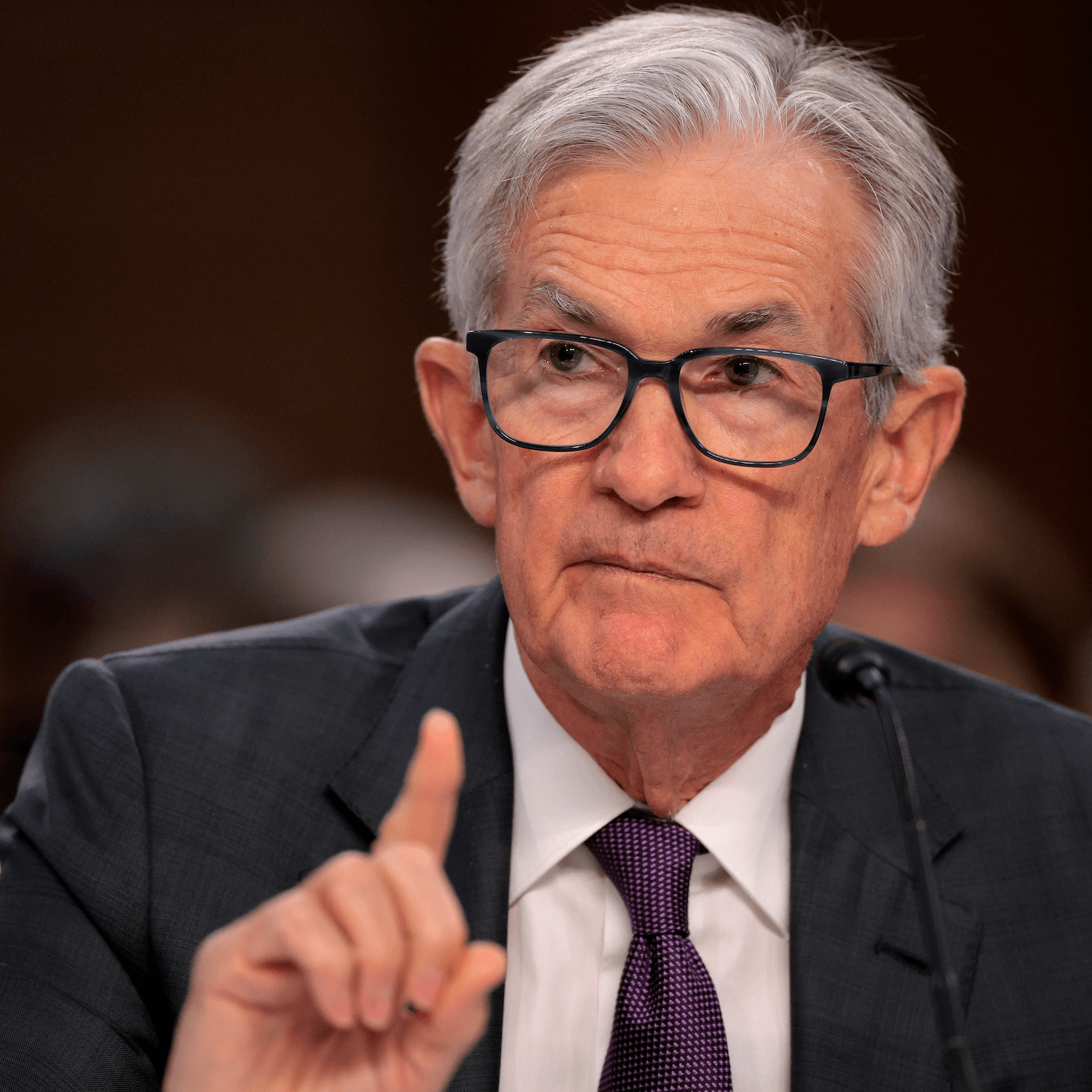
The Federal Reserve decided to hold interest rates steady this week. This is a good situation, let's be honest. This is a good economy. Classic Jerome Powell.
Pause
A couple days ago, consumer sentiment, or how we feel about the economy, posted its biggest gain since 1991. And then headless and heedless into the good vibes rushed candidate Donald Trump.
Pause
On a day where both the Dow and S&P closed at record highs, the former president wrote on social media, in all caps, we should note this. This is the Trump stock market because my polls against Biden are so good that investors are projecting that I will win and that will drive the market up. Everything else is terrible.
Pause
Trump won the presidency in 2016 in part by making promises about the economy, and he delivered on some. He's making promises again, and those promises are making some people very worried. And we're going to tell you why.
Pause
On Today Explained, the tariff man making tariff plans for everybody. Support for this show comes from ServiceNow. AI is only as powerful as the platform it's built into, don't you know? That's why it's no surprise that more than 85% of the Fortune 500 use the ServiceNow AI platform.
Pause
Didn't know that. While other platforms duct tape tools together, ServiceNow seamlessly unifies people, data, workflows, and AI, connecting every corner of your business. And with AI agents working together autonomously, anyone in any department can focus on the work that matters most.
Pause
I've never met an AI agent. Learn how ServiceNow puts AI to work for people at servicenow.com. It's Today Explained.
Pause
Heather Long
I'm Heather Long, and I'm an economics columnist for The Washington Post. I covered Donald Trump's economy closely. Yes, I arrived in D.C. about the time that President Trump did and was there as the lead U.S. economics reporter for The Post.
Pause
So the story that Donald Trump tells about the Donald Trump economy is that during his presidency, the economy did really, really, really great. We had the greatest economy in the history of our country. There was never a greater economy. And then COVID came along and messed things up at the end, but that was not President Trump's fault, and up until then, things had been really good.
Pause
What was Donald Trump's economy really like? I would call it a sugar high. In those early years, one of the big policies that he did get enacted was a huge tax cut. It's the largest tax cut in the history of our country. It was the biggest tax cut in the end of 2017 that we've ever seen for corporations.
Pause
And sure enough, 2018, we saw a pretty good surge. 3% GDP is a pretty boomy year for a U.S. economy that normally grows around 1.9%. So in that sense, his little narrative was correct. But the two caveats to that are they also added a lot to the debt. And the final part is the other part of the Trump economy was just so much insecurity.
Pause
As a reporter, you would set your alarm for 5 a.m., 6 a.m., 7 a.m. in the morning. And I literally wake up and say, did we get a tweet? Markets are falling after President Trump announced on Twitter that he is ending all negotiations on any sort of coronavirus relief deal. And what would that tweet mean for the economy for the first time ever?
Pause
We were asking this question. OK, so Donald Trump assumes the presidency early in 2017. And what did he promise he was going to do over his term? He made a ton of promises. Number one that everybody remembers, this is America first language. We're going to have strong, incredible borders. We're going to build a wall. It's going to be built.
Pause
In economic terms, that meant restricting immigration, which they did do. It also meant the trade war, big tariffs against China. We have a $500 billion trade deficit with China. We're going to turn it around. And they also did tariffs on steel and aluminum products on many countries around the world.
Pause
Another interesting economic promise that's laughable looking back is Trump on the campaign promised to eliminate the national debt in eight years. Obviously, it was only in office for four. But when he took office, the national debt was around $20 trillion. And when he left, it was $28 trillion.
Pause
So certainly did quite the opposite of eliminating the national debt. Walk me through a couple of things that happened. So Donald Trump promises a trade war with China, and then he gives us one. And how does that turn out? He put massive tariffs on China. Amazingly, most of them are still on.
Pause
We are still buying a lot of goods from China. We were doing it during the Trump years. But there has been a shift of some business and some trade away from China. You can see the huge explosion in trade with the United States and Vietnam and Laos and other countries, Thailand and Southeast Asia.
Pause
In terms of how it worked for regular people, there's no doubt if you look at any economic analysis of this that it made goods more expensive here. There's various estimates out there, but it definitely added up to a couple hundred dollars a year because a tariff is another word for a tax.
Pause
Then let's go through the promise about the border. Trump was more or less saying like, I'm going to lock down the border so that immigrants don't take American jobs. How did that end up playing out? They did restrict immigration quite a bit.
Pause
So this is a really complicated one because of the juicing of the economy after those tax cuts. We do see a pretty good hiring boom. It really starts in mid-2018 when the unemployment rate goes under 4% and ultimately hits a 50-year low. It's since gone lower than that, but this was a huge change.
Pause
And you have to be fair to Trump that in that era, in 2018 and 2019, you really saw benefits across the spectrum on jobs. You could potentially make the case that restricting immigration may have helped a little bit in some communities to see some hiring of native Americans versus immigrants.
Pause
Obviously, immigrants add so much to the U.S. economy. A lot of our innovations and new businesses that happen in the United States are done by immigrants or children of immigrants.
Pause
Noel King
That was Heather Long of The Washington Post. Coming up, leading magazine The Economist recently wrote a piece about how Donald Trump's plans for his next term are freaking out bankers and CEOs. And we're going to ask whether they should be freaking out the rest of us, too.
Pause
Support for Today Explained comes from Chime. Nobody likes fees and complicated banking, says Chime. And Chime gets that, says Chime. Chime is a financial technology company that says they understand that every dollar counts.
Pause
So when you set up direct deposit through Chime, they say you get access to fee-free features, such as free overdraft coverage, getting paid up to two days early with direct deposit, so much more.
Pause
Chime says with qualifying direct deposits, you can be eligible for free overdraft, up to $200 on debit card purchases and cash withdrawals. Plus, they say you don't need to worry about monthly fees or maintenance fees.
Pause
You can work on your financial goals through Chime today. You can open an account in two minutes at Chime.com slash explained.
Pause
That's Chime.com slash explained. Chime feels like progress. Chime is a financial technology company, not a bank. Banking services and debit card provided by the Bancor Bank N.A. or Stride Bank N.A. Members FDIC.
Pause
Spot me eligibility requirements and overdraft limits apply. Timing depends on submission of payment file. Fees apply at out-of-network ATMs. Bank ranking and number of ATMs according to U.S. News and World Report 2023. Chime checking account required.
Pause
Thank you Explained 2024 Explained.
Pause
Henry Trix is a business columnist at The Economist. He writes Schumpeter, which is a very good column about disruption and innovation in business.
Pause
Henry Trix
If there's one thing Donald Trump does well, that would be disruption. Henry says this time around, Trump isn't explicitly planning to disrupt things. He's hoping to launch economic policies that make the economy grow in a similar way that it grew during his administration from 2016 to 2020.
Pause
And to be fair to him, the economy did pretty well under his administration. But as is often the case with Trump, the potential for disruption is lurking just beneath his promises.
Pause
The danger, I guess, is that his approach to economic policy actually risks exacerbating the economic problems that Americans are suffering from today. And particularly we're talking about high inflation there.
Pause
We know of Donald Trump as a kind of cut taxes and raise tariffs kind of a guy. This time, his main campaign promise, if you like, is on the tariff front. He calls himself Tariff Man, and he has this plan to increase tariffs across the board in the U.S. from the start of his administration.
Pause
We must have fairness and reciprocity. That's the word, reciprocity. They do it to us, we do it to them. What Trump wants to do is effectively triple the average rate of tariffs.
Pause
He also wants to retaliate against countries with particularly high tariffs on American products by raising the American tariffs to the same height. And this could have a pretty detrimental impact on trade.
Pause
Trade wars are never very good for the economy. They lower economic growth. And they tend to hit those on the lowest income hardest because tariffs raise the price of consumer goods, such as the sort of stuff that you buy in the grocery store.
Pause
Why would Donald Trump want to do something over the next four years, if indeed we elect him, that would make things more expensive for American consumers already having problems with inflation?
Pause
It's a question that many, many orthodox economists ask. I mean, Trump's trade advisers are a pretty weird and unorthodox bunch.
Pause
Here's a can of Coca-Cola. Coca-Cola has three cents worth of aluminum in it. So if that goes up 10%, that's three tenths of a cent. It doesn't mean anything. We've seen with 25% tariffs on the first $250 billion of these Chinese exports, zero inflation.
Pause
What China will do and has done is simply bear the burden of these tariffs through lower prices for their products, fewer exports and lower profits. They see a trade deficit as being a sign of economic weakness. And America has a big trade deficit.
Pause
We are handing China more and more of our jobs, more and more victories and long-term prosperity in exchange for cheap, disposable consumer goods. So they think that basically if they can raise tariffs, they can move America from being a net importer of goods to a net exporter.
Pause
It's an argument that has some adherence, but the more orthodox view is that actually the trade deficit is not a result of low tariffs. It's more a result of America's low savings rates. And at the moment, Americans are saving little because they're spending a lot.
Pause
And it's that spending that's actually driving the economy pretty strongly. That's strong growth due in large part to an increase in consumer spending, which accounts for roughly two thirds of U.S. economic activity.
Pause
That's one of the weirdnesses, I guess. The other thing is that Trump seems to think that tariffs are a bit like taxes that generate income. So he's sort of hoping that increasing taxes on entities he doesn't like, such as those foreigners who are importing into the U.S., he can use the revenue from those tariffs to compensate for the lower taxes that are there from his previous administration.
Pause
Okay. So what else in Trump's plans for a second term might affect the economy? I mean, I've been talking to the business community and one of the things that I found really surprising and interesting talking to them was their concern about the migration question that Trump has been talking about.
Pause
As soon as I take the oath of office, I'll terminate every open border policy of the Biden administration and begin the largest deportation operation in American history. Business is clearly supportive of the idea that America should have strong borders and that there should be legal immigration, not illegal immigration.
Pause
However, what really worries them is the fact that Trump has suggested, at least reportedly, that undocumented migrants into the US will be sort of rounded up and potentially put into camps and deported.
Pause
And the numbers that are associated with this are huge. We're talking about potentially millions of people if this were to go ahead. And the business community is worried about this partly for humanitarian reasons but also from an economic point of view because there is a labor shortage.
Pause
There are far more job openings right now than there are unemployed Americans And the concern is that if you take literally millions of undocumented workers, you're taking those people who are working in the sort of essential frontline jobs, the people who are picking the vegetables or the people who are working in leisure and retail and that sort of thing.
Pause
And it's just going to exacerbate the labor shortage. All right. So the titans of the business community are telling you this. They're telling the economists this. We aren't, though, seeing more broadly CEOs coming out and saying Donald Trump could be a threat to the American economy. Or am I missing this?
Pause
They're not saying it publicly. They're very worried about sticking their heads above the parapet for a variety of reasons, some of which are really good reasons.
Pause
So, for example, if you talk to them, they'll say, look, the first thing is that this is very early in the presidential race. And these are two elderly men. Donald Trump has not officially clinched the nomination to be the Republican candidate. So business people don't want to burn their bridges too early by criticising him or his economic policies openly.
Pause
But there are also other reasons why it's good to keep their cards close to their chest. One of them is that the culture wars have been actually particularly damaging for some businesses. And they look at what's happened with Bud Light, for example.
Pause
This morning, backlash brewing against Bud Light over its product placement deal with TikTok star Dylan Mulvaney, a transgender actress. And they worry that if they come out and openly criticize Donald Trump, they kind of get the same response from the MAGA masses.
Pause
The ad causing parent company Anheuser-Busch to seize major losses. The stock fell more than 4% since March 31st. The company's market value falling by more than $5 billion.
Pause
And the other thing is it's really worth bearing in mind that they're not particularly supportive of the Biden administration's economic policies either. They think that Joe Biden has not been a pro-business president in the way that, say, Barack Obama or Bill Clinton was.
Pause
You know, they worry about his antitrust policies and, you know, some of his industrial policies as well. And so there's not enough support, if you like, for Joe Biden in order for them to come out swinging against Donald Trump.
Pause
Now, for all of the worry, you also write in your piece about some business leaders, some leading bankers who are looking at the prospect of a second Trump term and saying, we think it'll be fine.
Pause
And the only the only thing I can think is that maybe they're remembering four years ago when we were all kind of panicked. And then, you know, it wasn't great by any stretch of the imagination. The Trump years were chaotic and wild and all these things.
Pause
But the economy didn't collapse. And even during the first year of COVID, it didn't collapse. Why do you think some are willing to say this is just not that big a deal, guys?
Pause
Because they look at the strength of the economy at the moment, especially relative to other countries. And they say it's really quite remarkable how the American economy has avoided recession, despite all the hiccups that it's faced from a disputed election, COVID and higher inflation and tighter monetary policy.
Pause
So they're inclined to be a little bit more complacent that come what may, the American economy has sort of transcended politics. That's what some people say.
Pause
Others worry that there is a sort of dangerous complacency here. Because what Trump is proposing in terms of higher tariffs, mass deportations, this sort of thing. Yes, there's the chaos that you just alluded to. But more importantly, it risks jeopardizing the system on which American business has thrived for decades.
Pause
That's a system that's based on the rule of law, the respect of contracts, the fact that the US engages in geopolitics in a way that keeps shipping lanes open through the Navy, that sort of thing.
Pause
So there is a resilience to the global economic structure that's been built up over decades. And they worry that it's sort of gossamer thin and could disappear overnight if Mr. Trump were to blow it up.
Pause
Noel King
That was Henry Trix of The Economist. Today's episode was produced by Miles Bryan and Jesse Alejandro Cottrell. It was edited by Amin El-Sadi and engineered by David Herman. Our fact checkers were Laura Bullard, Melissa Hirsch, and Hadi Muagdi.
Pause
I'm Noelle King. It's Today Explained. We all have moments where we could have done better, like cutting your own hair. Oh, yikes. or for getting sunscreen so now you look like a tomato. Ouch. Could have done better. Same goes for where you invest. Level up and invest smarter with Schwab. Get market insights, education, and human help when you need it. Learn more at schwab.com.