--:-- Sean Rameswaram: The second Hamas attacked Israeli civilians and started a war back in October, everyone feared it would spill out into a broader regional conflict. People were thinking about the West Bank, Lebanon, Iran, you know, land. But one of the most conspicuous spinoffs of this war has been on water.
--:-- Joshua Keating: Missile attacks on cargo ships in the Red Sea used to be unthinkable. Since November, Houthi fighters have carried out more than 20 of them.
--:-- Sean Rameswaram: A rebel group from Yemen has been attacking ships in the Red Sea for months now. We will continue to prevent all vessels, regardless of their nationalities, headed to the Israeli seaports until the necessary food and medical supplies are delivered to our brothers in the Gaza Strip.
--:-- Joshua Keating: The United States has been blowing up boats in return.
--:-- Sean Rameswaram: We're going to try and figure out what the Houthis want and whether they'll get it on Today Explained.
--:-- [Support for Today Explained comes from the FIFA World Cup of all things. The FIFA World Cup 26 is coming to North America next summer. It is the ultimate celebration of sports and culture.]
--:-- Sean Rameswaram: Support for this show comes from Macy's. Layering is an art form. All it takes is a bit of intention, style, and of course, the perfect cold weather staples.
--:-- Joshua Keating: Sean Ramos from, joined by Joshua Keating, making his Today Explained debut. Joshua writes about the world for Vox, and he's here to tell us about this group from Yemen threatening global commerce, the Houthis.
--:-- Joshua Keating: The Houthis, which are an Iran-backed rebel group that controls a large swath of Yemen, have been launching attacks on container shipping through the Red Sea pretty quickly after the October 7th attacks.
--:-- Sean Rameswaram: The Houthis declared their solidarity with Palestinians fighting Israel. and actually launched some long-range missiles at Israel, which were intercepted either by Israeli air defenses or by the U.S. military in the region.
--:-- Joshua Keating: Yemen's Houthi rebels have claimed responsibility for a series of drones and missiles launched towards Israel's coastal holiday city of Eilat. Israel reported destroying an aerial target over the Red Sea. They've since shifted tactics to sort of targeting the shipping through this area.
--:-- Joshua Keating: Houthi leader, Mohammed al-Houthi, sitting down for a rare interview, telling ABC News that the group will escalate strikes on any ship linked to Israel. Countries that attack us will be a legitimate target for us, such as the ships belonging to the usurping entity or heading to it.
--:-- Sean Rameswaram: A lot of the ships they've attacked actually have no connection to Israel or very little connection to Israel. But at this point, there have been about 25 attacks by the Houthis against merchant vessels traveling through the Red Sea. And it's caused a great deal of chaos in the global shipping industry.
--:-- Joshua Keating: The one that kind of kicked this whole thing off was in late November when the Houthi rebels on helicopters basically seized the Galaxy Leader, an Israeli-linked cargo ship and took it to Yemen, where it's still being held.
--:-- Sean Rameswaram: Its fighters appeared to land by helicopter onto the top deck. They brandished weapons at the ship's crew and ordered them to lie down. Basically, they are being held essentially as hostages with pretty limited communication with the outside world.
--:-- Joshua Keating: And, you know, the way the shipping industry works, these ships are, they could be owned by Maersk, a Danish company, but flagged in Malta or Liberia. In the case of the Galaxy Leader, most of the crew came from the Philippines. So there are massive numbers of countries sort of involved in just one of these ships.
--:-- Sean Rameswaram: But most of the attacks haven't been like that. There have been a few different types. They've tried a few different methods. The latest target of Yemen's Houthis, Norwegian tanker Strinda. Struck by a missile, its crew is unharmed. Its owner says it traveled from Malaysia heading to Italy with a shipment of palm oil.
--:-- Joshua Keating: There was an attack in recent days using a sort of basically an uncrewed boat that exploded. And one that, you know, a lot of defense experts I talked to that really caught their eye is the Houthis have been firing ballistic missiles at ships.
--:-- Sean Rameswaram: So are the Houthis trying to steal cargo here like proper pirates or are they just in it to be disruptors?
--:-- Joshua Keating: They're in it for the disruption. I mean, basically, they want to target, you know, both shipping that's sort of directly linked to Israel or linked to countries that are supporting Israel in its war in Gaza.
--:-- Sean Rameswaram: So, you know, this is a way that they've found to kind of globalize the conflict, impose costs on the international community for the actions Israel is taking in Gaza.
--:-- Joshua Keating: And I think you can sort of see this in the context of a wider set of actions by Iran-backed groups in the Middle East. And so, you know, we've seen that with Hezbollah launching rockets into northern Israel. We've seen that with these militias attacking U.S. troops in Iraq and Syria, which the U.S. has begun retaliating against.
--:-- Sean Rameswaram: And so, I think the Houthi attacks you can see as part of that.
--:-- Joshua Keating: Who is this group that's attacking these ships, that's hijacking these ships? Who are the Houthis? What's their origin story?
--:-- Joshua Keating: So the official name of the group is Ansar Allah They usually called the Houthis They named after their founder Hussein al and his family which is still kind of in a leadership role They Zayedis which is a minority Shia Muslim sect They are based primarily in northern Yemen, and they first kind of came on the scene as a rebel group in the 1990s fighting against Ali Abdullah Saleh, who is the sort of longtime dictator of Yemen.
--:-- Sean Rameswaram: I ask for forgiveness from all my people, men and women, for any shortcomings during my 33-year-long rule.
--:-- Joshua Keating: Salah was overthrown amid Arab Spring protests in 2012, which left a kind of power vacuum that the Houthis took advantage of.
--:-- Sean Rameswaram: Shiite Houthi rebels have bombarded the president of Yemen's home and are trying to overthrow the government, says the information minister.
--:-- Joshua Keating: And they seized the capital city, Sanaa, in 2014. You know, despite the fact that they hold the capital, they're not recognized as the Yemeni government by the international community. They're still considered a rebel group.
--:-- Sean Rameswaram: Secretary of State Mike Pompeo has announced he will designate the Houthis as a foreign terrorist organization and Abdulmalik al-Houthi and two other leaders as terrorists.
--:-- Joshua Keating: They received substantial funding and weaponry from Iran. And they've been fighting this extremely brutal war against Yemen's internationally recognized government, along with forces from an international coalition, which is led by Saudi Arabia and has also received quite a bit of support from the U.S. as well.
--:-- Sean Rameswaram: It's been an absolutely brutal war. About 377,000 people have been killed. Most of those are actually not due to the fighting themselves, but due to things like malnutrition, unsafe water, famine.
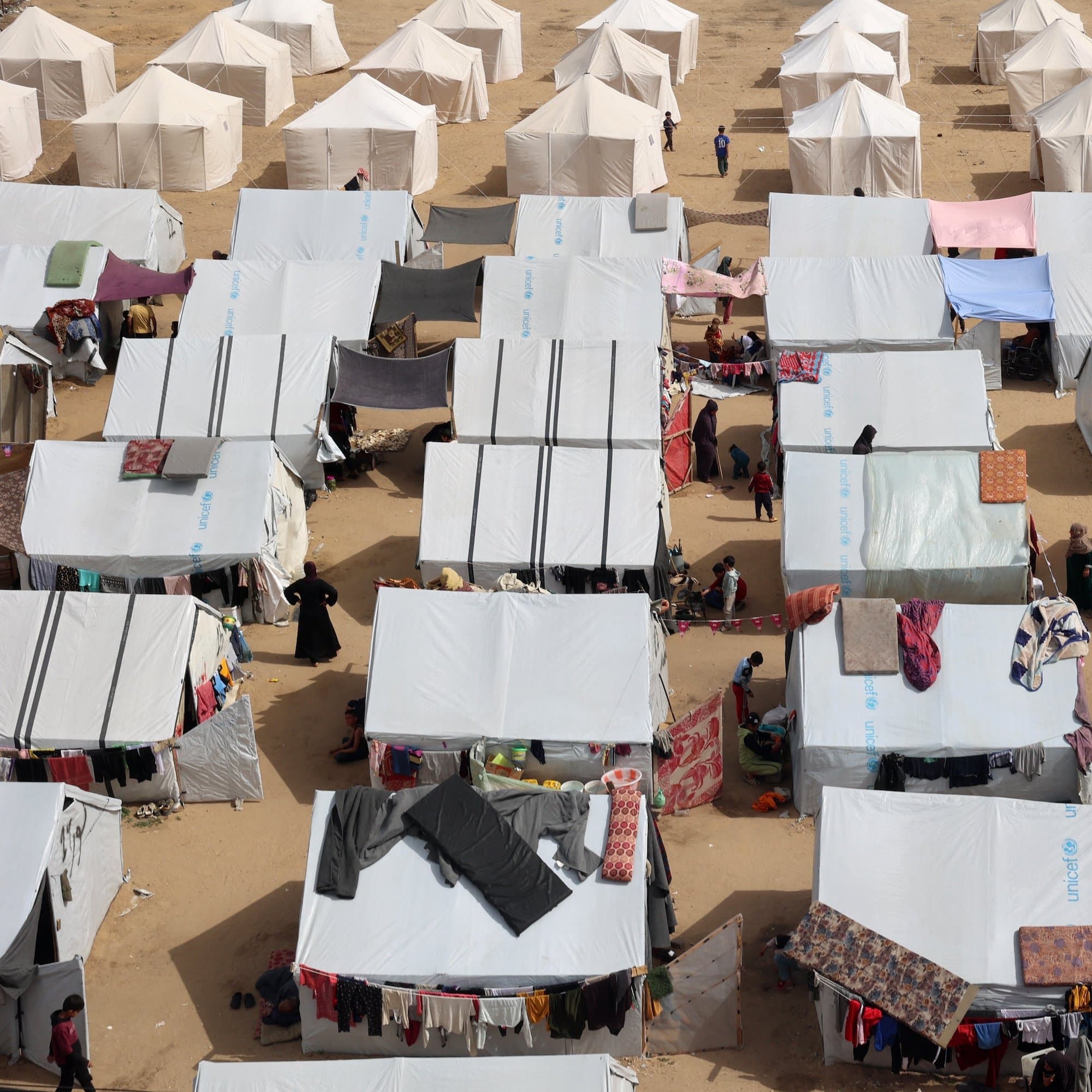
--:-- Joshua Keating: Yemen's eight-year-long war has caused millions to flee their homes to camps like al-Jashar on the west coast.
--:-- Sean Rameswaram: Within seconds of arriving, we were surrounded by people begging for food and help. We don't even have a morsel, not a bit of rice to eat, he says. We have nothing.
--:-- Joshua Keating: Things have gotten a bit better recently, actually. There was a ceasefire brokered by the UN in 2022. And since then, the fighting has died down. And the Saudis have actually been holding talks with the Houthis about sort of ongoing peace talks, which are going on up until a few weeks before the October 7th attacks.
--:-- Sean Rameswaram: The thing about the Houthis is they've never hid that they have sort of international ambitions. The official slogan of the group is, God is great, death to America, death to Israel, curse on the Jews, and victory for Islam.
--:-- Joshua Keating: So not exactly subtle. But, you know, despite all that, they've generally been thought of as just, you know, a threat to Yemen itself and or just a factor in Yemen or for the countries like Saudi Arabia, United Arab Emirates, who've been sort of actively involved in this coalition.
--:-- Sean Rameswaram: This is the first time that they've really done something globally on the scale, I'd say.
--:-- Joshua Keating: Do the Houthis have an advantage here? Well, I would say the advantage they have in this case is geography.
--:-- Sean Rameswaram: There are basically two entrances to the Red Sea. In the north, there's the Suez Canal. In the south, there's this narrow 20-mile straight, Bab al-Manda, between Yemen on the Arabian Peninsula and Djibouti on the coast of Africa.
--:-- Joshua Keating: And the fact that about 12% of global trade has to pass through this very, very narrow choke point gives them some leverage. It means that with fairly limited resources, they can disrupt a whole lot of global commerce just because this is a very narrow area.
--:-- Sean Rameswaram: And if you want to go through the Red Sea, there's no way around it.
--:-- Joshua Keating: So what does that mean? Does that mean this stops when the Houthis decide they don't want to do it anymore?
--:-- Sean Rameswaram: What has basically happened is that in December, the U.S. announced this sort of international coalition, which they're calling Operation Prosperity Guardian.
--:-- Joshua Keating: This was basically done at the behest of the shipping companies to sort of make transit through the Red Sea safe again.
--:-- Sean Rameswaram: There was a pretty stunning op-ed in Lloyd's List, which is the kind of official journal of the international shipping industry, which actually explicitly called for a return of gunboat diplomacy, using this sort of term, from the 19th century.
--:-- Joshua Keating: The war on land between Iran and Iraq is spilling over into the sea, with Western tankers being the sitting targets for both sides. If they're going to pick up oil from Iran, they face the threat of attack by Iraqi planes armed with Exocet missiles.
--:-- Sean Rameswaram: If they're going to the oil terminals on the other side, they face attack by Iranian planes.
--:-- Joshua Keating: So there's some precedent, actually, for sort of U.S. and Iran or Iran-backed forces kind of exchanging fire to keep energy flowing from that region.
--:-- Sean Rameswaram: So, So the US has more military resources in that region than any other country and is the one that shipping companies turn to when this know in that context another country that I mentioned earlier is China which also relies heavily on this sea route both for you know shipping goods to Europe and for shipping energy from the Middle East.
--:-- Joshua Keating: They are not involved in Operation Prosperity Guardian. They do not appear to be involved militarily in any way.
--:-- Sean Rameswaram: And the U.S. doesn't seem in a hurry to involve them for whatever reason.
--:-- Joshua Keating: So that's an interesting wrinkle at this. Particularly some of the ships that have come under attack have actually been Hong Kong flagged.
--:-- Sean Rameswaram: So you would think they would have some stake in this.
--:-- Joshua Keating: In years past, the U.S. and China actually did collaborate combating Somali piracy, like not too far away from this, for instance.
--:-- Sean Rameswaram: But this time, no collaboration between the U.S. and China on this problem.
--:-- Joshua Keating: This feels like just like the latest reminder of how fragile our shipping is.
--:-- Sean Rameswaram: There have been many recent reminders, right?
--:-- Joshua Keating: Yeah. I mean, people may remember two years ago when the Ever Given, a cargo ship, got lodged sideways in the Suez Canal and shut that down for about a week.
--:-- Sean Rameswaram: The 400-meter-long Ever Given got stuck on Tuesday morning, running aground in high winds reportedly after a power failure on board.
--:-- Joshua Keating: A fleet of tugboats has been trying to refloat the megaship ever since, while a digger, tiny by comparison, tries to extricate her bow from the eastern bank.
--:-- Sean Rameswaram: That only lasted for a week, and it was sort of much lower stakes.
--:-- Joshua Keating: This has the potential to be a much bigger disruption.
--:-- Sean Rameswaram: I've spent most of the last two years, up until October, writing about the war in Ukraine. It's been my main focus.
--:-- Joshua Keating: And that's been another case where these issues have come into play. Because there was sort of heavily mining and military activity in the Black Sea, you know, Russia basically effectively blockaded the southern coast of Ukraine.
--:-- Sean Rameswaram: And in that case, the key commodity wasn't energy or finished goods, it was grain.
--:-- Joshua Keating: Ukraine's a major exporter of grain, especially to actually countries like Egypt and in the Middle East and Africa.
--:-- Sean Rameswaram: And so, you know, the UN got involved. There was a sort of deal that was brokered to allow grain shipments through.
--:-- Joshua Keating: That fell apart. But that was another, a lot of the same issues actually were involved there.
--:-- Sean Rameswaram: It was shippers needing assurances that they'd be safe, like worrying about, you know, freight rates and insurance.
--:-- Joshua Keating: And it's just kind of a reminder of how much disruption that geopolitical tensions can cause this industry that the global economy could not function without.
--:-- Sean Rameswaram: Which I think people forget, right?
--:-- Joshua Keating: Because you don't ever see a cargo ship unless you live in a port city. And even then, maybe you don't.
--:-- Sean Rameswaram: You just order something online and in two days or whatever, it's at your doorstep.
--:-- Joshua Keating: Right. And people involved in this industry say that people only pay attention to them when something goes wrong.
--:-- Sean Rameswaram: And it's not just war that does this.
--:-- Joshua Keating: I mean, an interesting dynamic right now is that at the same time the Suez route is blocked, the Panama Canal is actually operating at substantially reduced capacity because of drought.
--:-- Sean Rameswaram: Severe drought is drying up the lakes that feed the canal, plunging water levels so low they've had to cut the number of vessels passing through from 36 to 32 per day, delaying goods and creating a growing waiting room of ships out at sea.
--:-- Joshua Keating: Some vessels are also being forced to carry up to 40 percent less cargo and slow down so they don't hit bottom.
--:-- Sean Rameswaram: And so, you know, right now we're in this situation where you have both a war in the Middle East and the effects of climate change in Central America just sort of combining to create this massive disruption in the global shipping industry.
--:-- Joshua Keating: This is a pretty adaptable industry. They're kind of used to dealing with contingencies, with bad weather, with closed canals.
--:-- Sean Rameswaram: It's going to cause a disruption.
--:-- Joshua Keating: We're sort of through the Christmas season now, which they say is a major time for the shipping industry.
--:-- Sean Rameswaram: The next one to watch is in February. It's going to be Lunar New Year in China, which is like a huge, huge time for commerce in that country and is always a time when there's a major uptick in shipping.
--:-- Joshua Keating: But a lot of industry experts I've been reading and talking to say that we may be in for a disruption that's sort of on par with what we saw in COVID when, you know, you saw factories shutting down and shipping and, you know, there were shortages of, you know, certain goods because parts couldn't get there on time.
--:-- Sean Rameswaram: Like, it's just, we're sort of used to this just-in-time manufacturing model, which depends on, you know, parts getting there on time, finished goods moving around.
--:-- Joshua Keating: And for all the, like, one-click e-commerce of it, a lot of it's still, like, metal boxes on boats.
--:-- Sean Rameswaram: And when something blocks those metal boxes from moving, it causes disruptions all up and down the supply chain.
--:-- Joshua Keating: Joshua Keating, you can call him Josh. He writes about the world for Vox. You can read him at Vox.com.
--:-- Sean Rameswaram: We also had help with today's show from Julian Borger at The Guardian.
--:-- Joshua Keating: Thanks, Julian.
--:-- Sean Rameswaram: Halima Shah and Hadi Mawajdeh made our show today.
--:-- Joshua Keating: Matthew Collette edited.
--:-- Sean Rameswaram: Laura Bullard and Amanda Llewellyn fact-checked.
--:-- Joshua Keating: Patrick Boyd mixed and mastered.
--:-- Sean Rameswaram: This is Today Explained.