--:-- Sean Rameswaram: What if you waited all week for a big get-together on Friday, you hopped on a plane first thing in the morning, touched down, put on your best fit, arrive, and then boom. Literally, one of the worst people in the world walks into the room. You might have been at the Arab League summit in Saudi Arabia, where Bashar al-Assad made his big return on Friday.
--:-- [Sound of a plane landing]
--:-- Sean Rameswaram: It's with pleasure today that Dr. Bashar al-Assad, that the president of Syria is present here as the League of Arab States has handed down a resolution allowing Syria to resume involvement in our meetings. And we hope...
--:-- [Music transitions]
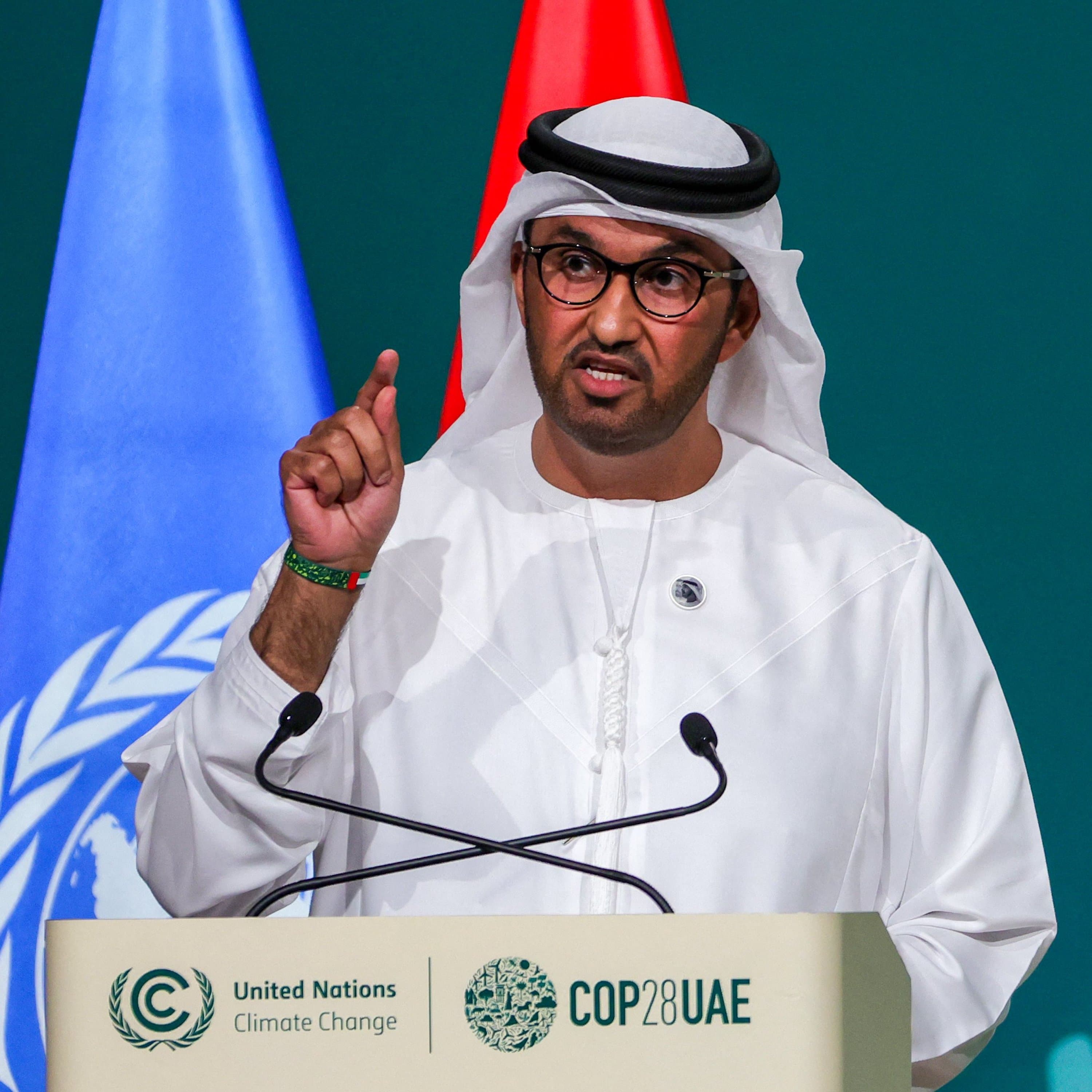
--:-- Sean Rameswaram: And it's not just the Arab League. He's been invited to COP28 in Dubai later this year. The rehabilitation of Syria's war criminal, chemical weapon-using president. Coming up on Today Explained.
--:-- Sean Rameswaram: Support for Today Explained comes from BetterHelp. Let me tell you a true story. Last weekend, I got an email from a listener who wanted to discuss their problems with me. And I said, look, I don't think that this is about me personally. At least I hope it's not. Why don't you try BetterHelp.com slash Explained? Absolute truth.
--:-- Sean Rameswaram: As the largest online therapy provider in the world, BetterHelp can provide access to mental health professionals with a diverse variety of expertise. Find the one with BetterHelp. The one is not me, guys. Our listeners get 10% off their first month at BetterHelp.com slash explain. That's BetterHelp.com slash explain.
--:-- [Music transitions]
--:-- Sean Rameswaram: Support for this show comes from Macy's. Layering is an art form. All it takes is a bit of intention, style, and of course, the perfect cold weather staples. So find the perfect look for you with the help of Macy's Fall Fashion Guide, your one-stop shop for fall's latest trends and must-haves, curated by their experts.
--:-- Sean Rameswaram: From leather to denim to cozy knits, find everything you need to piece together your new fall look. Explore the Macy's Fall Guide for yourself and shop in-store or online at Macy's.com.
--:-- [Music transitions]
--:-- Sean Rameswaram: Today Explained featuring Lina Khatib. She's the director of the SOAS Middle East Institute in London. It's a think tank affiliated with the University of London.
--:-- Lina Khatib: Being invited to the Arab League summit is a big deal for Bashar al-Assad because this is a milestone about legitimacy and recognition for him.
--:-- Sean Rameswaram: Stepping off a plane in Jeddah, Bashar al-Assad was greeted with handshakes and smiles. Once a pariah among the Arab League, the 22-member countries are welcoming the Syrian president back.
--:-- Lina Khatib: You have a president who had been isolated in the international community, isolated in the Arab world. And finally, he is back in the Arab fold with no conditions whatsoever. And so for him, this can be counted as a political victory.
--:-- Sean Rameswaram: When exactly did he get isolated? Could you remind us?
--:-- Lina Khatib: So the Syrian war did not start as a war. Of course, in 2011, the situation in Syria was one of peaceful protests criticizing the regime. But the regime cracked down with violence on protesters.
--:-- Wael Sowah: My name is Wael Sowah. I am a Syrian-American writer and researcher. When the uprising broke in Syria, actually, we were all taken by surprise. For me and many of my generation, we were older generation, of course, we were watching what was happening. We were very pleased, but also we had our concern because we lived under both Bashar al-Assad and his father, Hafiz al-Assad.
--:-- Wael Sowah: The family governed the country with an iron fist. And Saudi Arabia actually was one of the first Arab countries to condemn the violent crackdown of Bashar al-Assad in 2011.
--:-- Wael Sowah: We had a sit-in, a vigil, and we were calling for the release of our friends and colleagues. I remember another university professor who was in his mid-70s, actually, who were beaten and dragged into the police van.
--:-- Wael Sowah: My good friend Rezan Zaytoni also was dragged from her hair and was pushed into the van. Many of them were taken outside of the city and dropped in the open, and they had to walk back to their homes.
--:-- Wael Sowah: But those were the lucky people only. The unlucky people had to go to the detention center and had to receive their portion of torture.
--:-- Wael Sowah: By 2012, Assad's diplomatic relations with Arab countries started being severed one by one. And he was, as in Syria, was kicked out of the Arab League.
--:-- Wael Sowah: He always had Russia on his side, I guess. But how isolated did he get? Assad got pretty isolated because in addition to being kicked out of the Arab League, and by this I mean Syria's membership was suspended, you also had Western countries withdrawing their ambassadors, closing their embassies.
--:-- Wael Sowah: The United States expelled the Syrian charge d'affaires. Berlin and Rome made similar decisions along with London. And so Assad found himself with just few backers in the Middle East and very, very few engagements in the world at large, apart from some rogue states.
--:-- Wael Sowah: And so I would say the international isolation was pretty significant and severe. The United States, the European countries, and many Arab countries called for Assad to step down.
--:-- Lina Khatib: It did mean something to me and to many other Syrians. We were very optimistic that calling on Assad to step down or announcing Assad as a president who lost the legitimacy of ruling the country would eventually convince Assad to step down
--:-- Lina Khatib: International isolation for Syria meant that Assad was no longer regarded as the legitimate leader of Syria in most countries, I would say, in the world.
--:-- Lina Khatib: It meant economic isolation because the European Union and the United States, for example, began to impose sanctions on the Assad regime and people affiliated with the Assad regime, as well as businesses linked to the Assad regime.
--:-- Lina Khatib: European leaders meeting in Brussels were determined to send a very personal message with these latest sanctions. The Syrian president's wife will face travel bans and her assets will be frozen. His mother and sister are also targeted.
--:-- Wael Sowah: So you had political isolation, economic isolation, and of course, various attempts at political transition in Syria that ultimately aimed at removing Assad from power.
--:-- Lina Khatib: And you had to tackle all those things with the help of the Russians and the Iranians.
--:-- Wael Sowah: And so did something change in the past year, in the past six months? Why is it that all of a sudden Middle Eastern countries are saying, let's open up relations with Bashar al-Assad again. Let's open up relations with Syria.
--:-- Lina Khatib: What happened is over the years, all this isolation that Assad was subjected to politically was not enough to remove him from power.
--:-- Lina Khatib: In the U.S. in particular, there was no diplomatic effort to really try to get rid of Assad. people may remember that President Obama had said the use of chemical weapons is and would be totally unacceptable.
--:-- Lina Khatib: And if you make the tragic mistake of using these weapons, there will be consequences and you will be held accountable. But when that red line was crossed, because the Assad regime did use chemical weapons, the U.S. did not really react.
--:-- Lina Khatib: There were no repercussions for Assad. And in a way, this lost the United States a lot of credibility in the Middle East.
--:-- Lina Khatib: It lost the United States credibility in the eyes of Assad himself, who started believing that actually the West did not really want him to leave, unlike what President Obama had literally said that basically Assad must go.
--:-- Sean Rameswaram: And over the years, the U.S. became much more concerned with, under Obama, with Iran and trying to have a nuclear deal signed with Iran.
--:-- Lina Khatib: Because of this deal, the international community will be able to verify that the Islamic Republic of Iran will not develop a nuclear weapon.
--:-- Sean Rameswaram: And Gulf countries, in particular Saudi Arabia, felt let down that the U.S. was prioritizing signing a nuclear deal with Iran rather than trying to deal with Iran's regional role, such as its support for Assad.
--:-- Lina Khatib: So you have an accumulation of factors over the years that led Arab countries, in particular Saudi Arabia, to feel that changing the regime in Syria is not a possibility anymore.
--:-- Lina Khatib: The UN peace process was not leading in that direction. Iran was getting stronger and stronger in the region. And Saudi Arabia felt that it had no choice but to try to de-escalate tension instead of trying to get rid of Assad because they felt this is now impossible.
--:-- Sean Rameswaram: So that is why he's been invited back into the Arab League. This is just a move to try to lower tensions in the region.
--:-- Wael Sowah: When I saw Assad descend from his plane and met by the Saudi senior officials, when I saw him sit in the meeting and address the other presidents, when I saw the Saudi officials welcome him adoringly, I was appalled, I was distressed, I was depressed, I was angry and sad at the same time.
--:-- Wael Sowah: And so was more than 60% of the Syrian people. We had the feeling that we were let down by the very governments which funded the opposition to become an armed opposition.
--:-- Wael Sowah: And now they receive Assad as a hero. For a while, when debate about readmitting Syria into the Arab League was going on, there was talk amongst Arab states, Arab leaders, that there could be some conditions.
--:-- Wael Sowah: But what happened is Assad has been readmitted with no conditions whatsoever. Of course, you will read many analyses and articles that there are hidden conditions that Assad will have to change his attitude.
--:-- Wael Sowah: But it is too late. I mean, what happens now if Assad does not give any concession? Do you think the Arab leaders will expel him from the Arab League again? No way.
--:-- Wael Sowah: What's done is done. Instead, what would have been conditions have now been transformed into issues for cooperation between Arab states and Syria.
--:-- Wael Sowah: So when you say these are issues and not conditions, Assad is under no obligation to deliver on any of them.
--:-- Wael Sowah: What are the issues? The peace process led by the UN, which Assad never really cooperated on anyway, and is not going to cooperate now because the peace process means political transition and he's not going to give up power.
--:-- Wael Sowah: Second issue is the issue of refugees. Currently, there are six and a half million Syrian refugees in the world. Assad does not want them back, really.
--:-- Wael Sowah: So again, trying to imagine a scenario in which Assad is cooperating on refugee return is, I think, a fantasy.
--:-- Wael Sowah: The third issue is that of detainees. There are many people who have disappeared and who are detained in Syria
--:-- Wael Sowah: And again Assad is not going to suddenly tell us where they are because he wants to be held accountable for their disappearance and detention
--:-- Wael Sowah: And then you have the issue of the drug trade, mainly the drug Captagon. It's a kind of emphysamine, and Syria has become the leading place for the trade of Captagon and manufacturing of Captagon in the world.
--:-- Wael Sowah: In Darateza, in northwestern Syria, Rebels from the Hayat-Tahrir al-Sham group are seizing drugs at the border crossing. With this criminal industry valued in the billions of dollars, some are now asking if we are seeing the rise of a new Middle Eastern narco-state.
--:-- Wael Sowah: So again, this is a very lucrative source of funding for the Assad regime. And again, it's not likely to just suddenly give that up.
--:-- Wael Sowah: And the final issue is that of militias backed by Iran that are running the show in many places in Syria, including being involved in the Captagon trade, in particular, the Lebanese militia Hezbollah.
--:-- Wael Sowah: In recent months, the militant Shiite Muslim group has thrown its support behind Syria's president Bashar al-Assad. Fighting alongside the Syrian army, Hezbollah has helped them to win key victories against the Syrian rebels.
--:-- Lina Khatib: Has Bashar al-Assad ever apologized, Lina?
--:-- Wael Sowah: He has never apologized and he has never admitted doing anything wrong.
--:-- Wael Sowah: Do you feel guilty?
--:-- Wael Sowah: I did my best to protect the people so you cannot feel guilty when you do your best. You feel sorry for the life that has been lost, but you don't feel guilty when you don't kill people.
--:-- Wael Sowah: He has always been consistent that in his view, there was never an uprising in Syria. There was an attempt by terrorists to destabilize Syria, and all he is doing in his view is protect Syria from terrorists.
--:-- Wael Sowah: So he labels anyone who opposes him a terrorist and presents himself as defending Syria from danger.
--:-- Sean Rameswaram: Lina's back when we're back on Today Explained.
--:-- [Music transitions]
--:-- Sean Rameswaram: Support for Today Explained comes from Built Rewards. These days, it seems like everybody has a rewards program. You swipe your card and you get one cent on the hundred dollars. But with your rent, frequently, you just pay month after month. You never get anything from it other than that roof over your head. Not anymore, says Built Rewards.
--:-- Sean Rameswaram: Built Rewards says it lets you earn points on your rent. By paying rent through Built, they say you can earn flexible points that can be redeemed toward hundreds of hotels and airlines, perhaps a future rent payment, your next Lyft ride, and so much more.
--:-- Sean Rameswaram: Your home isn't just where you sleep, it's your community, and Bilt wants you to go out and do things in the community. You can eat at your favorite local restaurants, then earn more points.
--:-- Sean Rameswaram: You can get VIP treatment at certain fitness studios. You can enjoy exclusive experiences just for Bilt members every month.
--:-- Sean Rameswaram: When you're ready to travel, they say Bilt points can be converted to miles or hotel points all around the world. You can earn points on rent and around your neighborhood wherever you call home by joining built.com slash explained.
--:-- Sean Rameswaram: That's J-O-I-N-B-I-L-T dot com slash explained.
--:-- [Music transitions]
--:-- Sean Rameswaram: Today Explained is back with Lina Khatib. Bashar al-Assad is back in the Arab League. He's getting hugged. We asked Lina what leaders have to gain from engaging with this dude on a global stage.
--:-- Lina Khatib: Assad is not going to take any meaningful action. All they will achieve is de-escalation. They just want to kind of keep Assad out of their list of issues to worry about because they have other things to worry about.
--:-- Sean Rameswaram: So that is it, really. Sadly, it's not much more than that.
--:-- Lina Khatib: I mean, they just want, in the case of Jordan, maybe to have their borders quietened down a little bit.
--:-- Sean Rameswaram: Are there countries in the Arab League that oppose al-Assad rejoining?
--:-- Lina Khatib: Absolutely. Qatar says it has no plans to embrace al-Assad, who's blamed for the deaths of tens of thousands of his own people and the displacement of many, many more.
--:-- Lina Khatib: Doha is instead seeking to unite the Syrian opposition. It continues to support the Syrian opposition in northwest Syria and around the world, actually.
--:-- Lina Khatib: And it has declared very clearly that although it will not stand in the way of Syria's readmission into the Arab League, its own bilateral relations with Syria will remain as they had been before, meaning no diplomatic ties with Assad whatsoever and no recognition of the legitimacy of Assad as president of Syria.
--:-- Sean Rameswaram: Are other countries around the world mad at the Arab League for admitting this known war criminal back into the fold? Maybe the United States, I don't know, Western nations?
--:-- Lina Khatib: Yes, absolutely. The UK is disappointed with this move. The United States has also insisted that it still wants political transition according to the UN peace process to happen, and that sanctions imposed by the U.S. on the Assad regime are not going to be lifted.
--:-- Lina Khatib: We have made clear to all of our partners that Syria does not merit readmission into the Arab League. And we continue to believe that we will not normalize our relations with the Assad regimes and we don't support our allies and partners doing so either.
--:-- Sean Rameswaram: So when it comes to the European nations and the United States, it's business as usual. Assad is still not regarded as legitimate.
--:-- Lina Khatib: The European Union is there standing for the Syrian people and for the rights of Syrian people And we will continue to support the mechanism of international accountability for all the horrors that happened from the side of the regime supported by Russia in Syria against the Syrian people.
--:-- Sean Rameswaram: Is there a precedent for this, for letting a known war criminal, you know, just sort of get a pass and just be welcomed back into the fold?
--:-- Lina Khatib: I mean, regionally and chemically, Saddam Hussein comes to mind.
--:-- Lina Khatib: Unfortunately, when it comes to politics, we are now in a world in which pragmatism rules rather than values.
--:-- Lina Khatib: And when it comes to the Arab League in particular, many members of the Arab League are authoritarian regimes. They are not democracies.
--:-- Lina Khatib: And so this issue of accountability is not absolute in this kind of context.
--:-- Lina Khatib: So here you have Saddam Hussein, for example, who was obviously a criminal and yet was never actually condemned very widely in the Arab world, despite, for example, his invasion of Kuwait and other actions, you know, against the Kurds, etc.
--:-- Lina Khatib: He was a ruthless dictator. He used savage methods against his own people, including gassing 5,000 Iraqi Kurds at Halabjir.
--:-- Lina Khatib: So he was not absolutely isolated despite those actions.
--:-- Lina Khatib: Omar al-Bashir of Sudan is another example. Al-Bashir was the only serving head of state to be indicted for war crimes.
--:-- Lina Khatib: The International Criminal Court in The Hague issued two arrest warrants. The charges stem from the war in Darfur.
--:-- Lina Khatib: So unfortunately, the situation of Bashar al-Assad is not the first time that this kind of scenario happens.
--:-- Lina Khatib: But definitely Bashar al-Assad, I would say, is perhaps one of the most brutal. I mean, he ranks up there with Saddam Hussein, if not even higher up in terms of the extent of the brutality he has inflicted on his people.
--:-- Sean Rameswaram: And where do we go from here?
--:-- Lina Khatib: I believe Bashar al-Assad has also been invited to the climate summit COP28 in Dubai this November, December.
--:-- Sean Rameswaram: Is he going to be standing on some stage next to Joe Biden?
--:-- Lina Khatib: And what would that mean for him? Just total legitimization?
--:-- Lina Khatib: Well, for Bashar al-Assad, he would love nothing more than a photo op with Joe Biden or the prime minister of the UK or the king or any real Western leader who he can basically stand next to in that context and say, I am here.
--:-- Lina Khatib: You have to accept me as the de facto winner in the Syrian conflict.
--:-- Sean Rameswaram: The invitation to COP28 came really to suit the agenda of the United Arab Emirates, which is the host of COP28, to show the political clout that the UAE has.
--:-- Lina Khatib: Of course, Assad is relishing the moment. He will do his best to use it as an opportunity to re-enter the international community, not just the Arab League.
--:-- Sean Rameswaram: So it will be a further step for him towards normalization at large.
--:-- Lina Khatib: But this is, of course, going to make many Western leaders uncomfortable because they will not want a photo op with Bashar al-Assad, that's for sure.
--:-- Sean Rameswaram: There are a lot of bad dudes in the world. He's among the baddest.
--:-- Lina Khatib: But what does this just say for all the bad dudes? That you can just abuse human rights conventions, the Geneva Conventions with impunity, and just wait it out for a while?
--:-- Lina Khatib: And then just, I don't know, by inertia, be welcomed back into global politics?
--:-- Sean Rameswaram: I mean, unfortunately, this sets a really bad precedent.
--:-- Lina Khatib: Considering all the harsh words said about Assad, considering the documentation of the crimes inflicted by Assad, this is why the U.S., for example, created this Caesar Act.
--:-- Lina Khatib: They're known as Caesar's photographs, named after a military defector who documented torture and killings in Syrian government jails.
--:-- Lina Khatib: His testimonies to the U.S. Congress was part of a campaign to hold the regime responsible for what have been described as war crimes.
--:-- Lina Khatib: It led to the passing and now the implementation of a bill in the U.S., the so-called Caesar Act.
--:-- Sean Rameswaram: So here we have hard evidence about the brutality of this regime.
--:-- Lina Khatib: And yes, this president is being readmitted into the Arab League. And some countries in the world, even in the West, are saying maybe we should just be pragmatic and turn a blind eye, unfortunately.
--:-- Sean Rameswaram: What does this tell us about, say, the Russia-Ukraine situation? Are we going to suddenly see Vladimir Putin re-embraced further down the line in the same way?
--:-- Lina Khatib: I think the way Assad is being handled sets a really dangerous precedent for the world at large, because it gives people like Vladimir Putin hope that one day they can be back.
--:-- Sean Rameswaram: Lina Khatib directs the SOAS Middle East Institute in London. You also heard from Wael Sowah. He's a writer, researcher, and the editor-in-chief of the Syrian Observer.
--:-- Sean Rameswaram: Avishay Artsy and Haleema Shah produced today's show with help from Amina al-Sadi. Matthew Collette, Laura Bullard, and Patrick Boyd.
--:-- Sean Rameswaram: I'm Sean Rameswaram. This is Today Explained. Thank you.