--:-- [Up First theme music plays]
--:-- Michelle Martin: New Israeli strikes in central Gaza are killing more civilians. I saw two donkeys carrying the bodies of at least eight people. The bombardments come just days after Israel proposed terms for a ceasefire.
--:-- E. Martinez: I'm E. Martinez with Michelle Martin and this is Up First from NPR News.
--:-- Michelle Martin: Supreme Court Justice Samuel Alito says his wife flew a controversial flag outside their home because of a dispute with their neighbors.
--:-- Michelle Martin: NPR spoke with one of them. The power imbalance between these people and myself is huge. And they're choosing to harass and intimidate us when we are nothing to them.
--:-- Michelle Martin: And citizens of the EU will be voting for parliament soon. What's on their minds as Russia's invasion of Ukraine drags on?
--:-- Michelle Martin: Stay with us. We've got the news you need to start your day.
--:-- Michelle Martin: This message comes from BetterHelp. President Fernando Madeira describes how BetterHelp Online Therapy has helped him.
--:-- President Fernando Madeira: For me, sometimes I just need to go and talk to somebody that is not going to judge me, right? It's going to be there and they're going to listen to me. And I can start just saying, look, I'm not feeling right today. And it feels natural. I love it.
--:-- Michelle Martin: To get matched with a therapist, visit BetterHelp.com slash NPR for 10% off your first month.
--:-- Michelle Martin: This message comes from NPR sponsor Adobe. Introducing the all-new Adobe Acrobat Studio, now with AI-powered PDF spaces.
--:-- Adobe Representative: Need to turn 100 pages of market research into five insights with a click? Templates for a sales proposal that'll close that deal? Or an AI specialist to tailor the tone of your market report? You can do all that with the all-new Adobe Acrobat Studio.
--:-- Michelle Martin: Learn more at adobe.com slash do that with Acrobat.
--:-- Michelle Martin: Heavy fighting in central Gaza has left at least 140 Palestinians dead over the last two days. That according to a hospital director there who spoke with NPR.
--:-- Michelle Martin: The new bombardments include an overnight airstrike by Israel on a U.N. facility sheltering displaced families.
--:-- Michelle Martin: Here's how an aid worker for Doctors Without Borders describes a scene in central Gaza.
--:-- Aid Worker: The situation is apocalyptic. This morning on my way to the hospital, I saw two donkeys carrying the bodies of at least eight people who had died.
--:-- Michelle Martin: This is happening despite U.S. calls for Israel and Hamas to agree to a ceasefire originally proposed by Israel.
--:-- Michelle Martin: We're going to go now to NPR's Kat Lonsdorf, who is in Tel Aviv. Hello, Kat.
--:-- Kat Lonsdorf: Hey, Michelle. So what have you been hearing about what's going on in Gaza?
--:-- Kat Lonsdorf: Yeah, so in the past few days, Israeli troops have launched a new offensive in central Gaza. Israel's military says its air force is striking Hamas and that its ground troops are operating in a limited manner.
--:-- Kat Lonsdorf: But from what we've heard from people on the ground, including our producer, Anas Baba, that area has been pummeled with Israeli airstrikes and artillery in the past two days.
--:-- Kat Lonsdorf: And just a reminder, these areas in central Gaza are where many people have fled in recent weeks from Rafah in the south.
--:-- Kat Lonsdorf: That aid worker we just heard, Karen Huster, who called it apocalyptic, she sent us that voice note on Wednesday before the Israeli airstrike last night on the UN facility.
--:-- Kat Lonsdorf: Do we know any more about that strike? What can you tell us?
--:-- Kat Lonsdorf: Yeah, this morning Anas our producer spoke to us from that UN school that had been hit. He said the school is sheltering displaced families. One he heard about had reached the school just two weeks ago, and the entire family was killed while they were sleeping.
--:-- Kat Lonsdorf: Anas described walking up the school staircase, which was covered in blood, and he saw severely injured children.
--:-- Kat Lonsdorf: The Israeli military put out a statement this morning saying that that strike was, quote, precise, and that Hamas compound had been embedded in the school with people who had been involved in the October 7th attacks on Israel.
--:-- Kat Lonsdorf: The military also said that a number of steps were taken to reduce the risk of harming uninvolved civilians.
--:-- Kat Lonsdorf: You know, just last week, President Biden unveiled what he called an Israeli plan for a ceasefire.
--:-- Kat Lonsdorf: What's the status of that?
--:-- Kat Lonsdorf: Prime Minister Benjamin Netanyahu has come out and said that what Biden unveiled was not, quote, complete and insisted Israel would carry on until it has destroyed Hamas both as a military and governing force.
--:-- Kat Lonsdorf: Netanyahu has a delicate balancing act between pressure from the U.S. and his own coalition here in Israel, made up in part by far-right politicians who are demanding the total annihilation of Hamas.
--:-- Kat Lonsdorf: They have openly threatened to bring down his government if he doesn't stick to their demands.
--:-- Kat Lonsdorf: And, you know, there are efforts in Doha to get talks restarted, but they just really don't seem to be going anywhere.
--:-- Kat Lonsdorf: Hamas originally responded positively to that plan that Biden put forth last week, but now they're signaling that they won't agree to it unless Israel says it will end the war completely.
--:-- Kat Lonsdorf: I want to talk more about those sort of those elements in Israeli politics. The far right has become an important player in the past few years.
--:-- Kat Lonsdorf: And yesterday, Israeli nationalists made a show of strength in a parade through Jerusalem.
--:-- Kat Lonsdorf: Talk more about that, if you would.
--:-- Kat Lonsdorf: Yeah, so this was a celebration of a national holiday here called Jerusalem Day. It's a parade that happens every year. It marks when Israel effectively annexed East Jerusalem in 1967.
--:-- Kat Lonsdorf: I was at the march yesterday, and tens of thousands of people showed up, waving Israeli flags, singing and dancing.
--:-- Kat Lonsdorf: They say it's just a celebration to show that Israel claims all of Jerusalem, but we heard marchers shouting things like death to Arabs, and for Palestinians it's very provocative.
--:-- Kat Lonsdorf: And it should be noted that those far-right members of Netanyahu's cabinet, the ones who are against this ceasefire deal, many of them were there.
--:-- Michelle Martin: That is NPR's Kat Lonsdorf from Tel Aviv. Kat, thank you.
--:-- Kat Lonsdorf: Thanks, Michelle.
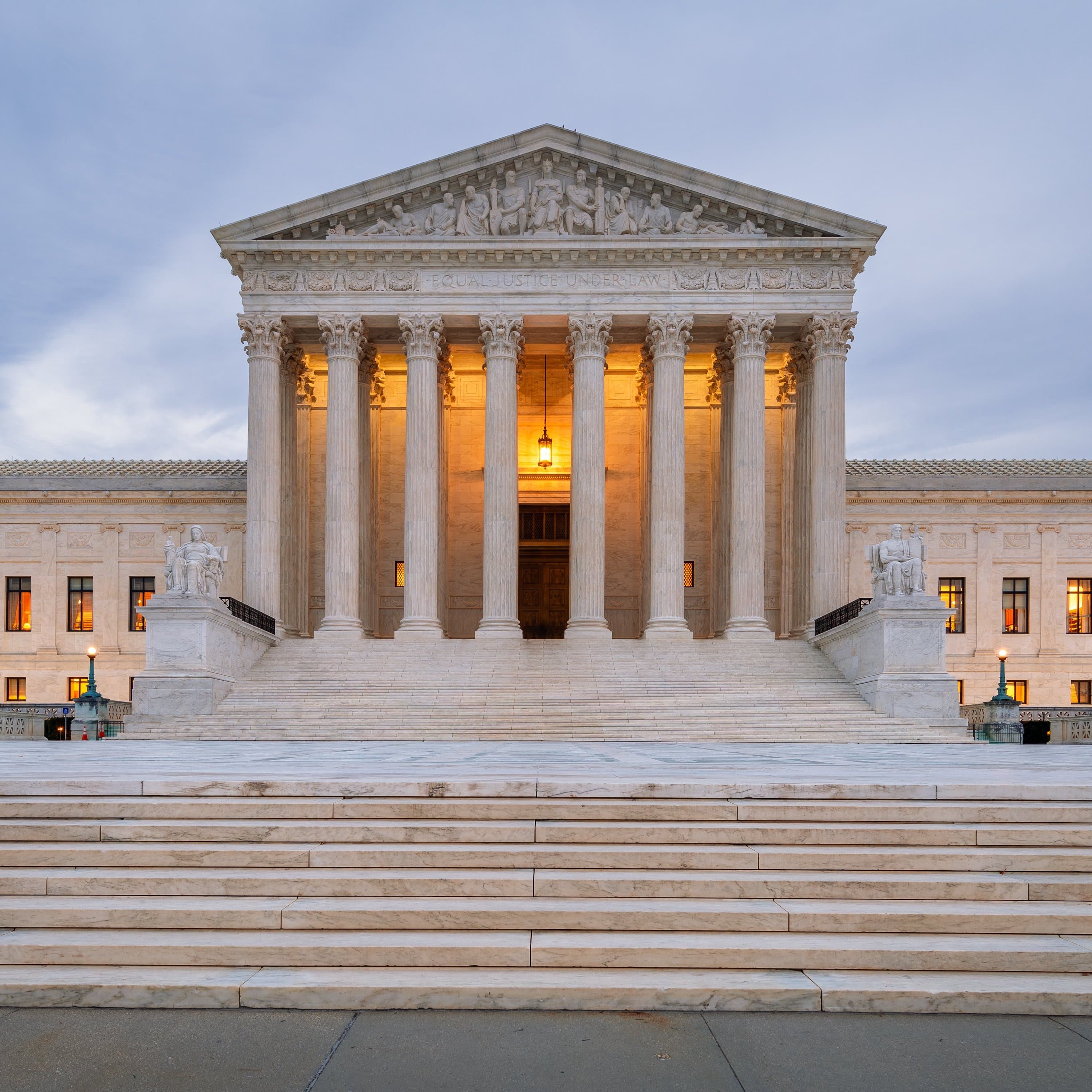
--:-- Michelle Martin: It's not every day that a spat between neighbors becomes national news unless one of the neighbors sits on the Supreme Court. Recently, Supreme Court Justice Samuel Alito was forced to explain why an upside-down flag was raised in front of his house just after the January 6th attack on the Capitol.
--:-- Michelle Martin: The flag is one of the totems embraced by election deniers, far-right groups, and some supporters of former President Donald Trump.
--:-- Michelle Martin: Alito said his wife put up the flag because of a fight with their neighbors.
--:-- Michelle Martin: The neighbor at the center of the dispute spoke with NPR's Tom Dreisbach, and he's with us now.
--:-- Tom Dreisbach: Good morning, Tom.
--:-- Tom Dreisbach: So tell us what we know about how this, what the spat was about? Like, how did it get started?
--:-- Tom Dreisbach: Yeah, so it all starts on a street in northern Virginia. On the one hand, you have the Alitos, Justice Samuel Alito and his wife, Martha Ann. He's on the political right, of course. Down the block, you have Emily Baden and her family. She calls herself a leftist.
--:-- Tom Dreisbach: And after Trump lost the 2020 election, Baden and her husband put up a sign in front of their house. On the one side it said paraphrasing for the radio here F Trump
--:-- Tom Dreisbach: Then after the January 6th attack on the Capitol Baden put up another sign that said Trump is a fascist and quote you are complicit
--:-- Tom Dreisbach: And from what we understand Martha Ann Alito was not a fan of either sign
--:-- Tom Dreisbach: According to the New York Times, which broke the story, the upside down flag started hanging in front of the Alito's house around that time.
--:-- Tom Dreisbach: And we should say some Trump supporters were doing this at the time to show their opposition to Joe Biden taking office.
--:-- Tom Dreisbach: But all of this was just a prelude to two more incidents on the block.
--:-- Tom Dreisbach: OK, so what happened next?
--:-- Tom Dreisbach: First, Inauguration Day 2021. Emily Baden and her now husband drive by the Alito's house. Martha Ann Alito is standing outside.
--:-- Tom Dreisbach: And in Baden's version of events, Martha Ann Alito yells something at them and looks like she spits in the direction of the car.
--:-- Tom Dreisbach: And then a few weeks later, Emily Baden and her husband are in front of their house. Justice Alito and Martha Alito walk up.
--:-- Tom Dreisbach: And here is what Emily Baden told us happened next.
--:-- Tom Dreisbach: And a warning, there's some rough language here that we have bleeped.
--:-- Emily Baden: And then Mrs. Alito says something like, well, well, well, if it isn't the fascists.
--:-- Tom Dreisbach: And that was when I spoke back and I said, I did obviously use an expletive, but I also said a lot of other things like, how dare you behave this way?
--:-- Tom Dreisbach: The expletive she used was the C word.
--:-- Tom Dreisbach: She said she now regrets saying that.
--:-- Tom Dreisbach: In any case, Baden says Justice Alito stayed quiet the whole time.
--:-- Tom Dreisbach: And then he and Martha and Alito both walked away.
--:-- Tom Dreisbach: So was that it? Was there anything else?
--:-- Tom Dreisbach: Well, Baden and her husband were a little freaked out because Martha and Alito used their full names when she walked up, and they had never actually met.
--:-- Tom Dreisbach: Here's Baden again.
--:-- Emily Baden: The power imbalance between these people and myself is huge, and they're choosing to harass and intimidate us when we are nothing to them.
--:-- Tom Dreisbach: Her husband actually called the cops. They said they would contact the Alito's protective detail, not much else they could do.
--:-- Tom Dreisbach: And that was the last interaction they had.
--:-- Tom Dreisbach: So what did the Alito say about this?
--:-- Tom Dreisbach: Well, Justice Alito sent a letter to Congress about all this because Democrats were calling on him to recuse himself from two Trump-related cases involving January 6th.
--:-- Tom Dreisbach: Now, Alito claimed that his wife was solely responsible for putting up a flag upside down.
--:-- Tom Dreisbach: She refused to take them down in his version of events.
--:-- Tom Dreisbach: He said her reasons for flying it are, quote, not relevant for present purposes, but did note the argument with the Badens and the C-word.
--:-- Tom Dreisbach: But we know that argument on the street happened weeks after the Alitos had flown the upside down flag.
--:-- Tom Dreisbach: We asked the Supreme Court about that discrepancy and they did not respond.
--:-- Michelle Martin: That is NPR's Tom Dreisbach. Tom, thank you.
--:-- Tom Dreisbach: Thank you.
--:-- Michelle Martin: The European Union holds its election for parliament this weekend. The EU is the world's second biggest democracy, home to 450 million citizens.
--:-- Michelle Martin: This election is a once-every-five-year event, and it comes at a challenging time for Europe.
--:-- Michelle Martin: To tell us more about all this is NPR Central Europe correspondent Rob Schmitz. Good morning, Rob.
--:-- Rob Schmitz: Good morning. So voters will head to the polls in the EU starting today through Sunday, depending on the country.
--:-- Rob Schmitz: What's different for EU citizens now? What are the issues that they weren't thinking about in the last election in 2019?
--:-- Rob Schmitz: Yeah the biggest difference from five years ago is that there is now an ongoing war on European soil Russia military campaign in Ukraine has forced the EU to completely restructure how it gets its energy
--:-- Rob Schmitz: And that led to rising prices for food gas you name it
--:-- Rob Schmitz: And it's meant that the biggest issue from the last election, climate change, has in some ways been shifted to the background to make way for more immediate concerns, like the overall survival of the economy in the face of not only a war in Ukraine, but also in the aftermath of a global pandemic.
--:-- Rob Schmitz: It's been a tough five years for Europe.
--:-- Rob Schmitz: What do you think this means politically for the EU?
--:-- Rob Schmitz: Yeah, as we've seen in national elections throughout Europe in the past few years, all of this chaos has resulted in a sort of hodgepodge of results.
--:-- Rob Schmitz: We've seen the rebound of far-right parties in countries like Italy, here in Germany, and the Netherlands.
--:-- Rob Schmitz: But we've also witnessed the resurrection of centrist politics in countries like Poland, where a far-right populist party in power for years was defeated by a record turnout of voters who were fed up with its poor track record.
--:-- Rob Schmitz: What is clear amongst all of these varied political results is that big parties that have made up mainstream politics for decades in Europe are losing votes, making way for a bigger variety of parties.
--:-- Rob Schmitz: I spoke to Judy Dempsey about this. She's a non-resident fellow at Carnegie Europe, and here's what she thinks will happen in this election.
--:-- Judy Dempsey: There are so many different political parties. Whoever gets the largest, whoever gets the smallest, that will have a say.
--:-- Rob Schmitz: And in some ways, there's going to be paralysis for a couple of months.
--:-- Rob Schmitz: And this is bad news for Europe at a time when it's facing so many big domestic and global issues.
--:-- Rob Schmitz: And Michelle, essentially what she means here is that we're likely going to see EU parliament seats divided more evenly amongst a bigger group of parties across the political spectrum.
--:-- Rob Schmitz: And that'll mean that Europe will have to wait as these parties negotiate how this power is going to be divided.
--:-- Rob Schmitz: And what will this mean for Europe's relationship with the U.S. and the rest of the world, for that matter?
--:-- Rob Schmitz: Well, yeah, the biggest impact could be on continuing support for Ukraine.
--:-- Rob Schmitz: We've seen that support sort of waver in the U.S. and we could see more roadblocks here in Europe if, for example, the far right sees gains in its support.
--:-- Rob Schmitz: The other big issue will be climate change policy.
--:-- Rob Schmitz: As I mentioned before, this issue has slipped into the background a little and a wave of intense farmer protests this past year has forced the EU to step back on implementing climate-related policies.
--:-- Rob Schmitz: We could see the EU move even further in that direction after this election.
--:-- Rob Schmitz: Last but not least, the EU's very important relationship with the world's two biggest superpowers, the US and China, might be moved aside for a while or even shift a little bit during this transition of power.
--:-- Rob Schmitz: And that could have an impact on what are extremely important political and economic relationships for the EU.
--:-- Rob Schmitz: It could also impact the EU's role in trying to help the U.S. maintain a rules-based system internationally that they both had a big role in forming.
--:-- Michelle Martin: That is NPR's Rob Schmitz joining us from Berlin. Rob, thank you.
--:-- Rob Schmitz: Thank you.
--:-- Michelle Martin: And that's up first for Thursday. I'm Michelle Martin.