--:-- [Theme music fades out]
--:-- Steve Inskeep: CEOs and foreign leaders have been visiting Mar-a-Lago. Some kept their distance from President Trump in his first term, but are now trying to get close enough to persuade him. What did he say about his visitors and other things in a post-election news conference?
--:-- Michelle Martin: I'm Steve Inskeep with Michelle Martin, and this is Up First from NPR News.
--:-- Steve Inskeep: Here is how the day unfolded at a Wisconsin school. A second-grade student called 911 to report a shooting at school. What do police know about the student who opened fire killing two people and then herself?
--:-- Michelle Martin: And a gene-edited pig kidney has for the first time been transplanted into a human. Feel like a whole new person like I got a second chance in life. What does this mean for people desperately waiting for an organ?
--:-- Steve Inskeep: Stay with us. We'll give you the news you need to start your day.
--:-- Steve Inskeep: President-elect Donald Trump has been holding court from his home in Palm Beach, Florida. Business leaders have been making their way there. Tech CEOs, pharma CEOs, and yesterday the CEO of a Japanese investment bank promising to spend $100 billion in the United States.
--:-- Mara Liason: NPR senior national political correspondent Mara Liason was watching, and she's with us now.
--:-- Steve Inskeep: Good morning, Mara. So the president, Alex, says everybody's trying to be his friend. Sounds about right.
--:-- Mara Liason: Yeah, it does. Some of this is the normal anticipation and enthusiasm that the business community, billionaires, Wall Street would have to any new Republican president who's going to cut their taxes and limit regulation.
--:-- Steve Inskeep: Some of it's because Trump's takeover of the Republican Party is now complete. There are no more Romneys and Flakes and Cheneys around.
--:-- Mara Liason: And some of it is that he's seen as a more legitimate president this time because he won the popular vote, but a lot of it is just a change in the approach of foreign leaders and business leaders and Democrats.
--:-- Steve Inskeep: They are using a different way to resist Trump compared to his first term. They're choosing their battles instead of across-the-board resistance.
--:-- Mara Liason: They believe his mind can be changed on things like TikTok, which now he sees as useful to him, or cryptocurrency because his family is now in the crypto business.
--:-- Steve Inskeep: So I think it's a different kind of resistance.
--:-- Mara Liason: He talked about various dinners he's having with the CEOs. What stood out to you there?
--:-- Steve Inskeep: Well, you know he described a dinner he had with two big pharma CEOs and that industry lobbying group.
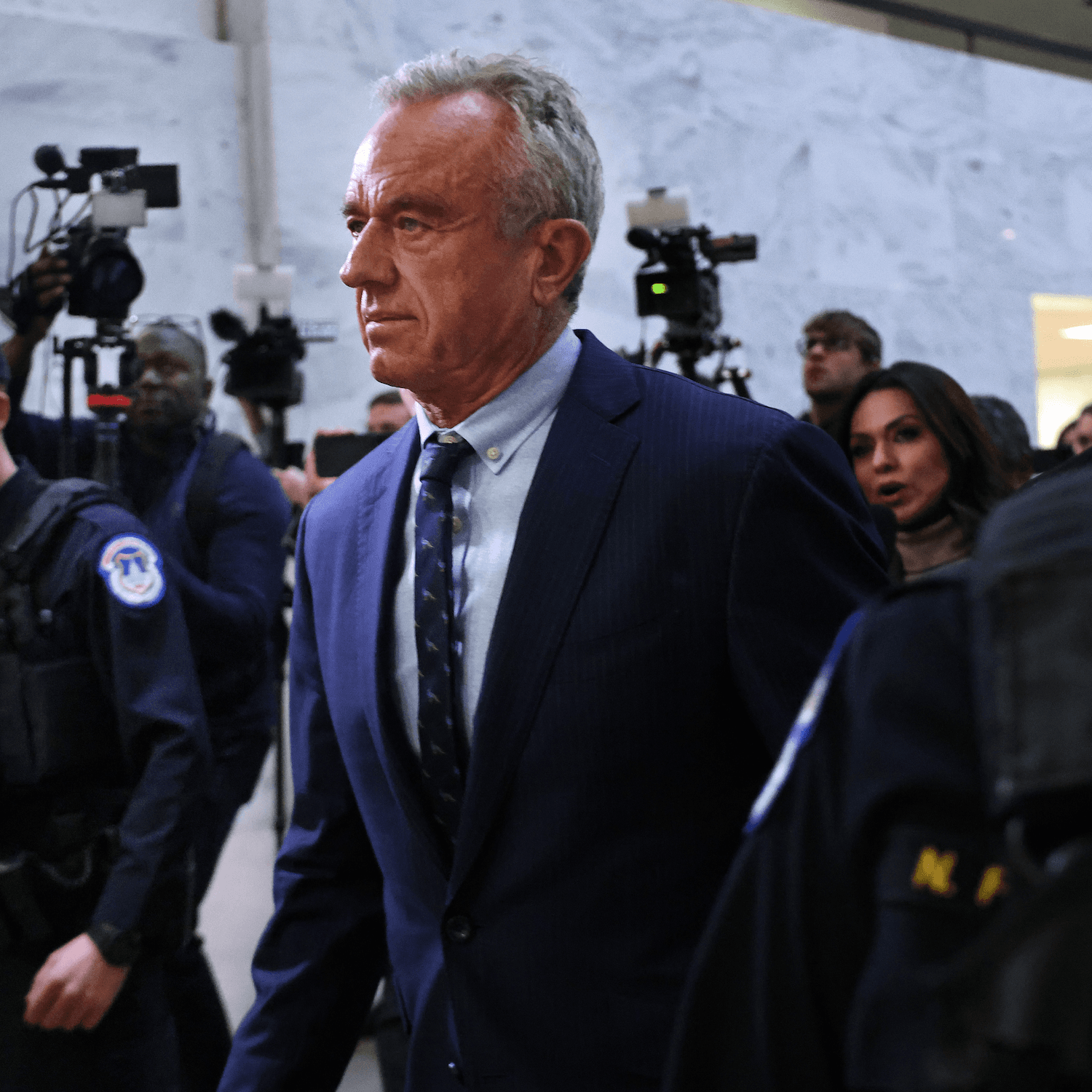
--:-- Mara Liason: They concerned about his pick for Health and Human Services Department Robert F Kennedy who is an anti-activist.
--:-- Steve Inskeep: Here's how Trump described RFK Jr.
--:-- Mara Liason: No, I think he's going to be much less radical than you would think. I think he's got a very open mind or I wouldn't have put him there.
--:-- Steve Inskeep: He's going to be very much less radical.
--:-- Mara Liason: So he was asked about his own views on vaccines and he gave full support to the polio vaccine.
--:-- Steve Inskeep: He said it's not going anywhere.
--:-- Mara Liason: But Trump did leave the door open to those who believe that vaccines are linked to autism, something that has been widely debunked.
--:-- Steve Inskeep: He said, "We're going to find out."
--:-- Mara Liason: He also wasn't clear about his position on vaccine mandates.
--:-- Steve Inskeep: He was asked if schools should mandate vaccines, and he said, "I'm not a big mandate person."
--:-- Mara Liason: But he also gave the pharma executive something they wanted.
--:-- Steve Inskeep: He was very hard on pharmacy benefit managers who pharmaceutical companies blame for price hikes.
--:-- Mara Liason: He scornfully referred to them as middlemen.
--:-- Steve Inskeep: Well, and he also invited reporters into his home for a press conference.
--:-- Mara Liason: I think this is the first one since the election.
--:-- Steve Inskeep: Just say more about that. How did it go?
--:-- Mara Liason: Well, it was a bit like all of his rallies in the campaign condensed into an hour and 10 minutes.
--:-- Steve Inskeep: He covered a lot of the same ground.
--:-- Mara Liason: He said that everything was pretty much perfect when he was president.
--:-- Steve Inskeep: There were no wars, no inflation.
--:-- Mara Liason: Now that he's going to be president again, he said things will be great again.
--:-- Steve Inskeep: There were a lot of exaggeration and that he won the youth vote by 34 percent or that he brought down the price of insulin to $35.
--:-- Mara Liason: Although he did something on that, it was Biden who brought it down to $35.
--:-- Steve Inskeep: And there were still a lot of grievances.
--:-- Mara Liason: He talked about how he was going to sue the board of the Pulitzer Prizes and the Des Moines Register for publishing a poll that showed him losing.
--:-- Steve Inskeep: So very similar to the old Trump.
--:-- Mara Liason: That is NPR's Mara Liason. Mara, thank you.
--:-- Mara Liason: You're welcome.
--:-- [Theme music fades in]
--:-- Steve Inskeep: An all-too-familiar ritual took place at a church outside of Madison, Wisconsin last night, a vigil for the victims and the survivors of a school shooting yesterday at Abundant Life Christian School.
--:-- Sarah Lear: Pastor Marcus Allen worked to comfort the crowd with prayer.
--:-- Steve Inskeep: We just ask that you come to the hearts of parents on tonight, to take a chance by sending their kids to school, a place that should be safe for them, God.
--:-- Sarah Lear: Police say a teenager opened fire at that school yesterday, killing two people and then herself.
--:-- Steve Inskeep: Six others are wounded.
--:-- Sarah Lear: Sarah Lear of Wisconsin Public Radio has been following the story, and she's with us now.
--:-- Steve Inskeep: Good morning, Sarah. Hello.
--:-- Sarah Lear: So what do we know now about what happened inside the school?
--:-- Steve Inskeep: Madison Police Chief Sean Barnes says the first law enforcement officers arrived at the school on the east side of the city of Madison within four minutes of a second grader calling 911.
--:-- Sarah Lear: We'll let that soak in for a minute. A second-grade student called 911 at 1057 a.m. to report a shooting at school.
--:-- Steve Inskeep: Police believe the shooting happened inside a study hall where there were students gathered from multiple grades.
--:-- Sarah Lear: The two people killed by the shooter are a teacher and a teenage student.
--:-- Steve Inskeep: So as we just heard, we know that the shooting occurred at the school late yesterday morning.
--:-- Sarah Lear: I know that the police spoke to the public several times throughout the day.
--:-- Steve Inskeep: And finally last night, the police chief Sean Barnes told us some details about the shooter.
--:-- Sarah Lear: Could you just remind us of what he said?
--:-- Steve Inskeep: Yes.
--:-- Sarah Lear: So the shooter has been ID'd as 15-year-old Natalie Rupnow. Her first name was Natalie, but she went by Samantha.
--:-- Steve Inskeep: Police say she died of what's believed to be a self-inflicted gunshot wound.
--:-- Sarah Lear: And what do we know about the survivors? How are they doing?
--:-- Steve Inskeep: As of late Monday, police said at least two students were in critical condition with life-threatening injuries.
--:-- Sarah Lear: Other victims, including a teacher, suffered injuries that weren't life-threatening.
--:-- Steve Inskeep: One mother, Marie Jean Charles, has three boys who all go to school at Abundant Christian.
--:-- Sarah Lear: And she was relieved that none of her sons were injured, but she also says she expects them to have emotional trauma for a long time.
--:-- Steve Inskeep: This is not OK. If your kids are at school, they are not OK.
--:-- Sarah Lear: If they are at church, they are not OK. If they are outside elsewhere, they are not OK. Where are they going to be safe?
--:-- Steve Inskeep: When Jean Charles was reunited with her boys on Monday, she says she cried and prayed.
--:-- Sarah Lear: But she also says thoughts and prayers aren't enough.
--:-- Steve Inskeep: Sarah, obviously there are some things we still want to know. And I mean, chief among them is why? Like, why?
--:-- Sarah Lear: But what else are the authorities saying that they're still investigating?
--:-- Steve Inskeep: Right. So the biggest question why that's still unclear.
--:-- Sarah Lear: Police say they're still trying to piece together a motive.
--:-- Steve Inskeep: Officers have recovered a handgun from the scene.
--:-- Sarah Lear: Madison police say they're working with federal officials to trace the origins of the gun.
--:-- Steve Inskeep: The police chief said late Monday it's not clear how exactly a 15-year-old got this gun.
--:-- Sarah Lear: Officers have searched the shooter's home in Madison.
--:-- Steve Inskeep: They searched it on Monday.
--:-- Sarah Lear: And police say the family of the shooter has been cooperative.
--:-- Steve Inskeep: So are the authorities saying they're going to share more as they know more?
--:-- Steve Inskeep: There's another news conference set for this afternoon.
--:-- Sarah Lear: And Madison's police chief has warned people to be wary of rumors and misinformation on social media.
--:-- Steve Inskeep: That is Sarah Lear of Wisconsin Public Radio. Sarah, thank you so much.
--:-- Sarah Lear: Thank you for having me.
--:-- [Theme music fades in]
--:-- Steve Inskeep: We can reveal this morning what doctors have done for the first time to save people who need organ transplants.
--:-- Rob Stein: Surgeons have implanted a new kind of engineered pig kidney into a living person. Pig kidney, human being.
--:-- Steve Inskeep: NPR Health correspondent Rob Stein was in the operating room during the procedure, the only journalist in there.
--:-- Rob Stein: Hi there, Steve.
--:-- Steve Inskeep: Wow, what an experience.
--:-- Rob Stein: You know, it was quite dramatic.
--:-- Steve Inskeep: I met the patient at NYU Langone Health in New York City just minutes before she was wheeled to the OR.
--:-- Rob Stein: Her name is Tawana Looney. She's 53 from Gadsden, Alabama.
--:-- Steve Inskeep: How are you feeling this morning?
--:-- Rob Stein: I feel blessed. I'm excited. Why are you excited?
--:-- Steve Inskeep: To get a kidney.
--:-- Rob Stein: You know, it's going to change my life. We're going to make history today.
--:-- Steve Inskeep: Looney's immune system would reject a human kidney, so the FDA let her get a pig kidney that's been genetically engineered so her body could accept it, even though this is all very experimental.
--:-- Rob Stein: This is blowing my mind because you're telling me Rob not just that people are using a pig kidney because human organs are in short supply which they are. They're using a pig kidney because they think in this case it is the best choice, better than a human organ for this person.
--:-- Steve Inskeep: So how did this operation come together?
--:-- Rob Stein: As one team of surgeons started preparing Looney for the kidney, another team flew to rural Virginia to retrieve two kidneys from a modified pig cloned at a biotech company's research farm.
--:-- Steve Inskeep: After the chopper returned with the kidneys, the surgeons stitched one of them to Looney's blood supply, then started blood flowing from Looney's body into the pig kidney for the first time.
--:-- Rob Stein: I'm taking the clamp off of the vein. You'll see it'll be kind of a little bit dark colored initially.
--:-- Steve Inskeep: And now I'm taking the clamp off the artery.
--:-- Rob Stein: And it should be nice and pink.
--:-- Steve Inskeep: Yeah, it is.
--:-- Rob Stein: Then, Steve, the next test came. That's when surgeons made sure the kidney was doing its job, which is making urine.
--:-- Steve Inskeep: Wow, beautiful, gorgeous. It's just pouring out.
--:-- Rob Stein: Thank you.
--:-- Steve Inskeep: And here's what Dr. Robert Montgomery, the lead surgeon, said right after the seven-hour operation.
--:-- Rob Stein: When you really think about what we just did, it's pretty amazing.
--:-- Steve Inskeep: Putting a pig organ in a human being and having it work right away, and it's like Star Wars stuff, right?
--:-- Rob Stein: I especially like the applause there.
--:-- Steve Inskeep: So what happens now?
--:-- Rob Stein: So far, the pig kidney seems to be working great.
--:-- Steve Inskeep: In fact, Looney was discharged earlier than expected to an apartment near the hospital where doctors are keeping a close eye on her.
--:-- Rob Stein: I visited her there two weeks after the surgery.
--:-- Steve Inskeep: So how are you doing?
--:-- Rob Stein: I am doing wonderful. It's amazing. I feel like a whole new person, like I ain't got a second chance in life.
--:-- Steve Inskeep: Now, Steve, it's important to point out that two other patients who got pig kidneys with different modifications died within weeks of their operations.
--:-- Rob Stein: So did two men who got genetically modified pig hearts.
--:-- Steve Inskeep: But the pig organs seemed to work well in those cases, and they were much sicker than Looney.
--:-- Rob Stein: So doctors are hopeful this time.
--:-- Steve Inskeep: And the hope is that someday genetically modified pigs could provide an unlimited supply of kidneys, livers, hearts, and other organs to help solve the organ shortage.
--:-- Rob Stein: But, you know, it's important to point out that there are worries about all this, about pig organs spreading dangerous viruses to people, about breeding and slaughtering thousands of pigs just for their organs, and about experimenting on desperately ill patients like this.
--:-- Steve Inskeep: So there's still a lot to be worked out.
--:-- Rob Stein: Well, thanks for your eyewitness account, Rob. Really appreciate it.
--:-- Rob Stein: You bet, Steve.
--:-- [Theme music fades in]
--:-- Steve Inskeep: And that's up first for Tuesday, December 17th.
--:-- Michelle Martin: I'm Michelle Martin.
--:-- Steve Inskeep: And I'm Steve Inskeep.
--:-- Michelle Martin: There's an easy way to stay connected to news and podcasts from the NPR network.
--:-- Steve Inskeep: It's the NPR app.
--:-- Michelle Martin: You hear community coverage from your local station.
--:-- Steve Inskeep: Remember, public media are in just about every community in this country.
--:-- Michelle Martin: So you hear community coverage from your station, along with stories from across the nation and around the world, and podcast suggestions based on what you like.
--:-- Steve Inskeep: Download the NPR app in your app store.
--:-- Michelle Martin: Today's episode of Up First was edited by Roberta Rampton, Cheryl Corley, Scott Hensley, H.J. Mai, and Mohamed El-Bardisi.
--:-- Steve Inskeep: It was produced by Zia Butch, Leah Dumas, and Katie Klein.
--:-- Michelle Martin: We get engineering support from Stacey Abbott, and our technical director is Carly Strange.
--:-- Steve Inskeep: And we hope you'll join us again tomorrow.
--:-- Michelle Martin: Thanks for listening to Up First.
--:-- Steve Inskeep: And thanks for being part of the NPR community.
--:-- Michelle Martin: Goodbye.
--:-- Steve Inskeep: Goodbye.