--:-- Alex Osola: The U.S. Forest Service is improving wildfire prediction models with Google AI. This is a new era of American innovation. Find out more at g.co slash American Innovation.
--:-- Alex Osola: Electronic Arts is close to a deal to go private in what might be a record-breaking leveraged buyout. Plus, why regulators are requesting information from banks going back years in an effort to find cases of debanking. This is an issue for the president that is very near and dear to him. He has alleged that the largest banks have debanked him and his family.
--:-- Alex Osola: It's Friday, September 26th. I'm Alex Osola for The Wall Street Journal. This is the PM edition of What's News, the top headlines and business stories that move the world today.
--:-- Alex Osola: We're exclusively reporting that video game maker Electronic Arts is nearing a deal to go private in what would likely be the largest leveraged buyout of all time. That's according to people familiar with the matter. The people said that a group of investors, including private equity firm Silverlake and Saudi Arabia's Public Investment Fund, could unveil a deal for the company as soon as next week.
--:-- Alex Osola: Discussions on price are still underway, but two of the people said that EA could be valued at as much as $50 billion. Massive leverage buyouts like this one have been rare in recent years.
--:-- Miriam Gottfried: I think dealmakers would really like for it to be the watershed moment that causes deals to come rushing back. But I wouldn't say that we can speak so soon. There are tons and tons of companies inside of private equity funds that firms would love to sell right now. But the market has not been right for them to get out of these deals because they bought them when interest rates were very low.
--:-- Miriam Gottfried: One thing that you'll note about these deals that are happening now is that a sovereign wealth fund is involved. And people think it's preferable to have a sovereign wealth fund instead of too many private equity firms in the mix. And a lot of deals got derailed because there were too many cooks in the kitchen.
--:-- Alex Osola: TV broadcaster Sinclair said today it will end its preemption of Jimmy Kimmel Live and air the late-night show again beginning tonight. ABC suspended the show earlier this month after remarks Kimmel made about the killing of conservative activist Charlie Kirk.
--:-- Alex Osola: ABC brought back the show on Tuesday, but Sinclair said it still wouldn't carry it at that time. The company said today that its decision was quote independent of any government interaction or influence.
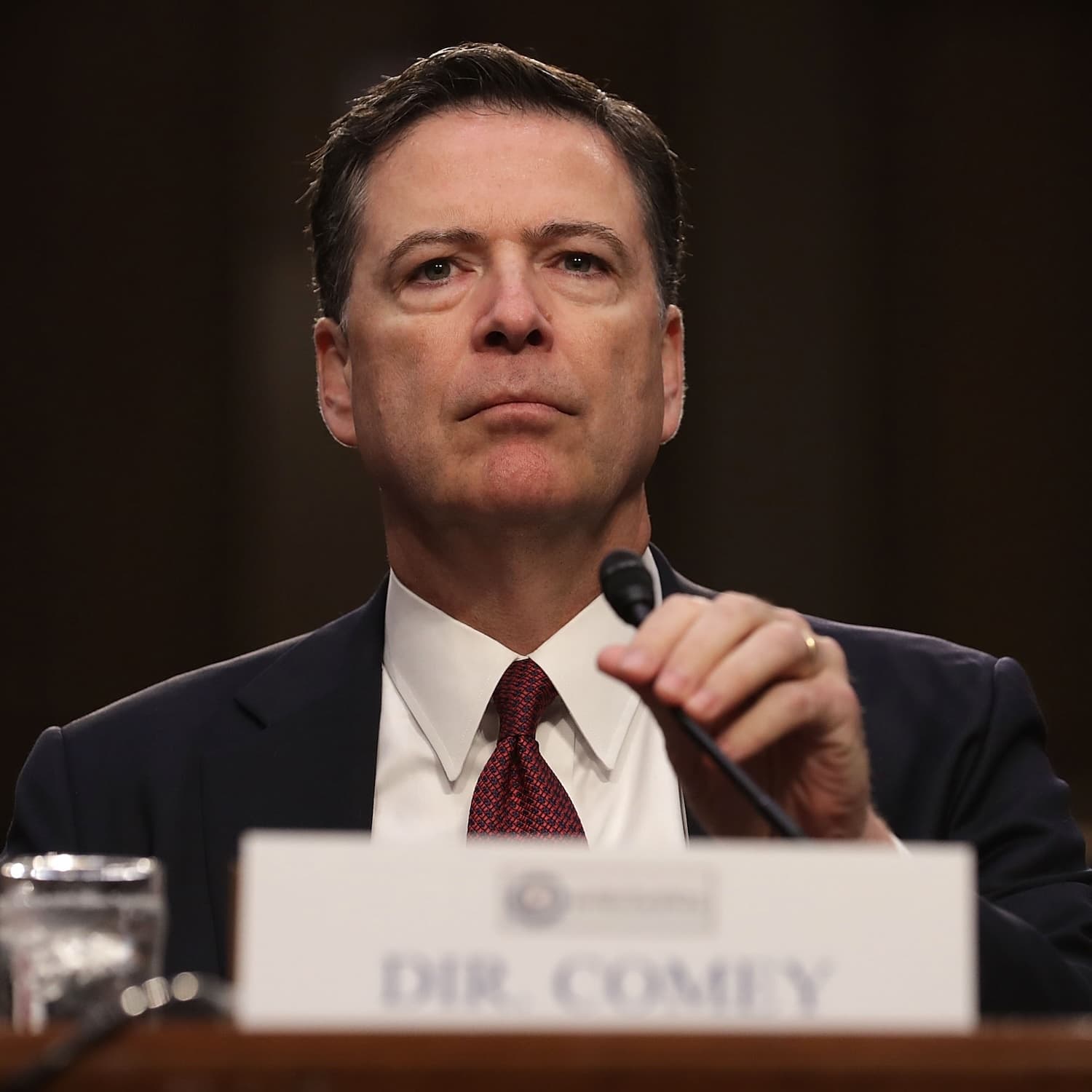
--:-- Alex Osola: Meanwhile President Trump said today that he expects more people whom he views as enemies to face criminal indictments. It's his first comment since the Justice Department indicted former Federal Bureau of Investigation Director James Comey yesterday, charging him with making false statements and obstruction.
--:-- Alex Osola: Trump had demanded Comey's prosecution and ousted the U.S. attorney who determined that there was insufficient evidence to bring the case. Speaking on the South Lawn of the White House, Trump said more indictments were coming for, quote, corrupt radical left Democrats and cast yesterday's indictment against Comey as justice, not revenge.
--:-- Alex Osola: The president's critics called his action an inflection point in the politicization of the Justice Department, with the president directing whom it should prosecute.
--:-- Alex Osola: We're exclusively reporting that banks are racing to respond to regulators' broad requests for information on whether they closed customer accounts or denied people service on political or religious grounds.
--:-- Alex Osola: The sweeping demands are part of President Trump's crackdown on alleged discrimination by banks. People familiar with the matter say that regulators are working with the Justice Department, which is looking for any violations of civil rights laws, including the Equal Credit Opportunity Act.
--:-- Gina Hebe: Regulators are asking for a sweeping amount of information. In some cases, banks are being asked to send along internal policies that could amount to what the administration calls debanking, as well as complaints from their databases.
--:-- Gina Hebe: Regulators are also reviewing their own databases for patterns that could indicate that certain customers have been unfairly cut off from access to accounts or rejected from accounts altogether. And in some cases, they're asking for entire lists of customers whose accounts were closed, not at their own request.
--:-- Gina Hebe: The time span is really striking. Some of these requests are going back a number of years. Why are they asking for this? What indication is there that this is a problem?
--:-- Gina Hebe: This is an issue for the president that is very near and dear to him. He has alleged that the largest banks have debanked him and his family. He has said that they have unfairly cut off access to conservatives.
--:-- Gina Hebe: And there have been just broad accusations that banks have kept a distance from certain industries such as cryptocurrency and cannabis. although these industries were ones that regulators were not very comfortable with banks working with a couple years ago.
--:-- Gina Hebe: What have banks said about this? So banks say that they only close accounts because of credit risks, because of legal risks, and to weed out money laundering and terrorist financing.
--:-- Gina Hebe: They say they're not looking at political parties ideological views religion the things that the administration is alleging.
--:-- Alex Osola: So banks will have to respond to these letters presumably. What happens after that?
--:-- Gina Hebe: Regulators are working with the Justice Department. Whether that leads to actual probes, formal charges, remains to be seen. But we do know that DOJ is looking for violations of civil rights laws, and some of these regulators have explicitly said that there could be fines down the road.
--:-- Alex Osola: That was WSJ reporter Gina Hebe. Thanks, Gina.
--:-- Alex Osola: Thanks for having me.
--:-- Alex Osola: The University of Michigan's monthly consumer survey found that views on the economy dropped in September, as worries about high prices and the labor market weighed on household sentiment.
--:-- Alex Osola: Investors, however, were optimistic today, as a rally helped U.S. stocks break their three-day losing streak. The S&P and Dow both advanced about 0.6 percent, while the tech-heavy Nasdaq added 0.4%. For the week, all three indexes closed in the red.
--:-- Alex Osola: Coming up, federal regulators are giving some authority back to Boeing, six years after tightening their oversight. That's after the break.
--:-- Alex Osola: Bob's a financial professional who's meeting with a valued client and enjoying a round of golf. But Bob's used to win-win scenarios because he works with MassMutual who offer freedom and flexibility, success for your clients and yourself.
--:-- Alex Osola: The feeling is MassMutual. Learn more at MassMutual.com slash Wealth Management.
--:-- Alex Osola: Israeli Prime Minister Benjamin Netanyahu struck a defiant tone speaking at the United Nations today. Speaking to an almost empty room, he lashed out at countries that recognized a Palestinian state this week amid a crescendo of international criticism over Israel's conduct in the war in the Gaza Strip.
--:-- Alex Osola: In his speech, Netanyahu accused his critics of turning against Israel under pressure from their domestic populations, rising anti-Semitism, and a biased media.
--:-- Alex Osola: Giving the Palestinians a state one mile from Jerusalem after October 7th is like giving al-Qaeda a state one mile from New York City after September 11th. This is sheer madness. It's insane, and we won't do it.
--:-- Alex Osola: In an unusual move, the Israeli leader said he ordered that trucks with loudspeakers be deployed to Gaza so that hostages could hear him as he called for them to be freed.
--:-- Alex Osola: He is scheduled to meet with President Trump on Monday.
--:-- Alex Osola: Boeing has secured sizable aircraft orders from Turkish Airlines and Norwegian Air Shuttle, the companies announced today, a boost for the jet maker as it seeks to revamp its business.
--:-- Alex Osola: The companies didn't disclose financial terms, but buyers typically receive steep discounts for big aircraft orders. Another promising sign for Boeing The company is regaining authority from the Federal Aviation Administration to perform final safety checks on its 737 MAX jets starting next week.
--:-- Andrew Tangle: It was 2019 and two 737 MAXs had just crashed, in large part because of a flawed flight control system with a faulty design, not a factory problem. But at the same time, factory problems emerged.
--:-- Andrew Tangle: The FAA was concerned about the company's pressure on employees to produce aircraft and deliver aircraft. And while the plane was grounded in 2019, the FAA took this authority back and said, we are going to make sure all of the regulatory requirements are adhered to before we sign off on Boeing's ability to hand these planes over to airlines to fly passengers.
--:-- Andrew Tangle: Is it typical for plane manufacturers to have this sign-off authority that Boeing had lost?
--:-- Andrew Tangle: Yes. These inspections and sign-offs are pretty routine. Aerospace manufacturers, they have a subset of employees who act on behalf of the regulator. The inspection has been compared to the final walkthrough before you buy a house. It's not a very intrusive inspection, but this created a choke point for Boeing.
--:-- Andrew Tangle: FAA inspectors were finding problems with the aircraft. So now that Boeing does have this authority back, what does this mean for the company?
--:-- Andrew Tangle: It's a sign that they're regaining trust from the regulator. It's a significant early milestone for Boeing's overall recovery and its attempts to turn the corner from these two crashes, but also a long string of quality issues.
--:-- Alex Osola: That was WSJ reporter Andrew Tangle. Thanks, Andrew.
--:-- Alex Osola: Thanks for having me.
--:-- Alex Osola: And that's What's News for this week. Tomorrow, you can look out for our weekly markets wrap-up, What's News in Markets. Then on Sunday, we're taking a look at the Trump administration's use of military force on boats in international waters to combat drug smuggling.
--:-- Alex Osola: That's in What's News Sunday. And we'll be back with our regular show on Monday morning.
--:-- Alex Osola: Today's show is produced by Pierre Bien-Aimé and Rodney Davis with supervising producer Jana Heron. Michael LaValle wrote our theme music.
--:-- Alex Osola: Aisha El-Muslim is our development producer. Chris Zinsley is our deputy editor, and Philana Patterson is the Wall Street Journal's head of news audio. I'm Alex Osola. Thanks for listening.
--:-- Alex Osola: TrueStage is the marketing name for TrueStage Financial Group, banked subsidiaries and affiliates. Corporate Headquarters is located in Madison, Wisconsin.