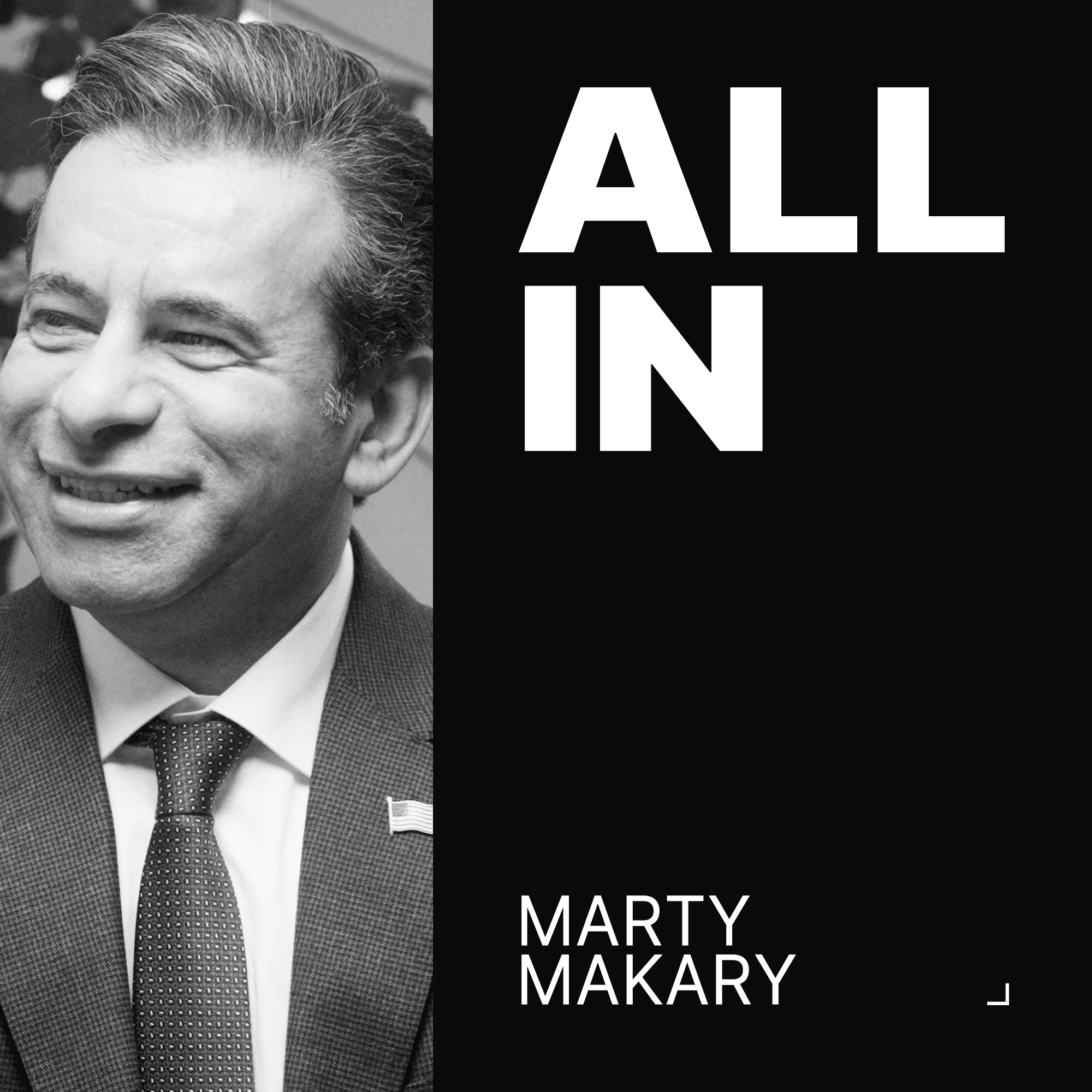
ICE Chaos in Minneapolis, Clawdbot Takeover, Why the Dollar is DroppingAll-In with Chamath, Jason, Sacks & Friedberg · Jan 30, 2026
This conversation was recorded LIVE at the All-In Summit in Miami and included slides. To watch on YouTube, check out our All-In Summit playlist: https://bit.ly/aisytplaylist
0:00 Bill Gurley & Brad Gerstner break down the state and historical significance of 2022's market downturn
12:27 How VCs will handle capital commitments from LPs, underwriting startups in the new reality
24:14 Bull run mistakes, why VCs don't underwrite lower valuations, handling distributions
33:52 Gurley's take on WeCrashed & Super Pumped TV series, how sophisticated investors got "gaslit" by the market, influx of capital creating consumer-surplus businesses
47:54 Brad predicts the market for next year, Bill gives post-Benchmark plans
Follow the besties:
https://twitter.com/DavidSacks
Follow the pod:
https://twitter.com/theallinpod
https://linktr.ee/allinpodcast
Intro Music Credit:
https://twitter.com/yung_spielburg
Intro Video Credit:
No summary for this episode yet.
BG Squared. This is our BG Squared panel. Everybody knows Friends of the Pod. Brad Gerstner and Bill Gurley give it up for our guests. We'll let your winners ride. Rain Man David Sack. We open source it to the fans and they've just gone crazy with it. Love you guys. Bill, you predicted five of the last three recessions. a broken clock is still right twice a day i mean here we are again you you've sounded the alarm bell and of course you're right and um you've seen this movie before for all of us younger capital allocators um who uh are experiencing it for the second or third time but you've experienced it a couple more times.
I mean, it's pretty old. How does this one measure up to Great Recession, dot-com bust, you know, 87, and the many ones we've seen in between? You know, one thing that I think is super important to put this into context, I'll try and tell this quick. I had a meeting once with Howard Marks, who I'd wanted to meet for a long period of time. He's a famous bond investor that does a lot of writing. and for 15 minutes he asked me questions about the venture industry, a lot of structural questions. And I told him my answer as best I could. And he said, man, that's a really shitty industry. And I said, well, why do you say that?
What do you mean? He says, you know, cyclical collapse is built into the structure. And so we have funds that, you know, are taken, you know, committed to that have 10 to 15 year lives. So you have low barriers to entry, but you have very high barriers to exit. And so he felt that it was just systematically set up to rise and crash, rise and crash. And one thing that I realized coming out of that is that it doesn't happen like a sine curve, which is what we all imagine when we think of a cyclical business. It's more like a sawtooth. Risk on is a very slow process. and it's reflexive. So it grows and grows and grows and grows.
And then risk off tends to be very abrupt. And we've seen that here, right? This cycle, risk on was from 09 to five months ago. That's really well said. And risk off is five months. And the thing that's really tough about that is it requires mental adjustment very quickly, like because it didn't gradually change, it abruptly changed. And so, you know, cap charts might have, you know, systematic issues that are stuck because too much lick prep relative to the new reality. Valuations have shifted. Cost of capital is radically different. You may have, you know, on the way up as risk got, people took more risk you tried crazier things you you're willing to to uh take take make investments in businesses you might not if the cost of capital is a lot lower you name a stadium for five years as a crypto company you might do that and then but then all of a sudden it's it's gone and now the commitment to naming the stadium is greater than the market gap well i i assume you're That may not be true for FTX.
Well, I mean, just as an example, it might be a disproportionate value of your market. Yeah, so anyway, it's tough. And in this particular case, because that's what you asked. So it turns out 09 wasn't that bad. If we have an 09, that'll be pretty good. Things got turned around pretty quickly. 01 was very abrupt. And we didn't really start to see liquidity again until, with a few exceptions. Elon mentioned PayPal, but like 05, 06. It was a long walk in the desert. I mean, a lot of great companies were started, but a lot of founders gave up at that time, right? Yeah. And look, I mean, I think if you're an early stage investor or if you're an early stage founder that's just getting going or even an early stage company, because if you haven't scaled out yet, this probably hasn't affected you.
It could be wonderful. Like your access to talent is going to be a lot easier. People are going to be more pragmatic and rational. But it's usually a long window on the other side. The other challenge you have here is in 20, I mean, we basically had a mini pullback in March of 2020. But then the Fed hit so hard that things just blasted off again. And now you guys have talked about this, but that tool is not in the toolbox anymore. Brad? So one of the things I was talking to somebody last night, and this audience is amazing. I was talking to somebody last night and they said, you know, so how does it work?
You just get together and talk. And I said, you know, what I love about this group is there are hundreds of hours of like data and research that we're constantly challenged with. We all know where we are. We know what just happened. And I think grounding ourselves in just a few facts to try to figure out what the next six months are going to be because we have founders here trying to run their businesses. Can I raise capital? Are we bouncing straight back from where we were? So very quickly, this chart just tells us, you know, the iron law of investing is interest rates. A 1% change in rates leads to a 15 or 20% change in a multiple.
And so the reason multiples have collapsed here for all these businesses is because expectations as to inflation and rates has changed dramatically. I hear a lot of talk about 1999, 2000. So if it's all about rates, let's just look at those two things. We plotted them here together. This is 19 to 22 on the bottom. It shows what rates did. We took them to zero. The Fed is now saying our neutral rate is two to 3% and people are hyperventilating. Look at where we were in 2000. Look at what the cost of capital was in 2000. Crazy, right? Right, and so this idea, and by the way, the delta there, right?
We went from just above five up to six and a half, right? So we're talking about going from two and a half back to two and a half or three. But the big question is, are we going back to two and a half or three or are they behind the curve, lost in the weeds, and we're gonna have to go to four to five to kill inflation? Well, everybody was saying inflation, you know, inflation is here to stay forever. Remember, when we report on core CPI, it's what happened last month. it is not a forward-looking indicator. So we peaked in core CPI. Consumer price index, explain what it is. Consumer price, this is the basket of goods and services that we all go out and spend money on.
So the Fed is focused on the demand side of the equation. They know they hopped us up on a bunch of Red Bull and cocaine to survive the pandemic. And now- I know you were talking about last night for sacks, but keep going. You still haven't said a word all day. Look at you. Are you okay, buddy? we're gonna get through it together okay you are so wrecked so so this chart this chart we deconstructed 20 bank models to say what are the components of cpi how do they differ the red lines where goldman thinks we're going the green line is ubs i just told you the fed thinks we'll exit the year at four we just decelerated significantly and when they look at a or when they look at may in June, it's going to be down yet further.
And here's why it's going to be down. When the Fed stimulated the economy, all the prices we pay for everything went haywire. Okay, the price for a used car was 20,000 bucks for 10 years. And then just coincidentally, they give us a bunch of Red Bull and the price goes to $29,000. For two months in a row, we've had sequential declines. You tell me, is the price of the used car this time next year higher than 29 or lower than 29? It's going to be lower because we're destroying demand by raising interest rates. Same for home prices. So what's plotted here is the home affordability index. Somebody who can afford to pay $1,200 a month in December could afford a $350,000 home.
Today can afford a $240,000 home. You tell me, are the number of new home searches on Zillow going up or down. Go run your Google Trends. They're going down because people's ability to buy homes is going down. And then finally, airline tickets, same deal, right? And so when you put that all together, you say, okay, sequentially, month over month, forward-looking, this stuff's starting to tip over. If you look at what consumer confidence is, it's the lowest in 10 years, right? Consumer confidence is a leading indicator of slowing down. So again, everybody on television is telling us about what just happened.
It's like the nightly news, big red arrows, inflation going up. This is what's going to happen. And what we all care about is what's going to happen. We destroyed 15 trillion. You said this on pod 80. We destroyed 15 trillion of household net worth in the last five months. So the expected path of household net worth would have taken us from 110 trillion to 125 trillion over the course of the last two years. That was the trend we were on. Instead, we got all hopped up and went from 110 to 142. But now we're all the way back to 127. That's what I call on path, on trend. So the Fed has done exactly what it wanted to do.
It ruined all the SPACs. It ruined everything. It took all the juice. Sorry. Sorry. I did one too. Okay. So it took the juice out of the system. That and consumer Confidence tells me forward-looking inflation is rolling. Finally, Bernanke says this morning or over the weekend, he said, ignore what everybody else is saying. Follow the tips. No, we've been saying this since May of last year. So this is the break even. This is the bond market. When that goes positive, that means the bond market is saying that inflation is rolling over because this is the 10-year less inflation. And so now we have anecdotal information about cars, about houses, about airlines.
We have our common sense. We know that those prices are not sustainable. And we have the bond market telling us the same thing. That's why I don't think you should believe the hyperinflation narrative. Got it. Any thoughts on NFTs? I mean, here's the thing. What about my board ape? What will happen to that? When you're going through this and you start to understand the logic of it, you realize what a mirage we were in that certain assets that had no underlying value, you know, they weren't cars, airline tickets or homes, were also being exacerbated during all of this. And I think that was probably one of the things that made this less fun in this cycle.
Bill, you're a fundamental investor. You really think about consumers. You think about the total addressable market. You give a lot of thoughts to that. What was the last couple of years like when, Because you were saying three or four years ago, hey, this is kind of disconnecting from reality. You know, back when I had that conversation with Howard, I started doing some more research. I went back and I talked to some of our fund of funds that have data over a very long period of time. And I mean, it sounds ridiculous, but what I realized was that the IRR numbers and the ROI numbers on the venture capital category We're heavily dependent on performance in the hottest part of the cycle.
And so in the tip of that sawtooth. And that's when we came up with this phrase that the best way to protect yourself against the downside is to enjoy every last bit of the upside. So while you get anxious about the rollover, you actually can't afford as a venture capital firm. And maybe this contributes to the collapse as fast as it does. you can't afford not to play the game because it's too hard to predict when it's going to change. Bill, there's $250 billion of committed capital unallocated into companies. What happens in the cycle over the next five years if there is this expectation that we're not going to be in the good part of the risk on part of the curve?
That capital needs to be deployed at this point in the cycle. And do we end up having these crazy bifurcations in the market where high quality companies get 10x evaluation of the mean and all the money plows into a few companies that that are kind of I'll give you some quick thoughts and I know Brad has some too because we were talking about this this morning um first of all I I've never ever felt as a as a venture investor that I have to invest money like and like and if you remember most of it's committed but not drawn down. And so you're going to have to go ask for it. If you deployed two thirds of your fund into crypto assets with no board seat in the past 12 months, are you going to call Harvard and Penn and say, hey, I need some more right now?
I don't think you're going to make that call. I wouldn't know. You're saying they'd let the capital sit there and never call it? Well, you guys were talking about this on one of the recent pods. You know, in 01, a lot of people actually returned the commitment. And it was actually an act of greed, not an act. It came across like they were being nice. But they were getting out. I call it the burnt waffle theory. They were killing the fun and getting out of the overhang and starting fresh, just like I guess it was Melvin that attempted to do. It was a version of that. It's like a recap in a way.
Yeah. Well, they just want to get started without the overhang of the look back. They deployed 200 or 300 million. I think one thing, you know, Bill, not to interrupt, you know, the assumption of the question was, will they be forced to deploy capital into a really bad vintage? Right. I actually think the upcoming vintage is going to start getting real. It's going to be a good vintage. I think that was Bill's point. I think we both feel that way. I think the vintage of the last 18 months will be lousy. so the capital deployed over the last 18 months won't have a lot of return. All of our LPs know it, right?
I was just sitting with an LP, you know, one of my investors at lunch today, right? Imagine this. They have 50 investments like Benchmark and Altimeter, right? All of them are going down. And now you're going to call them up and say, I want all this money right now to go invest in a bunch of stuff that still may not yet have corrected enough. These are partnerships. Partnership means a partnership with me and my partners, all the people who gave me the money. We're not going to put our partners in a headlock and drag their money into the market and put it into things that we don't think accurately reflect the new world order.
If you go back to that first chart, you can underwrite to the five-year average, the 10-year average, where we've been. I think we're going back to trend. but you cannot underwrite to where we were last year. Disabuse yourself. One of the, Bill tweeted this last week, it's spot on. The biggest mistake we will all make is to anchor ourselves to prices that we saw in the world over the last 18 months. Pretend you never saw them, not in venture, not in the stock market, because that is a delusional place to think we're getting back there. We're not, unless we have another pandemic or a nuclear war and rates go to zero and then we have bigger problems.
So re-underwrite and underwrite to the five-year average de novo for all your businesses. That's how you survive through this and ultimately come out winning. And the other point I would make, David, is that the new reality is apparent to all of us because of public comps. So like you just have a new world order. And so it's very hard. I don't think I mean, there might be someone so sloppy that they just keep investing headstrong. But I think most of them look at where things are in the type of business that you're investing in and they feel like they want to make a return. I think you're using the right word.
It is borderline. Well, it's definitely unprofessional and it's borderline idiotic for anybody with organized capital right now to be ripping money in because you don't know what the terminal valuation of a business is. At the end of the day, investing is like a line. It starts here with guys like Jason and it ends here with guys like me and Brad, say. And in the middle are these guys that are helping along the way. And it's all hot potato. But by the time the hot potato gets to us, there is a price, and that price has alternatives. Meaning, if you come to me and say, this thing is worth $10, and I say, actually, no, it's worth $2, because that other thing, which is better than you, is actually worth $5.
And that's what's happened in the stock markets. And by the time you get the potato, you put it on the scale. There is a terminal endpoint to valuation. right? At the end of the day, there's a buyer of last resort, and that is the public market investor. And he and she has said, no mas. That's what this chart says. No mas. Don't tell me that your thing is worth 50 times, 80 times, 90 times. It's worth 5.6 times. I saw something this morning from Morgan Stanley that said, if, however, you're a massive grower, 50% plus grower, there's 30 companies in the SaaS index that grow, but only 30 in the entire world that grow above 50%.
You know what that multiple is? Just take a wild guess. 8.5. I mean, we're not talking 50 times. We're talking 5.6 or 8.6. So all of a sudden, the band is this. So those games, to your point, are over. I mean, growing by 50% a year, for those of you guys that have built businesses that do it, that is still very hard. You know, that's massive compounding. So the game is over. And the idea that there's a quarter trillion, I think that that's a fallacy. What do you think ultimately gets deployed at the quarter trillion? Just pick a number. What do you think? Over the next three years. Of the quarter trillion, I think you're probably counting 50% of that as private equity or more, maybe 70% traditional private equity.
leverage buyout firms are going to have a field day. Field day. I mean, so Toma Bravo and all these guys, they will spend all of that. So you tell me what percentage of that. Okay, so let's... Over three years, over three years. 100 billion of VC, I would say 20. 20 billion goes in the next three years? 25 or 30%. Depends on price adjustment. I wish we had the numbers from a one because you had similar things where the raise amounts were going up. Because that's frigging tiny, right? I mean, if you're saying 25 billion over three years, That's like $8 billion of total VC dollars deployed a year.
Which, you know, to your trend line thing. I wonder if you went back six years where that number was. Let's be candid. What number of people at these companies is necessary to run them? We're looking at a Twitter with 8,000. You're looking at a Google. And even some of the startups, they got fat. I think it's less fat. And they had huge salaries. And there was no essentialism or discipline. We just talked about a whole CapEx cycle and a need for hardware and a need for capital equipment. There's a whole semiconductor space. There's biotech. I mean, a huge segment of that venture market, Jason, is not software.
It's very capital-intensive businesses, which, by the way, are really critical in this economic cycle. But in the software space, people have been living high on the hog. Let's be honest. No, but like I like, for example, like our investing focus, we've moved in the last 18 months to focus a lot on these things. Lithium mines. I mean, the stuff that we're doing seems insane. If you had asked me, would you be sweating a mine in India and sending our CFO and a partner to go and make sure the mine exists, I never would have thought that it's possible. But the reason is because of this chart. Because those tradeoffs on dollars make so much more sense.
To put money into an over-bloated software business comes with a lot of baggage. Valuation baggage, team baggage, technical cruft. All of these things have to get balanced. And so if you get a really cheap deal, you do it. Super interesting. Bill, you're like the software guru. Do you feel the same way? I mean, yeah, we'll call it, yeah. Actually, I want to make a quick comment, especially with this slide on SaaS multiples. So obviously, it's a price-to-revenue multiple slide, and price-to-revenue is like this really crude evaluation tool. It's like the crudest you could possibly have. I published a blog post once where I took all the internet stocks and laid them beginning to end on the price-to-revenue multiple, And it was like just a massive diversion.
There is no such thing. And so what really values companies, you know, it's typically a discounted cash flows. And so now all of a sudden the buy side is asking SaaS companies about net dollar retention, about long term operating margin, about whether their free cash flow is greater or less than their net income, about SBC as a percentage of free cash flow. Stock based comp. Yeah, and so all of a sudden, everyone's brought out the microscope on how they're evaluating these companies and these crude tools that maybe the only, like there are entrepreneurs who probably think the only way you measure is that.
By the way, the companies that, in your example, all of a sudden run away with it and get all the money, think about the problem they have. Their growth is going to slow. Nobody grows at 500% when you're at a billion dollars. Right. You're lucky to grow at 25, 30%. Right. Okay? So when your growth is slowing and your valuation is outsized like you were going to get to $5 billion, how do they attract more capital? This is why this whole game is very complicated right now. There was also something that took hold over the course of the last two years, specifically with respect to software, that this was an easy business.
You just send us your data. I pop out a term sheet. it's formulaic as though all software companies are created equal and you guys asked a question last week on the pod how many software companies are actually over a billion dollars in revenue how many are over two billion well we actually went and counted oh good right public software companies over two billion in revenue we got to 21 okay there are only 21 that are worth more than 25 billion dollars in all the public markets of all the millions of software companies that have been started. But what happened last year was you could be making dog walking software, okay?
And somebody looked at your multiple and slapped 100x on it and said you were worth that as though that was the equivalent of building a database that would disrupt the entire database market. So the thing that is returning to markets is something that we all do for a living called dispersion. Some shit's going to be really great and the rest is going to be below the mean. And if you look at software, the history of software, right, is that there are very, very few companies that ever get to a billion dollars in revenue. And so if you were slapping 100X ARR revenue or multiple on a company doing 50 million in revenue, it's highly likely that they will never see that price again.
whatever you paid for that asset, because the dilution and the deceleration in their growth rate will absolutely eviscerate any return you have as an investor. And so when you're looking at this, back to your point, not only are we looking at revenue multiples, but we're also looking at something like Snowflake and saying, now they're doing 15% free cash flow and expanding those All that stuff is critical. Gurley, do you think it's weird that VCs don't try to underwrite lower valuations? The incentive is always to up your valuation. Even if the company's performing plan, you don't generally do these market-driven valuations.
It's like, oh, you're worth $500 million last round. We'll give you a billion dollars this round. Are we going to see more VCs do down rounds in companies that they're in? There's no VC club where they get together and discuss how they're going to behave. You're looking at it. The price fixing. Keep in mind, as that risk on goes slowly up and up and up, and especially in Silicon Valley, we've had a systematic shift of power from the investor to the founder over a very long period of time. People are friendly because they want deal flow. So nobody does it. Let's talk about that. So interesting.
You've seen deals happen where one term sheet seems great for all shareholders, And then this term sheet includes some secondary for the founders and no governance seems pretty great for the founders. And somehow this one magically wins. And then somebody wins the deal by not taking a board seat. You know, in the three decades you've been doing this now, I think it's three or four. Going into the fourth? Wow. It might be going into the fourth. I mean, well, I'm saying it as. He's in the fourth decade, yes. He's in the fourth decade. You know, when you look at governance, what is the mistake we've made over this last bull run?
Well, once again. What should it be? Well, I think. What's the right partnership? I think what it should be is that the market gets to decide. So if, you know, if someone wants, if someone can raise, you know, $100 million with no board seat, no rights, and they want that, I think they should be able to do that. Right. But what's in the best interest of. our industry, of all shareholders, the employees. I'm not dodging the question. It's just super complicated. We put money behind Rich Barton, as both of us did, and he had super voting. But he also, I think, is very honorable about his duty to shareholders.
There was a track record there. Yeah. And it never was an issue in the entire history of the company. So, you know, but, you know, if there's a first time founder that's doing that, like, you know, who knows? Who knows what the motivation is? And but but once again, it's a market. It's a free market. And I think that there are certain people or founders that decide, hey, you bring something to the table that I want. And I understand there's a government's requirement to it. And we'll opt into that. And, you know, willing buyer meets willing seller. Gurley, what do you guys, Brett, what is your attitude when you guys actually have a win?
You do the job, company goes public, and you have the chance to distribute to your LPs. There's been a movement in Silicon Valley where some firms have said, you know what, guys, I'm going to hold this forever. I'm going to create permanent capital structures, evergreen funds. if you, Foundation, want a distribution from me, just tell me and I'll give you money magically somehow, etc. What do you guys think about that versus just distributing and walking away, booking the win? And if you want to hold the stock, you just hold it in your own private account. Let me just start by saying that investing is really fucking hard.
And there's a lot of ways you can lose. And when you guys started the podcast, I was listening to one of the episodes today and it really hit me. In the song that you put together, David says, let your renters ride. I remember that episode. So from the brief history of the podcast, you've gone from talking about that as a strategy to this question that you've posed to me, which is on the opposite end. In my defense. he's here he talks he's appeared what he's awake he's alive he lives we have we have all these great minds here so i figured i'd give him a chance to talk like some of the people on the pod who like to hear themselves talk a little bit too much he was resting his eyes he was resting his eyes all right now in fairness we had that conversation as I recall the context was that way back when like for example when I got when I had Facebook and Facebook went public the urge was just to sell it all and so I think where we landed on that was don't sell 100%, keep 20%, keep 50% it was schmuck insurance basically but that was for you personally as an investment what about you as a fund manager?
I think for me as a fund manager I think we I think we did a pretty good job over the last six months distributing out some gains, some realizations. We actually paid back our whole first fund. But in our second fund, we had about $120 million of Affirm stock. And we were sitting on it because we believe in the company and still do. And we're still sitting on it. And that was like a $100 million mistake. So I think, you know, what's my attitude going to be from now on? Honestly, my attitude from now on is probably going to be distributed. So my first chance to actually return any real money to our LPs was when Slack did our direct listing.
And it was like, you know, there are three or four of us on the board. Me, Andrew Broch at Excel, John O'Farrell from Andreessen, two independents, and Stuart. And they had gone through a couple of direct listings before, bring in our bankers, and they go through this whole rigmarole. And I remember being so amped up in the whole thing. and I thought, oh, I believe in this company. I believe in all of this, blah, blah, blah. Long story short, the point is I held the stock. I didn't distribute it. The pandemic hit. I then distributed in sheer panic and we left a lot of money on the table that I could have just booked the win for the LPs.
And then from that point, I said, never again. I'll hold it for myself. But the minute that I get a distribution, if I'm in the business of managing money for other people, it's out the door when it's liquid. And I'm not gonna take a, I'll be happy to take a point of view for my own shares, but I felt so stupid. I took a 50% loss trying to be a hero. And then also we have the issue of selling in secondary when those opportunities arise. And we all just watched the We Crashed documentary, which one of your partners plays a role in. I don't know. Obviously, it's probably 5% reality. But Benchmark did make a pretty amazing trade in selling WeWork shares early and booking an enormous win.
Correct, Bill? Correct. Okay. So just an alternative. Wait, what's the answer to the question? What are you going to do, distribute or not distribute? Yes, that's what I'm going to give you. It's going to actually answer. Secondary options. So to me, the most important thing is tell your partners what you're going to do and then do it. Because you're making a deal up front. So for us, the deal was if we invest in something in our venture fund and it's realized, it goes public. If we see venture-like returns, which we define with them as 2 to 3x over a three-year time horizon, we will hold. If we don't, we distributed.
Last year, we distributed over $6 billion, which was more than all the venture we raised in our first five funds. Why? Not because I didn't like Unity or I didn't like Snowflake. Everybody knows how we feel about these businesses. But because we realized that according to the deal we had made with our partners, the framework was triggered. And the second thing I would argue is because people are talking about permanent funds now and all this. that i'm not sure that's the deal people made yeah for me if you're an investor or limited partner in our fund and you want to hold on to it then also invest in my hedge fund because there we haven't sold a share a snowflake but that is a different liquidity profile but what i was getting to bill and just let's put work on the side um just in general when the opportunities for a firm to do a secondary arises what's the right that's rare i mean that's rare for for i mean for an I think it's very different, but it's rare for a venture firm to meet a secondary that has the firepower to absorb the type.
That was Masa. I mean, that was a very unique situation. We typically distribute over three to six quarters following the lockup release, unless there's some exception. Just systematically. Yeah. Yeah. Dollar cost average. Yeah. There have been a few exceptions. We took Open Table Republican in 09 at a very low value, knowingly at a low valuation. And I held that until we sold it to Booking. But because I felt the network effect was there and it was going to keep compounding and that kind of thing. And look, if you I mean, look clearly, you know, what Bezos has done or Zuckerberg, like if you think you're sitting on one of those and you I mean, you have to ask.
Well, those are two. Yeah, I know. I know. But if you think you are, like, you know, maybe the Collison brothers are another one. If it's going to play out the way those did, you're going to want to hold it. Google it. But they're very rare. Have you and your partners watched both We Crashed and The Dropout? I can't speak for all of them. I've watched both of them. You've watched both of them. What was more accurate? I think that, well, I don't know about accurate because I only, I don't, we, super pump was not accurate just because they made up a lot of scenes like drummond wasn't very active at all but he's in a lot of the scenes so a lot of them were made up um i think leto did a better job of showing you who adam newman is um and really got into the character he was incredible he was so good as an actor yeah and accurate yeah to your mean having met yeah and equally on the other side i think that travis and you know him well is is way more nuanced he's one of the grittiest, hardest working founders I've ever worked with.
He's super intelligent. He can be really charming. And those dimensions weren't explored in the characters. Which I think is unfortunate. I remember you telling me, this was, I don't know, in the height of WeWork, you said, Chamath, this is the single greatest salesman I've ever met in my life. You told me also... About Adam Neumann. You said the first time Adam Neumann came in, you and your partner, he left the room and you guys looked at each other and you guys were like, we just have to invest in this guy because he can i said we should never invest in real estate we have to do this deal yeah well what what let's um let's ask brad a question oh wow well i watched the first jay and i were watching we crashed i watched the first two episodes and the only thing i could think of bill was what's adam newman's next company and where do i send the check because I think he already I don't know.
He's got something brewing. I have a question for Brad. So let's go back. Good morning. You know, I've been up here for like eight hours today, Jake. I don't know how much more you want me to do. I'm exhausted after an hour of these things. I honestly don't know how you do it. Have a round of applause. He's been interviewing people for like ten hours. I'm like done after an hour and a half. Anyway, Brad, so let's go back to the 100 times ARR multiples that people were paying last year. Because these investors, with the benefit of 2020 hindsight, they may look kind of sheepish. But we know these investors and the pace car setting the valuations for the whole industry, you know, is these big, giant hedge funds.
We all know who I'm talking about. They're super sophisticated people. I mean, you know, they've been very successful investors for a long period of time. You know, the word used when we talked about it privately was gaslighted. That, you know, the market was sort of gaslighting all of us into thinking that the public comps for these companies were much higher than they were. Is that behind the psychology of why these very sophisticated investors made these big mistakes? Or how do you explain that? I think there's a massive amount of research that's been done that Buffett and Marx and many others have quoted that your ability to calculate risk goes down when you see a bunch of other people doing that thing.
Because your body, your mind's telling you, well, I won't die because I'm just doing what those other hundred people are. That's why there's herd mentality. That's why the lemming effect. Confirmation bias. confirmation. And so it's not that, I mean, you know, you didn't name them, but Tiger, right? We know them. They're great investors, et cetera. But you had to understand they were playing a different game, right? And so when people who were building portfolios of 20 names were trying to play the same game as a firm building a portfolio of 400 names, right? It was like trying to follow, you know soft bank in 2017 so i'm not i mean listen we all thought masa soft bank was going to be a wipeout in vision one it wasn't right now i know he just had a huge recent mark we'll see where it ultimately settles out so i mean i think from my perspective you know like bill said you get forced onto the field there's a certain amount you have to do to stay in the game to have the conversation.
But listen, as far back as, you know, last April, we were sitting around the table on Thursday, Thursday at Trueplay saying, this can't continue, right? And then in the fall, it was Bezos is selling, Musk is selling, like all the signals were going off, right? And so I think you have to know the game that you're playing. If you're a seed investor, an early stage investor, It doesn't matter what everybody else is doing. You have an obligation to play a differentiated game. And what I would say today is if somebody calls me up tomorrow and says, hey, Tiger's doing this deal at 75 times ARR. Do you want to do it?
They would have to pry the dollar out of my fucking hand with a crowbar. I'm not risking my money or my partner's money doing something that we're not underwriting. You know, to know I'm willing to underwrite, David, to that five year average. I think what you have in the market now is a huge opportunity because people are in a fetal position under their desk, scared that the world is forever changed because the CEOs of big banks go on CNBC and start hyperventilating about deglobalization and hyperinflation and all this stuff. And not one of them has actually built a model and deconstructed the components of CPI.
I think the much more likely explanation is that the trends that existed for 20 years still exist. They were interrupted temporarily by us saving ourselves from a catastrophe with COVID. The transient thing that everybody has come to make fun of, right? Transient can be a year, two years, three years. We will look back at this graph and that inflation will roll over. And I suspect that those trends will continue. So I'm willing to underwrite to that. But if you told me you thought inflation was going to be 5% for the next decade and the 10-year was going to 7%, I would say short every tech company in the market.
No, no, no, short everything. Short everything in the market and don't invest a dollar in venture until you have line of sight and the market has repriced it. That's what the market is wrestling with right now. We have some people who are saying, you know, markets abhor uncertainty and you have peak uncertainty. We have a war. We have, this is the hardest forecasting job of my career. I'll shut up. You have filibustering. But, you know, like that is, you know, I think that is ultimately the question. If you're a founder, you're an investor, what are you willing to underwrite to? Yeah. And Bill, what are your thoughts in terms of early stage?
Yeah, that's exactly what I was thinking. He said, don't take it. Like if we love to invest in two people in a PowerPoint, like if that investment can happen today and all it doesn't It doesn't matter if the inflation pops or interest rates go up. It won't affect them. It doesn't even matter if it's a war. It might help, actually. Yes, because you're hiring people at half price. Right. And there's less competition. I mean, my biggest problem of the past six years was hyper-competition. Finding a CFO. No, not just talent. I'm talking about Uber and Lyft and like hundreds of billions of dollars of money raised in the private market and shot onto the playing field out of a cannon.
That's brutal. And that's not happening if inflation's going up. It doesn't allow the market to really sort out the winners and losers properly because the companies that should contract get propped up for a little bit longer. There's some talented people in those companies that don't then end up in the right home. You know, I said this last week, the most transformational moment in our company's history, at Facebook's history, was during the GFC because of the fact that there weren't any other alternatives to go and work. By the way, I found, and I shared this with my partners the other day, I found through my career, which wasn't four decades, but okay, that the window after the correction is the calmest, where there's least anxiety, for me at least, like everything slows down.
People talk rationally. People aren't doing silly things. It's nice, like a walk on the beach. There's a lot more communication that seems rational and pragmatic. And you can also maybe get to know a founder, understand the business over three, four, five weeks and make a decision as opposed to three, four, five hours. And they tell you, hey, term sheets. Well, and people think more unit, like think about unit economics in a more reasonable way. And you're not, you know, this is this is why I mean, the two of you invested in Uber. I know because we've had this conversation. Well, he mentions it pretty frequently.
You're too humble to take credit. I did get it for $25 million. But, you know, Bill's talked about, you know, benchmarks legendary for investing in eBay and it was winner take all. Winner take all. Yeah. And I suspect that when you invested in Uber, you saw similar network effects you said oh my god an even bigger market this is gonna be this is gonna be winner take all unfortunately what you didn't plan on was masa raiding saudi arabia getting a hundred billion dollars of free money and then blowing it out of a can and into the market so lift and everybody else could do diseconomic things and literally i did not for seven years.
So the entire profit margin of Uber was competed away by stupidity. And you tweeted last week, and I noticed it because Jason and I may have a little something on the line here, you know, with respect to Uber, for the first time you tweeted after their quarterly earnings, maybe we're starting to see network effects show up at Uber. Because if you listen to the lift call. It was a train wreck. For a decade, what that money did was it made those businesses what we call the consumer surplus. Meaning, what is a consumer surplus business? It's when all you win. Nobody else wins. The employees don't win.
The shareholders don't win. The investors don't win. Consumers win. You're getting subsidized rides. You're getting subsidized food delivery. You're getting some subsidized form of content. And there are these consumer surplus businesses that abound right now that still exist, which are propped up by dollars that aren't being, that they're not being allocated because they're competitive. It's just because they had to... Negative unit economics to drive growth. I mean, Lyft said on their call that they were going to continue subsidizing. In fact, they're going to increase their coupons. I have a question for you guys.
No, no, no. Sorry, Bill, I just want to ask you. The negative unit economics to drive growth trend was a big one for the last eight years. And it certainly seemed to have played out at Uber, but a lot of other delivery companies. Do you think that as a strategy, assuming capital availability, negative unit economics to drive growth, and then once you have the network, and once you grab the market, you make money, is a reasonable strategy? It all depends on whether you can rein it back in or not. And I think DoorDash did an incredible job. I think Jeff Bezos did an incredible job back in 01. I think if 50 entrepreneurs try that trick, 49 are going to auger in.
By the way, that's the best. I think that's such a key takeaway. Well, there's another part about it. You can only pull it off as well as if in that moment you have an effective monopoly, which Bezos effectively did and Tony did in those markets where he was operating. Nobody else was competing in Palo Alto, California. Yeah. And, you know. Well, they weren't competing the way he was. They weren't. For sure. I have a question for the two of you guys. What do you guys think about something like Instacart in a moment like this? So 40 odd billion dollar valuation maybe gets reset to 24. They file to go public?
They file to go public confidentially. Are you guys investors? I'm not. I'm not. No. So candidly, what are you what's going on here? I mean, I think it's a I think it's a provocative question because you have a you have a business that's raised. a ton of capital that was born of the air that we're talking about that probably did things that were unnatural. If they weren't negative unit economics, they were close. And they talked about it because they would say publicly, we're going to roll in advertising and then that's going to bring us. I got in trouble once. I was, this is on Bloomberg, so I think you can find this clip.
But I was talking to Emily Chang and she said something to the effect of, did you just see this latest Sequoia round? And I made this joke. It was a complete joke. It's not true. I was like, yeah. I went to Instacart. I bought one mango. Had it delivered for free. Then I bought a second mango. I sent an email to Doug Leone. Thanks for the second mango. What a douche. I bought four grapes. And I said, consumer surplus. I mean, you can get four grapes whenever you want. It's hard to judge a company from the outside because you can't look at the financials, but the product experience has evolved over a very long period of time.
It's actually pretty good. I suspect there's an asset value there and whether that can match up with what someone can afford to pay it to. All right, we got a wrap. Bill, just a final question here. Wait, wait, wait. Hold on, why do you get to ask the final question? We want to know where the markets are going. It's about feeling sincere. Ask them both where the markets are going. All right, Brad, where's the market going to be at this time next year? We will be higher for growth stocks this time next year, but we may very well get there by way of lower and potentially meaningfully lower. Because the counterfactual to the hyperinflation argument is not, you can't deliver the counterfactual for at least four to five months.
The facts don't exist until we actually see the facts play out. But my suspicion is we return to trend, things become more predictable and investable again, and we bounce back up to the five-year average. All right, back now for you, Bill. Final question. I don't get that one? No, too easy. You can answer it if you like, but I got a more important one. 6.385% higher. Okay. I know you're not going to answer it, so I got a better one for you. You're not in the next benchmark fund. Essentially, that means retirement of the Spurs. now the market's down you seem like you're a little bit bored are you going to get back into early stage investing yes or no and are you missing it um i think i don't know what that was um i i think i could i i might get intrigued with doing angel stuff the way bezos did i don't think i want to practice the art taking board seats i'm still on 10 that i'm serving dutifully and and I've played that game, you know.
Maybe similar to what David said about operating a business. You meet a great founder. They got a good idea. You vibe. You put in a 500K check. Yeah, I'd be open to that. Do you want to tell anybody? I'm very excited about public stocks here, actually. Really? Yeah. Continue. You're excited about what? Public stocks. Yeah. Like, the valuations are getting super interesting. Such good deals. Super interesting. Yeah. You want to do your Bill Gurley invitation? Oh, yeah. You guys got to hear this. At the poker table. J-Cal. J-Cal. It's a great question. Do I have to stay out here for the day? Yes.
I've been investing for the better part of three or four decades, closer to four, and ten boards I doodly served on. Every time I shove it all in with kings, your mouth sucks out on me with a 910 suited, and that's just my luck right now, so maybe I'll just look at the public market cards. I'll just be liquid. I'll be liquid. All right, ladies and gentlemen, BG Squared. BG Squared, baby. We'll let your winners ride. Rain Man David Sack. And instead, we open source it to the fans, and they've just gone crazy with it. Love you, Wesley. I'm the queen of Ken Wah. I'm going all in. What? What? What?
What? What? What? What? What? What? What? What? What? What? What? What? What? Besties are gone. That's my dog taking a notice in your driveway. Tax. Oh, man. My amateur will meet me at once. We should all just get a room and just have one big huge orgy because they're all just useless. It's like this like sexual tension, but we just need to release them out. What? You're the. Be. Be. What? You're a bee. You're a bee. Be. What? We need to get merch. These are back.