--:-- Duarte Giraldino: Good morning. It's Friday, September 10th. I'm Duarte Giraldino. And I'm Shemitah Basu. This is Apple News Today. Each morning, hear about some of the most fascinating stories in the news and how the world's best journalists are covering them.
--:-- Shemitah Basu: 20 years after the 9-11 attacks, a lot of victims' families still have questions. One is, who bears ultimate responsibility for the attacks? Many of the families allege Saudi Arabia was complicit despite the kingdom's denials. And families say the U.S. government hasn't been honest about what it knows.
--:-- Duarte Giraldino: Now, in a small victory, President Biden is ordering the release of some files that have been kept secret for a very long time. ProPublica is out with a new story about the years-long legal fight to declassify key 9-11 documents. We spoke with editor-at-large Tim Golden about what impact these documents could have.
--:-- Tim Golden: Well, the families have been trying to sue the government of Saudi Arabia for years. They now have a case in federal court in Manhattan that alleges Saudi complicity in the 9-11 attacks. They're looking for evidence that at least some Saudis who were being paid by the government provided some significant help to a couple of the hijackers in particular, two young Saudi men who were the first to arrive in the United States in January of 2000.
--:-- Duarte Giraldino: Golden explained to us how documents on one case are especially intriguing. Operation Encore was a follow-on investigation to what was really the biggest investigation in FBI history, which was the investigation of the 9-11 plot that was known as the pent bomb investigation. It involved agents all around the country and around the world, went to enormous lengths to try to determine how the attacks had happened and who might be involved.
--:-- Tim Golden: And that investigation really kind of culminated, although it didn't close, It really culminated with the FBI's presentations to the 9-11 Commission in 2003 and 2004. But what was almost unknown before we reported this last year in a piece a long investigative report that ProPublica did with The New York Times magazine was that there had been an extensive follow on investigation
--:-- Duarte Giraldino: Golden's reporting revealed the FBI created a 16 page summary of Operation Encore. That's what Biden ordered declassified. Past administrations didn't hand over key documents. Golden explains why Biden is making a different choice.
--:-- Tim Golden: You know, it bears remembering that the president took this step because after a first promise that he made at the beginning of August to disclose new materials, the families were not satisfied. And they had told him, don't bother showing up at memorials for the 20th anniversary of the attacks if you don't disclose more information. after he initially promised that he would make good on what he said he would do during his campaign.
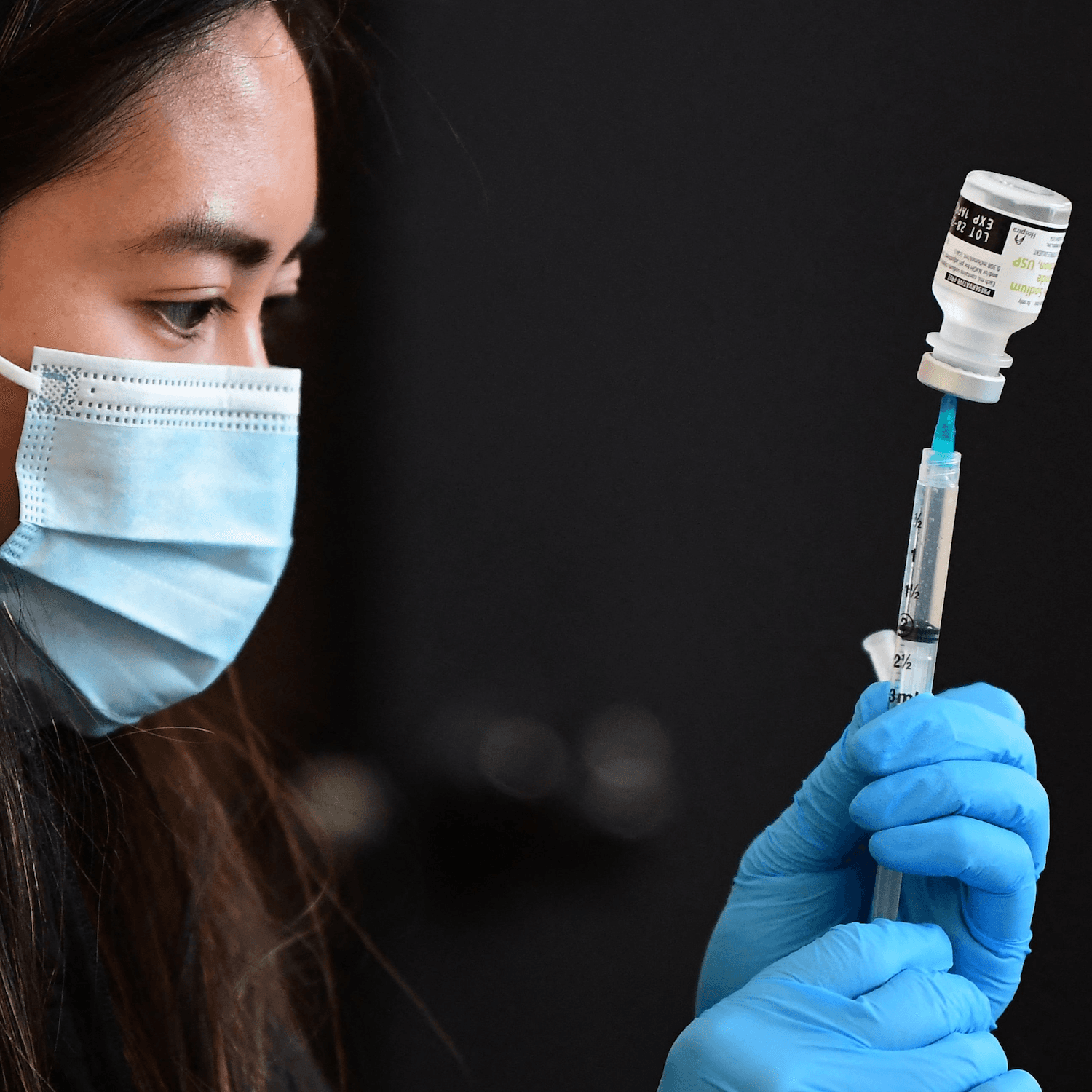
--:-- Shemitah Basu: The Department of Justice is suing the state of Texas over its new anti-abortion law. Attorney General Merrick Garland calls the law clearly unconstitutional. But while it makes its way through court, Texas is preparing another major abortion restriction. This one targeting abortion by medication. ABC News reports on another bill that's ready for the Texas governor's signature.
--:-- Duarte Giraldino: This one would reduce the amount of time a doctor has to prescribe abortion-inducing medicine. This period would shorten from 10 weeks of pregnancy to just 7. According to ABC, most abortions before 10 weeks are done using these pills. The FDA approved medication abortions in 2000. In 2011, the agency restricted the ways people can access these medications.
--:-- Shemitah Basu: If signed into law, the Texas bill would limit options for patients in the very early weeks of pregnancy. It would make it so that if a Texan misses the six-week window to get a procedure-based abortion, they would have just one more week to get abortion-inducing medication. It worth pointing out that by the time someone misses their period they already four weeks in
--:-- Duarte Giraldino: Say shoplifting, and you might think of a kid stealing a candy bar, small-time crime stuff. But right now, stores are fighting shoplifting on an industrial scale. Criminal gangs are stealing things in bulk and reselling them online. The retail industry, it's estimating this causes $45 billion in annual losses. This kind of organized crime is growing fast.
--:-- Shemitah Basu: And as the Wall Street Journal reports, it's pushing retailers to change tactics. Many are now trying to track down these criminals on their own. This story profiles the top investigator for CVS. One day, he saw a man steal more than $1,000 worth of allergy medicine. And then he followed him as he did this at two other stores.
--:-- Duarte Giraldino: Corporate detectives sometimes wait to bust shoplifters. They tail them to see where they're taking the stolen stuff. And often that leads to gangsters who manage these armies of thieves. Some of these organized shoplifters end up making millions of dollars selling things online. Big name brand companies like CVS, Home Depot, Target, Publix, they're teaming up and working with law enforcement.
--:-- Shemitah Basu: You see, the same sophisticated criminal networks often target these stores. And sites like Amazon make it easy for these criminals to turn around and sell stolen products online. It's all being done really quickly and discreetly. One police sergeant calls Amazon, quote, the largest unregulated pawn shop on the face of the planet.
--:-- Duarte Giraldino: Amazon tells the Journal, it works with law enforcement to find bad actors and shut them down. These thieves are going after kind of boring stuff, but it's lucrative. Electric toothbrush heads, razor blades, home improvement gear. One law enforcement raid on a suspect found a home that was so stacked with drills and vacuums, it had an elevator inside to move around bulky pallets.
--:-- Shemitah Basu: Home Depot's investigators said they'd never seen anything like it. Stores say thieves are getting bigger and bolder. That CBS investigator says he's closing cases this year involving more than $100 million in stolen goods. That about twice as much as the previous year And he just hired more people to sniff out the next shoplifting gangs that pop up
--:-- Duarte Giraldino: This has been an incredible time for track and field. Runners have been blowing old records out of the water, sometimes by huge margins. The 400 meter, the 5,000 meter, 10,000, women, men, girls, boys. It's a great time to be a sportscaster, too. Announcers have just been losing it. And it's a world record again! McLaughlin 51-47!
--:-- Shemitah Basu: So how do humans do it? How do they just get faster and faster and faster? Well, it turns out a global pandemic can help in a big way. And before you think it's only about high-tech shoes, check out the New Yorkers reporting on this. One factor is kind of counterintuitive. There were fewer competitions. You'd think that would mean fewer opportunities to break records, but racing less gave runners more time to train and recover.
--:-- Duarte Giraldino: Another thing that might not be obvious if you're not an elite runner, you win a race by being faster than everybody on the track, right? That's not the same as being the fastest ever. And sometimes part of the strategy is to hold back at certain points. You run just fast enough to beat your competition that day, but not so fast that you risk injuring yourself.
--:-- Shemitah Basu: Because of the pandemic, top runners were in a lot more situations where they were not racing each other, but rather racing the clock. And they killed it. As the piece puts it, when you win an Olympic gold medal, your time doesn't matter. But when it's just you against the clock, time is all that matters.
--:-- Duarte Giraldino: You can find all these stories and more in the Apple News app. And check out our weekend interview show in conversation. This week, I speak with frontline documentary filmmaker Michael Kirk. His latest film looks at how the U.S. changed after 9-11. It draws connections all the way to the January 6th attack on the Capitol. We ask everybody we interviewed, do you feel the connection? And they say, yes, yes, absolutely.
--:-- Shemitah Basu: Enjoy that weekend listen. We'll be back with the news on Monday.