--:-- Ryland Barton: Military commanders, intelligence officials, diplomatic power players, they know things you may not about where the world is headed. And we will pull back the curtain on what they're thinking on Sources and Methods, NPR's new national security podcast. Our team will help you understand America's shifting role in the world. Listen to Sources and Methods from NPR.
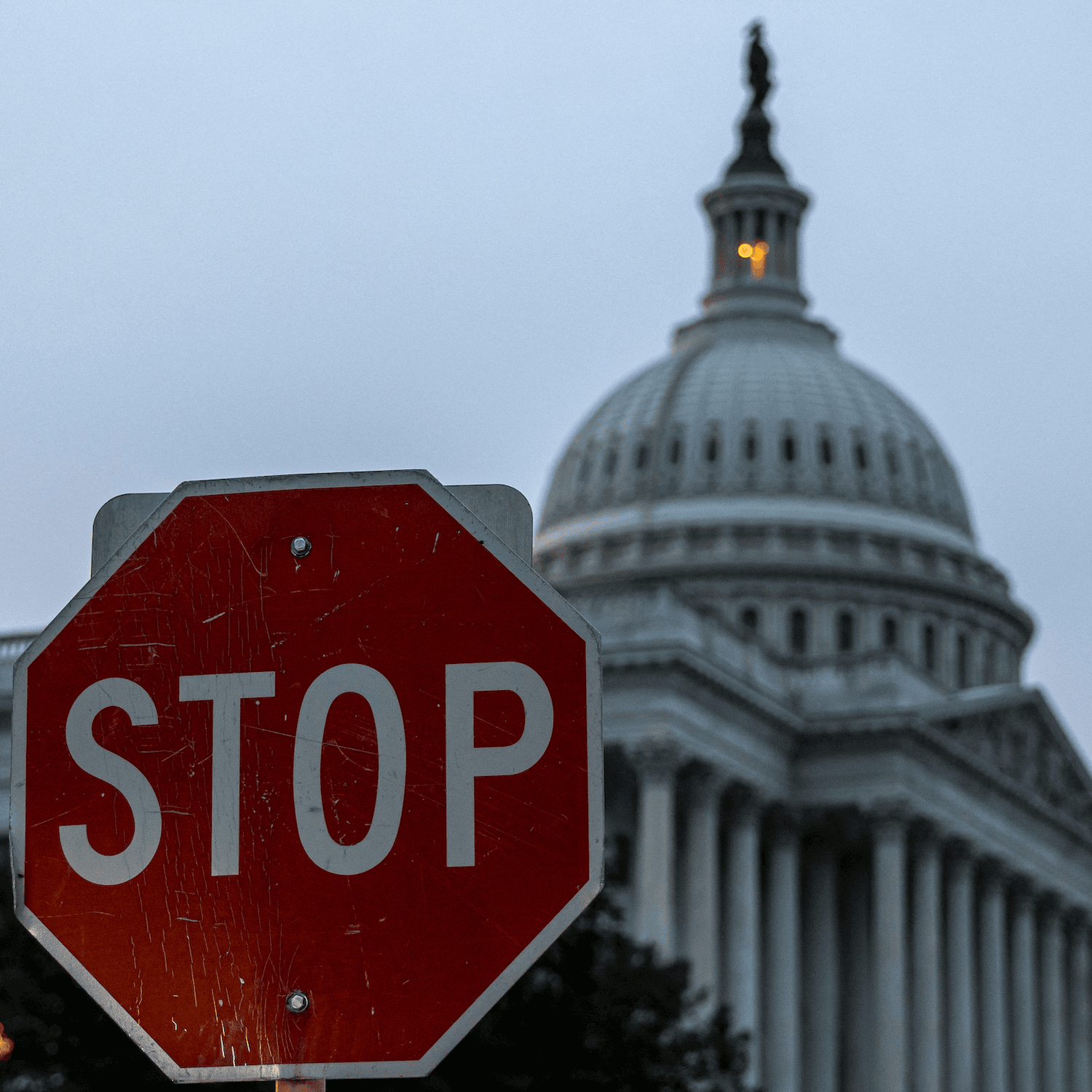
--:-- Ryland Barton: Live from NPR News in Washington, I'm Ryland Barton. A government shutdown is less than six hours away, as top Democrats and Republicans in Congress say they're no closer to reaching an agreement to fund the federal government after midnight.
--:-- Sam Greenglass: A vote tonight on a short-term patch is expected to fail, as NPR's Sam Greenglass explains. Senate Majority Leader John Thune needs a handful of Democrats to help pass a funding bill that will keep the government operating at current levels for the next few weeks.
--:-- Sam Greenglass: This is totally avoidable. It is a decision they're going to have to make. And if the government shuts down, it is on the Senate Democrats.
--:-- Chuck Schumer: But Minority Leader Chuck Schumer says the funding measure must include an extension of subsidies for health insurance premiums expiring this year.
--:-- Chuck Schumer: As Republicans continue to lie, distract, duck, hide, Democrats remain ready to get to work and keep the government funded Without an agreement the government will shut down at midnight
--:-- Sam Greenglass: Sam Greenblass NPR News
--:-- Domenico Montanaro: People would blame Republicans more for a shutdown according to new polling from NPR PBS News and Marist NPR's Domenico Montanaro has more.
--:-- Domenico Montanaro: Neither party would get the majority of the blame, but Republicans who control both chambers of Congress would get more of it than Democrats by a 38 to 27 percent margin.
--:-- Domenico Montanaro: Another 31 percent say they would blame both parties equally.
--:-- Domenico Montanaro: Across the political spectrum, people are split on whether it's better to compromise to avoid a shutdown or to stand on principle, even if it means one would occur.
--:-- Domenico Montanaro: Democrats and independents lean toward compromise, while Republicans tend toward standing on principle.
--:-- Domenico Montanaro: The survey of more than 1,400 people across the country was conducted over five days last week.
--:-- Domenico Montanaro: It has a margin of error of plus or minus three percentage points, meaning results could be three points higher or lower.
--:-- Domenico Montanaro: Domenico Montanaro, NPR News, Washington.
--:-- Joe Hernandez: President Trump and Defense Secretary Pete Hegseth addressed senior military commanders who came in from all over the world for a meeting outside Washington today.
--:-- Joe Hernandez: Hegseth told the group of generals and admirals that the Pentagon's new focus would be warfighting.
--:-- Joe Hernandez: Hegseth has made a warrior ethos central to his view of the military, and he reiterated that message telling top generals and admirals that the newly renamed Department of War had lost its way and become woke.
--:-- Joe Hernandez: He added To ensure peace we must prepare for war
--:-- Joe Hernandez: Hegseth summoned top U military commanders from around the world for the unusual meeting in Quantico Virginia made even more unusual by the presence of President Trump.
--:-- Joe Hernandez: The defense secretary has called for reducing by about 20% the number of admirals and generals who stand at more than 800.
--:-- Joe Hernandez: Joe Hernandez, NPR News.
--:-- [Announcer voice]
The U.N. has authorized more troops to try and stop escalating gang violence in Haiti. The new 5,500-member force will have the power to detain suspected gang members, which the current peacekeeping effort does not have.
--:-- [Announcer voice]
Gangs in Haiti have grown in power since the assassination of the president there in 2021.
--:-- [Announcer voice]
In Washington, this is NPR News.
--:-- [Announcer voice]
The United States is deporting hundreds of Iranians back to Iran in the coming weeks. That's according to Iran and not yet publicly acknowledged by the U.S. government.
--:-- [Announcer voice]
It comes as tensions remain high between the two countries following the American bombings of Iranian nuclear sites in June.
--:-- [Announcer voice]
This summer, Congress and President Trump ended federal support for public media, and that funding officially stops tomorrow.
--:-- David Folkenflick: In South Dakota, NPR's David Folkenflick says public broadcasters are making deep cuts as they chart a new course.
--:-- David Folkenflick: South Dakota Public Broadcasting owns NPR and PBS stations.
--:-- Julia Overgaard: Julia Overgaard is its executive director. We not a huge staff And you know it like a cookie or a pie and you keep trimming around the edges But million there is no way to trim around that
--:-- Julia Overgaard: Certain programs were off the table.
--:-- Julia Overgaard: Overguard promised lawmakers no touching its extensive schedule of high school sports and fine arts activities, nor its gavel-to-gavel coverage of state government.
--:-- Julia Overgaard: The station had 11 journalists. It's down to four.
--:-- Julia Overgaard: In the past three months, the station's private foundation has raised $1.7 million more than it did in the same period last year.
--:-- Julia Overgaard: The foundation is trying to bring back some journalists to pilot new initiatives.
--:-- David Folkenflick: David Folkenflick, NPR News, Sioux Falls, South Dakota.
--:-- [Announcer voice]
Police in Northern California pulled over a Waymo self-driving taxi after it made an illegal U-turn.
--:-- [Announcer voice]
The San Bruno Police Department wrote that officers were conducting a DUI operation when they stopped the vehicle, but didn't give it a ticket because, as they put it, citation books don't have a box for robot.
--:-- [Announcer voice]
From Washington, this is NPR News.
--:-- [Announcer voice]
On the ThruLine podcast from NPR, immigration enforcement might be more visible now. But this moment didn't begin with President Trump's second inauguration, or even his first.
--:-- [Announcer voice]
A series from ThruLine about how immigration became political and a cash cow. Listen to through line in the NPR app or wherever you get your podcasts.