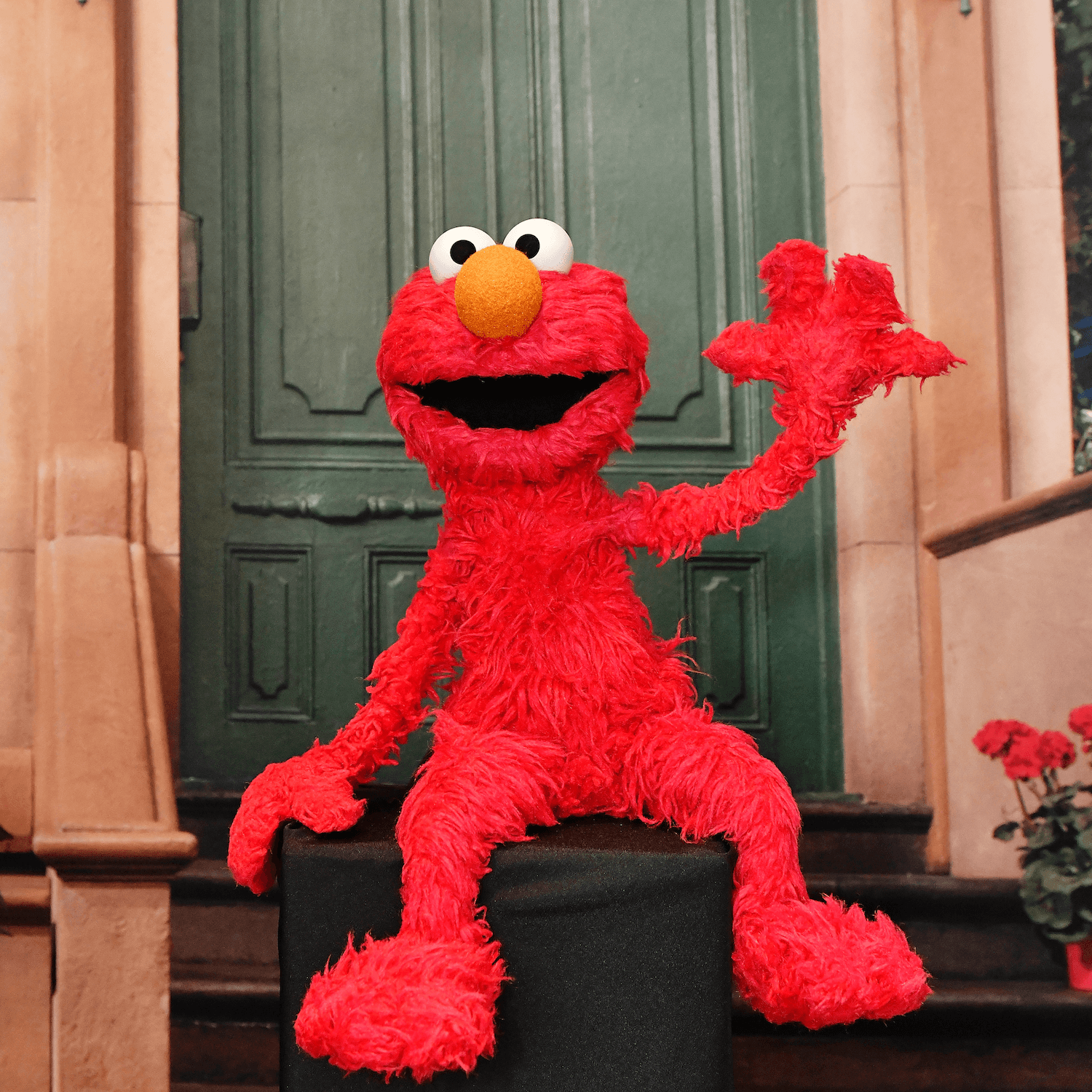
From Elmo to emergency alerts: The impact of public media cutsApple News Today · Jul 17, 2025
Main Topic: Inflation and its impact on the US economy
Key Points:
Participants:
Takeaways:
Upbeat music fades out
Host
Support for Today Explained comes from BetterHelp. Let me tell you a true story. Last weekend, I got an email from a listener who wanted to discuss their problems with me. And I said, look, I don't think that this is about me personally. At least I hope it's not. Why don't you try BetterHelp.com slash Explained? Absolute truth. As the largest online therapy provider in the world, BetterHelp can provide access to mental health professionals with a diverse variety of expertise. Find the one with BetterHelp. The one is not me, guys. Our listeners get 10% off their first month at BetterHelp.com slash explain. That's BetterHelp.com slash explained.
Music transitions to a new segment
Having a night out with your friends is awesome. Dealing with hangovers sucks. Meet Senorita, the THC-infused margarita that lets you skip the booze but keep the vibe. Made with real fruit, organic agave, and Himalayan pink salt, every sip is like a mini getaway. No fillers, no hangovers, just full flavor and a better buzz. Find your flavor at senoritadrinks.com. Use code VOX20 for 20% off. Must be 21 and over. This product may cause intoxication. This product has not been evaluated or approved by the FDA. This product may contain up to 0.3% THC.
Music transitions to a new segment
Emily Stewart, Vox, you and I have talked about inflation on this program before, but it's confusing and it's pretty important right now. So just in case anyone out there is too embarrassed to admit that they don't fully understand what exactly inflation is, Let's just start by doing a quick definition. What exactly is inflation again?
Emily Stewart
Inflation is just a general rise in prices. So basically, your dollar doesn't go as far as it used to. The basket of stuff you would buy at the grocery store every week, it starts to cost more money.
Host
I think it's important to realize prices rise slowly over time, right? Like a cup of coffee today costs more than a cup of coffee in the 60s, right? And you don't think that's weird because most people just don't notice low inflation over long periods of time. Right. Inflation gets brought up when prices are going up faster and you actually start to notice when you go to the grocery store and you're like, wait a minute, like what just happened? I bought the same stuff I do every week.
Emily Stewart
Which is exactly what's happening right now. Yes, exactly. Inflation is really increasing at a rate that we haven't seen in quite some time. OK, you know this already. Americans are paying more for just about everything right now as inflation hits a 30 year high. Regular gas prices up more than 50 percent. Utility gas, 28 percent. Used cars, beef, pork, eggs, all up.
Host
To put it a little bit more concretely, the Consumer Price Index, which measures what consumers pay for goods and services, rose by 6.2 percent over the past 12 months as of October. And that's the fastest pace since 1990. And prices were up almost 1 percent over the month. That's a lot. That's something that you notice when you go out to a restaurant. I've noticed it. Sometimes I'll go out to a restaurant and be like, wait, is wine this much? Like, it does just start to creep into your life.
Emily Stewart
The Warehouse Grill and Drinkery near Omaha says it had no choice but to add $2 to all chicken and beef dishes on the menu and an extra $3 for steak. I've been to multiple restaurants where there's just like a sticker on the menu that says like every price is 15% more. Really? Yeah.
Host
The other reason for the price hikes, restaurants and their suppliers are facing a major shortage of workers, which is forcing them to pay higher wages to keep and attract staff. We have heard a lot, obviously, about wages going up during the pandemic. Right. Or I guess in recent months that workers are not going back to work. They're demanding higher wages. But what's happening now is that wages overall are not going up as fast as inflation. Real wages, meaning wages adjusted for inflation, are down about a percent this year. So if workers are making wage gains or just your paycheck is going up or staying how it is, like your paycheck is not going as fast as prices are. So your money is not getting as far as it used to, maybe.
Emily Stewart
Who can afford to fill up 15, 20 gallons of gasoline? I know a lot of people are struggling. The last time we talked about inflation on the show, which was back in June, I think the episode was called Why Stuff is Getting More Expensive. You told me that a lot of people thought our inflation situation was temporary, a problem created by the supply chain kinks that came out of the pandemic. Is that still the consensus?
Host
It depends who you ask. But at this point, I think it's safe to say that this is lasting a lot longer than a lot of economists and policymakers thought and certainly hoped earlier this year. You know, the White House has been really vocal that this is transitory, meaning it's temporary. Our experts believe, and the data shows, that most of the price increases we've seen were expected and are expected to be temporary. Reality is you can't flip the global economic light back on and not expect this to happen. You know, that was June. It is now November. It's lasting a little bit longer than people thought. And it's broader as well, right?
Emily Stewart
But I do think it's kind of, you know, important to maybe talk about a specific thing because it does feel like everything, right? And one big example that we seen kind of throughout the year is used cars. They are much more expensive than they used to be. So the price of used cars are up 26 year over year. That's a lot, right? Yeah, that's a lot. So now might be a good time to trade in or sell your car. You could turn a profit. Dealers say they-
Host
And there's a whole bunch of different reasons for this. There is a chip shortage for new cars, which kind of spills over into used cars. You know, people also don't want to take public transportation. And so it's all kind of a mess, right? And that has led to used cars being very expensive. If you're on the market for a used car, you probably know that. And so, you know, for most people, like I didn't buy a car last year. It doesn't necessarily matter for me. But if you were on the market for a used car last year, you're like annoyed at this point. I know a lot of people bought used cars during the pandemic because they discovered, you know, it'd be nice to go places. But it's not like it's a daily purchase or a weekly purchase.
Emily Stewart
What about more everyday stuff like groceries? Well, that's the thing. Like inflation really is starting to pick up everywhere in a way that's noticeable. My mom's been complaining to me that her Christmas baking is more expensive, right? So it is showing up everywhere. The prices of food are going up. Price of beef is up 20% year over year. Bacon is up 15%. Eggs are up 12%. Gas is going up a lot, and that's super annoying to people. Some out in California spending as much as $5 a gallon to fill up. Experts say demand has just outpaced supply. According to AAA, a price of unleaded gas is about $3.40 right now. A year ago, it was $2.11. Right. And with some of that stuff, it should be important to note that it's a little bit tricky. Like, gas prices are not Joe Biden's fault. Oil is a global commodity, right? So this isn't like a U.S. problem. It's a world problem. During the pandemic and early on, demand dropped. So production dropped. And so now, you know, as people are traveling again, getting back out on the road, as there is more demand for oil, it's taking kind of the industry a while to catch up.
Host
Sounds like it's a great time to be like a vegan who rides a bicycle. I mean, that's a great time, but maybe not a fun time. I'm sorry. And the cost of heating is also predicted to rise. And so, you know, like I said before, most people are noticing that something's going on. I know this is all a pretty unpredictable science, but do economists have any theories about when this might end?
Emily Stewart
I think it's safe to say this is probably not going to stop before the holidays, which is not ideal. At the same time, I do think this year's holiday season is probably maybe health-wise safer than last year. But we don't really know when it's going to end. Like, are these things going to shake themselves out? Will the government need to act to kind of help things shake themselves out? And there's also a concern that as people come to expect inflation, that makes it worse. People start to ask for higher wages. Businesses start to raise prices. And so it sort of becomes this self-fulfilling prophecy. And there is some concern that that will, you know, sort of cause things to spiral.
Host
I don't think we're headed towards 1970s level inflation, which is what a lot of people talk about, or at least a lot of economists say that's very unlikely. But it is a little bit murky right now. But there is something the federal government could do here to sort of slow the inflation. Right. The Federal Reserve is tasked with managing inflation, and they can take steps that, at least historically, have slowed the rise of prices. But those steps do come at a cost.
Music transitions to a new segment
Chime says with qualifying direct deposits, you can be eligible for free overdraft up to $200 on debit card purchases and cash withdrawals. Plus, they say you don't need to worry about monthly fees or maintenance fees. You can work on your financial goals through Chime today. You can open an account in two minutes at Chime.com slash explained. That's Chime.com slash explained. Chime feels like progress. Chime is a financial technology company, not a bank. Banking services and debit card provided by the Bancor Bank N.A. or Stride Bank N.A. Members FDIC. Spot me eligibility requirements and overdraft limits apply. Timing depends on submission of payment file. Fees apply at out-of-network ATMs.
Music transitions to a new segment
Emily before the break you mentioned that there is stuff the Federal Reserve could do to step in here and manage inflation. What can they do?
Emily Stewart
So one big thing that the Fed can do is to raise interest rates, which basically means making it more expensive to borrow money. And that would slow the economy down. And historically, at least, raising interest rates would theoretically slow down inflation. I think it's also important to note the Fed has started, quote-unquote, tapering, meaning it's scaling back some of its bond-buying program meant to help the economy. So the Fed is slowly already kind of cooling down a little bit its support for the economy. But, you know, there is growing pressure for them to do something on interest rates. If inflation persists, which I think it will, it will move forward the point at which the Fed is forced to raise interest rates. And sooner or later, they've got to do that. The Fed chair, Jay Powell, has resisted acting on interest rates. He's been pretty clear that the economy is still recovering from the pandemic and he really wants to get people back to work.
Host
I would want to assure people that we will use our tools as appropriate to get inflation under control. We don't think it's a good time to raise interest rates, though, because we want to see the labor market heal further. But it's kind of a tricky line because the Fed is a little bit too trigger-happy, starts raising rates that could hinder the recovery and make things worse. And at the same time, you don't want inflation to get so bad that it really also hurts the economy. So he's in a little bit of a tough spot.
Emily Stewart
How does El Presidente feel about that tough spot that the Fed chair is in? Well, we're kind of about to learn that right now. President Joe Biden can decide whether or not to reappoint Powell to be the Fed chair. We think that might happen this week. So I guess we'll know pretty quickly how he feels about Powell's job performance. Who might President Biden replace Jerome Powell with if he decides to do that this week or the next? It looks like the other person who's kind of the top contender here is Lyle Brainerd, who is on the Fed's board of governors. Lyle Brainerd. Yeah. Lady. Sounds like they might have the right head for this kind of problem. That's quite a joke. Yeah, I mean, with her, the thing is that we don't know that she would have a super different take than Powell on inflation or the path of the Fed going forward.
Host
Proponents of Powell's say he's charted the economy through the pandemic and a course change could introduce more uncertainty. A renomination would reaffirm the Fed's independence from politics. But he's a registered Republican, which progressives say is a nonstarter. They largely back Governor Lael Brainard, citing her record on financial regulation. If Biden were to choose her, it would signal that he's not happy with what Jay Powell has been up to and not happy with what's going on in the economy right now. It sounds like a tough tradeoff, though, like having some people be able to find a job versus having everyone paying more for food, gas and electronics. Right. I think that's sort of the hard thing to square here.
Emily Stewart
You know, millions of people lost their jobs when the pandemic hits and lots of people have gotten their jobs back. But not everybody. We kind of don't understand entirely what's going on in the labor force, why people are not going back to work. And, you know, I think it's just one of those things where, again, is it better that people are paying a little bit more for ice cream or milk or whatever they're getting at the store, but they have a job to help them pay for that or not? And I do think it's also important to point out inflation is happening in a lot of places in the world, not just the United States. So everybody's kind of dealing with the same problem. Okay, so there's this open debate. about, you know, employment versus inflation. But what we know for certain is that a lot more Americans are freaking out about inflation, yeah? Yeah. People hate inflation. We started seeing everything going up. Grocery prices went up. A gallon of milk was $1.99. Now it's $2.79. Well, when you buy 12 gallons a week times four weeks, you know, that's a lot of money.
Host
Neil Irwin at The Times has a good story about this, that, you know, people do have money in their pockets thanks to the stimulus checks to the American Rescue Plan. People have a lot of job opportunities. People are quitting their jobs at a high rate, which is generally a sign that they feel like they can find another job. And yet people feel really bad about the economy. And a lot of that is inflation. Michigan puts out a survey on consumer sentiment that basically shows that people feel worse about the economy right now than they did in April of 2020, like when the pandemic was hitting and we thought maybe we were headed into like another Great Depression, right?
That was a scary time. Yeah, real scary time. That's what's really wild about this. Like people feel bad now. Just 22% of adults say we're headed in the right direction. A shocking 71% say we're on the wrong track. And that includes a near majority of Democrats who are saying that. And again, people are sitting on cash from the government stimulus programs. Employers are begging people to take jobs. We see all of these stories about how there are all these job openings. People aren't going back. But inflation has a really powerful psychological effect. People don't like it, and they start to worry about it.
And it is nerve-wracking. It's understandably nerve-wracking. If you think your paycheck is not rising with your cost of living, that's a scary prospect.
And this is why despite getting some stuff done and generally keeping a low profile people seem to be not terribly satisfied with the job President Biden doing right now huh Yeah that what the polling suggests People don't feel good about the economy and they don't feel good about Joe Biden. A recent NBC News poll found that just 40 percent of people approved of Biden's handling of the economy. That's down from 52 percent in April. So it's quite a drop. Come on. And I know Biden just had a big win on traditional infrastructure, but there's still this second half of that question about all that sort of human infrastructure care stuff that he wants to do.
Are the numbers and the approval ratings and the drama on inflation getting in the way of him getting his care package done? I think it's fair to say that inflation doesn't help. There are some people in Congress who don't want to vote for Bill Backbatter for plenty of reasons. Joe Manchin. For more than 20 years, Joe Manchin has gotten his hair cut by the same barber, his wife, Gail. Kirsten Sinema. Miss Sinema. Miss Sinema. No. This kind of gives them another thing to add to the list of like, maybe I'm not so sure about this bill. Maybe let's think about it. Republicans have also been really unified around the message that, one, inflation is terrible.
Two, inflation is Joe Biden's fault. He's coming for your Christmas. And three, passing a big social spending bill will make inflation even worse. So they're pretty aligned on this. So how much inflation will hurt Build Back Better and the chance at a reconciliation bill? Hard to say, but I think it's really fair to say the White House would much rather not be dealing with this.
Emily Stewart
Biden is trying to make the argument that Build Back Better will lower inflation because it will let more people get back to work. It will improve the supply chain. Seventeen Nobel laureates in economics wrote a letter to me about 10 days ago saying this is going to affect bring inflation down, not up. How successful that will be. Who knows? I mean, how successful any of this will be. Who knows?
Host
It sounds like there are just a lot of unknowns. But the one thing we know is that inflation is happening. It's a real issue for a lot of people. People are displeased. It's not going away. It's going to affect Christmas, which probably won't be good for Joe Biden. And that's about where the clarity ends. Do you think there will at least be some kind of consensus about how to handle this problem, maybe in the near future? I mean, to a certain extent, we know a little bit how to handle the problem. The Fed is not asleep at the wheel. If inflation does start to become really worrying, they're going to start to raise interest rates.
I think full stop. They're not not paying attention. But I think the broader point here is that the economy is really confusing right now. Like we are coming out of an unprecedented shutdown and the labor market is super weird. Nobody quite knows what's going on everywhere. I think anybody who says they know exactly what's happening in the economy right now, like it's just not true. Nobody quite knows. But it is important to kind of also think about we've made a lot of big gains since March 2020, right? A lot of the government stimulus really did help people. Low-wage workers have the upper hand for the first time in a long time in some industries.
And it's not clear that higher interest rates are going to solve something like a trucker shortage, right? Like if you don't want to drive a truck because driving a truck sucks, like higher interest rates are not going to change that.
I guess, like, the thing that at least I keep telling myself as I feel annoyed about inflation heading into the holidays is, like, I haven't been home for Christmas to see my mom in two years. And this is the first time I'm going to be home, right? It sucks that things are going to be a little bit more expensive, but maybe just, like, buy less and enjoy the fact that maybe you can see your family a little bit more safely this year. I like that. And maybe in the new year, consider becoming a vegan who bikes. If you insist.
Emily Stewart, she's grateful she can see her family a little bit more safely this year. So is Miles Bryan and so is Will Reed. They produced this episode. I'm Sean Ramos for them. It's Today Explained and we're closing out our series on the future of work this coming Friday with an episode all about retirement. Do you think about retirement? What are your retirement plans? Does thinking about or planning for retirement give you anxiety, joy? We want to hear all about your feelings regarding retirement before Friday. Heck, we want to hear about them right now. Give us a call and leave us a brief message at 202-688-5944. Again, that is 202-688-5944. or you can email us a brief voice memo. We're today explained at vox.com. Thanks. We'll do it.

