--:-- Sean Rameswaram: Welcome to Today Explained, I'm Sean Rameswaram.
--:-- Ashish Malhotra: Thanks for having me on the show.
--:-- Sean Rameswaram: Today, we're talking about India's massive election. When you have 900 million eligible voters, elections take a little longer. After 39 days of polling, India's will be over this week. Ashish Malhotra is a freelance journalist based in New Delhi. Ashish, thanks for joining us.
--:-- Ashish Malhotra: Thanks for having me on the show.
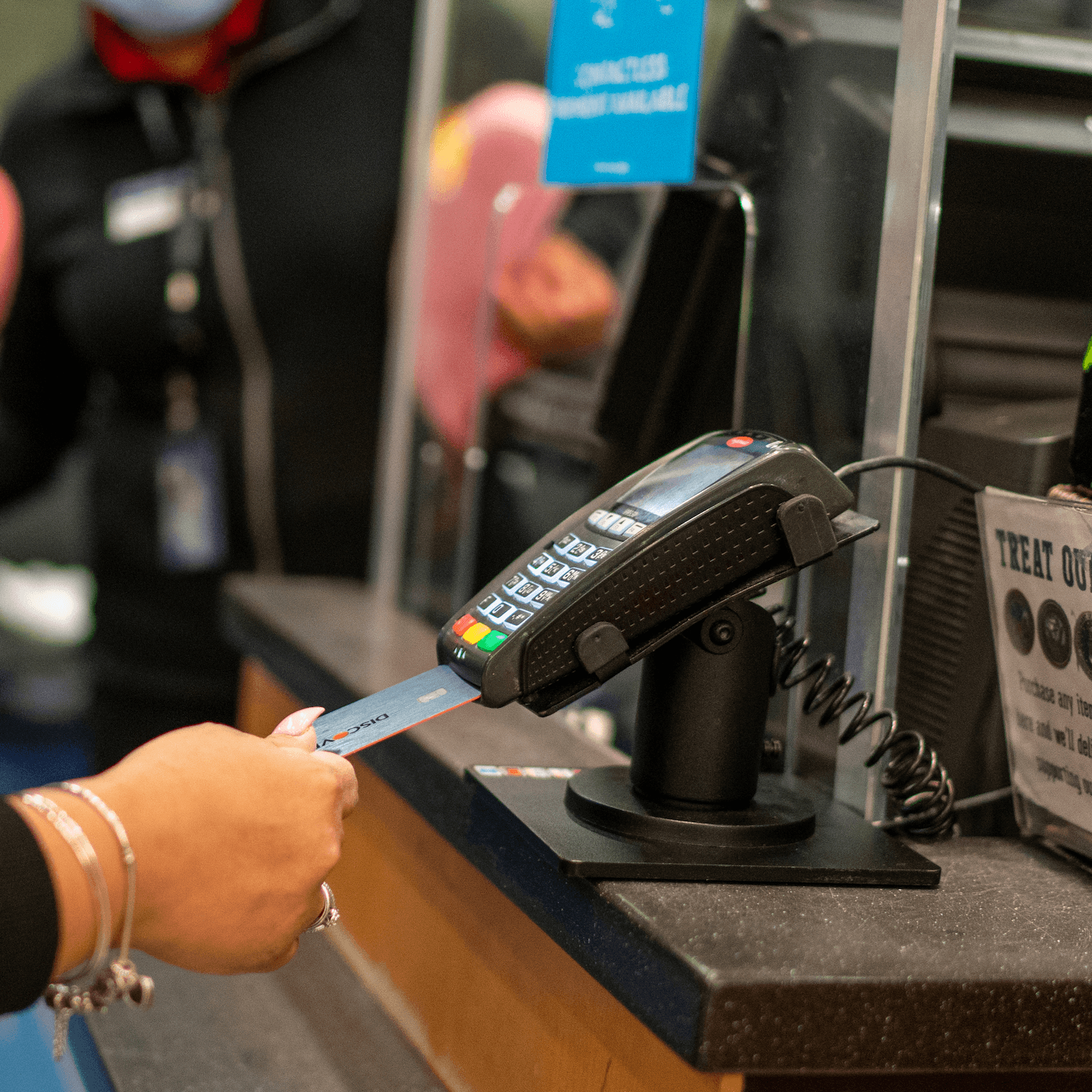
--:-- Sean Rameswaram: What does your bank card actually say on it, the plastic, other than like Visa or MasterCard or whatever it might be? I just went to their website. It says, do well, do good. Sounds pretty good. Aspiration, you can download the app to open up an account today. Save money while you try and save the world.
--:-- Ashish Malhotra: Irfan Nooruddin, Georgetown University. Correct me if I'm wrong, but like the biggest experiment in democracy the world's ever seen is happening right now in India?
--:-- Sean Rameswaram: No correction needed. It is. It is unprecedented, the scale of what is being done in India over the last five weeks and which will conclude at the end of this week. With an election that will have seen 900 million voters registered and eligible to vote and some 600 million votes expected to be cast over seven phases of election.
--:-- Ashish Malhotra: Quite literally nothing like this has ever been tried before anywhere in the world. We have something on the order of 3,000-plus registered candidates across 543 constituencies, and that's probably an underestimate because it doesn't include the myriad folks running as independents, probably no chance of receiving more than a handful of votes, and yet they're out there campaigning. There are constituencies in which you quite honestly have 20, 25 names on the ballot.
--:-- Sean Rameswaram: So it is not just an unprecedented exercise in terms of the people participating, but it really is mass democracy in that lots and lots of people aspire to public office and compete for people's votes. So I guess the, you know, $600 million question, Irfan, is how do you get that many people to vote? How does the system work?
--:-- Ashish Malhotra: The Election Commission of India is a remarkable institution and maybe one of India's premier public institutions, with tremendous legitimacy and credibility. It's a national mobilization effort. You have 11 million voter officials, election officials, who are recruited to participate in this election.
--:-- Sean Rameswaram: The Election Commission guarantees that a polling booth A polling box will be provided within two square kilometers of any population concentration. You have images that I'm sure some of your listeners have seen of ballot boxes being taken to remote villages on elephant. And by camel, literally to set up a ballot booth for single voters who happen to be in far flung, extremely remote areas.
--:-- Ashish Malhotra: Could you tell me a little bit more about how people actually cast their ballots? Because that is just so dramatically different than what people in, I don't know, the West might be used to.
--:-- Sean Rameswaram: The main difference is that unlike in the West where we tend to associate a ballot paper with a list of names with their party affiliations, the ballots in India would look most different. And that's because so much of this large population is functionally illiterate. The use of party symbols on the ballots makes these very colorful things to look at, right? I mean, every party has a unique symbol that is approved by the Election Commission.
--:-- Ashish Malhotra: What are these symbols? I think it might be a little hard. I mean, in the States, we got like, what, a donkey and an elephant. What do they got over there in India? They're much more colorful. They're much more everyday.
--:-- Sean Rameswaram: The big ones, the ones you're most likely to see if you're walking around an Indian street or a village, are the two associated with the big national parties. The current ruling government, which is run by the Bharatiya Janata Party or the BJP Party, has the lotus. The hand, which is the Congress Party symbol and the oldest party in the country, is also ubiquitous.
--:-- Ashish Malhotra: Other symbols include everything from the hammer and sickle of the communist parties to irons, the kind of things you use to press your clothes. The only limitation is that these cannot have religious connotations. So, for instance, maybe India's most prominent and best known symbol is that of the Taj Mahal. But because the Taj Mahal is a mausoleum of Muslim heritage, that would not be appropriate and would not be allowed by the Election Commission.
--:-- Sean Rameswaram: But other than that, pretty much anything you could think of could be a symbol. Bicycles, cars, airplanes, all of that's fair game. Tell me the bicycle party's cool. The bicycle party is very cool. They have a government program to get a free bicycle. So, isn't that cool?
--:-- Ashish Malhotra: People have used, like, the term festival to describe India's election. Is that dismissive? Is that accurate? Is it fun? I suppose if one wanted to be a little sensitive about it, there's a little condescension implied in the whole language of festivals, such as that maybe that this is not serious, that wow look at these people voting how unique.
--:-- Sean Rameswaram: The fact is that Indians vote a lot. This is we have been having national elections since 1952. Every state in the country is elected. The state governments in every state in the country are elected. There are elections all the time. These are very sophisticated voters. They're very sophisticated political parties. It's a very sophisticated democracy. But yes, it's fun. Right? I mean, I heard the Election Commission puts out music videos. It's colorful, posters and hoardings, pictures of politicians all over in a way that would not be true in the United States.
--:-- Ashish Malhotra: Campaign rallies that are big and loud, right? People driving through the streets with megaphones from the backs of trucks, blaring out campaign slogans. So in that sense, it is a festival. It is really a celebration of India's democracy, an affirmation that this is fairly unique, a real achievement in a world in which so many democracies seem to be quite challenged.
--:-- Sean Rameswaram: How expensive is it to run the biggest election the world's ever seen? The full costs of the elections are unknown to an exact dollar amount, but the estimates are that this election will be one of the most expensive in recorded history, maybe coming in at somewhere between five and seven billion U.S. dollars.
--:-- Ashish Malhotra: Most of those many billions of dollars is because parties have to expend tremendous amounts of resources to put their message out there, to mobilize local cadres to go out and turn out the vote, to mobilize voters to get advertising. Many things that are, of course, quite familiar to elections and democracy all over the world. But because of the diversity of the country, every party has to be able to run a multilingual election campaign.
--:-- Sean Rameswaram: If you're running across the country, you are talking about getting to voters in 25 different national languages and 500-some dialects. So these have to be tailored campaigns that have to be replicated and reproduced the length and breadth of the country. And television advertising and print advertising is the name of the game. And that's expensive.
--:-- Ashish Malhotra: The other category of expenses that is quite different than that in more established democracies is that at these rallies, parties have to distribute lots of goodies to would-be voters as part of quoting their vote. And this ranges from everything like televisions and laptops in some places to alcohol and just outright cash.
--:-- Sean Rameswaram: What? Is that the festival part or the bribery part? Well, that's a great question, and it's one that academics and journalists think about a lot. Is this vote buying? Is this some form of coercion when poor voters are being induced to vote because they are promised or given outright large amounts of cash or something else?
--:-- Ashish Malhotra: What voters will tell you is that the one part of the Indian election system that works from their perspective is that the secrecy of the ballot, their ability to go into a ballot booth and vote confidently knowing that nobody else will know how they voted. And as a result, what they do at these election campaigns is they'll take the goodies from every party that has it on offer, and then they will go into the ballot box and vote just as they would even if none of those incentives have been provided.
--:-- Sean Rameswaram: One of the things that your listeners might not know is that India's elections are characterized by very high anti-incumbency. To be an incumbent, to be the guy who won the last election, is actually a disadvantage in Indian elections. Lots of people lose their seats in every election, unlike in America, in which once you've won that first election, you're probably guaranteed to win the next one.
--:-- Ashish Malhotra: So it seems that there isn't really a link between taking the goodies and actually voting for the party that gave you the goodies. But a party that doesn't give you the goodies shows itself as not being serious and so can't compete.
--:-- Sean Rameswaram: I guess Americans would balk at the idea of handing out laptops or booze at like polling booths. But then again, our elections aren't exactly totally sound either.
--:-- Ashish Malhotra: I wonder, do you think other countries could learn something from the way India conducts its elections? Certainly. The conditions under which India runs its elections have far more to teach other developing countries than the version of elections that are run here in the United States or maybe run in England or Germany or France.
--:-- Sean Rameswaram: That if you're Nigeria or Kenya or the Philippines or Indonesia or indeed Argentina or Brazil, that India looks much more like the democracy that you have, both in terms of the population profile, in terms of the nature of the political parties, in terms of the media markets that you're working with, than to other places.
--:-- Ashish Malhotra: And so there an increasing stream of election workers from other parts of the world election officials from other parts of the world who come to India to observe and learn how India carries out this election.
--:-- Sean Rameswaram: Irfan Nooruddin is the director of Georgetown University's India Initiative. It's a bunch of people in India and the United States who try to come up with big solutions to big problems.
--:-- Ashish Malhotra: The craziest thing about India's election, the biggest election of all time, everybody already knows who's going to win. That's next on Today Explained.
--:-- Sean Rameswaram: I don't know about you, but my phone's pretty full. It's like a 32 gig or something. So I'm constantly having to delete stuff to install new stuff and it prevents me from wanting to download new stuff. But a thing you could do with your bank app is delete it and maybe close out your account and download Aspiration and put your money where your heart is because all you have to do to open up an Aspiration account is download the Aspiration app and then all of a sudden you're earning 2% annual interest. You're paying zero ATM fees and maybe you're saving the planet while you're at it because Aspiration commits 10% of its earnings to charities that help other Americans and offers extra cashback rewards for shopping at socially conscious businesses.
--:-- Ashish Malhotra: They also promise that none of your money will go towards funding oil pipelines or drilling that harms the planet. They're a financial firm that wants to put more money in your pocket and give you more power to do good.
--:-- Sean Rameswaram: Okay, so yeah, my name is Ashish Malhotra. I'm a freelance journalist based in Delhi. I do work for various different outlets, such as the LA Times, The Guardian, Al Jazeera. And yeah, I'm currently in Delhi right now at a friend's apartment, and there's a cat here as well. So you may hear him from time to time. His name's Nutmeg.
--:-- Ashish Malhotra: Prime Minister Narendra Modi is by far and away the favourite to win a second term and that's only sort of been solidified by a bunch of exit polls. Just based on these numbers, almost like a repeat of 2014. Perhaps a slight reduction in numbers, but pretty much like kind of a BJP NDA sweep.
--:-- Sean Rameswaram: I say solidified in the sense of, you know, the feeling that people have on the ground. Of course, exit polls could be off. You know, we've seen that across the world in recent years. So that could very well be the case here.
--:-- Ashish Malhotra: But certainly even before the exit polls, you know, there was a sense that Modi would be coming back to power, perhaps with a lower share of seats for him and his ruling coalition, but still with enough to see a second term.
--:-- Sean Rameswaram: I went to quite a few rallies and political roadshows here in Delhi. There was a big one for Modi. Even before he came, he was actually everywhere because everyone was wearing masks of him. There were giant cardboard cutouts of him bouncing around in the air over the crowd. And so in that sense, he's everywhere you go. His face is everywhere you go.
--:-- Ashish Malhotra: I called the economist to the Congress party. Look at him, for the last five years, Narendra Modi has been working. Note bandhi, Gapar Singh tax... At the Rahul Gandhi rally I went to, who's the leader of the Congress party, which is the main opposition party, the following day, there wasn't a single Rahul Gandhi mask. I don't think those are even in the market anywhere and I think that says something to you about sort of the sort of personal popularity of these leaders, even those who support the Congress Party and Rahul Gandhi. It's nowhere near the same level of fandom personally that he generates in the way that Modi does.
--:-- Sean Rameswaram: Not Meg. Yeah. So if the excitement for Modi is so palpable, does that mean that this referendum on his leadership for the past several years is that he did a great job? There's a lot of people who will tell you that they actually recognize that Modi has perhaps not delivered on many things. And yet they'll still vote for him.
--:-- Ashish Malhotra: The kinds of things we're talking about in the economy, for instance, unemployment, it was found a few months ago, is at a 45-year high. You know, there are a few controversial economic policies he rolled out, such as banning 86% of the country's currency overnight in 2016, and also a new goods and services tax. And these are all sort of, you know, partially at least aimed at combating corruption and bringing more people into the tax net. But they also hit a lot of people hard, especially small businesses and poorer people.
--:-- Sean Rameswaram: And yet some of these same people, when you talk to them about these things and they acknowledge that these things have happened, some of these same people will tell you that they're voting for Modi.
--:-- Ashish Malhotra: A few months ago we covered India and Pakistan escalating beef And our guests said that a cynical read was that Modi conducted the airstrikes to whip India into a nationalist frenzy How much did that conflict help his popularity heading into this election?
--:-- Sean Rameswaram: National security basically has been made an issue in this election like it has never been made before. But, you know, when I went to the rally in Delhi a few weeks ago, the biggest cheers that I heard from the crowd were when he said something along the lines of, in the new India, we go into terrorists' homes and kill them. In the new Hindustan, I think you are Garme Kuskar Marta. And the crowd went wild, basically. And that's kind of indicative of how he's used national security as a way of focusing attention away from other issues.
--:-- Ashish Malhotra: No, Meg, go over there. Who does that kind of message that sort of nationalist rhetoric speak to most? Is it older voters? Is it younger voters? Is it just everyone? I mean, we have to remember, of course, that Narendra Modi and his party, the BJP, are both Hindu nationalists. That's kind of their base. And in terms of demographics, one thing that I think is quite interesting for a lot of people, there's this idea that Modi is bringing prestige to India on the global stage. And that's something that I think is actually very salient among younger voters.
--:-- Sean Rameswaram: And so while you have sort of a phenomenon in many countries where there's this generational divide between younger and older voters and the younger voters perhaps tend to be more liberal, in India actually younger voters are very often big supporters of Modi for this kind of reason, at least in part. And especially amongst Hindu youth, you know, especially those who might be disgruntled, this kind of Hindu nationalist project is something that they feel that they can buy into.
--:-- Ashish Malhotra: Who's being forgotten in the Modi campaign and this sort of nationalist message? Are any groups being left behind by it? There's been a strong sense over the last five years with Modi in power that there has been a shrinking space for minorities in India. And we've had this kind of wave of violence in the last five years, particularly lynchings of Muslims and lower caste Hindus and sometimes Christians as well, over cows and beef.
--:-- Sean Rameswaram: Cows are, of course, the revered animal for the Hindu majority population and cattle slaughter is banned in many states across the country. But in the last few years basically we've seen this rise of incidents where people have been lynched by mobs for being suspected of eating beef or of killing cows and obviously this hasn't been something that Narendra Modi has been standing up at a pulpit somewhere telling people go and lynch people but he's certainly been held responsible in the sense that he either hasn't done enough or people within his party or even himself have engaged in rhetoric that people feel have emboldened these kinds of groups.
--:-- Ashish Malhotra: And what does a Modi win this week mean? That the world's biggest democracy is about to get a little more nationalistic, a little worse a place for minorities? Well, you know, I think it's pretty telling. Even if Modi isn't to come back to power, I would not say that that would be because of some sort of triumph of India's secularism over nationalism. I would see it as people saying that they feel the pinch economically. From what I've seen, I don't think that enough people actually really care about that rise in intolerance as an election issue.
--:-- Sean Rameswaram: If people have gone to the polls and voted Modi out, it's because of the economy. It's because they feel that he's let them down. He hasn't delivered on all these economic promises that he made. Certainly there are enough people who do care about this rise in intolerance that we've seen. But people are, I guess, willing to turn a blind eye to that kind of stuff if they see someone who's coming to power who is carrying water for them in other ways.
--:-- Ashish Malhotra: Ashish Malhotra is a freelance journalist based in New Delhi. I'm Sean Rameswaram. This is Today Explained. We'll know who wins India's election come Thursday.
--:-- Sean Rameswaram: Oh shit, now he's attacking me. Fuck. Let's leave this. I'll go back to the bedroom and just let him make noise. He actually lashed out at me. I assume we won't use that part of the interview. We'll see.
--:-- Ashish Malhotra: Yeah, no problem. Thanks to Aspiration for supporting the show again today. Aspiration wants to help you save money while helping you make a difference in the world. Their motto if it could be said they have one is save money save the planet. That's a bank, y'all. Download the Aspiration app to open up an account today.