--:-- Michelle Martin: Hello there. It's Michelle Martin. Real quick before the show, it has been a wild, exciting, exhausting election season. And in the homestretch, as you continue to follow things here on Up First, we want you to know there are two other ways to make sure you don't miss a development throughout the day.
--:-- Michelle Martin: First, every weekday, you can find a new episode of the NPR Politics Podcast with context and analysis on the big stories whenever they happen. So you get an alert, big breaking news, you don't know what to think, look for the NPR Politics podcast a few hours later.
--:-- Michelle Martin: And second, consider this is the podcast where NPR covers one big story in depth every weekday evening. They will be all over this election and its aftermath too.
--:-- Michelle Martin: So you've got Up First in the Morning, Consider This in the Evening, and the NPR Politics podcast anytime big things happen. And around the clock election news survival kit from NPR Podcast.
--:-- Michelle Martin: Okay, thank you for listening. Here's the show. Former President Donald Trump has sounded tired and erratic and is using even more profanity than usual in recent weeks.
--:-- Michelle Martin: He's messed up names, forgotten the word friar and called his opponent Kamala Harris stupid. Could this be his farewell tour? I'm Michelle Martin and this is Up First from NPR News.
--:-- Michelle Martin: A white police detective is facing a retrial over the 2020 killing of Breonna Taylor, who was a black medical worker. Could he be convicted this time?
--:-- Michelle Martin: And Israel's parliament has banned the U.N. aid agency for Palestinians. Today we are taking action that will limit UNRWA capabilities to continue to function in Israel.
--:-- Michelle Martin: What could this mean for the millions of Palestinians living under Israeli occupation who depend on U.N. aid? Stay with us. We'll give you the news you need to start your day.
--:-- Michelle Martin: This message comes from NPR sponsor Adobe. Introducing the all-new Adobe Acrobat Studio, now with AI-powered PDF spaces.
--:-- Michelle Martin: Need to turn 100 pages of market research into 5 insights with a click? Templates for a sales proposal that'll close that deal? Or an AI specialist to tailor the tone of your market report?
--:-- Michelle Martin: You can do all that with the all-new Adobe Acrobat Studio. Learn more at adobe.com slash do that with Acrobat.
--:-- Michelle Martin: Election day is just one week away and there's been a noticeable change with former President Donald Trump. Amid the whirlwind of campaigning, Trump is visibly tired.
--:-- Michelle Martin: His speeches have become more erratic and even profane. And PR Stephen Fowler has been tracking Trump's rally rhetoric and he's with us now to talk about what could be Trump's farewell tour from campaigning.
--:-- Stephen Fowler: Good morning, Michelle.
--:-- Michelle Martin: Good morning, Stephen. Stephen, I just want to start by saying that not everybody watches a full Trump speech, let alone several.
--:-- Stephen Fowler: Yeah, so Michelle, Donald Trump's held about 100 rallies, significant speeches and press conferences this year alone.
--:-- Michelle Martin: I just want to start by saying that not everybody watches a full Trump speech, let alone several.
--:-- Stephen Fowler: I've watched more than half of them start to finish and been to nearly a dozen in person, including last night.
--:-- Michelle Martin: They last about 80 to 90 minutes and follow this formula of remarks made from a teleprompter and off-the-cuff ad-libs.
--:-- Stephen Fowler: Many things have stayed the same. He started this year in the Republican primaries with dire remarks about his vision of a future of America hardline views on immigration and attacking his enemies.
--:-- Michelle Martin: After President Biden dropped out this summer Trump failed to pivot his focus fully to Vice President Kamala Harris and contrast his record against having her as an opponent.
--:-- Stephen Fowler: But things have been different in the last few weeks. Trump sounded a lot more tired.
--:-- Michelle Martin: There's been more gaffes and more rambling. And he's been very vulgar and profane with the anecdotes he uses and the attacks on Harris and Democrats.
--:-- Stephen Fowler: Steven, I have to say that for more than a decade now, Trump has earned a reputation for pushing the envelope with what has been considered acceptable for politicians to say, at least in public.
--:-- Michelle Martin: We hear that that's what a lot of his supporters say that they like about him.
--:-- Stephen Fowler: But is there something different about this last month?
--:-- Michelle Martin: A lot of Trump's core message about why he's running hasn't really changed since he first came down that golden escalator in 2015.
--:-- Stephen Fowler: Here's a snippet from that speech. The U.S. has become a dumping ground for everybody else's problems.
--:-- Michelle Martin: And here's Trump last week in Tempe, Arizona. We're a dumping ground. We're like a garbage can for the world. That's what's happened.
--:-- Stephen Fowler: That's what's happened to us. You can hear the difference a decade makes, though.
--:-- Michelle Martin: I mean, he's visibly and audibly tired. He's got lower energy and has been chronically late to his rally appearances.
--:-- Stephen Fowler: At times, though, Michelle, he sounded pretty melancholy about what is likely a farewell tour end to campaigning because either he will win and can't run again or lose and he said he won't run again.
--:-- Michelle Martin: So there's a week to go until Election Day. Is this change in behavior affecting his schedule or his closing message from what you can tell?
--:-- Stephen Fowler: Last night, Trump held a rally here in Atlanta. It was at Georgia Tech's basketball arena that seats about 8,500 people.
--:-- Michelle Martin: Even with him showing up about an hour late, almost all of the upper section was empty and the crowd was noticeably thinning out as his remarks went on.
--:-- Stephen Fowler: He's had a ton of events in the seven battleground states likely to decide this election that have been in smaller and smaller venues, but those have been interspersed on the schedule with events in places like New York and California.
--:-- Michelle Martin: This week, he's going to New Mexico and Virginia, those are not battleground states, where he's likely to get a bigger, friendlier crowd that hasn't seen him as much.
--:-- Stephen Fowler: So the message it sends about his message is more about connecting with the base and adoring supporters.
--:-- Michelle Martin: And that way, it's typical Trump.
--:-- Stephen Fowler: But Michelle, this is not the same man who shocked people in 2016, tried to overturn his defeat in 2020, and still managed to crush opponents in this year's Republican primaries.
--:-- Michelle Martin: That is NPR Stephen Fowler in Atlanta. Stephen, thank you.
--:-- Stephen Fowler: Thank you.
--:-- Michelle Martin: Israel's parliament has voted to ban the U.N.'s main aid agency for Palestinians from operating in Israel.
--:-- Michelle Martin: The United Nations Relief and Works Agency is the main group providing food and shelter to Palestinians who are facing hunger and displacement in the war in Gaza.
--:-- Michelle Martin: Israel says it has ties to Hamas, the militant group that Israel is battling in Gaza.
--:-- Michelle Martin: NPR's Daniel Estrin is in Tel Aviv, and he's with us now to tell us more about this.
--:-- Daniel Estrin: Good morning, Michelle.
--:-- Michelle Martin: Good morning, Daniel. Just remind us, what exactly does this U.N. agency do?
--:-- Daniel Estrin: The agency is known by its acronym UNRWA, U-N-R-W-A. It provides food, health care, and education to millions of Palestinian refugees.
--:-- Michelle Martin: And in Gaza, UNRWA is the main address for aid.
--:-- Daniel Estrin: It has been that way for decades and especially now during the Gaza war.
--:-- Michelle Martin: NPR producer in Gaza Anas Baba visited an UNRWA medical clinic this morning.
--:-- Daniel Estrin: He said he saw hundreds of people in line needing care and one man in line told him without UNRWA services our life would be worthless.
--:-- Michelle Martin: UNRWA also distributes flour to families, and Anas Baba met one man coming to an UNRWA warehouse for flour.
--:-- Daniel Estrin: His name is Mahmoud Shafi. He said this Israeli ban on UNRWA is an additional war, along with the Gaza war.
--:-- Michelle Martin: And he said Israel's aim is no longer targeting Hamas. He said it's killing children, women, and men.
--:-- Daniel Estrin: He said they are facing a genocide.
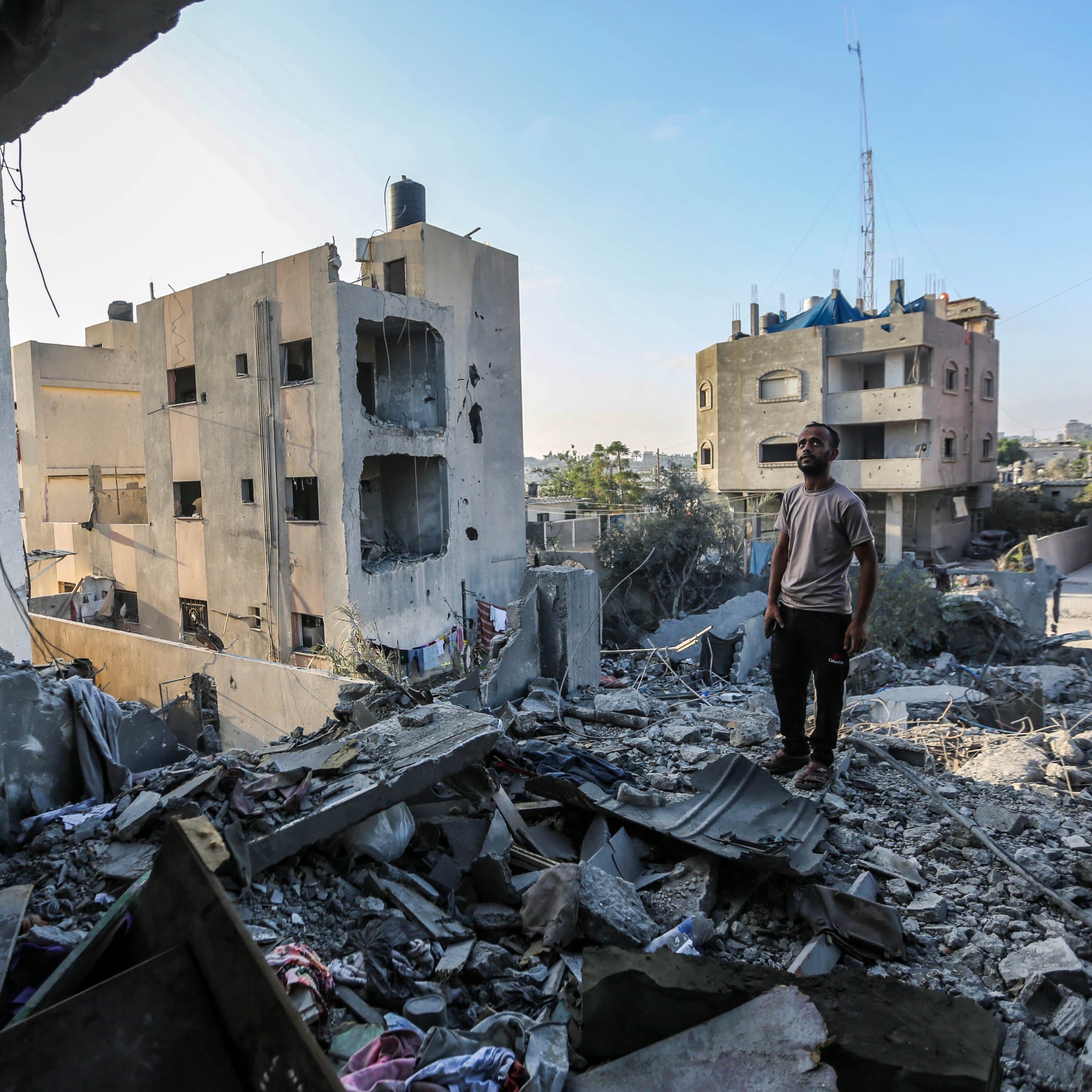
--:-- Michelle Martin: And just this morning, Gaza health officials are reporting one of the single deadliest Israeli strikes in weeks.
--:-- Daniel Estrin: They're saying scores of people, mostly women and children, were killed when Israel struck a five-story building.
--:-- Michelle Martin: So why is Israel banning UNRWA now?
--:-- Daniel Estrin: Well, Israel says that some Palestinian staffers of UNRWA took part in the October 7th attack.
--:-- Michelle Martin: Unruh fired and suspended them or others were killed in the war.
--:-- Daniel Estrin: Israel has also said that during the war it has found a Hamas command center directly underneath Unruh's Gaza headquarters.
--:-- Michelle Martin: Those and a lot of other grievances throughout the years.
--:-- Daniel Estrin: This is Israel's ambassador to the United Nations speaking to reporters. His name is Danny Danone.
--:-- Michelle Martin: Unruh was infiltrated by Hamas many years ago.
--:-- Daniel Estrin: We have run the Security Council. That is why today we are taking action that will limit UNRWA capabilities to continue to function in Israel.
--:-- Michelle Martin: Now, Israel says it wants to continue to work with other UN agencies instead of UNRWA.
--:-- Daniel Estrin: And that really points to Israel's biggest problem with this agency.
--:-- Michelle Martin: It serves the families of Palestinian refugees who were uprooted from their homes when Israel's founding war took place 76 years ago.
--:-- Daniel Estrin: And Israel says this agency just perpetuates Palestinians' demand for the right to return to their lands, which became Israel.
--:-- Michelle Martin: But I should mention that this ban on UNRWA in the Israeli parliament won a vast majority of lawmakers, including most of the centrist opposition.
--:-- Daniel Estrin: So how are the UN and the U.S. responding to Israel's ban?
--:-- Michelle Martin: The U.N. says this can have devastating consequences for refugees, and the State Department is saying that UNRWA plays an irreplaceable role in Gaza and it's calling on Israel not to move forward with implementing this legislation.
--:-- Daniel Estrin: The U.S. actually warned Israel in a letter that if it does move forward with this legislation, it could have implications under U.S. law.
--:-- Michelle Martin: The U.S. is basically suggesting that it could withhold some weapons and military aid to Israel.
--:-- Daniel Estrin: We're going to have to see what happens with the U.S. elections.
--:-- Michelle Martin: Who is elected president could determine whether Israel moves forward.
--:-- Daniel Estrin: That is NPR's Daniel Estrin in Tel Aviv. Daniel, thank you.
--:-- Daniel Estrin: You're welcome.
--:-- Michelle Martin: Closing arguments are expected today in the second trial of former Louisville police detective Brett Hankinson.
--:-- Michelle Martin: He is charged with two felonies in the death of Breonna Taylor for depriving her of her civil rights and those of her neighbor during a botched police raid at her apartment in 2020.
--:-- Michelle Martin: His first trial last November ended in a mistrial after the jury could not reach a verdict.
--:-- Michelle Martin: This shooting, along with the police killing of George Floyd, triggered a national outcry over police violence, particularly against black people.
--:-- Michelle Martin: Giselle Roden with Louisville Public Media has been following the trial, and she's with us now.
--:-- Giselle Roden: Good morning, Michelle.
--:-- Michelle Martin: Hankinson testified in his own defense yesterday. What did he say?
--:-- Giselle Roden: Well, Michelle, we heard what happened on March 13, 2020, from his perspective.
--:-- Michelle Martin: He said that he was called by fellow officers to help execute a search warrant at Taylor apartment.
--:-- Giselle Roden: Hankison was there when police broke down the front door.
--:-- Michelle Martin: And we know that Taylor boyfriend fired a single shot at officers because he thought they were intruders.
--:-- Giselle Roden: His shot hit an officer in the leg and then police returned fire, shooting a total of 32 times and killing Taylor.
--:-- Michelle Martin: While all this is happening, Hankison testified that he thought he saw a man with a rifle in the apartment shooting at officers.
--:-- Giselle Roden: So what did he do then?
--:-- Michelle Martin: So he testified that he went to the other side of the apartment to find a better shot.
--:-- Giselle Roden: That rifle he said he thought he saw, police investigators would later say they never found a long gun in the home.
--:-- Michelle Martin: Hengison cried on the stand when he said he thought his fellow officers were getting killed.
--:-- Giselle Roden: Hengison said he fired 10 shots through a covered sliding glass door and a bedroom window from outside the apartment.
--:-- Michelle Martin: But none of those struck Taylor.
--:-- Giselle Roden: Some of his bullets, however, entered a neighboring apartment.
--:-- Michelle Martin: Hankinson said he decided to shoot through the building to protect his fellow officers, even though he couldn't see exactly what he was shooting at.
--:-- Giselle Roden: So as we mentioned, this is the second time the U.S. Justice Department has tried Hankinson for violating Taylor's civil rights.
--:-- Michelle Martin: What makes this trial different from the last one?
--:-- Giselle Roden: Well, last time, the prosecution had several other Louisville Metro Police officers testify to how dangerous Hankinson's actions were the night of the raid.
--:-- Michelle Martin: But in this trial, those same officers testified again, but added not only did Hankison's actions endanger the people in the surrounding area, but they said he also put his fellow officers at risk.
--:-- Giselle Roden: And prosecutors said Hankison went against police protocol since he couldn't identify what he was shooting at.
--:-- Michelle Martin: And several of the officers testified that they were shocked and even confused when one of their fellow officers shot through the apartment allegedly without using target identification.
--:-- Giselle Roden: In that other apartment was a pregnant woman, her boyfriend, and her five-year-old son.
--:-- Michelle Martin: Also different in this case, Hankison's defense attorneys added a new witness.
--:-- Giselle Roden: They called James Borden. It's a police shootings expert.
--:-- Michelle Martin: He analyzed what Hankinson did the night of the raid.
--:-- Giselle Roden: Borden said yesterday that Hankison's actions were reasonable, considering that an officer had been shot and someone had a weapon in the apartment.
--:-- Michelle Martin: So what is next in this case?
--:-- Giselle Roden: Well, Hankison will be back on the stand later today.
--:-- Michelle Martin: Then there may be additional rebuttal testimony, and after that, closing arguments will begin, and the jury will begin deliberating.
--:-- Giselle Roden: In Hankinson's federal trial last year, it took the jury three days to deliberate, and the judge declared a mistrial because jurors couldn't reach unanimous decision.
--:-- Michelle Martin: If Hankinson's convicted this time, he could face a maximum life sentence in prison, and he would be the second officer convicted in this police raid.
--:-- Giselle Roden: Like last time, most of Breonna Taylor's family has been in court every day for testimony.
--:-- Michelle Martin: That is Giselle Roden with Louisville Public Media. Giselle, thank you.
--:-- Giselle Roden: Thank you, Michelle.
--:-- Michelle Martin: And that's Up First for Tuesday, October 29th. I'm Michelle Martin. For your next listen, tune in to Consider This from NPR.
--:-- Michelle Martin: In the final week of the campaign, Donald Trump's closing argument to the American people leans into the extreme and divisive rhetoric he's been known for.
--:-- Michelle Martin: Listen to Consider This from NPR.
--:-- Michelle Martin: Today's episode of Up First was edited by Megan Pratt, Ryland Barton, Russell Lewis, Olivia Hampton, and Alice Wolfley.
--:-- Michelle Martin: It was produced by Ana Perez, Nia Dumas, Chris Thomas, and Chad Campbell.
--:-- Michelle Martin: We get engineering support from Robert Rodriguez and Arthur Laurent, and our technical director is Zach Coleman.
--:-- Michelle Martin: We hope you'll join us again tomorrow.