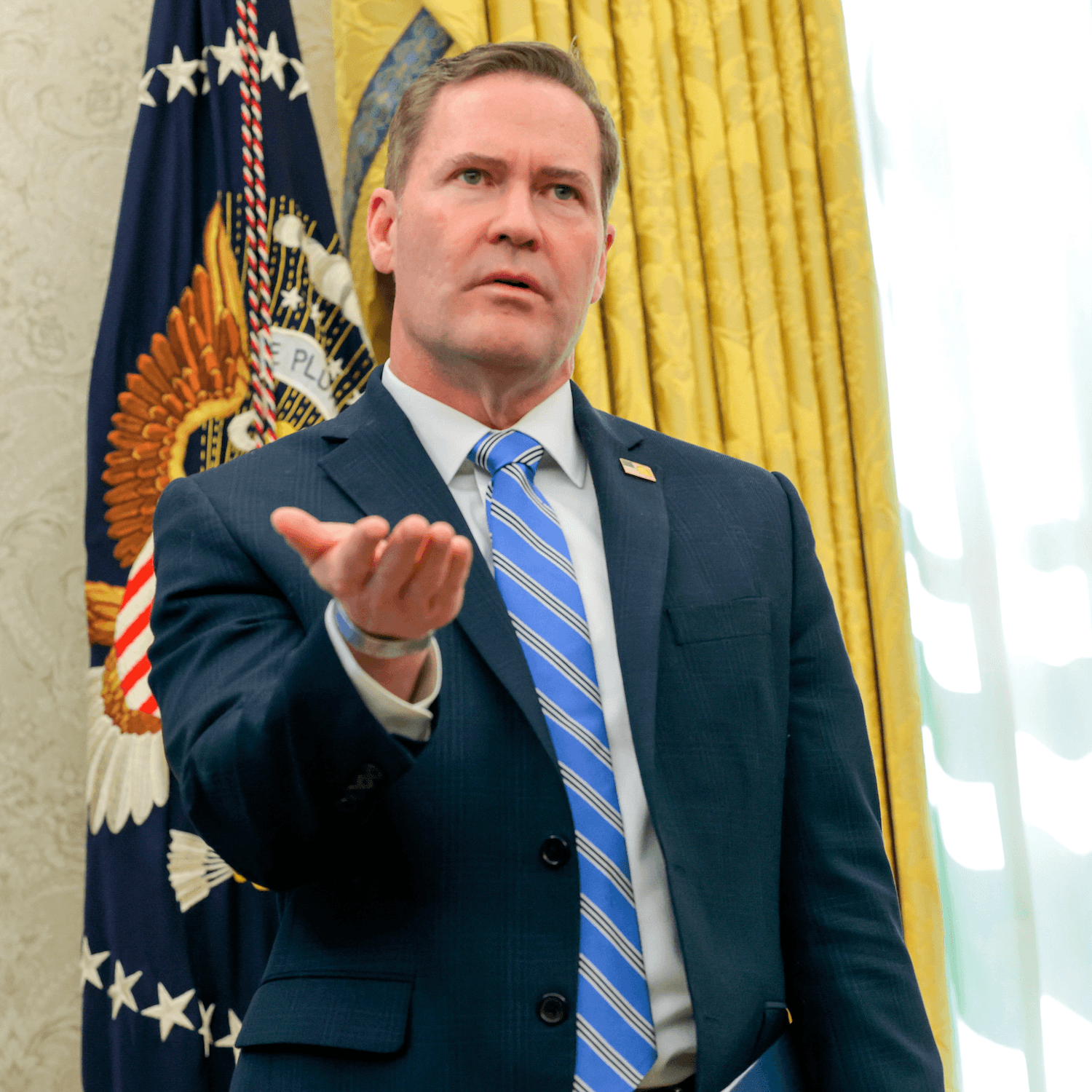
--:-- Aisha Roscoe: Experience necessary? What kind of experience? President-elect Donald Trump announces his picks for his national security team. What signals is he sending about his second-term priorities?
--:-- Scott Simon: I'm Aisha Roscoe. And I'm Scott Simon, and this is Up First from NPR News.
--:-- Aisha Roscoe: Loyalty seems to be a common factor in Trump's choices to lead defense, national intelligence, and the CIA. More on that in a moment.
--:-- Scott Simon: And some good public health news. Rates of syphilis, chlamydia, and gonorrhea have dropped. We'll hear the reasons why.
--:-- Aisha Roscoe: Also, the United Nations Climate Change Conference is underway. It's a deal for wealthy countries to help developing ones getting closer to reality. So please stay with us. We have the news you need to start your weekend.
--:-- [Announcer voice]
This message comes from NPR sponsor Adobe. Introducing the all-new Adobe Acrobat Studio, now with AI-powered PDF spaces. Need to turn 100 pages of market research into 5 insights with a click? Templates for a sales proposal that'll close that deal? Or an AI specialist to tailor the tone of your market report? You can do all that with the all-new Adobe Acrobat Studio. Learn more at adobe.com slash do that with Acrobat.
--:-- Scott Simon: There's been a lot of buzz over who President-elect Trump wants in his new administration. Several nominees for his national security team are better known for their enthusiastic support for Trump than their experience.
--:-- Greg Myrie: NPR national security correspondent Greg Myrie joins us now. Greg, thanks for being with us.
--:-- Scott Simon: Hi, Greg. Help us put some of these selections into perspective.
--:-- Greg Myrie: Tulsi Gabbard, nominated for director of national intelligence. She is a veteran and a former Democratic lawmaker.
--:-- Scott Simon: Yeah, she would be responsible for overseeing all 18 intelligence agencies. And, you know, just four years ago, Scott, she was a congresswoman from Hawaii, ran for the Democratic presidential nomination.
--:-- Greg Myrie: But then she quit the party and became this huge Trump supporter. She's never worked in the intelligence community and has taken a number of very controversial foreign policy positions.
--:-- Scott Simon: You know, just days after Russia's massive invasion of Ukraine, she took to social media and called the leaders of Russia, Ukraine and the U.S. to, quote, embrace the spirit of aloha, respect and love.
--:-- Greg Myrie: Now, if confirmed, she'll be one of the president's top advisors on this war.
--:-- Scott Simon: And Scott, I just want to quickly mention another nominee, John Ratcliffe, to head the CIA. He served briefly as director of national intelligence in Trump's first term, but only after a big battle with Democrats who said he lacked experience.
--:-- Greg Myrie: We're hearing that same criticism again.
--:-- Scott Simon: In his first term, Donald Trump chose more traditional experience figures who were sometimes described as the adults in the room. Why the different approach now?
--:-- Greg Myrie: Yeah, Trump felt he was being undermined in his first term by security officials with the Russia investigations into the 2016 presidential election.
--:-- Scott Simon: He openly quarreled with them. You know, one really memorable moment was when Trump stood next to Vladimir Putin at a summit in Finland and said he believed the Russian leader and not the U.S. intelligence agency when Putin said he hadn't interfered in the U.S. election.
--:-- Greg Myrie: You know, Trump just cycled through multiple national security officials and he increasingly chose loyalists at the end of his first term. And that's where we're starting the second term.
--:-- Scott Simon: I asked Ian Brimmer the global affairs analyst who runs the Eurasia Group how he sees Trump's new national security team. Lighter experience generally would be perceived as less capable on the national security defense and foreign policy space, but clearly more alignment, more loyalty personally to Trump.
--:-- Greg Myrie: Greg, what might have inspired Donald Trump's nomination of someone we have seen on our monitors here in the studio, Fox News host Pete Hegseth, for Secretary of Defense?
--:-- Scott Simon: Well, Scott, you know, I think you've probably seen him using that perch to criticize the Pentagon brass.
--:-- Greg Myrie: He says American troops are poorly served by what he calls woke generals. He says they're more concerned about diversity, gender and cultural issues than the ability to fight wars.
--:-- Scott Simon: He's an outspoken opponent of women in many combat roles. He's aggressively defended U.S. troops convicted of war crimes. And Trump has actually responded by pardoning some of them.
--:-- Greg Myrie: He's just 44. He was a major in the Army National Guard, served in Iraq and Afghanistan. But he's never held a senior position in national security or managed a large organization.
--:-- Scott Simon: He'd be in charge of a defense department that has about 3 million employees worldwide. National security issues don't take a break. And President Trump, from the moment he takes the oath of office, is going to face some tough issues, including Russia's war in Ukraine. What should we expect?
--:-- Greg Myrie: Yeah, Trump on the campaign trail said he could end this war, the Russia-Ukraine war, in a day. But he hasn't said how he could do this.
--:-- Scott Simon: He could cut military assistance to Ukraine or pressure that country to make territorial concessions.
--:-- Greg Myrie: Now, Ian Bremmer says Trump will take a very transactional approach and he may get some short-term victories here. But he says Trump is unlikely to worry about the broader consequences.
--:-- Scott Simon: The question is, what does that mean long term for America's system of alliances that it's built up over many decades that comes from mutual trust and consistent commitments that the Americans uphold over time?
--:-- Greg Myrie: I mean, Trump is likely to do a lot of damage to those institutions long term.
--:-- Scott Simon: So we've discussed Trump's more controversial picks, but we should note he has had some more experienced nominees that he's chosen that do have broad supports.
--:-- Greg Myrie: They include Florida Senator Marco Rubio, chosen to be Secretary of State, and Florida Congressman Mike Waltz, tapped to be the National Security Advisor.
--:-- Scott Simon: NPR's Greg Myrie, thanks so much.
--:-- Greg Myrie: Sure thing, Scott.
--:-- Will Stone: New data from the federal government shows that cases of sexually transmitted infections are coming down. NPR's Will Stone joins us now. Will, thanks for being with us.
--:-- Scott Simon: Sure thing, Scott. What can you tell us about these latest numbers?
--:-- Will Stone: So this report focused on syphilis, chlamydia, and gonorrhea cases from last year. Overall, there were over 2.4 million of these three sexually transmitted infections in the U.S., and that represents a slight decrease of about 2 percent compared to 2022.
--:-- Scott Simon: So we're not talking about a massive change year to year. But just to put this in context, infections had climbed in recent years to historically high levels.
--:-- Will Stone: Overall, they're up about 90 percent over the last two decades, which means the fact that cases seem to be slowing down now is actually quite promising.
--:-- Scott Simon: Do we have any sense of why things are improving?
--:-- Will Stone: The Centers for Disease Control and Prevention is still sorting through the data, trying to figure that out.
--:-- Scott Simon: A few things do stand out. Gonorrhea cases are down for the second year. Also, syphilis appears to be slowing down after years of significant increases.
--:-- Will Stone: Here's what Dr. Bradley Stoner from the CDC told me. I think that we're seeing a prevention impact of work that's going on in communities all over the country. And it really starting to show some benefit.
--:-- Scott Simon: But also there tremendous amount of work left to do so we just can waste the momentum.
--:-- Will Stone: When you look at who is being most affected, a couple trends are clear. People in their teens to mid-20s account for about half of the cases.
--:-- Scott Simon: Men who have sex with men are disproportionately affected. There are also racial disparities with new cases affecting Black Americans in particular.
--:-- Will Stone: Dr. Stoner mentioned prevention efforts. What do those look like exactly?
--:-- Scott Simon: So this is the work that happens on the local level with health departments. There's education and awareness, access to testing and treatment, and having more people who do the frontline public health work.
--:-- Will Stone: They're known as disease intervention specialists. Basically, they investigate outbreaks and help patients navigate the health care system.
--:-- Scott Simon: David Harvey thinks they had a big part to play in this improvement, he leads the National Coalition of STD Directors, which the CDC calls STIs now, and says there was funding from Congress in response to COVID several years ago that supported this workforce.
--:-- Will Stone: That ended up benefiting STI prevention work, too. We think it's a meaningful outcome from this investment of additional dollars, and we don't think this will be sustained.
--:-- Scott Simon: In other words, without more investment, he expects the numbers will go up again.
--:-- Will Stone: And he points out the base funding for the CDC on STI prevention is half of what they think it should be.
--:-- Scott Simon: He said there are some really troubling trends, notably around congenital syphilis, literally thousands of babies being born with syphilis in a year.
--:-- Will Stone: Well, what are the prospects for this work continuing given the changes in Washington, D.C.?
--:-- Scott Simon: Yeah, obviously, Scott, there are questions about funding priorities with the new Congress and administration, especially in the realm of public health.
--:-- Will Stone: That said, the first Trump administration took interest in this issue. It actually started the Ending HIV Initiative and came up with the first federal STI action plan, which is due for an update.
--:-- Scott Simon: So there will certainly be wrangling over the budget. But Harvey is cautiously optimistic that this should be a bipartisan work.
--:-- Will Stone: And Paris Will Stone, thanks so much.
--:-- Will Stone: Thank you.
--:-- Jeff Brady: The annual U.N. climate meeting. COP29 is at the halfway point in Baku, Azerbaijan. Negotiators are working out details for how wealthy countries will help developing nations in a warming world. Jeff Brady from NPR's Climate Desk joins us. Jeff, thanks for being with us.
--:-- Scott Simon: Good morning, Scott. What have negotiators accomplished so far this week?
--:-- Jeff Brady: You know, from outside, it doesn't look like much. There's a lot of technical work going on behind the scenes right now to get to a financial agreement in the next week.
--:-- Scott Simon: But some of the most compelling moments have been speeches from leaders of developing nations.
--:-- Jeff Brady: Here's the Bahamas Prime Minister Philip Davis reminding that global warming is everyone's problem. The fires that devour your forests, the hurricanes that shatter our homes, are not distant misfortunes, but shared tragedies.
--:-- Scott Simon: What we endure, you endure. What we lose, you lose. And if we fail to act, it will be our children and grandchildren who bear the burden.
--:-- Jeff Brady: And that underscores the goal of these negotiations, which is getting wealthier countries to commit many billions of dollars to help developing nations.
--:-- Scott Simon: These are countries like the Bahamas that did little to cause global warming, you know, burning fossil fuels. But they're suffering the consequences.
--:-- Jeff Brady: The country signed the Paris Climate Agreement almost a decade ago that aims to limit how warm the planet will get.
--:-- Scott Simon: The Paris goal is to limit warming to 1.5 degrees Celsius, that's 2.7 Fahrenheit, over pre temperatures.
--:-- Jeff Brady: And scientists tell us that what needed to avoid some really bad climate effects. We already experiencing some of them more severe storms you know flooding extreme heat.
--:-- Scott Simon: Wealthy countries agreed to cut greenhouse gases first but the world is not on track to meet that Paris Agreement goal and will likely push past that goal.
--:-- Jeff Brady: The U.S., for example, is supposed to cut climate pollution in half by 2030. We're on track for about 40 percent now.
--:-- Scott Simon: But, you know, scientists say every little bit of warming we avoid will make a big difference in the future.
--:-- Jeff Brady: Jeff, do countries face any penalties if they don't meet those commitments? And if not, what are these COP meetings trying to do?
--:-- Scott Simon: There aren't penalties. This process is more about countries agreeing to do things and then holding each other accountable.
--:-- Jeff Brady: For example, at last year's UN climate meeting in Dubai, countries pledged to triple renewable energy by the end of this decade.
--:-- Scott Simon: This year, the International Renewable Energy Agency came back with a report showing countries are not on track to meet that pledge.
--:-- Jeff Brady: So now there's pressure for countries to step up construction of things like wind power and hydropower and geothermal energy.
--:-- Scott Simon: And, of course, America just elected a president, now president-elect, who's called climate change a hoax.
--:-- Jeff Brady: Donald Trump says he'll pull the U.S. out of the Paris Agreement again.
--:-- Scott Simon: How does that affect the talks in Baku?
--:-- Jeff Brady: You know, it's part of the discussion, but not as big a topic as I expected.
--:-- Scott Simon: One reason is that it takes a year to withdraw from that agreement. So the U.S. is expected to be back at COP in Brazil next year.
--:-- Jeff Brady: There's talk about who will step up, you know, to fill the U.S. leadership gap in the meantime. Maybe China, maybe the European Union.
--:-- Scott Simon: But there are some unknowns here. The CEO of ExxonMobil, he recently asked Trump not to pull out of the Paris Agreement.
--:-- Jeff Brady: He says business needs certainty, and we're going to see what President-elect Trump decides there.
--:-- Scott Simon: Meantime, at the U.N. climate meeting, there's still some optimism. There will be some sort of finance agreement announced in the next week or so.
--:-- Jeff Brady: Jeff Brady from NPR's Climate Desk, thanks so much for being with us.
--:-- Jeff Brady: Thanks for having me.
--:-- Aisha Roscoe: And that's up first for Saturday, November 16th. I'm Ayesha Roscoe. And I'm Scott Simon.
--:-- [Cast of dozens]
A cast of dozens makes this podcast possible. Our producer is Michael Radcliffe with help from Lauren McGocky, Fernando Naro, and Ryan Bank.
--:-- Scott Simon: Our director is Danny Hensel and he's taking a maiden voyage with a new cake pan today as he bakes a chocolate hazelnut crostata.
--:-- Aisha Roscoe: We wish him the best of luck.
--:-- Scott Simon: Our editors are Andrew Sussman, Scott Hensley, Sadie Babbitt, plus Dee Parvaz, Matthew Sherman, Melissa Gray, who would be a great co-host for Up First, and Shannon Rhodes.
--:-- Aisha Roscoe: She'd like a piece of that crostata.
--:-- Scott Simon: Hannah Glovna is our technical director with engineering support from Andy Huther, Arthur Halliday-Lorent, and Ted Meebane.
--:-- Aisha Roscoe: He's crostata-curious but says chocolate chip cookies are the thing.
--:-- Scott Simon: Evie Stone is our senior supervising editor.
--:-- Aisha Roscoe: Sarah Lucy Oliver is our executive producer.
--:-- Scott Simon: And Jim Cain is our deputy managing editor.
--:-- Aisha Roscoe: We've all been wondering what he does here.
--:-- Scott Simon: Tomorrow on the Sunday Story, mining companies have long had their eyes on the world's ocean floor. And now they have the technology to get to it. The race to mine the seafloor is about to take off.
--:-- Aisha Roscoe: And for more news, interviews, sports and music, you can tune in to Weekend Edition on your radio.
--:-- Scott Simon: Go to stations.npr.org to find your local NPR station. And to learn about crostatas. I'm not sure what a crostata is. Okay, Chris. Fancy brownie? Yeah, okay, okay, okay.